Kirjojen hintavertailu. Mukana 11 717 354 kirjaa ja 12 kauppaa.

Kirjahaku

Etsi kirjoja tekijän nimen, kirjan nimen tai ISBN:n perusteella.

31 kirjaa tekijältä J. B. Bury

The Cambridge Medieval History vol 3 - Germany and the Western Empire: J.B. Bury

The Cambridge Medieval History vol 3 - Germany and the Western Empire: J.B. Bury

J. B. Bury

Createspace Independent Publishing Platform
2011
nidottu
The Cambridge Medieval History Series consists of 8 volumes, with volume 1 first published in 1911. Planned by one of the most renowned Byzantinists and Medievalists of the day, John B. Bury, it became the de facto standard by which all comprehensive period histories would be measured. Its impact on the field of medieval scholarship is every bit as great as Gibbon's "Decline and Fall of the Roman Empire". Volume One - The Christian Roman Empire and the Foundation of the Teutonic Kingdoms begins with the accession of Constantine to the Imperium and ends roughly with reign of Justinian in the East. It covers the migration of Germanic tribes into Roman territories. Significant attention is given the ecumenical church councils of the 4th Century, with particular emphasis on the Arian controversies. Volume Two - The Rise of the Saracens and the Foundation of the Western Empire covers the time period from roughly 500 CE to 814 CE. Beginning with Justinian, it also looks at the Frankish Merovingian dynasty, the Lombard Kingdom in Italy, the Restoration of the Imperium in Italy, and ends with the transition of power from the Merovingians to the Carolingians through Charlemagne's reign. Chapters covering England and English institution and the conversion of the Celts. Finally, attention is given to the birth and spread of Islam and the growth of the Islamic Caliphate. Volume Three - Germany and the Western Empire covers the period from roughly 814 CE through the end of the first millennium. Beginning with the reign of Louis the Pious, it traces the decline of the Carolingian Empire and the foundation of the Capetian Dynasty. Attention is paid to the Holy Roman Empire in Germany through Henry III. The impact of the Norse Vikings on the political landscape is examined as is the development of the Anglo-Saxon kingdom of England through the death of Edward the Confessor. Throughout the volume development of feudalism as a primary labor, land-owning, and social way of life is highlighted. Finally, the continued growth of the Western Caliphate is looked at. Volume Four - The Eastern Roman Empire focuses primarily on the Byzantine East from roughly 700 CE through the end of the Empire in 1483. The different dynasties (Isaurian, Phrygian, and Macedonian) receive their own chapters, and in-depth attention is paid to the struggle with the emerging Islamic Caliphate. The religious and political relationship with the West is considered and significant attention is paid to the Comneni and Fourth Crusade. Volume Five - The Contest of Empire and Papacy is concerned primarily with the century and a half from 1050 CE to 1200 CE. It looks at the surging political power of the Church and the corresponding growth of nations of Western Europe. The Holy Roman Empire and the Norman Invasion of England, the establishment of the Plantagenet Dynasty in Norman Britain, and the emergence of Monasticism and Scholasticism in the period receive attention. Volumes 6-8 were published after 1923 and are therefore not in the public domain. Plantagenet Publishing will not be able to make them available in this format.
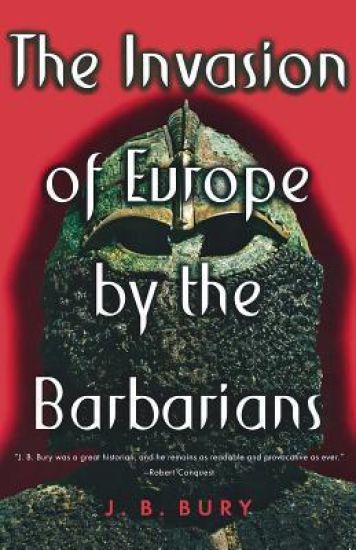
Invasion of Europe by the Barbarians
In print for more than thirty years, this book has long served as a standard text on the Germanic penetration of the Roman Empire. Bury's history is indispensable to anyone who seeks to understand the connection between the barbarian migrations of the third to the ninth century and the framework of modern Europe.
History of the Later Roman Empire: v. 2

History of the Later Roman Empire: v. 2

J. B. Bury

Dover Publications Inc.
2003
nidottu
Volume 2 of classic history. One of the world's foremost historians chronicles the major forces and events in the history of the Western and Byzantine Empires from the death of Theodosius (A.D. 395) to the death of Justinian (A.D. 565). "An important and valuable contribution to our knowledge." --" Classical Review."
The Cambridge Medieval History vol 4 - The Eastern Roman Empire

The Cambridge Medieval History vol 4 - The Eastern Roman Empire

J. B. Bury

Createspace Independent Publishing Platform
2011
nidottu
The Cambridge Medieval History Series consists of 8 volumes, with volume 1 first published in 1911. Planned by one of the most renowned Byzantinists and Medievalists of the day, John B. Bury, it became the de facto standard by which all comprehensive period histories would be measured. Its impact on the field of medieval scholarship is every bit as great as Gibbon's "Decline and Fall of the Roman Empire". Volume One - The Christian Roman Empire and the Foundation of the Teutonic Kingdoms begins with the accession of Constantine to the Imperium and ends roughly with reign of Justinian in the East. It covers the migration of Germanic tribes into Roman territories. Significant attention is given the ecumenical church councils of the 4th Century, with particular emphasis on the Arian controversies. Volume Two - The Rise of the Saracens and the Foundation of the Western Empire covers the time period from roughly 500 CE to 814 CE. Beginning with Justinian, it also looks at the Frankish Merovingian dynasty, the Lombard Kingdom in Italy, the Restoration of the Imperium in Italy, and ends with the transition of power from the Merovingians to the Carolingians through Charlemagne's reign. Chapters covering England and English institution and the conversion of the Celts. Finally, attention is given to the birth and spread of Islam and the growth of the Islamic Caliphate. Volume Three - Germany and the Western Empire covers the period from roughly 814 CE through the end of the first millennium. Beginning with the reign of Louis the Pious, it traces the decline of the Carolingian Empire and the foundation of the Capetian Dynasty. Attention is paid to the Holy Roman Empire in Germany through Henry III. The impact of the Norse Vikings on the political landscape is examined as is the development of the Anglo-Saxon kingdom of England through the death of Edward the Confessor. Throughout the volume development of feudalism as a primary labor, land-owning, and social way of life is highlighted. Finally, the continued growth of the Western Caliphate is looked at. Volume Four - The Eastern Roman Empire focuses primarily on the Byzantine East from roughly 700 CE through the end of the Empire in 1483. The different dynasties (Isaurian, Phrygian, and Macedonian) receive their own chapters, and in-depth attention is paid to the struggle with the emerging Islamic Caliphate. The religious and political relationship with the West is considered and significant attention is paid to the Comneni and Fourth Crusade. Volume Five - The Contest of Empire and Papacy is concerned primarily with the century and a half from 1050 CE to 1200 CE. It looks at the surging political power of the Church and the corresponding growth of nations of Western Europe. The Holy Roman Empire and the Norman Invasion of England, the establishment of the Plantagenet Dynasty in Norman Britain, and the emergence of Monasticism and Scholasticism in the period receive attention. Volumes 6-8 were published after 1923 and are therefore not in the public domain. Plantagenet Publishing will not be able to make them available in this format.
The Cambridge Medieval History vol 2 - The Rise of the Saracens and the Foundation of the Western Empire
The Cambridge Medieval History Series consists of 8 volumes, with volume 1 first published in 1911. Planned by one of the most renowned Byzantinists and Medievalists of the day, John B. Bury, it became the de facto standard by which all comprehensive period histories would be measured. Its impact on the field of medieval scholarship is every bit as great as Gibbon's "Decline and Fall of the Roman Empire". Volume One - The Christian Roman Empire and the Foundation of the Teutonic Kingdoms begins with the accession of Constantine to the Imperium and ends roughly with reign of Justinian in the East. It covers the migration of Germanic tribes into Roman territories. Significant attention is given the ecumenical church councils of the 4th Century, with particular emphasis on the Arian controversies. Volume Two - The Rise of the Saracens and the Foundation of the Western Empire covers the time period from roughly 500 CE to 814 CE. Beginning with Justinian, it also looks at the Frankish Merovingian dynasty, the Lombard Kingdom in Italy, the Restoration of the Imperium in Italy, and ends with the transition of power from the Merovingians to the Carolingians through Charlemagne's reign. Chapters covering England and English institution and the conversion of the Celts. Finally, attention is given to the birth and spread of Islam and the growth of the Islamic Caliphate. Volume Three - Germany and the Western Empire covers the period from roughly 814 CE through the end of the first millennium. Beginning with the reign of Louis the Pious, it traces the decline of the Carolingian Empire and the foundation of the Capetian Dynasty. Attention is paid to the Holy Roman Empire in Germany through Henry III. The impact of the Norse Vikings on the political landscape is examined as is the development of the Anglo-Saxon kingdom of England through the death of Edward the Confessor. Throughout the volume development of feudalism as a primary labor, land-owning, and social way of life is highlighted. Finally, the continued growth of the Western Caliphate is looked at. Volume Four - The Eastern Roman Empire focuses primarily on the Byzantine East from roughly 700 CE through the end of the Empire in 1483. The different dynasties (Isaurian, Phrygian, and Macedonian) receive their own chapters, and in-depth attention is paid to the struggle with the emerging Islamic Caliphate. The religious and political relationship with the West is considered and significant attention is paid to the Comneni and Fourth Crusade. Volume Five - The Contest of Empire and Papacy is concerned primarily with the century and a half from 1050 CE to 1200 CE. It looks at the surging political power of the Church and the corresponding growth of nations of Western Europe. The Holy Roman Empire and the Norman Invasion of England, the establishment of the Plantagenet Dynasty in Norman Britain, and the emergence of Monasticism and Scholasticism in the period receive attention. Volumes 6-8 were published after 1923 and are therefore not in the public domain. Plantagenet Publishing will not be able to make them available in this format.
The Cambridge Medieval History vol 1 - The Christian Roman Empire and the Foundation of the Teutonic Kingdoms
The Cambridge Medieval History Series consists of 8 volumes, with volume 1 first published in 1911. Planned by one of the most renowned Byzantinists and Medievalists of the day, John B. Bury, it became the de facto standard by which all comprehensive period histories would be measured. Its impact on the field of medieval scholarship is every bit as great as Gibbon's "Decline and Fall of the Roman Empire". Volume One - The Christian Roman Empire and the Foundation of the Teutonic Kingdoms begins with the accession of Constantine to the Imperium and ends roughly with reign of Justinian in the East. It covers the migration of Germanic tribes into Roman territories. Significant attention is given the ecumenical church councils of the 4th Century, with particular emphasis on the Arian controversies. Volume Two - The Rise of the Saracens and the Foundation of the Western Empire covers the time period from roughly 500 CE to 814 CE. Beginning with Justinian, it also looks at the Frankish Merovingian dynasty, the Lombard Kingdom in Italy, the Restoration of the Imperium in Italy, and ends with the transition of power from the Merovingians to the Carolingians through Charlemagne's reign. Chapters covering England and English institution and the conversion of the Celts. Finally, attention is given to the birth and spread of Islam and the growth of the Islamic Caliphate. Volume Three - Germany and the Western Empire covers the period from roughly 814 CE through the end of the first millennium. Beginning with the reign of Louis the Pious, it traces the decline of the Carolingian Empire and the foundation of the Capetian Dynasty. Attention is paid to the Holy Roman Empire in Germany through Henry III. The impact of the Norse Vikings on the political landscape is examined as is the development of the Anglo-Saxon kingdom of England through the death of Edward the Confessor. Throughout the volume development of feudalism as a primary labor, land-owning, and social way of life is highlighted. Finally, the continued growth of the Western Caliphate is looked at. Volume Four - The Eastern Roman Empire focuses primarily on the Byzantine East from roughly 700 CE through the end of the Empire in 1483. The different dynasties (Isaurian, Phrygian, and Macedonian) receive their own chapters, and in-depth attention is paid to the struggle with the emerging Islamic Caliphate. The religious and political relationship with the West is considered and significant attention is paid to the Comneni and Fourth Crusade. Volume Five - The Contest of Empire and Papacy is concerned primarily with the century and a half from 1050 CE to 1200 CE. It looks at the surging political power of the Church and the corresponding growth of nations of Western Europe. The Holy Roman Empire and the Norman Invasion of England, the establishment of the Plantagenet Dynasty in Norman Britain, and the emergence of Monasticism and Scholasticism in the period receive attention. Volumes 6-8 were published after 1923 and are therefore not in the public domain. Plantagenet Publishing will not be able to make them available in this format.

The Athenian Empire under the Guidance of Pericles

The Athenian Empire under the Guidance of Pericles

J. B. Bury

Createspace Independent Publishing Platform
2015
nidottu
In conjunction with the founding of democracy, Athens ushered in the "Golden Age" of the Ancient Greeks, which saw the invention or mastery of everything from mathematics and engineering to philosophy and art. And among the Athenians, none were as influential as Pericles, the West's first great statesman. Leading Athens for upwards of 40 years between the Second Persian War and the Peloponnesian War, Pericles has become an idealized figure over the last 2,000 years, but he was a polarising figure among his contemporaries. According to some, he was an honest and upstanding politician, while for others he was the lowest kind of demagogue, a political opportunist whose ability to wriggle free of criticism was best summed up by the typically pithy comment of his rival Thucydides (not to be confused by the famous historian of the same name, one of the main sources for Pericles's life). When asked who the better fighter was, Thucydides replied, "Pericles - even when he loses, he still convinces the Athenians he's won". As Strategos, Pericles was Athens' commander-in-chief, and the chief architect of the city's strategy, for a period of roughly two decades. Even in his military capacity, Pericles did not escape more than his fair share of criticism, both during his lifetime and all the way to the present day. His grand strategy, which put Athens on the defensive for much of the Peloponnesian War, has been accused by many critics as being too supine and too reliant on himself as its main architect, so when his death came during the first years of the war, Athens' ultimate defeat was inevitable. However, it is worth remembering that most of history's great generals planned strategy that was entirely reliant on their own particular species of military genius, so an unexpected, early death is hardly a valid reason to condemn an entire plan of operations. Even his prowess as an orator, on which Pericles built his political career, is questioned. The main source for the wording and content of his speeches is the historian Thucydides, but since he recorded the speeches from memory, it is unclear how much of the speeches are Pericles's words, and how much was put into his mouth by Thucydides.