Kirjojen hintavertailu. Mukana 11 342 296 kirjaa ja 12 kauppaa.

Kirjahaku

Etsi kirjoja tekijän nimen, kirjan nimen tai ISBN:n perusteella.

10 kirjaa tekijältä J. C. D. Clark

Thomas Paine

Thomas Paine

J. C. D. Clark

Oxford University Press
2018
sidottu
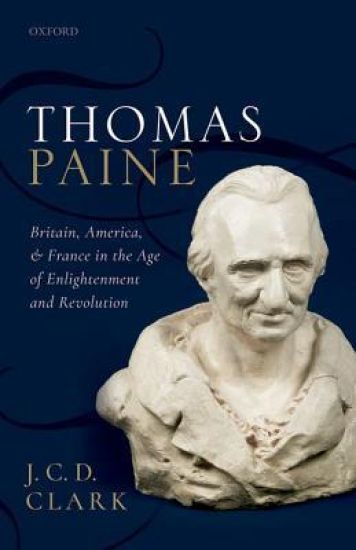
Thomas Paine (1737-1809) was England's greatest revolutionary: no other reformer was as actively involved in events of the scale of the American and French Revolutions, and none wrote such best-selling texts with the impact of Common Sense and Rights of Man. No one else combined the roles of activist and theorist, or did so in the 'age of revolutions', fundamental as it was to the emergence of the 'modern world'. But his fame meant that he was taken up and reinterpreted for current use by successive later commentators and politicians, so that the 'historic Paine' was too often obscured by the 'usable Paine'. J. C. D. Clark explains Paine against a revised background of early- and mid-eighteenth-century England. He argues that Paine knew and learned less about events in America and France than was once thought. He de-attributes a number of publications, and passages, hitherto assumed to have been Paine's own, and detaches him from a number of causes (including anti-slavery, women's emancipation, and class action) with which he was once associated. Paine's formerly obvious association with the early origin and long-term triumph of natural rights, republicanism, and democracy needs to be rethought. As a result, Professor Clark offers a picture of radical and reforming movements as more indebted to the initiatives of large numbers of men and women in fast-evolving situations than to the writings of a few individuals who framed lasting, and eventually triumphant, political discourses.
Thomas Paine

Thomas Paine

J. C. D. Clark

Oxford University Press
2020
nidottu
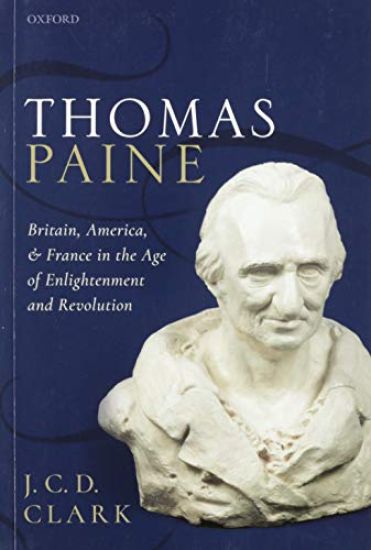
Thomas Paine (1737-1809) was England's greatest revolutionary: no other reformer was as actively involved in events of the scale of the American and French Revolutions, and none wrote such best-selling texts with the impact of Common Sense and Rights of Man. No one else combined the roles of activist and theorist, or did so in the 'age of revolutions', fundamental as it was to the emergence of the 'modern world'. But his fame meant that he was taken up and reinterpreted for current use by successive later commentators and politicians, so that the 'historic Paine' was too often obscured by the 'usable Paine'. J. C. D. Clark explains Paine against a revised background of early- and mid-eighteenth-century England. He argues that Paine knew and learned less about events in America and France than was once thought. He de-attributes a number of publications, and passages, hitherto assumed to have been Paine's own, and detaches him from a number of causes (including anti-slavery, women's emancipation, and class action) with which he was once associated. Paine's formerly obvious association with the early origin and long-term triumph of natural rights, republicanism, and democracy needs to be rethought. As a result, Professor Clark offers a picture of radical and reforming movements as more indebted to the initiatives of large numbers of men and women in fast-evolving situations than to the writings of a few individuals who framed lasting, and eventually triumphant, political discourses.
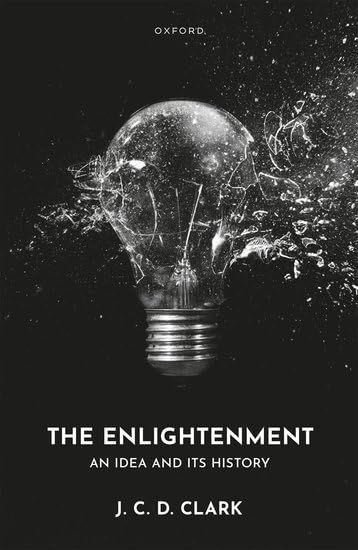
The Enlightenment

The Enlightenment

J. C. D. Clark

Oxford University Press
2024
sidottu
Enlightenment studies are currently in a state of flux, with unresolved arguments among its adherents about its dates, its locations, and the contents of the 'movement'. This book cuts the Gordian knot. There are many books claiming to explain the Enlightenment, but most assume that it was a thing. J. C. D. Clark shows what it actually was, namely a historiographical concept. Currently 'the Enlightenment' is a term widely accepted across popular culture and in a variety of academic disciplines, notably history, philosophy, political theory, political science, literary studies, and theology; Clark calls for a fundamental reconsideration in each. The Enlightenment: An Idea and Its History provides a critical historical analysis of the Enlightenment in England, Scotland, France, Germany, and the United States from c. 1650 to the present. It argues that the degree of commonality between social and intellectual movements in each--and, more broadly, between the five societies--has been overstated for polemical purposes. Clark shows that the concept of 'the Enlightenment' was not widely adopted in those societies until the mid-twentieth century; indeed, that it was unknown in the eighteenth. Without the concept, people at the time were unable to act in ways that would have created the Enlightenment as a coherent movement. Since the conventional account has held that the Enlightenment was a phenomenon, the idea could be used as a component of what has been called a 'civil religion': a summing up of the myths of origin, aims, and essential values of a society from which dissent is not permitted. An appreciation that it was instead a historiographical concept undermines, in turn, the idea that there was any great transition to what came to be called 'modernity'.
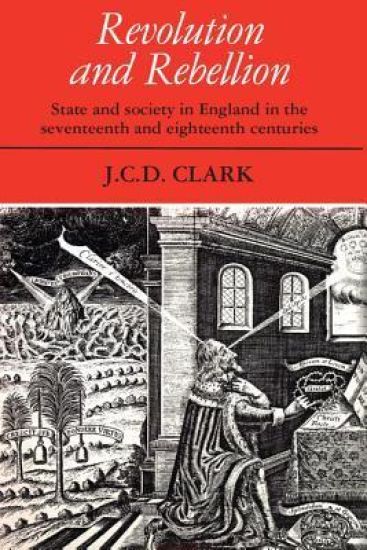
Revolution and Rebellion

Revolution and Rebellion

J. C. D. Clark

Cambridge University Press
1986
pokkari
This iconoclastic and satirical book provides a radical reconstruction of the recent historiography of the seventeenth and eighteenth centuries. It creates an alliance between those revisionist historians who have rewritten the received account of the origins of the English Civil War and those historians who have been rethinking the Hanoverian era. Revolution and Rebellion is thus a companion volume to the author’s English Society 1688–1832. The book counters the Marxist interpretation of the 1640s and the ‘English Revolution’ by developing our new understanding of the non-revolutionary nature of the world after 1660: it challenges the appropriateness of ‘revolution’ as a description of events like those of 1688, 1715, 1745, the American Revolution, the Industrial Revolution or the Reform Bill, drawing attention instead to the idea of ‘rebellion’. This is the first book so to link English history in the seventeenth and eighteenth centuries and it will be required reading for students and teachers of both eras.
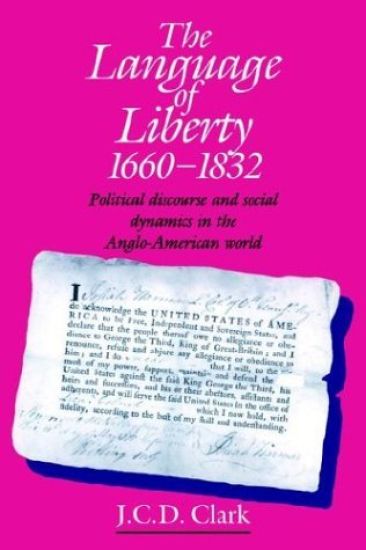
The Language of Liberty 1660–1832

The Language of Liberty 1660–1832

J. C. D. Clark

Cambridge University Press
1993
pokkari
This book creates a new framework for the political and intellectual relations between the British Isles and America in a momentous period which witnessed the formation of modern states on both sides of the Atlantic and the extinction of an Anglican, aristocratic and monarchical order. Jonathan Clark integrates evidence from law and religion to reveal how the dynamics of early modern societies were essentially denominational. In a study of British and American discourse, he shows how rival conceptions of liberty were expressed in the conflicts created by Protestant dissent’s hostility to an Anglican hegemony. The book argues that this model provides a key to collective acts of resistance to the established order throughout the period. The book’s final section focuses on the defining episode for British and American history, and shows the way in which the American Revolution can be understood as a war of religion.
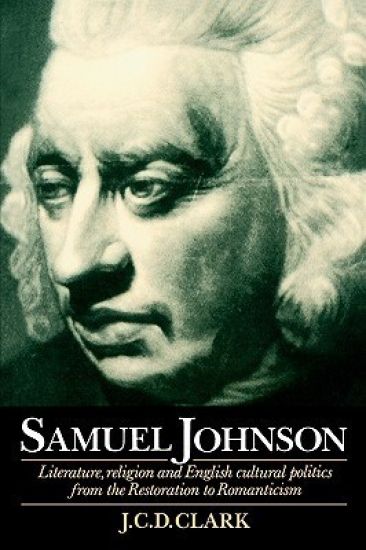
Samuel Johnson

Samuel Johnson

J. C. D. Clark

Cambridge University Press
1994
sidottu
This book offers the first analysis of the life and thought of the writer Samuel Johnson from an historian’s viewpoint, reversing the orthodoxy which has dominated the subject for over thirty years. Jonathan Clark, who has written extensively on English and American religion, ideology and politics in the eighteenth century, presents here a Johnson strikingly different from the apolitical, pragmatic and eccentric figure who emerges from the pages of most students of English literature. Johnson’s commitments and conflicts in religion and politics, obscured since Macaulay, are reconstructed; his role in the literary dynamics of his age is revealed against a new context for English cultural politics between the Restoration and the age of Romanticism. This book will therefore be of interest not only to Johnsonians but to historians of ideas and students of English literature.
Samuel Johnson

Samuel Johnson

J. C. D. Clark

Cambridge University Press
1994
pokkari
This book offers the first analysis of the life and thought of the writer Samuel Johnson from an historian’s viewpoint, reversing the orthodoxy which has dominated the subject for over thirty years. Jonathan Clark, who has written extensively on English and American religion, ideology and politics in the eighteenth century, presents here a Johnson strikingly different from the apolitical, pragmatic and eccentric figure who emerges from the pages of most students of English literature. Johnson’s commitments and conflicts in religion and politics, obscured since Macaulay, are reconstructed; his role in the literary dynamics of his age is revealed against a new context for English cultural politics between the Restoration and the age of Romanticism. This book will therefore be of interest not only to Johnsonians but to historians of ideas and students of English literature.
The Dynamics of Change

The Dynamics of Change

J. C. D. Clark

Cambridge University Press
2002
pokkari
It is often assumed that Sir Lewis Namier and Sir Herbert Butterfield demolished the ‘Whig interpretation of history’. In fact, much was allowed to remain standing by their failure to offer a new synthesis of English party politics. In this book Dr Clark provides the key component for such a new synthesis by a detailed exposition of the crisis of the 1750s, which was instrumental in the destruction of the party system and the emergence of new practices in the multi-factional world. The Court v. Country analysis of the politics of c. 1714–1760, still widely current, is refuted by a demonstration of the survival of the Whig and Tory parties of Queen Anne’s reign until the 1750s; the long debate about George III and the constitution is set in a new perspective; and major new insights are offered into the nature of party and party politics.
English Society, 1660–1832

English Society, 1660–1832

J. C. D. Clark

Cambridge University Press
2000
sidottu
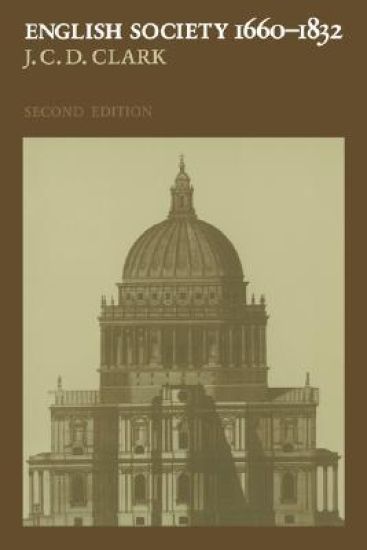
This is a revised and extensively rewritten edition of a work first published in 1985 as English Society 1688–1832. That book arrived at the opening of a new phase in English historiography, which questioned much of the received picture of English society as secular, modernising, contractarian, and middle class; it began the recovery of the ‘long eighteenth century’, the period which saw a form of state defined by the close relationship of monarchy, aristocracy and church. In particular, it placed religion at the centre of social and intellectual life, and used ecclesiastical history to illuminate many historical themes more commonly examined in a secular framework. In its updated form, this book reinforces these theses with new evidence, which extends its arguments into fresh areas of enquiry.
English Society, 1660–1832

English Society, 1660–1832

J. C. D. Clark

Cambridge University Press
2000
pokkari
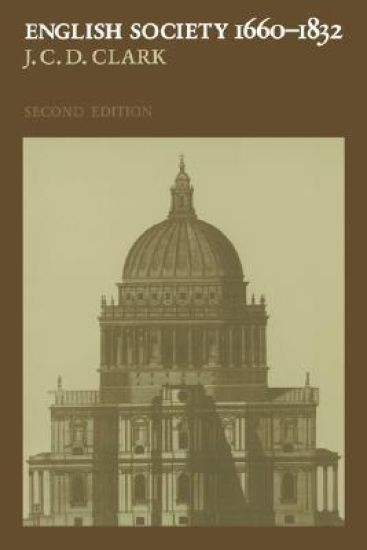
This is a revised and extensively rewritten edition of a work first published in 1985 as English Society 1688–1832. That book arrived at the opening of a new phase in English historiography, which questioned much of the received picture of English society as secular, modernising, contractarian, and middle class; it began the recovery of the ‘long eighteenth century’, the period which saw a form of state defined by the close relationship of monarchy, aristocracy and church. In particular, it placed religion at the centre of social and intellectual life, and used ecclesiastical history to illuminate many historical themes more commonly examined in a secular framework. In its updated form, this book reinforces these theses with new evidence, which extends its arguments into fresh areas of enquiry.