Kirjojen hintavertailu. Mukana 11 244 527 kirjaa ja 12 kauppaa.

Kirjahaku

Etsi kirjoja tekijän nimen, kirjan nimen tai ISBN:n perusteella.

4 kirjaa tekijältä J. C. Hallman

Say Anarcha

Say Anarcha

J. C. Hallman

HENRY HOLT COMPANY INC
2025
nidottu
For more than a century, Dr. J. Marion Sims was hailed as the “father of modern gynecology.” He founded a hospital in New York City and had a profitable career treating gentry and royalty in Europe, becoming one of the world’s first celebrity surgeons. Statues were built in his honor, but he wasn’t the hero he had made himself appear to be. Sims’s greatest medical accolade was his so-called cure for obstetric fistula, which did forever alter the path of women’s health. But the road to that treatment was several years of experimental surgeries - without anesthesia - on a young enslaved woman known as Anarcha. One medical text after another hailed Anarcha as the embodiment of the pivotal role that Sims played in the history of surgery. Decades later, a groundswell of women objecting to Sims’s legacy celebrated Anarcha as the “mother of gynecology.” Little was known about the woman herself. The written record would have us believe Anarcha disappeared; she did not. Through tenacious research, J. C. Hallman has unearthed the first evidence of Anarcha’s life that did not come from Sims’s suspect reports. Hallman reveals that after helping to spark a patient-centered model of care that continues to improve women’s lives today, Anarcha lived on as a midwife, nurse, and “doctor woman.” Say Anarcha excavates history, deconstructing the biographical smoke screen of a surgeon who has falsely been enshrined as a medical pioneer and bringing forth a heroic Black woman to her rightful place at the center of the creation story of modern women’s health care.
Say Anarcha

Say Anarcha

J. C. Hallman

HENRY HOLT COMPANY INC
2023
sidottu
In 1846, a young surgeon, J. Marion Sims (“The Father of Gynecology”), began several years of experimental surgeries on a young enslaved woman known as Anarcha (“The Mother of Gynecology”). This series of procedures—performed without anaesthesia and resulting in Anarcha’s so-called “cure”—forever altered the path of women’s health. Despite brutal practices and failed techniques, Sims proclaimed himself the curer of obstetric fistula, a horrific condition that had stymied the medical world for centuries. Parlaying supposed success to the founding of a new hospital in New York City—where he conducted additional dangerous experiments on Irish women—Sims went on to a profitable career treating gentry and royalty in Europe, becoming one of the world’s first celebrity surgeons. Medical text after medical text hailed Anarcha as a pivotal figure in the history of medicine, but little was recorded about the woman herself. Through extensive research, author J. C. Hallman has unearthed the first evidence ever found of Anarcha’s life that did not come from Sims’s suspect reports. With incredible tenacity, Hallman traced Anarcha’s path from her beginnings on a Southern plantation to the backyard clinic where she was subjected to scores of painful surgical experiments, to her years after in Richmond and New York City, and to her final resting place in a lonely Virginia forest. When Hallman first set out to find Anarcha, the world was just beginning to grapple with the history of white supremacy and its connection to racial health disparities exposed by COVID-19 and the disproportionate number of Black women who die while giving birth. In telling the stories of the “Mother” and “Father” of gynaecology, Say Anarcha excavates the history of a heroic enslaved woman and deconstructs the biographical smokescreen of a surgeon whom history has falsely enshrined as a heroic pioneer. Kin in spirit to The Immortal Life of Henrietta Lacks, Hallman’s dual biographical narratives tell a single story that corrects errors calcified in history and illuminates the sacrifice of a young woman who changed the world only to be forgotten by it—until now.
The Hospital for Bad Poets

The Hospital for Bad Poets

J. C. Hallman

Milkweed Editions
2009
pokkari
Full of cryptic twists, philosophical quandaries, and fabulist turns, J. C. Hallman's stories elucidate an intuitive understanding of the human condition. An alienated young man discovers the meaning of love in the pages of the biology textbook The Conjugal Cyst, and in the arms of two increasingly unavailable older nurses. As his father deserts his mother, who is subsequently encroached upon by his eligible English teacher, an adolescent boy constructs a wicker man in the garage, to repel successors and to summon his own adult identity. A mother and son witness a father's backyard fling with a disturbed neighbor who has pruned a leafy cave out of the dividing hedge. A young couple's romantic consummation is repeatedly interrupted by the intrusion of a narrator commenting on the phenomenon of eroticism. Richly allusive, these literate and literary stories explore modern riddles with no easy answers.
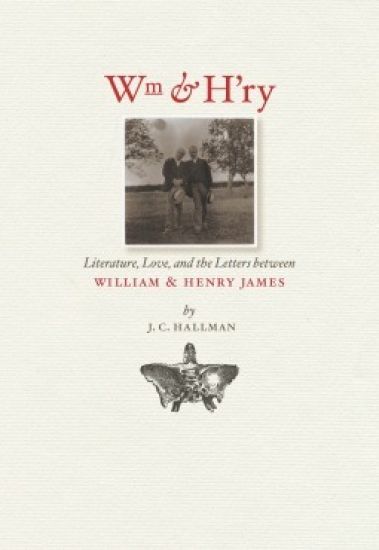
Wm & H'ry

Wm & H'ry

J. C. Hallman

University of Iowa Press
2013
nidottu
Readers generally know only one of the two famous James brothers. Literary types know Henry James; psychologists, philosophers, and religion scholars know William James. In reality, the brothers’ minds were inseparable, as the more than eight hundred letters they wrote to each other reveal. In this book, J. C. Hallman mines the letters for mutual affection and influence, painting a moving portrait of a relationship between two extraordinary men. Deeply intimate, sometimes antagonistic, rife with wit, and on the cutting edge of art and science, the letters portray the brothers’ relationship and measure the manner in which their dialogue helped shape, through the influence of their literary and intellectual output, the philosophy, science, and literature of the century that followed.William and Henry James served as each other’s muse and critic. For instance, the event of the death of Mrs. Sands illustrates what H’ry never stated: even if the “matter” of his fiction was light, the minds behind it lived and died as though it was very heavy indeed. He seemed to best understand this himself only after Wm fully fleshed out his system. “I can’t now explain save by the very fact of the spell itself . . . that [Pragmatism] cast upon me,” H’ry wrote in 1907. “All my life I have . . . unconsciously pragmatised.”Wm was never able to be quite so gracious in return. In 1868, he lashed out at the “every day” elements of two of H’ry’s early stories, and then explained: “I have uttered this long rigmarole in a dogmatic manner, as one speaks, to himself, but of course you will use it merely as a mass to react against in your own way, so that it may serve you some good purpose.” He believed he was doing H’ry a service as he criticized a growing tendency toward “over-refinement” or “curliness” of style. “I think it ought to be of use to you,” he wrote in 1872, “to have any detailed criticism fm even a wrong judge, and you don’t get much fm. any one else.” For the most part, H’ry agreed. “I hope you will continue to give me, when you can, your free impression of my performance. It is a great thing to have some one write to one of one’s things as if one were a 3d person & you are the only individual who will do this.