Kirjojen hintavertailu. Mukana 11 244 527 kirjaa ja 12 kauppaa.

Kirjahaku

Etsi kirjoja tekijän nimen, kirjan nimen tai ISBN:n perusteella.

8 kirjaa tekijältä J. Fuller

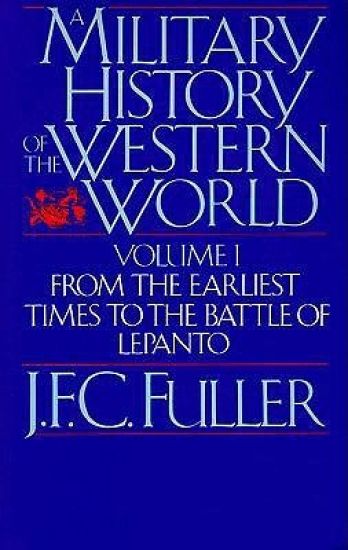
A Military History Of The Western World, Vol. I
Major General J. F. C. Fuller, a pioneer of mechanized warfare in Great Britain, was one of this century's most renowned military strategists and historians. In this magisterial work he spans military history from the Greeks to the end of World War II, describing tactics, battle lines, the day-to-day struggles while always relating affairs on the field to the larger questions of social, political, and economic change in Western civilization. A masterpiece of scholarship and biting prose, these volumes are available for the first time in a handsome trade paperback edition.
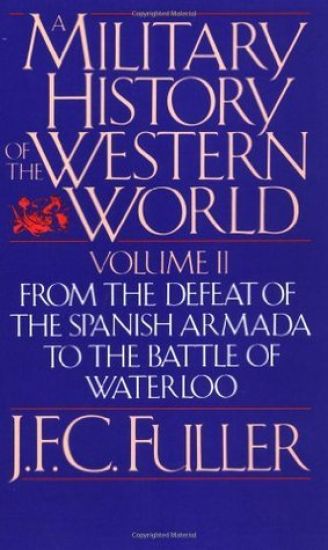
A Military History Of The Western World, Vol. II
Major General J. F. C. Fuller, a pioneer of mechanized warfare in Great Britain, was one of this century's most renowned military strategists and historians. In this magisterial work he spans military history from the Greeks to the end of World War II, describing tactics, battle lines, the day-to-day struggles while always relating affairs on the field to the larger questions of social, political, and economic change in Western civilization. A masterpiece of scholarship and biting prose, these volumes are available for the first time in a handsome trade paperback edition. This second volume describes the 16th-century rivalry between England and Spain, the Thirty Years War, struggle between France and England, American Revolutionary War, and the rise and fall of Napoleon.
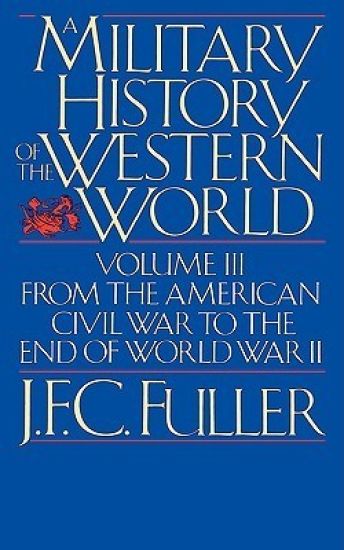
A Military History Of The Western World, Vol. III
Major General J. F. C. Fuller, a pioneer of mechanized warfare in Great Britain, was one of this century's most renowned military strategists and historians. In this magisterial work he spans military history from the Greeks to the end of World War II, describing tactics, battle lines, the day-to-day struggles while always relating affairs on the field to the larger questions of social, political, and economic change in Western civilization. A masterpiece of scholarship and biting prose, these volumes are available for the first time in a handsome trade paperback edition. This third volume outlines the age of industrialism and the rise of American imperialism, the Civil War, expansionist policies of Japan and Russia, and World Wars I and II, offering fresh insights into the relationship between military history and social change.
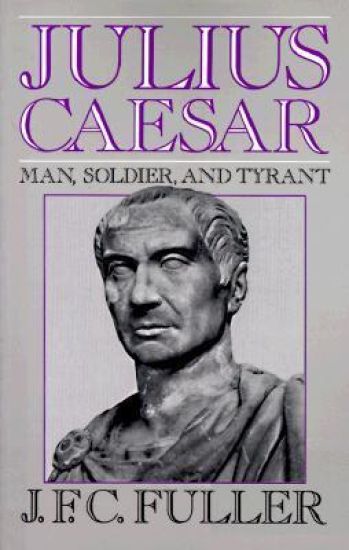
Julius Caesar

Julius Caesar

J. Fuller

Da Capo Press Inc
1991
pokkari
Since the Renaissance, Julius Caesar has been idolized as a superman. Classical sources, however, present a far less exalted being. As General Fuller writes, Caesar was "an unscrupulous demagogue whose one aim was power, and a general who could not only win brilliant victories but also commit dismal blunders.... It is reasonable to suspect that, at times, Caesar was not responsible for his actions, and toward the end of his life, not altogether sane." There is not doubt that Caesar was an extraordinary man." But Fuller points out that he was extraordinary for his reckless ambition, matchless daring, and ruthless tyranny, rather than for his skills as a military comander. Caesar continually had to extricate himself from results of mistakes of judgement. His unnecessary Alexandrian War, his close call at Thapsus, and his seemingly unpremeditated Gallic conquest are just a few of Fuller's many examples.And in telling Caesar's history, Fuller illuminates a century of Roman history as well. Aided by maps of Caesar's principal battles and diagrams of many of his weapons, Fuller brings to life Caesar's wars, his armies, his equipment, and his methods. Brilliant in design and impressive in scope, Julius Caesar clarifies how the military, political, and economic aspects of the Roman Republic worked together to produce a man whose name has come down to us as a synonym for absolute authority.
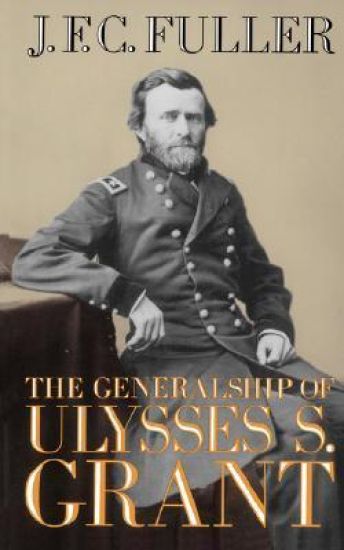
The Generalship Of Ulysses S. Grant

The Generalship Of Ulysses S. Grant

J. Fuller

Da Capo Press Inc
1991
pokkari
An analysis of one of America's greatest soldiers which refutes the notion that Grant relied only on brute force to achieve his victories, demonstrating instead the mastery of mobility, surprise, judgement, and strategic co-ordination that made Grant the premier Civil War general.
The Conduct Of War, 1789-1961

The Conduct Of War, 1789-1961

J. Fuller

Da Capo Press Inc
1992
pokkari
The Conduct of War is the study of the way in which political and economical changes since the French Revolution have altered both the techniques and the aims of war, and its theme is that war which is not fought in pursuance of a clear feasible policy will always end in disaster. Fuller begins by examining the limited wars that were possible in the age of absolute rulers, and the destructive impact of revolutionary and democratic government on this state of affairs. Not only did the new armies of the Napoleonic age grow immensely in size and military power the aims for which war was fought began to change. It was no longer a question of forcing the enemy government to alter its policy in specific ways the purpose of war became the destruction of that government and the absolute surrender of its people. Such a concept of war, Fuller contends, is a disastrous return to barbarism. Each war leads inevitably to a state of instability which will persist and worsen until a new conflict breaks out. Fuller was an ardent admirer of Clausewitz's On War, and in his book, he develops Clausewitz's theories of limited war to show their applicability to the history of modern warfare. Although some of Fuller's more extreme political views are now discredited, The Conduct of War remains one of the seminal works of 20th-century military theory.
The Second World War, 1939-45

The Second World War, 1939-45

J. Fuller

Da Capo Press Inc
1993
pokkari
Fuller's biographer, Bryan Holden Reid, has described The Second World War as "an analysis of the breakdown, as Fuller saw it, of the vital relationship between grand strategy and grand tactics- the end and the means...Too often books on the Second world War detail the movements of formations about the battlefield and give space to strategical commentary without assessing the manner in which the war was actually fought. On the tactical level, The Second World War can still be read with profit." Fuller himself characterized the book, however, as "in part a least a psychological study of the folly of man." Expertly combining detailed military history and analysis with Clausewitzian insights based on his own theories of warfare, Fuller produced a modern military masterpiece in The Second World War.
Armament And History

Armament And History

J. Fuller

Da Capo Press Inc
1998
pokkari
Although skill, leadership, strategy, and number of forces have been important factors in battles, armaments have played the most decisive role in determining ultimate military victory. Entranced by the power and precision of armaments, man has continuously invented faster, more accurate, and more devastating weapons, from the javelin, stone axe, sword, and the arrow to the cannon, musket, rifle, tank, super-fortress, and missile. In this study of the influence of armaments on history, J.F.C. Fuller shows how the inventive genius of man can potentially obliterate his sense of moral values and destroy civilization. Divided into armament epochs,Ages of Valour, Chivalry, Gunpowder, Steam, Oil, and Atomic Energy, Armament and History examines the most influential military innovations of each period as well as the key leaders (including Alexander, Caesar, Gustavus Adolphus, and Napoleon) who skillfully employed these weapons. Although the author acknowledges that war cannot be eliminated entirely, he urges man to impose restrictions on warfare before society descends into a second Dark Age. Completed immediately after the bombings of Hiroshima and Nagasaki,chilling examples of mass destruction caused by armaments,this impassioned work remains relevant more than a half-century later.