Kirjojen hintavertailu. Mukana 11 627 362 kirjaa ja 12 kauppaa.

Kirjahaku

Etsi kirjoja tekijän nimen, kirjan nimen tai ISBN:n perusteella.

9 kirjaa tekijältä J. L. Heilbron

H. G. J. Moseley

H. G. J. Moseley

J. L. Heilbron

University of California Press
2022
pokkari
H. G. J. Moseley (1887 - 1915), the son and grandson of distinguished English scientists, a favorite student of Rutherford's and a colleague of Bohr's, completed researches of capital importance for atomic physics just before the outbreak of World War I. He was urged to devote himself to scientific war work in England, but his duty as he aw it was to join the battle. He procured himself command of a signaling section in the Royal Engineers, a speedy trip to Gallipoli, and death in the bloody battle for Sari Bair. In this work the author presents a full record of Moseley's brief and brilliant career. It gives instructive detail about Eton, which, as Heilbron shows, offered more opportunity for acquiring a foundation in science than its emphasis on Greek and games would suggest; about Oxford, a scientific backwater in Moseley's time; and about Rutherford's thriving laboratory at the University of Manchester. It describes in detail Moseley's apprenticeship in experimental physics, his growth under the tight supervision of Manchester, and his classical independent work on X rays, which almost certainly would have brought him the Nobel Prize. An epilogue sketches the chief results secured by other in the decade after his death in the research lines he opened. Heilbron's account is informed by an unequaled acquaintance with the relevant manuscript material, including all of Moseley's known correspondence (most of which he discovered) and the paper of colleagues such as Bohr, W. H. Bragg, G. H. Darwin, F. A. Lindemann (Lord Cherwell), Rutherford, Henry Tizard, Georges Ubrain, and G. von Hevesy. An important feature of the book is the publication, in extenso, of Moseley's surviving correspondence. These letters are not only a rich source for historians of science and of education. Tehy are also splendid reading: well-written records of the maturing of a strong mind, pithy commentaries on the Establishment as Moseley saw it, and exciting notices of the course of one of the most important researches in modern physical science. This title is part of UC Press's Voices Revived program, which commemorates University of California Press's mission to seek out and cultivate the brightest minds and give them voice, reach, and impact. Drawing on a backlist dating to 1893, Voices Revived makes high-quality, peer-reviewed scholarship accessible once again using print-on-demand technology. This title was originally published in 1974.

H. G. J. Moseley

H. G. J. Moseley

J. L. Heilbron

University of California Press
2022
sidottu
H. G. J. Moseley (1887 - 1915), the son and grandson of distinguished English scientists, a favorite student of Rutherford's and a colleague of Bohr's, completed researches of capital importance for atomic physics just before the outbreak of World War I. He was urged to devote himself to scientific war work in England, but his duty as he aw it was to join the battle. He procured himself command of a signaling section in the Royal Engineers, a speedy trip to Gallipoli, and death in the bloody battle for Sari Bair. In this work the author presents a full record of Moseley's brief and brilliant career. It gives instructive detail about Eton, which, as Heilbron shows, offered more opportunity for acquiring a foundation in science than its emphasis on Greek and games would suggest; about Oxford, a scientific backwater in Moseley's time; and about Rutherford's thriving laboratory at the University of Manchester. It describes in detail Moseley's apprenticeship in experimental physics, his growth under the tight supervision of Manchester, and his classical independent work on X rays, which almost certainly would have brought him the Nobel Prize. An epilogue sketches the chief results secured by other in the decade after his death in the research lines he opened. Heilbron's account is informed by an unequaled acquaintance with the relevant manuscript material, including all of Moseley's known correspondence (most of which he discovered) and the paper of colleagues such as Bohr, W. H. Bragg, G. H. Darwin, F. A. Lindemann (Lord Cherwell), Rutherford, Henry Tizard, Georges Ubrain, and G. von Hevesy. An important feature of the book is the publication, in extenso, of Moseley's surviving correspondence. These letters are not only a rich source for historians of science and of education. Tehy are also splendid reading: well-written records of the maturing of a strong mind, pithy commentaries on the Establishment as Moseley saw it, and exciting notices of the course of one of the most important researches in modern physical science. This title is part of UC Press's Voices Revived program, which commemorates University of California Press's mission to seek out and cultivate the brightest minds and give them voice, reach, and impact. Drawing on a backlist dating to 1893, Voices Revived makes high-quality, peer-reviewed scholarship accessible once again using print-on-demand technology. This title was originally published in 1974.
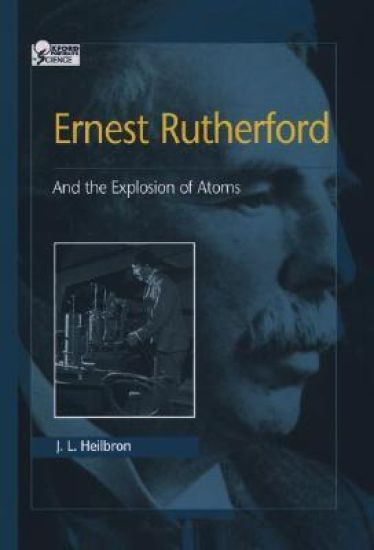
Ernest Rutherford

Ernest Rutherford

J. L. Heilbron

OXFORD UNIVERSITY PRESS INC
2003
sidottu
A biography of the scientist considered to be the father of nuclear physics for his development of the nuclear theory of the atom in 1911 and discovery of alpha and beta rays and protons.
Elements of Early Modern Physics

Elements of Early Modern Physics

J. L. Heilbron

University of California Press
2022
pokkari
Elements of Early Modern Physics comprises the two long introductory chapters of J. L. Heilbron's monumental work Electricity in the 17th and 18th Centuries: A Study of Early Modern Physics plus a concluding summary of the remaining chapters. Heilbron opens with a presentation of the general principles of physical theory and a description of the institutional frameworks in which physics were cultivated in the seventeenth and eighteenth centuries. He argues that the single most important contributor to physics in the seventeenth century was the Catholic Church. In the first half of the eighteenth century, Cartesian and Newtonian physicists disagreed over principles but thought in similar terms and cultivated the same sort of qualitative natural philosophy. Work towards an exact physics, which took on important dimensions after 1770, confounded the programs of both. Heilbron shows that by attending too closely to the Copernican revolution and the confrontation of great philosophical systems, historians have seriously misjudged the character of early modern science. This title is part of UC Press's Voices Revived program, which commemorates University of California Press’s mission to seek out and cultivate the brightest minds and give them voice, reach, and impact. Drawing on a backlist dating to 1893, Voices Revived makes high-quality, peer-reviewed scholarship accessible once again using print-on-demand technology. This title was originally published in 1982.
Electricity in the 17th and 18th Centuries

Electricity in the 17th and 18th Centuries

J. L. Heilbron

University of California Press
2022
pokkari
Electricity in the 17th and 18th Centuries: A Study of Early Modern Physics examines the development of electricity during the Scientific Revolution, offering a comprehensive analysis of its evolving understanding. The study unfolds in three stages: the first, until 1700, was marked by narrow exploration and premature attempts to systematize electrical phenomena; the second, spanning the early 18th century, saw the discovery of new phenomena that couldn't be explained by existing philosophies, with experimental philosophers at the forefront; and the third stage, by the late 18th century, saw electricity being quantified, particularly in the realm of electrostatics. The book provides an insightful account of the transition from theoretical abstraction to practical experimentation, highlighting the slow and incremental progress made by scientists in understanding electricity, culminating in the work of figures like Franklin, Cavendish, and Coulomb. The book delves into the institutional and intellectual frameworks that shaped the study of electricity during these centuries, emphasizing the significant role of the Catholic Church, particularly the Jesuits, in fostering experimental physics. It explores the challenges early electricians faced, such as inconsistent results caused by external factors like humidity and the peculiarities of materials like glass and gems. The author also scrutinizes the development of electrical theories, including the transition from effluvial models to more modern, quantifiable concepts like charge, capacity, and tension. By analyzing the Leyden jar and other key apparatus, the book traces how these tools helped clarify the nature of electricity, contributing to the eventual acceptance of Newtonian approaches to electrical theory. This title is part of UC Press's Voices Revived program, which commemorates University of California Press’s mission to seek out and cultivate the brightest minds and give them voice, reach, and impact. Drawing on a backlist dating to 1893, Voices Revived makes high-quality, peer-reviewed scholarship accessible once again using print-on-demand technology. This title was originally published in 1979.
Elements of Early Modern Physics

Elements of Early Modern Physics

J. L. Heilbron

University of California Press
2022
sidottu
Elements of Early Modern Physics comprises the two long introductory chapters of J. L. Heilbron's monumental work Electricity in the 17th and 18th Centuries: A Study of Early Modern Physics plus a concluding summary of the remaining chapters. Heilbron opens with a presentation of the general principles of physical theory and a description of the institutional frameworks in which physics were cultivated in the seventeenth and eighteenth centuries. He argues that the single most important contributor to physics in the seventeenth century was the Catholic Church. In the first half of the eighteenth century, Cartesian and Newtonian physicists disagreed over principles but thought in similar terms and cultivated the same sort of qualitative natural philosophy. Work towards an exact physics, which took on important dimensions after 1770, confounded the programs of both. Heilbron shows that by attending too closely to the Copernican revolution and the confrontation of great philosophical systems, historians have seriously misjudged the character of early modern science. This title is part of UC Press's Voices Revived program, which commemorates University of California Press’s mission to seek out and cultivate the brightest minds and give them voice, reach, and impact. Drawing on a backlist dating to 1893, Voices Revived makes high-quality, peer-reviewed scholarship accessible once again using print-on-demand technology. This title was originally published in 1982.
Electricity in the 17th and 18th Centuries

Electricity in the 17th and 18th Centuries

J. L. Heilbron

University of California Press
2022
sidottu
Electricity in the 17th and 18th Centuries: A Study of Early Modern Physics examines the development of electricity during the Scientific Revolution, offering a comprehensive analysis of its evolving understanding. The study unfolds in three stages: the first, until 1700, was marked by narrow exploration and premature attempts to systematize electrical phenomena; the second, spanning the early 18th century, saw the discovery of new phenomena that couldn't be explained by existing philosophies, with experimental philosophers at the forefront; and the third stage, by the late 18th century, saw electricity being quantified, particularly in the realm of electrostatics. The book provides an insightful account of the transition from theoretical abstraction to practical experimentation, highlighting the slow and incremental progress made by scientists in understanding electricity, culminating in the work of figures like Franklin, Cavendish, and Coulomb. The book delves into the institutional and intellectual frameworks that shaped the study of electricity during these centuries, emphasizing the significant role of the Catholic Church, particularly the Jesuits, in fostering experimental physics. It explores the challenges early electricians faced, such as inconsistent results caused by external factors like humidity and the peculiarities of materials like glass and gems. The author also scrutinizes the development of electrical theories, including the transition from effluvial models to more modern, quantifiable concepts like charge, capacity, and tension. By analyzing the Leyden jar and other key apparatus, the book traces how these tools helped clarify the nature of electricity, contributing to the eventual acceptance of Newtonian approaches to electrical theory. This title is part of UC Press's Voices Revived program, which commemorates University of California Press’s mission to seek out and cultivate the brightest minds and give them voice, reach, and impact. Drawing on a backlist dating to 1893, Voices Revived makes high-quality, peer-reviewed scholarship accessible once again using print-on-demand technology. This title was originally published in 1979.
The Dilemmas of an Upright Man

The Dilemmas of an Upright Man

J. L. Heilbron

Harvard University Press
2000
nidottu
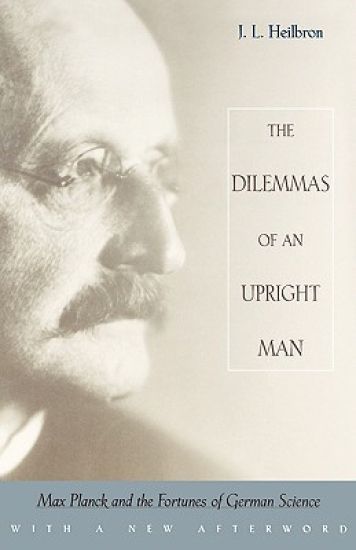
In this moving and eloquent portrait, John Heilbron describes how the founder of quantum theory rose to the pinnacle of German science. With great understanding, he shows how Max Planck suffered morally and intellectually as his lifelong habit of service to his country and to physics was confronted by the realities of World War I and the brutalities of the Third Reich.In an afterword written for this edition, Heilbron weighs the recurring questions among historians and scientists about the costs to others, and to Planck himself, of the painful choices he faced in attempting to build an “ark” to carry science and scientists through the storms of Nazism.
The Sun in the Church

The Sun in the Church

J. L. Heilbron

Harvard University Press
2001
nidottu
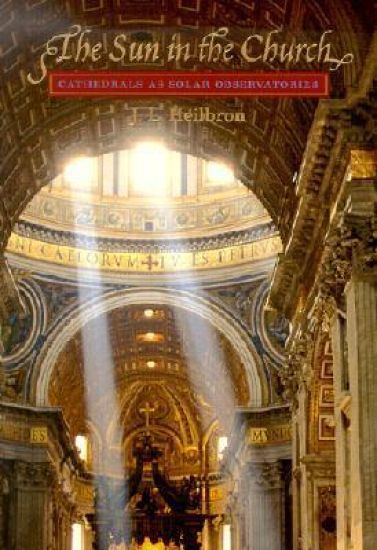
Between 1650 and 1750, four Catholic churches were the best solar observatories in the world. Built to fix an unquestionable date for Easter, they also housed instruments that threw light on the disputed geometry of the solar system, and so, within sight of the altar, subverted Church doctrine about the order of the universe.A tale of politically canny astronomers and cardinals with a taste for mathematics, The Sun in the Church tells how these observatories came to be, how they worked, and what they accomplished. It describes Galileo's political overreaching, his subsequent trial for heresy, and his slow and steady rehabilitation in the eyes of the Catholic Church. And it offers an enlightening perspective on astronomy, Church history, and religious architecture, as well as an analysis of measurements testing the limits of attainable accuracy, undertaken with rudimentary means and extraordinary zeal. Above all, the book illuminates the niches protected and financed by the Catholic Church in which science and mathematics thrived.Superbly written, The Sun in the Church provides a magnificent corrective to long-standing oversimplified accounts of the hostility between science and religion.