Kirjojen hintavertailu. Mukana 12 374 334 kirjaa ja 12 kauppaa.

Kirjahaku

Etsi kirjoja tekijän nimen, kirjan nimen tai ISBN:n perusteella.

3 kirjaa tekijältä J. P. Park

A New Middle Kingdom

A New Middle Kingdom

J. P. Park

University of Washington Press
2018
sidottu
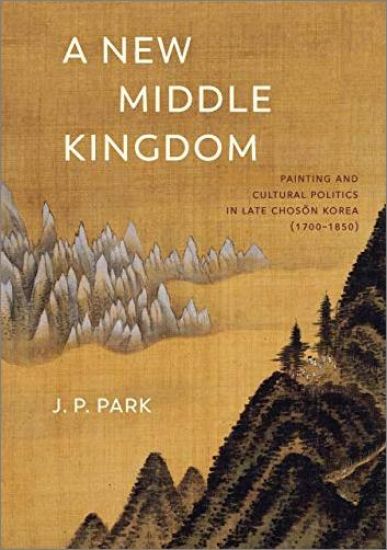
Historians have claimed that when social stability returned to Korea after devastating invasions by the Japanese and Manchus around the turn of the seventeenth century, the late Choson dynasty was a period of unprecedented economic and cultural renaissance, in which prosperity manifested itself in new programs and styles of visual art. A New Middle Kingdom questions this belief, claiming instead that true-view landscape and genre paintings were likely adopted to propagandize social harmony under Choson rule and to justify the status, wealth, and land grabs of the ruling class. This book also documents the popularity of art books from China and their misunderstanding by Koreans and, most controversially, Korean enthusiasm for artistic programs from Edo Japan, thus challenging academic stereotypes and nationalistic tendencies in the scholarship about the Choson period. As the first truly interdisciplinary study of Korean art, A New Middle Kingdom points to realities of late Choson society that its visual art seemed to hide and deny.A William Sangki and Nanhee Min Hahn Book
Art by the Book

Art by the Book

J. P. Park

University of Washington Press
2012
sidottu
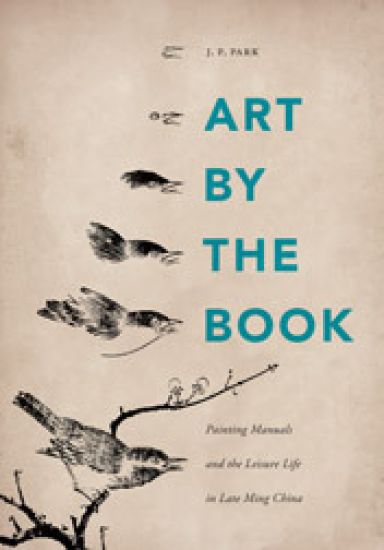
Sometime before 1579, Zhou Lujing, a professional writer living in a bustling commercial town in southeastern China, published a series of lavishly illustrated books, which constituted the first multigenre painting manuals in Chinese history. Their popularity was immediate and their contents and format were widely reprinted and disseminated in a number of contemporary publications. Focusing on Zhou's work, Art by the Book describes how such publications accommodated the cultural taste and demands of the general public, and shows how painting manuals functioned as a form in which everything from icons of popular culture to graphic or literary cliche was presented to both gratify and shape the sensibilities of a growing reading public. As a special commodity of early modern China, when cultural standing was measured by a person's command of literati taste and lore, painting manuals provided nonelite readers with a device for enhancing social capital.
The Forger's Creed

The Forger's Creed

J. P. Park

University of California Press
2025
sidottu
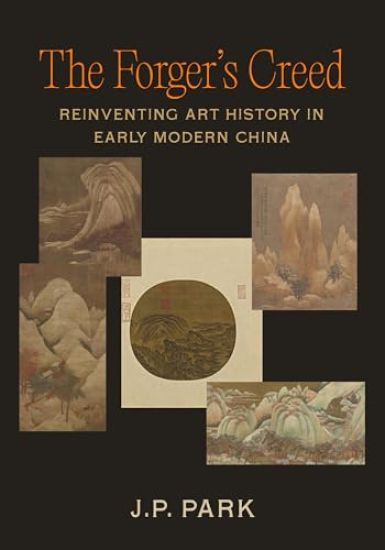
The first in-depth look at the history and legacies of forgeries in Chinese art. In 1634, scholar-official Zhang Taijie (b. ca. 1588) published a book titled A Record of Treasured Paintings (C. Baohui lu), presenting an extensive catalogue of a purportedly vast painting collection he claimed to have built. However, the entire book is Zhang's meticulously crafted forgery; he even forged paintings to match the documentation, and profited from trading them. Furthermore, the book intriguingly mirrors unfounded art-historical claims of its time. Prominent figures like Dong Qichang (1555–1636) made entirely fabricated arguments to assert legitimate lineages in Chinese art, designed to create a fictionalized history shaped by preferred beliefs rather than reality. While presenting the first comprehensive exploration of various forgery practices in early modern China—fabricated texts, forged paintings, and fictitious art history—The Forger's Creed examines the cultural, social, and genealogical desires, anxieties, and tensions prevalent in early modern China. Through thorough scrutiny of the historical irregularities introduced by these forgeries, J. P. Park highlights a peculiar and paradoxical phenomenon wherein forgeries transform into legitimate materials across Chinese history.