Kirjojen hintavertailu. Mukana 12 595 353 kirjaa ja 12 kauppaa.

Kirjahaku

Etsi kirjoja tekijän nimen, kirjan nimen tai ISBN:n perusteella.

5 kirjaa tekijältä J. Stephen Lansing

Perfect Order

Perfect Order

J. Stephen Lansing

Princeton University Press
2006
sidottu
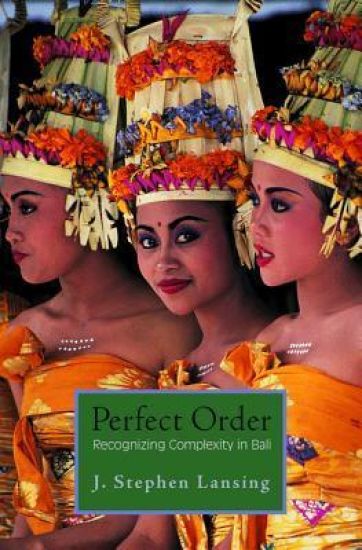
Along rivers in Bali, small groups of farmers meet regularly in water temples to manage their irrigation systems. They have done so for a thousand years. Over the centuries, water temple networks have expanded to manage the ecology of rice terraces at the scale of whole watersheds. Although each group focuses on its own problems, a global solution nonetheless emerges that optimizes irrigation flows for everyone. Did someone have to design Bali's water temple networks, or could they have emerged from a self-organizing process? Perfect Order--a groundbreaking work at the nexus of conservation, complexity theory, and anthropology--describes a series of fieldwork projects triggered by this question, ranging from the archaeology of the water temples to their ecological functions and their place in Balinese cosmology. Stephen Lansing shows that the temple networks are fragile, vulnerable to the cross-currents produced by competition among male descent groups. But the feminine rites of water temples mirror the farmers' awareness that when they act in unison, small miracles of order occur regularly, as the jewel-like perfection of the rice terraces produces general prosperity. Much of this is barely visible from within the horizons of Western social theory. The fruit of a decade of multidisciplinary research, this absorbing book shows that even as researchers probe the foundations of cooperation in the water temple networks, the very existence of the traditional farming techniques they represent is threatened by large-scale development projects.
Perfect Order

Perfect Order

J. Stephen Lansing

Princeton University Press
2012
pokkari
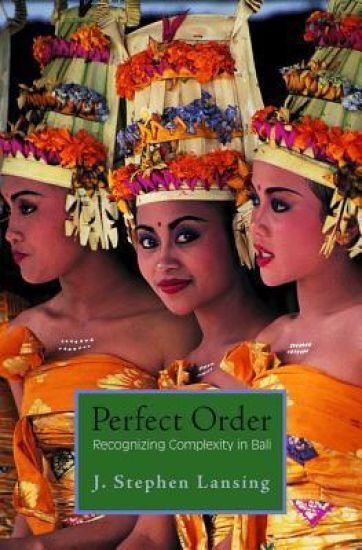
Along rivers in Bali, small groups of farmers meet regularly in water temples to manage their irrigation systems. They have done so for a thousand years. Over the centuries, water temple networks have expanded to manage the ecology of rice terraces at the scale of whole watersheds. Although each group focuses on its own problems, a global solution nonetheless emerges that optimizes irrigation flows for everyone. Did someone have to design Bali's water temple networks, or could they have emerged from a self-organizing process? Perfect Order--a groundbreaking work at the nexus of conservation, complexity theory, and anthropology--describes a series of fieldwork projects triggered by this question, ranging from the archaeology of the water temples to their ecological functions and their place in Balinese cosmology. Stephen Lansing shows that the temple networks are fragile, vulnerable to the cross-currents produced by competition among male descent groups. But the feminine rites of water temples mirror the farmers' awareness that when they act in unison, small miracles of order occur regularly, as the jewel-like perfection of the rice terraces produces general prosperity. Much of this is barely visible from within the horizons of Western social theory. The fruit of a decade of multidisciplinary research, this absorbing book shows that even as researchers probe the foundations of cooperation in the water temple networks, the very existence of the traditional farming techniques they represent is threatened by large-scale development projects.

Priests and Programmers

Priests and Programmers

J. Stephen Lansing; William C. Clark

Princeton University Press
2007
pokkari
For the Balinese, the whole of nature is a perpetual resource: through centuries of carefully directed labor, the engineered landscape of the island's rice terraces has taken shape. According to Stephen Lansing, the need for effective cooperation in water management links thousands of farmers together in hierarchies of productive relationships that span entire watersheds. Lansing describes the network of water temples that once managed the flow of irrigation water in the name of the Goddess of the Crater Lake. Using the techniques of ecological simulation modeling as well as cultural and historical analysis, Lansing argues that the symbolic system of temple rituals is not merely a reflection of utilitarian constraints but also a basic ingredient in the organization of production.
Islands of Order

Islands of Order

J. Stephen Lansing; Murray P. Cox; Michael R. Dove

PRINCETON UNIVERSITY PRESS
2019
sidottu
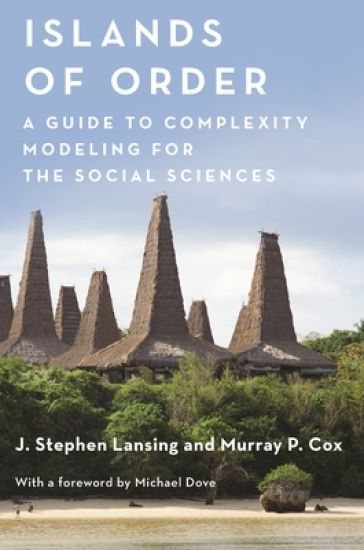
Two pioneering anthropologists reveal how complexity science can help us better understand how societies change over timeOver the past two decades, anthropologist J. Stephen Lansing and geneticist Murray Cox have explored dozens of villages on the islands of the Malay Archipelago, combining ethnographic research with research into genetic and linguistic markers to shed light on how these societies change over time. Islands of Order draws on their pioneering fieldwork to show how the science of complexity can be used to better understand unstable dynamics in culture, language, cooperation, and the emergence of hierarchies.Complexity science has opened exciting new vistas in physics and biology, but poses challenges for social scientists. What triggers fundamental, discontinuous social change? And what brings stable patterns—islands of order—into existence? Lansing and Cox begin with an incisive and accessible introduction to models of change, from simple random drift to coupled interactions, phase transitions, co-phylogenies, and adaptive landscapes. Then they take readers on a series of journeys to the islands of the Indo-Pacific to demonstrate how social scientists can harness these powerful tools to discover out-of-equilibrium social dynamics. Lansing and Cox address empirical questions surrounding the colonization of the Pacific, the relationship of language to culture, the emergence and disappearance of male and female hierarchies, and more.Unlocking new possibilities for the social sciences, Islands of Order is accompanied by an interactive companion website that enables readers to explore the models described in the book.
Islands of Order

Islands of Order

J. Stephen Lansing; Murray P. Cox; Michael R. Dove

Princeton University Press
2019
pokkari
Two pioneering anthropologists reveal how complexity science can help us better understand how societies change over timeOver the past two decades, anthropologist J. Stephen Lansing and geneticist Murray Cox have explored dozens of villages on the islands of the Malay Archipelago, combining ethnographic research with research into genetic and linguistic markers to shed light on how these societies change over time. Islands of Order draws on their pioneering fieldwork to show how the science of complexity can be used to better understand unstable dynamics in culture, language, cooperation, and the emergence of hierarchies.Complexity science has opened exciting new vistas in physics and biology, but poses challenges for social scientists. What triggers fundamental, discontinuous social change? And what brings stable patterns—islands of order—into existence? Lansing and Cox begin with an incisive and accessible introduction to models of change, from simple random drift to coupled interactions, phase transitions, co-phylogenies, and adaptive landscapes. Then they take readers on a series of journeys to the islands of the Indo-Pacific to demonstrate how social scientists can harness these powerful tools to discover out-of-equilibrium social dynamics. Lansing and Cox address empirical questions surrounding the colonization of the Pacific, the relationship of language to culture, the emergence and disappearance of male and female hierarchies, and more.Unlocking new possibilities for the social sciences, Islands of Order is accompanied by an interactive companion website that enables readers to explore the models described in the book.