Kirjojen hintavertailu. Mukana 11 699 587 kirjaa ja 12 kauppaa.

Kirjahaku

Etsi kirjoja tekijän nimen, kirjan nimen tai ISBN:n perusteella.

3 kirjaa tekijältä J.C. Das

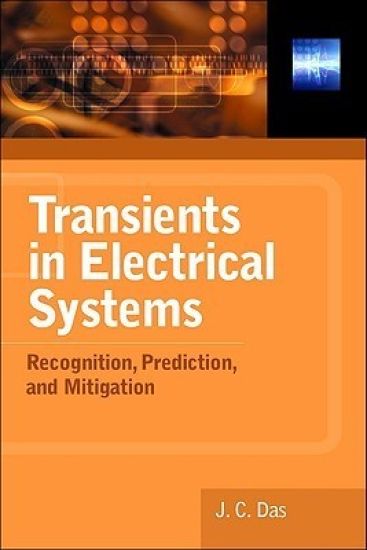
Transients in Electrical Systems: Analysis, Recognition, and Mitigation
Publisher's Note: Products purchased from Third Party sellers are not guaranteed by the publisher for quality, authenticity, or access to any online entitlements included with the product.Detect and Mitigate Transients in Electrical SystemsThis practical guide explains how to identify the origin of disturbances in electrical systems and analyze them for effective mitigation and control. Transients in Electrical Systems considers all transient frequencies, ranging from 0.1 Hz to 50 MHz, and discusses transmission line and cable modeling as well as frequency dependent behavior. Results of EMTP simulations, solved examples, and detailed equations are included in this comprehensive resource.Transients in Electrical Systems covers:Transients in lumped circuitsControl systemsLightning strokes, shielding, and backflashoversTransients of shunt capacitor banksSwitching transients and temporary overvoltagesCurrent interruption in AC circuitsSymmetrical and unsymmetrical short-circuit currentsTransient behavior of synchronous generators, induction and synchronous motors, and transformersPower electronic equipmentFlicker, bus, transfer, and torsional vibrationsInsulation coordinationGas insulated substationsTransients in low-voltage and grounding systemsSurge arrestersDC systems, short-circuits, distributions, and HVDCSmart grids and wind power generation
Power System Analysis

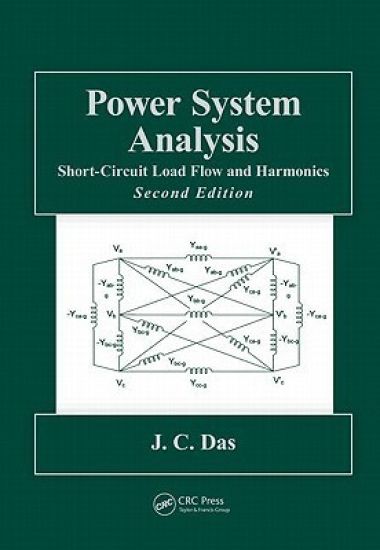
Power System Analysis

J.C. Das

CRC Press
2017
nidottu
Fundamental to the planning, design, and operating stages of any electrical engineering endeavor, power system analysis continues to be shaped by dramatic advances and improvements that reflect today’s changing energy needs. Highlighting the latest directions in the field, Power System Analysis: Short-Circuit Load Flow and Harmonics, Second Edition includes investigations into arc flash hazard analysis and its migration in electrical systems, as well as wind power generation and its integration into utility systems. Designed to illustrate the practical application of power system analysis to real-world problems, this book provides detailed descriptions and models of major electrical equipment, such as transformers, generators, motors, transmission lines, and power cables. With 22 chapters and 7 appendices that feature new figures and mathematical equations, coverage includes: Short-circuit analyses, symmetrical components, unsymmetrical faults, and matrix methodsRating structures of breakersCurrent interruption in AC circuits, and short-circuiting of rotating machinesCalculations according to the new IEC and ANSI/IEEE standards and methodologiesLoad flow, transmission lines and cables, and reactive power flow and controlTechniques of optimization, FACT controllers, three-phase load flow, and optimal power flowA step-by-step guide to harmonic generation and related analyses, effects, limits, and mitigation, as well as new converter topologies and practical harmonic passive filter designs—with examples More than 2000 equations and figures, as well as solved examples, cases studies, problems, and referencesMaintaining the structure, organization, and simplified language of the first edition, longtime power system engineer J.C. Das seamlessly melds coverage of theory and practical applications to explore the most commonly required short-circuit, load-flow, and harmonic analyses. This book requires only a beginning knowledge of the per-unit system, electrical circuits and machinery, and matrices, and it offers significant updates and additional information, enhancing technical content and presentation of subject matter. As an instructional tool for computer simulation, it uses numerous examples and problems to present new insights while making readers comfortable with procedure and methodology.
Power System Analysis

Power System Analysis

J.C. Das

CRC Press Inc
2011
sidottu
Fundamental to the planning, design, and operating stages of any electrical engineering endeavor, power system analysis continues to be shaped by dramatic advances and improvements that reflect today’s changing energy needs. Highlighting the latest directions in the field, Power System Analysis: Short-Circuit Load Flow and Harmonics, Second Edition includes investigations into arc flash hazard analysis and its migration in electrical systems, as well as wind power generation and its integration into utility systems. Designed to illustrate the practical application of power system analysis to real-world problems, this book provides detailed descriptions and models of major electrical equipment, such as transformers, generators, motors, transmission lines, and power cables. With 22 chapters and 7 appendices that feature new figures and mathematical equations, coverage includes: Short-circuit analyses, symmetrical components, unsymmetrical faults, and matrix methodsRating structures of breakersCurrent interruption in AC circuits, and short-circuiting of rotating machinesCalculations according to the new IEC and ANSI/IEEE standards and methodologiesLoad flow, transmission lines and cables, and reactive power flow and controlTechniques of optimization, FACT controllers, three-phase load flow, and optimal power flowA step-by-step guide to harmonic generation and related analyses, effects, limits, and mitigation, as well as new converter topologies and practical harmonic passive filter designs—with examples More than 2000 equations and figures, as well as solved examples, cases studies, problems, and referencesMaintaining the structure, organization, and simplified language of the first edition, longtime power system engineer J.C. Das seamlessly melds coverage of theory and practical applications to explore the most commonly required short-circuit, load-flow, and harmonic analyses. This book requires only a beginning knowledge of the per-unit system, electrical circuits and machinery, and matrices, and it offers significant updates and additional information, enhancing technical content and presentation of subject matter. As an instructional tool for computer simulation, it uses numerous examples and problems to present new insights while making readers comfortable with procedure and methodology.