Kirjojen hintavertailu. Mukana 11 717 486 kirjaa ja 12 kauppaa.

Kirjahaku

Etsi kirjoja tekijän nimen, kirjan nimen tai ISBN:n perusteella.

4 kirjaa tekijältä J.I. Little

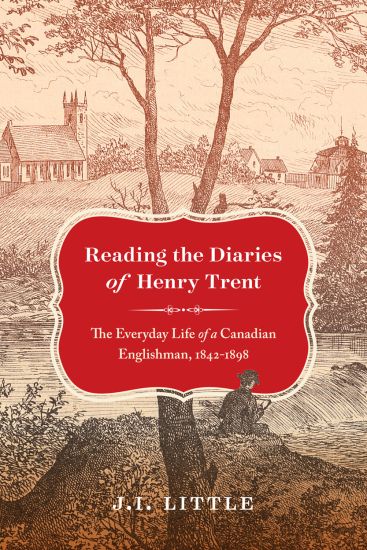
Reading the Diaries of Henry Trent

Reading the Diaries of Henry Trent

J.I. Little

McGill-Queen's University Press
2021
sidottu
The personal journals examined in Reading the Diaries of Henry Trent are not the witty, erudite, and gracefully written exercises that have drawn the attention of most biographers and literary scholars. Prosaic, ungrammatical, and poorly spelled, the fifteen surviving volumes of Henry Trent's hitherto unexamined diaries are nevertheless a treasure for the social and cultural historian.Henry Trent was born in England in 1826, the son of a British naval officer. When he was still a boy, his father decided to begin a new life as a landed gentleman and moved the family to Lower Canada. At the age of sixteen Trent began writing in a diary, which he maintained, intermittently, for more than fifty years. As a lonely youth he narrates days spent hunting and trapping in the woods owned by his father. On the threshold of manhood and in search of a vocation, he writes about his experiences in London and then on Vancouver Island during the gold rush. And finally, as the father of a large family, he describes the daily struggle to make ends meet on the farm he inherited in Quebec's lower St Francis valley.As it follows Trent through the different stages of his long life, Reading the Diaries of Henry Trent explores the complexities of class and colonialism, gender roles within the rural family, and the transition from youth to manhood to old age. The diaries provide a rare opportunity to read the thoughts and follow the experiences of a man who, like many Victorian-era immigrants of the privileged class, struggled to adapt to the Canadian environment during the rise of the industrial age.
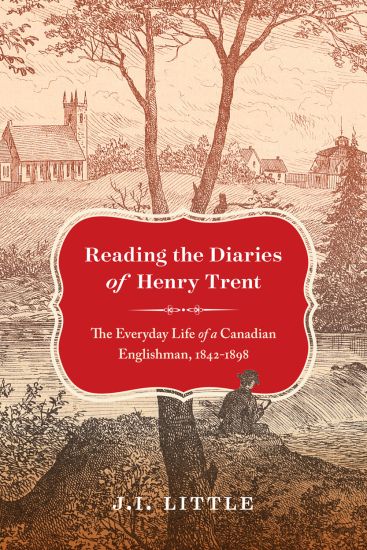
Reading the Diaries of Henry Trent

Reading the Diaries of Henry Trent

J.I. Little

McGill-Queen's University Press
2021
nidottu
The personal journals examined in Reading the Diaries of Henry Trent are not the witty, erudite, and gracefully written exercises that have drawn the attention of most biographers and literary scholars. Prosaic, ungrammatical, and poorly spelled, the fifteen surviving volumes of Henry Trent's hitherto unexamined diaries are nevertheless a treasure for the social and cultural historian.Henry Trent was born in England in 1826, the son of a British naval officer. When he was still a boy, his father decided to begin a new life as a landed gentleman and moved the family to Lower Canada. At the age of sixteen Trent began writing in a diary, which he maintained, intermittently, for more than fifty years. As a lonely youth he narrates days spent hunting and trapping in the woods owned by his father. On the threshold of manhood and in search of a vocation, he writes about his experiences in London and then on Vancouver Island during the gold rush. And finally, as the father of a large family, he describes the daily struggle to make ends meet on the farm he inherited in Quebec's lower St Francis valley.As it follows Trent through the different stages of his long life, Reading the Diaries of Henry Trent explores the complexities of class and colonialism, gender roles within the rural family, and the transition from youth to manhood to old age. The diaries provide a rare opportunity to read the thoughts and follow the experiences of a man who, like many Victorian-era immigrants of the privileged class, struggled to adapt to the Canadian environment during the rise of the industrial age.
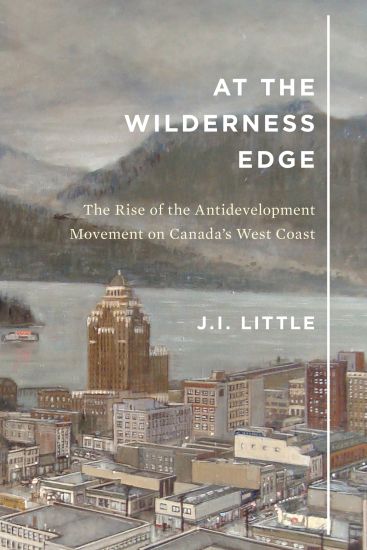
At the Wilderness Edge

At the Wilderness Edge

J.I. Little

McGill-Queen's University Press
2019
sidottu
Vancouver prides itself on being a green city, and the west coast is known for its active environmental protest culture. But the roots of this mentality reach far beyond the founding of organizations such as Greenpeace. Small campaigns led by local community groups from the 1960s onward left a lasting impact on the region. At the Wilderness Edge examines five antidevelopment campaigns in and around Vancouver that reflected a dramatic decline in public support for large-scale commercial and industrial projects. J.I. Little describes the highly effective protests that were instrumental in preserving threatened green spaces on Coal Harbour, Hollyburn Ridge, Bowen Island, Gambier Island, and the Squamish estuary, keeping these important British Columbia landmarks from becoming a high-rise development project, a downhill ski resort, a suburban housing tract, an open-pit copper mine, and a major coal port, respectively. Through detailed analysis of development proposals and protests, government studies, and community responses, Little argues that it was not the usual suspects – 1960s radicalism and anti-establishment youth culture – that initiated and carried out these protests, but rather middle-aged, middle-class, politically engaged citizens, many of whom were women. An engaging study of grassroots politics in action, At the Wilderness Edge sheds new light on the rise of environmental consciousness, a pivotal era in the history of British Columbia, the Pacific Northwest, and Canada.
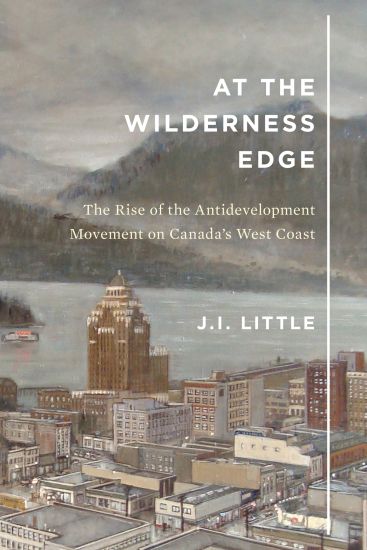
At the Wilderness Edge

At the Wilderness Edge

J.I. Little

McGill-Queen's University Press
2019
nidottu
Vancouver prides itself on being a green city, and the west coast is known for its active environmental protest culture. But the roots of this mentality reach far beyond the founding of organizations such as Greenpeace. Small campaigns led by local community groups from the 1960s onward left a lasting impact on the region. At the Wilderness Edge examines five antidevelopment campaigns in and around Vancouver that reflected a dramatic decline in public support for large-scale commercial and industrial projects. J.I. Little describes the highly effective protests that were instrumental in preserving threatened green spaces on Coal Harbour, Hollyburn Ridge, Bowen Island, Gambier Island, and the Squamish estuary, keeping these important British Columbia landmarks from becoming a high-rise development project, a downhill ski resort, a suburban housing tract, an open-pit copper mine, and a major coal port, respectively. Through detailed analysis of development proposals and protests, government studies, and community responses, Little argues that it was not the usual suspects – 1960s radicalism and anti-establishment youth culture – that initiated and carried out these protests, but rather middle-aged, middle-class, politically engaged citizens, many of whom were women. An engaging study of grassroots politics in action, At the Wilderness Edge sheds new light on the rise of environmental consciousness, a pivotal era in the history of British Columbia, the Pacific Northwest, and Canada.