

Kirjahaku
Etsi kirjoja tekijän nimen, kirjan nimen tai ISBN:n perusteella.
53 kirjaa tekijältä Jack Williams
Looking at the inter-war period, this work explores the relationship between cricket and English social and cultural values.
Looking at the inter-war period, this work explores the relationship between cricket and English social and cultural values.

Cricket and broadcasting explores how the significance of radio and television to cricket in England has grown since the beginnings of broadcasting. Since the Second World War cricket has been increasingly shaped by its relationship with broadcasting which has been a force for conservatism and change. Representations of cricket on radio and television have done much to determine levels of interest and participation in the sport. Major changes such as the growth of the limited-overs game, the expansion of international cricket, reforms to County Championship and the rise of sponsorship were dependent on support from television, and income from television has enabled county cricket to survive as the highest form of domestic cricket in England.This accessibly written book will be essential reading for scholars and students of sports history, social and cultural history, and media studies.
Jack Williams provides a thought-provoking examination of television's role in British popular culture.
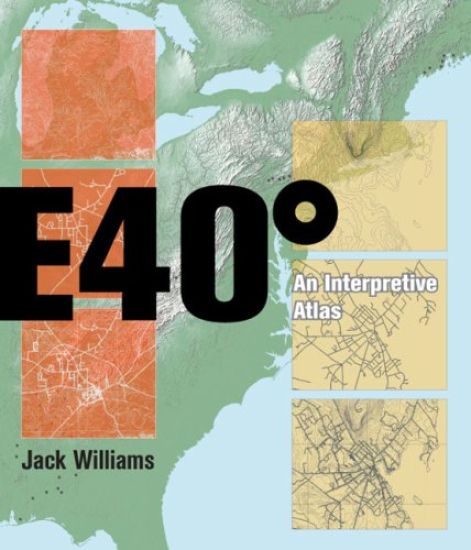
The Appalachian mountain chain once contained the highest and most dramatic mountains on earth. Worn down over time, these mountains still hold some of the most diverse climactic zones and singular geological formations in existence. In ""East 40 Degrees: An Interpretive Atlas"", Jack Williams examines a succession of beautiful but little-known towns along this cordillera (a term descended from the Latin chorda, meaning ""braided rope""), revealing in their layers of history and geography how both their diverse cultural and social circumstances and their geological history were instrumental in forming each town's distinctive character. Referring to the spatial orientation of the Appalachian mountain chain, the ""east 40 degrees"" of the title runs from Alabama through fifteen states to the coast of Maine. Each town, Williams examines, sits within the folds of these mountains or beside a river nourished in their moist uplands. Beginning his record with the continental collisions that shaped each town's history more than 300 million years ago, Williams allows us to ""see the tenuous web of connections between ourselves and the natural processes that shape this earth."" Featuring a wealth of beautiful and significant illustrations and maps, this unique work brings into focus the critical issues of environmental and cultural sustainability confronting us today. Elegant, poetic, and erudite, ""East 40 Degrees"" will appeal to architects and landscape architects, planners, environmental historians, ecologists, geographers, and anyone interested in the history and origins of our modern landscapes and towns. Publication of this volume was assisted by a grant from Furthermore: a program of the J. M. Kaplan Fund.
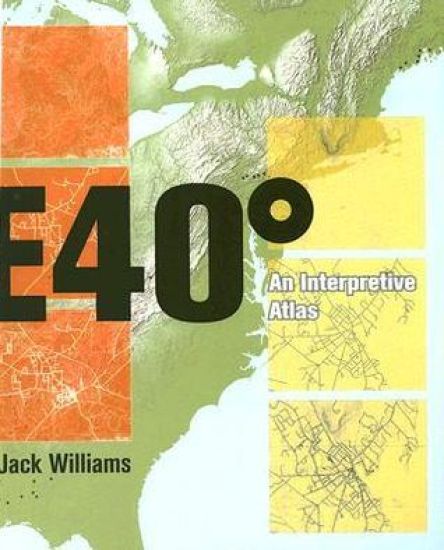
The Appalachian mountain chain once contained the highest and most dramatic mountains on earth. Worn down over time, these mountains still hold some of the most diverse climactic zones and singular geological formations in existence. In ""East 40 Degrees: An Interpretive Atlas"", Jack Williams examines a succession of beautiful but little-known towns along this cordillera (a term descended from the Latin chorda, meaning ""braided rope""), revealing in their layers of history and geography how both their diverse cultural and social circumstances and their geological history were instrumental in forming each town's distinctive character. Referring to the spatial orientation of the Appalachian mountain chain, the ""east 40 degrees"" of the title runs from Alabama through fifteen states to the coast of Maine. Each town, Williams examines, sits within the folds of these mountains or beside a river nourished in their moist uplands. Beginning his record with the continental collisions that shaped each town's history more than 300 million years ago, Williams allows us to ""see the tenuous web of connections between ourselves and the natural processes that shape this earth."" Featuring a wealth of beautiful and significant illustrations and maps, this unique work brings into focus the critical issues of environmental and cultural sustainability confronting us today. Elegant, poetic, and erudite, ""East 40 Degrees"" will appeal to architects and landscape architects, planners, environmental historians, ecologists, geographers, and anyone interested in the history and origins of our modern landscapes and towns. Publication of this volume was assisted by a grant from Furthermore: a program of the J. M. Kaplan Fund.
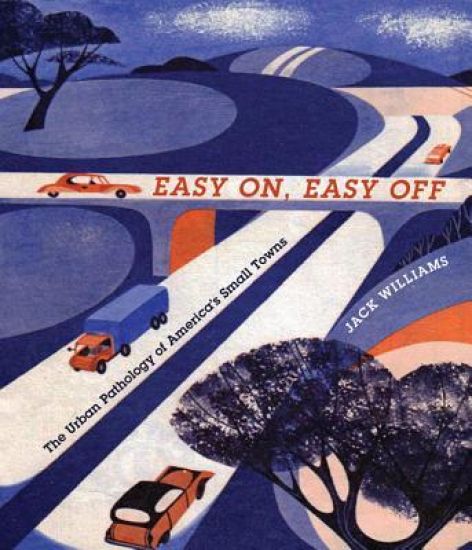
Life outside our nation’s big cities comprises a remarkably rich aspect of America—culturally, historically, and physically. Because of the way we move through the country, however—on roads built for maximum expediency—most of us are rarely if ever exposed to these small communities, a trend that is moving these towns dangerously far off the maps of commerce and public consciousness.In Easy On, Easy Off, Jack Williams takes to the roads of the interstate highway system to explore America’s small towns, bringing back diverse examples of both beautiful and neglected places that illustrate how shifts in modern transportation have influenced urban form. Most of these communities are little known beyond their discrete regions, yet their struggles to prosper are universal. Mill towns, county-seat court squares, villages of the Great Plains, mining towns, and California's forgotten Chinese settlements all share similar fates—overshadowed by interstate off-ramp towns and bypassed by high-speed traffic.Employing more than 150 historic maps and images, unique drawings, and contemporary photographs, Williams convincingly argues that irreversible changes have overtaken the landscapes of small-town America, with each community’s economic and social vitality slowly shifting away to other commercial places that attach to our highway interchanges and extrude into strip malls. A tale of success perhaps for the highway system, the more urgent story relayed in Easy On, Easy Off is of the loss of the complex fabric of thousands of small towns that once defined this nation.
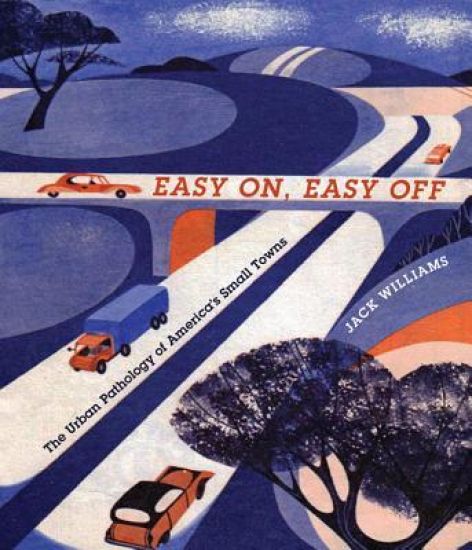
Life outside our nation’s big cities comprises a remarkably rich aspect of America—culturally, historically, and physically. Because of the way we move through the country, however—on roads built for maximum expediency—most of us are rarely if ever exposed to these small communities, a trend that is moving these towns dangerously far off the maps of commerce and public consciousness.In Easy On, Easy Off, Jack Williams takes to the roads of the interstate highway system to explore America’s small towns, bringing back diverse examples of both beautiful and neglected places that illustrate how shifts in modern transportation have influenced urban form. Most of these communities are little known beyond their discrete regions, yet their struggles to prosper are universal. Mill towns, county-seat court squares, villages of the Great Plains, mining towns, and California's forgotten Chinese settlements all share similar fates—overshadowed by interstate off-ramp towns and bypassed by high-speed traffic.Employing more than 150 historic maps and images, unique drawings, and contemporary photographs, Williams convincingly argues that irreversible changes have overtaken the landscapes of small-town America, with each community’s economic and social vitality slowly shifting away to other commercial places that attach to our highway interchanges and extrude into strip malls. A tale of success perhaps for the highway system, the more urgent story relayed in Easy On, Easy Off is of the loss of the complex fabric of thousands of small towns that once defined this nation.

The 16th-Century intellectual Robert Recorde is chiefly remembered for introducing the equals sign into algebra, yet the greater significance and broader scope of his work is often overlooked. This book presents an authoritative and in-depth analysis of the man, his achievements and his historical importance. This scholarly yet accessible work examines the latest evidence on all aspects of Recorde’s life, throwing new light on a character deserving of greater recognition. Topics and features: presents a concise chronology of Recorde’s life; examines his published works; describes Recorde’s professional activities in the minting of money and the mining of silver, as well as his dispute with William Herbert, Earl of Pembroke; investigates Recorde’s work as a physician, his linguistic and antiquarian interests, and his religious beliefs; discusses the influence of Recorde’s publisher, Reyner Wolfe, in his life; reviews his legacy to 17th-Century science, and to modern computer science and mathematics.
Drawing on methods from religious studies, philosophy, and cognitive science, Jack Williams develops a unique and interdisciplinary approach to the study of religious conversion. This is the first major philosophical study of conversion to treat the phenomenon as a long-term process, shaped by the convert’s embodiment and immersion in a linguistic, social, and ritual community. Williams’ analysis of the conversion process is rooted in a view of cognition as both embodied and affective, and is informed by the latest research in phenomenology, affect theory, neuroscience, and enactivist cognitive science. In conversation with diverse conversion narratives, he advances a theory of conversion that is not restricted to a modern, Western context but that can be applied to experiences of conversion across global history and culture. Rethinking Religious Conversion displays an original approach to the philosophical study of diverse religious practices. By bringing together a diverse array of contemporary and historical scholarship, it revitalizes the study of conversion for both philosophy and religious studies.
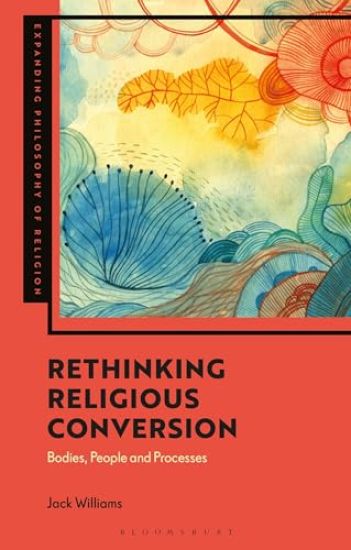
Rethinking Religious Conversion: Bodies, People and Processes
Jack Williams
BLOOMSBURY ACADEMIC
2026
nidottu
Drawing on methods from religious studies, philosophy, and cognitive science, Jack Williams develops a unique and interdisciplinary approach to the study of religious conversion. This is the first major philosophical study of conversion to treat the phenomenon as a long-term process, shaped by the convert's embodiment and immersion in a linguistic, social, and ritual community. Williams' analysis of the conversion process is rooted in a view of cognition as both embodied and affective, and is informed by the latest research in phenomenology, affect theory, neuroscience, and enactivist cognitive science. In conversation with diverse conversion narratives, he advances a theory of conversion that is not restricted to a modern, Western context but that can be applied to experiences of conversion across global history and culture. Rethinking Religious Conversion displays an original approach to the philosophical study of diverse religious practices. By bringing together a diverse array of contemporary and historical scholarship, it revitalizes the study of conversion for both philosophy and religious studies.

The 16th-Century intellectual Robert Recorde is chiefly remembered for introducing the equals sign into algebra, yet the greater significance and broader scope of his work is often overlooked. This book presents an authoritative and in-depth analysis of the man, his achievements and his historical importance. This scholarly yet accessible work examines the latest evidence on all aspects of Recorde’s life, throwing new light on a character deserving of greater recognition. Topics and features: presents a concise chronology of Recorde’s life; examines his published works; describes Recorde’s professional activities in the minting of money and the mining of silver, as well as his dispute with William Herbert, Earl of Pembroke; investigates Recorde’s work as a physician, his linguistic and antiquarian interests, and his religious beliefs; discusses the influence of Recorde’s publisher, Reyner Wolfe, in his life; reviews his legacy to 17th-Century science, and to modern computer science and mathematics.

A graphic personal account, The Rigger exposes the extreme risks undertaken by specialist operators in order to provide and maintain first-class communications in Northern Ireland. The author, who served alongside the SAS and other covert military organisations, spares no detail in describing the dangers, tensions, dramas and humour of life at the sharp end. Climbing 400-foot masts is not for the faint-hearted at the best of times but to do so in the bandit country of South Armagh or above staunchly IRA enclaves of Belfast and Londonderry is a whole new ball-game and, for some not as lucky as Jack Williams, a fatal one.


West of the River: Short Stories from West Jordan Utah
Jack Williams
Createspace Independent Publishing Platform
2016
nidottu
Reflections and Stories from the West Desert of Utah, 1880 to 1991
Jack Williams
Createspace Independent Publishing Platform
2016
nidottu
This book of seven short stories contains reflections that my mother, Lila Leon Kearney Williams, recorded before her death in 1976. She lived part of her life in the West Desert in the village of Callao located on the northern part of an eighty mile long valley called Snake Valley that extends from Gold Hill Utah to Baker Nevada. Some of her stories were passed down to her from aunts and uncles and some are about her life as a youth in this desert region. Other reflections are my own, extrapolated from experiences I've had myself traveling to this desert region to camp, to explore and to relive some of the heritage I claim from this area.

Myths & Realities of Ethiopia
Jack Williams
Createspace Independent Publishing Platform
2016
nidottu