Kirjojen hintavertailu. Mukana 12 390 323 kirjaa ja 12 kauppaa.

Kirjahaku

Etsi kirjoja tekijän nimen, kirjan nimen tai ISBN:n perusteella.

4 kirjaa tekijältä Jack Winter

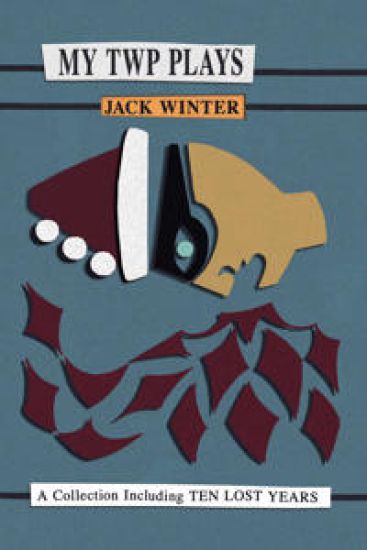
My TWP Plays

My TWP Plays

Jack Winter

Talonbooks
2014
pokkari
My TWP Plays presents five important plays written by Jack Winter while he was resident playwright at Toronto Workshop Productions, one of the first great troupes of the experimental and alternative theatre movement. The carnivalesque style of the selected works in this anthology reflects the turbulence, contradictions, and subversion of the social revolution during which they were written and first produced, as well as the cultural politics at a time when Canadian artists were investigating new, noncolonial, and distinctly Canadian forms of expression that would define the nation and challenge received artistic styles and practices. Extensive notes by the playwright and a foreword by the director and dramaturge Bruce Barton (University of Toronto) illuminate an important two-decade period in the evolution of contemporary Canadian theatre, while providing glimpses of the artistic conditions, the cultural environment, and the personal circumstances within which the works were created. Before Compiegne (1963) wildly imagines Joan of Arc's final days. The Mechanic (1964) and its experiments in form and staging offer a contemporary take on Moliere and the commedia dell'arte.The Death of Woyzeck (1965) dismantles, reconstructs, and rewrites Georg Buchner's famous fragmentary original of 1837. Ten Lost Years (1974) presents a highly theatricalized full-length dramatization of Barry Broadfoot's collected interviews with Canadian survivors of the Great Depression. You Can't Get Here from There (1975) examines Canada's complicity in the 1973 overthrow of Chilean president Salvador Allende.
Tales of the Emperor

Tales of the Emperor

Jack Winter

Talonbooks
2015
pokkari
Tales of the Emperor is based on the life of Qin Shi Huang (circa 260-210 BCE), the "First Emperor" - he who unified China, gave it his name, built the Great Wall, entombed an army of terra cotta soldiers, authored legalism, erased history, insinuated governance, and established paranoia as a national characteristic. His dynasty did not outlive him but his influence permeates the present and, there is ample indication, will dominate the future. The literary method of Tales of the Emperor is derived from the first Chinese attempt at "writing history" - the famous Historical Records of Ssu-Ma Ch'ien. Like that Chinese classic, Tales of the Emperor is motivated by the desire to understand the past by entering it, mixing testimony with anecdote, interpretation with invention, biography with characterization, objective analysis with passionate self-interest. Birth to death, Tales of the Emperor tells the story of its central figure in a thematic rather than a chronologic narrative.In a mosaic of separate tales - some no more than fragments, others chapter-length - intersecting characters are presented, entwined, relinquished, among them a failed assassin, a wily adviser, an ironic architect, a castrated historian, an entire tribe of grave builders, and, of course, the wry, conflicted, everyday tyrant himself. The Emperor's accomplishments are documented, his strivings are examined, and intimate tittle-tattle about him is indulged. There's only one principal theme: you find the antiquity you look for, or, in the language of the book: "history is the study of the paintings of great events."