Kirjojen hintavertailu. Mukana 11 475 784 kirjaa ja 12 kauppaa.

Kirjahaku

Etsi kirjoja tekijän nimen, kirjan nimen tai ISBN:n perusteella.

41 kirjaa tekijältä Jack Zipes

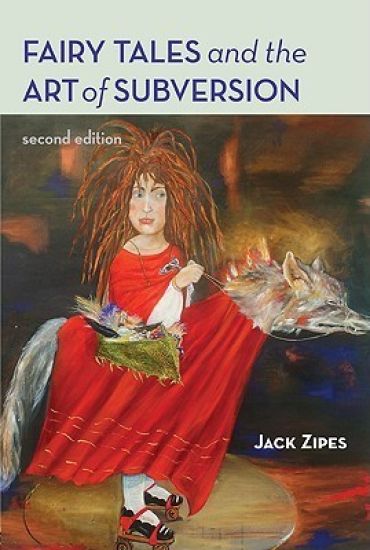
Fairy Tales and the Art of Subversion
The fairy tale is arguably one of the most important cultural and social influences on children's lives. But until the first publication of Fairy Tales and the Art of Subversion, little attention had been paid to the ways in which the writers and collectors of tales used traditional forms and genres in order to shape children's lives – their behavior, values, and relationship to society. As Jack Zipes convincingly shows in this classic work, fairy tales have always been a powerful discourse, capable of being used to shape or destabilize attitudes and behavior within culture. How and why did certain authors try to influence children or social images of children? How were fairy tales shaped by the changes in European society in the sixteenth and seventeenth centuries? Zipes examines famous writers of fairy tales such as Charles Perrault, Jacob and Wilhelm Grimm, Hans Christian Andersen and L.Frank Baum and considers the extraordinary impact of Walt Disney on the genre as a fairy tale filmmaker.
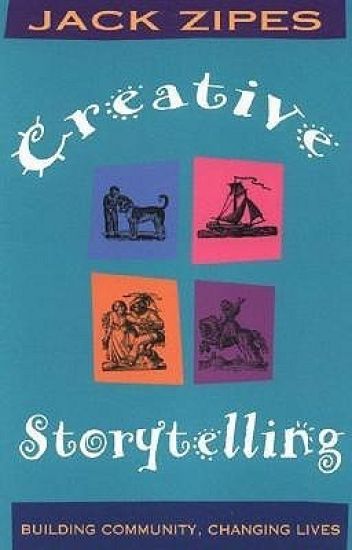
Creative Storytelling

Creative Storytelling

Jack Zipes

Routledge
1995
nidottu
Jack Zipes has reinvigorated storytelling as a successful and engaging tool for teachers and professional storytellers. Encouraging storytellers, librarians, and schoolteachers to be active in this magical process, Zipes proposes an interactive storytelling that creates and strengthens a sense of community for students, teachers and parents while extolling storytelling as animation, subversion, and self-discovery.
Happily Ever After

Happily Ever After

Jack Zipes

Routledge
1997
sidottu
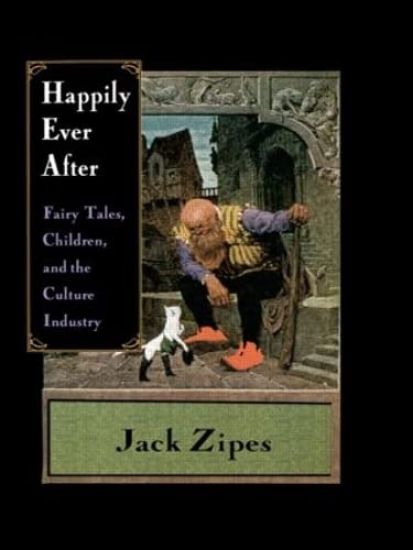
First Published in 1997. Happily Ever After is Jack Zipes's latest work on the fairy tale. Moving from the Renaissance to the present, and between different cultures this book addresses Zipes's ongoing concern with the fairy tale- its impact on children and adults, its role in the socialisation of children- as well as the future of the fairy tale on the big(and little) screen. Here are Straparola's sixteenth-century 'Puss in Boots' and a 1922 film of the story; Hansel and Gretel and child abuse; the Pinocchio of Colladi and of Walt Disney. AN ardent champion of children's literature and children's culture, Zipes writes also about oral tradition and the rise of storytelling throughout the world. But behind each of his essays lies the key question that all fairy tales will raise: what does it tale to bring about happiness? And is happiness only to be found in fairy tales?
Happily Ever After

Happily Ever After

Jack Zipes

Routledge
1997
nidottu
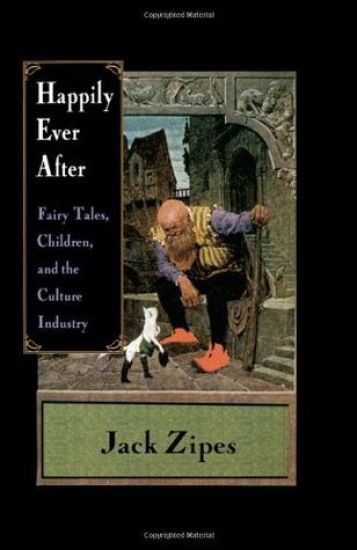
First Published in 1997. Happily Ever After is Jack Zipes's latest work on the fairy tale. Moving from the Renaissance to the present, and between different cultures this book addresses Zipes's ongoing concern with the fairy tale- its impact on children and adults, its role in the socialisation of children- as well as the future of the fairy tale on the big(and little) screen. Here are Straparola's sixteenth-century 'Puss in Boots' and a 1922 film of the story; Hansel and Gretel and child abuse; the Pinocchio of Colladi and of Walt Disney. AN ardent champion of children's literature and children's culture, Zipes writes also about oral tradition and the rise of storytelling throughout the world. But behind each of his essays lies the key question that all fairy tales will raise: what does it tale to bring about happiness? And is happiness only to be found in fairy tales?
Sticks and Stones

Sticks and Stones

Jack Zipes

Routledge
2000
sidottu
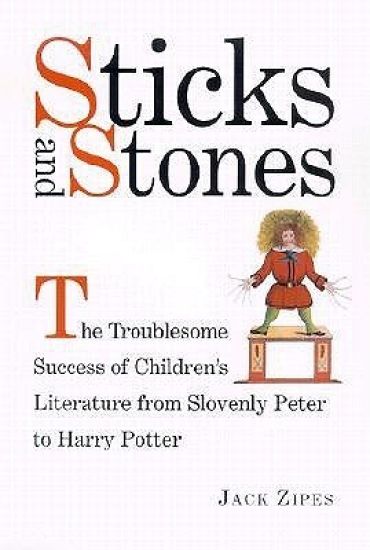
Have children ever really had a literature of their own? In Sticks and Stones, Jack Zipes explores children's literature, from the grissly moralism of Slovenly Peter to the hugely successful Harry Potter books, and argues that despite common assumptions about children's books, our investment in children is paradoxically curtailing their freedom and creativity. Sticks and Stones is a forthright and engaging book by someone who cares deeply about what and how children read.
Sticks and Stones

Sticks and Stones

Jack Zipes

Routledge
2002
nidottu
Have children ever really had a literature of their own? In Sticks and Stones , Jack Zipes explores children's literature, from the grissly moralism of Slovenly Peter to the hugely successful Harry Potter books, and argues that despite common assumptions about children's books, our investment in children is paradoxically curtailing their freedom and creativity. Sticks and Stones is a forthright and engaging book by someone who cares deeply about what and how children read.
Speaking Out

Speaking Out

Jack Zipes

Routledge
2004
sidottu
In his successful Creative Storytelling, Jack Zipes showed how storytelling is a rich and powerful tool for self-expression and for building children's imaginations. In Speaking Out, this master storyteller goes further, speaking out against rote learning and testing and for the positive force within storytelling and creative drama during the K-12 years.For the past four years, Jack Zipes has worked with the Neighborhood Bridges Program of the Children's Theatre Company of Minneapolis, taking his storytelling techniques into inner-city schools. Speaking Out is in part a record of the transformations storytelling can work on the minds and lives of young people. But it is also a vivid and exhilarating demonstration of a different kind of education - one built from deep inside each child. Speaking Out is a book for storytellers, educators, parents, and anyone who cares about helping kids find within themselves the keys to imagination.
Speaking Out

Speaking Out

Jack Zipes

Routledge
2004
nidottu
In his successful Creative Storytelling, Jack Zipes showed how storytelling is a rich and powerful tool for self-expression and for building children's imaginations. In Speaking Out, this master storyteller goes further, speaking out against rote learning and testing and for the positive force within storytelling and creative drama during the K-12 years.For the past four years, Jack Zipes has worked with the Neighborhood Bridges Program of the Children's Theatre Company of Minneapolis, taking his storytelling techniques into inner-city schools. Speaking Out is in part a record of the transformations storytelling can work on the minds and lives of young people. But it is also a vivid and exhilarating demonstration of a different kind of education - one built from deep inside each child. Speaking Out is a book for storytellers, educators, parents, and anyone who cares about helping kids find within themselves the keys to imagination.
Hans Christian Andersen

Hans Christian Andersen

Jack Zipes

Routledge
2005
sidottu
The 2005 bicentenary of Hans Christian Andersen's birth is an opportunity to re-evaluate the achievement of one of the great figures of the fairy tale and storytelling tradition, a beloved writer famous for The Snow Queen and The Little Mermaid, The Ugly Duckling and The Red Shoesand many other now classic tales. Jack Zipes broadens our understanding of Andersen by exploring the relation of the Danish writer's work to the development of literature and of the fairy tale in particular. Based on thirty-five years of researching and writing on Andersen, this new book is a welcome reconsideration of Andersen's place and of his reception in English-speaking countries and on film.
Hans Christian Andersen

Hans Christian Andersen

Jack Zipes

Routledge
2005
nidottu
The 2005 bicentenary of Hans Christian Andersen's birth is an opportunity to re-evaluate the achievement of one of the great figures of the fairy tale and storytelling tradition, a beloved writer famous for The Snow Queen and The Little Mermaid, The Ugly Duckling and The Red Shoesand many other now classic tales. Jack Zipes broadens our understanding of Andersen by exploring the relation of the Danish writer's work to the development of literature and of the fairy tale in particular. Based on thirty-five years of researching and writing on Andersen, this new book is a welcome reconsideration of Andersen's place and of his reception in English-speaking countries and on film.
Fairy Tales and the Art of Subversion
The fairy tale may be one of the most important cultural and social influences on children's lives. But until Fairy Tales and the Art of Subversion, little attention had been paid to the ways in which the writers and collectors of tales used traditional forms and genres in order to shape children's lives – their behavior, values, and relationship to society. As Jack Zipes convincingly shows, fairy tales have always been a powerful discourse, capable of being used to shape or destabilize attitudes and behavior within culture.For this new edition, the author has revised the work throughout and added a new introduction bringing this classic title up to date.
Fairy Tales and the Art of Subversion
The fairy tale may be one of the most important cultural and social influences on children's lives. But until Fairy Tales and the Art of Subversion, little attention had been paid to the ways in which the writers and collectors of tales used traditional forms and genres in order to shape children's lives – their behavior, values, and relationship to society. As Jack Zipes convincingly shows, fairy tales have always been a powerful discourse, capable of being used to shape or destabilize attitudes and behavior within culture.For this new edition, the author has revised the work throughout and added a new introduction bringing this classic title up to date.
Why Fairy Tales Stick

Why Fairy Tales Stick

Jack Zipes

Routledge
2006
sidottu
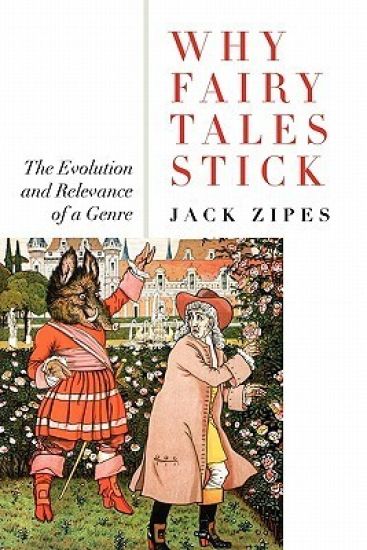
In his latest book, fairy tales expert Jack Zipes explores the question of why some fairy tales "work" and others don't, why the fairy tale is uniquely capable of getting under the skin of culture and staying there. Why, in other words, fairy tales "stick." Long an advocate of the fairy tale as a serious genre with wide social and cultural ramifications, Jack Zipes here makes his strongest case for the idea of the fairy tale not just as a collection of stories for children but a profoundly important genre.Why Fairy Tales Stick contains two chapters on the history and theory of the genre, followed by case studies of famous tales (including Cinderella, Snow White, and Bluebeard), followed by a summary chapter on the problematic nature of traditional storytelling in the twenty-first century.
Why Fairy Tales Stick

Why Fairy Tales Stick

Jack Zipes

Routledge
2006
nidottu
In his latest book, fairy tales expert Jack Zipes explores the question of why some fairy tales "work" and others don't, why the fairy tale is uniquely capable of getting under the skin of culture and staying there. Why, in other words, fairy tales "stick." Long an advocate of the fairy tale as a serious genre with wide social and cultural ramifications, Jack Zipes here makes his strongest case for the idea of the fairy tale not just as a collection of stories for children but a profoundly important genre.Why Fairy Tales Stick contains two chapters on the history and theory of the genre, followed by case studies of famous tales (including Cinderella, Snow White, and Bluebeard), followed by a summary chapter on the problematic nature of traditional storytelling in the twenty-first century.
When Dreams Came True

When Dreams Came True

Jack Zipes

Routledge
2007
sidottu
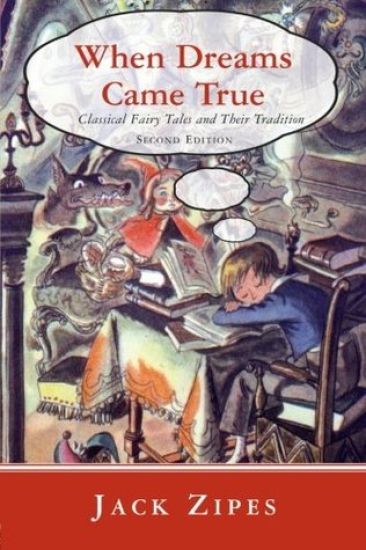
For centuries fairy tales have been a powerful mode of passing cultural values onto our children, and for many these stories delight and haunt us from cradle to grave. But how have these stories become so powerful and why?In When Dreams Came True, Jack Zipes explains the social life of the fairy tale, from the sixteenth century on into the twenty-first. Whether exploring Charles Perrault or the Brothers Grimm, Hans Christian Andersen or The Thousand and One Nights, The Happy Prince or Pinocchio, L. Frank Baum or Hermann Hesse, Zipes shows how the authors of our beloved fairy tales used the genre to articulate personal desires, political views, and aesthetic preferences within particular social contexts. Above all, he demonstrates the role that the fairy tale has assumed in the civilizing process—the way it imparts values, norms, and aesthetic taste to children and adults.This second edition of one of Jack Zipes’s best-loved books includes a new preface and two new chapters on J.M. Barrie’s Peter Pan and E.T.A. Hoffman’s The Nutcracker and the Mouse King.
When Dreams Came True

When Dreams Came True

Jack Zipes

Routledge
2007
nidottu
For centuries fairy tales have been a powerful mode of passing cultural values onto our children, and for many these stories delight and haunt us from cradle to grave. But how have these stories become so powerful and why?In When Dreams Came True, Jack Zipes explains the social life of the fairy tale, from the sixteenth century on into the twenty-first. Whether exploring Charles Perrault or the Brothers Grimm, Hans Christian Andersen or The Thousand and One Nights, The Happy Prince or Pinocchio, L. Frank Baum or Hermann Hesse, Zipes shows how the authors of our beloved fairy tales used the genre to articulate personal desires, political views, and aesthetic preferences within particular social contexts. Above all, he demonstrates the role that the fairy tale has assumed in the civilizing process—the way it imparts values, norms, and aesthetic taste to children and adults.This second edition of one of Jack Zipes’s best-loved books includes a new preface and two new chapters on J.M. Barrie’s Peter Pan and E.T.A. Hoffman’s The Nutcracker and the Mouse King.
The Enchanted Screen

The Enchanted Screen

Jack Zipes

Routledge
2010
nidottu
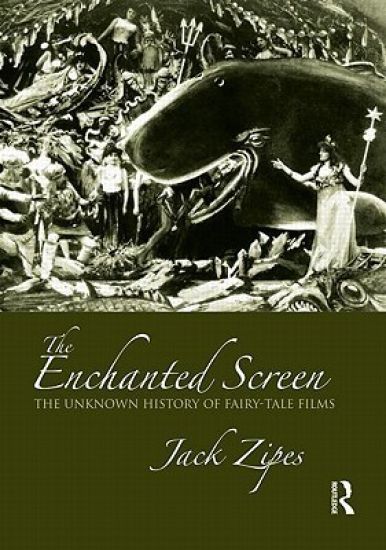
The Enchanted Screen: The Unknown History of Fairy-Tale Films offers readers a long overdue, comprehensive look at the rich history of fairy tales and their influence on film, complete with the inclusion of an extensive filmography compiled by the author. With this book, Jack Zipes not only looks at the extensive, illustrious life of fairy tales and cinema, but he also reminds us that, decades before Walt Disney made his mark on the genre, fairy tales were central to the birth of cinema as a medium, as they offered cheap, copyright-free material that could easily engage audiences not only though their familiarity but also through their dazzling special effects. Since the story of fairy tales on film stretches far beyond Disney, this book, therefore, discusses a broad range of films silent, English and non-English, animation, live-action, puppetry, woodcut, montage (Jim Henson), cartoon, and digital. Zipes, thus, gives his readers an in depth look into the special relationship between fairy tales and cinema, and guides us through this vast array of films by tracing the adaptations of major fairy tales like "Little Red Riding Hood," "Cinderella," "Snow White," "Peter Pan," and many more, from their earliest cinematic appearances to today. Full of insight into some of our most beloved films and stories, and boldly illustrated with numerous film stills, The Enchanted Screen, is essential reading for film buffs and fans of the fairy tale alike.
The Enchanted Screen

The Enchanted Screen

Jack Zipes

Routledge
2010
sidottu
The Enchanted Screen: The Unknown History of Fairy-Tale Films offers readers a long overdue, comprehensive look at the rich history of fairy tales and their influence on film, complete with the inclusion of an extensive filmography compiled by the author. With this book, Jack Zipes not only looks at the extensive, illustrious life of fairy tales and cinema, but he also reminds us that, decades before Walt Disney made his mark on the genre, fairy tales were central to the birth of cinema as a medium, as they offered cheap, copyright-free material that could easily engage audiences not only though their familiarity but also through their dazzling special effects. Since the story of fairy tales on film stretches far beyond Disney, this book, therefore, discusses a broad range of films silent, English and non-English, animation, live-action, puppetry, woodcut, montage (Jim Henson), cartoon, and digital. Zipes, thus, gives his readers an in depth look into the special relationship between fairy tales and cinema, and guides us through this vast array of films by tracing the adaptations of major fairy tales like "Little Red Riding Hood," "Cinderella," "Snow White," "Peter Pan," and many more, from their earliest cinematic appearances to today. Full of insight into some of our most beloved films and stories, and boldly illustrated with numerous film stills, The Enchanted Screen, is essential reading for film buffs and fans of the fairy tale alike.
Relentless Progress

Relentless Progress

Jack Zipes

Routledge
2008
sidottu
Can fairy tales subvert consumerism? Can fantasy and children's literature counter the homogenizing influence of globalization? Can storytellers retain their authenticity in the age of consumerism? These are some of the critical questions raised by Jack Zipes, the celebrated scholar of fairy tales and children's literature. In this book, Zipes argues that, despite a dangerous reconfiguration of children as consumers in the civilizing process, children's literature, fairy tales, and storytelling possess a uniquely powerful (even fantastic)capacity to resist the "relentless progress" of negative trends in culture. He also argues that these tales and stories may lose their power if they are too diluted by commercialism and merchandising.Stories have been used for centuries as a way to teach children (and adults) how to see the world, as well as their place within it. In Relentless Progress, Zipes looks at the surprising ways that stories have influenced people within contemporary culture and vice versa. Among the many topics explored here are the dumbing down of books for children, the marketing of childhood, the changing shape of feminist fairy tales, and why American and British children aren’t exposed to more non-western fairy tales. From picture books to graphic novels, from children’s films to video games, from Grimm’s fairy tales to the multimedia Harry Potter phenomenon, Zipes demonstrates that while children’s stories have changed greatly in recent years, much about these stories have remained the same—despite their contemporary, high-tech repackaging. Relentless Progress offers remarkable insight into why classic folklore and fairy tales should remain an important part of the lives of children in today’s digital culture.