Kirjojen hintavertailu. Mukana 11 627 467 kirjaa ja 12 kauppaa.

Kirjahaku

Etsi kirjoja tekijän nimen, kirjan nimen tai ISBN:n perusteella.

7 kirjaa tekijältä Jacob Leigh

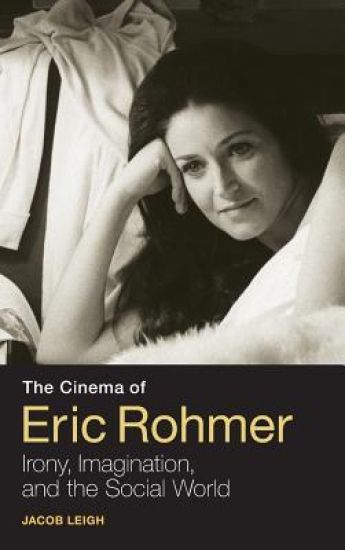
The Cinema of Eric Rohmer

The Cinema of Eric Rohmer

Jacob Leigh

Continuum Publishing Corporation
2012
sidottu
Since the death of the French film director Eric Rohmer in 2010, interest in his work has reignited. Known as the last of the established directors in the French New Wave, Rohmer took complete control over all his films, acting as his own producer throughout his career, and writing the scripts. He also made his mark by taking the lead in casting and location scouting - as French seaside resorts with beautiful young people are some of the elements present in most of his films. Combining history and criticism, Jacob Leigh pens the first chronological survey of this understudied filmmaker in order to give readers clear insights into how Rohmer's films came about and what he intended them to be. The book provides in-depth analysis of the themes and ideas of Rohmer's twenty-three feature films, and illustrates the complexity of their cinematic style. Leigh's study is the perfect introduction to the work of this great filmmaker, for both students and the general reader.
The Cinema of Eric Rohmer

The Cinema of Eric Rohmer

Jacob Leigh

Continuum Publishing Corporation
2012
nidottu
Since the death of the French film director Eric Rohmer in 2010, interest in his work has reignited. Known as the last of the established directors in the French New Wave, Rohmer took complete control over all his films, acting as his own producer throughout his career, and writing the scripts. He also made his mark by taking the lead in casting and location scouting - as French seaside resorts with beautiful young people are some of the elements present in most of his films. Combining history and criticism, Jacob Leigh pens the first chronological survey of this understudied filmmaker in order to give readers clear insights into how Rohmer's films came about and what he intended them to be. The book provides in-depth analysis of the themes and ideas of Rohmer's twenty-three feature films, and illustrates the complexity of their cinematic style. Leigh's study is the perfect introduction to the work of this great filmmaker, for both students and the general reader.
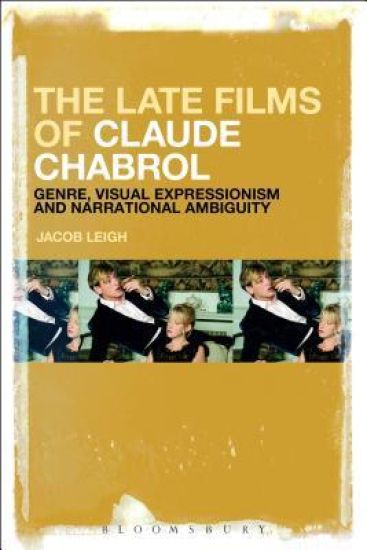
The Late Films of Claude Chabrol

The Late Films of Claude Chabrol

Jacob Leigh

Bloomsbury Academic USA
2017
sidottu
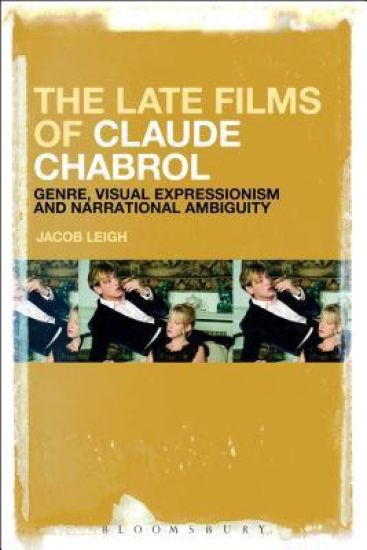
A member of the French New Wave group of filmmakers who first came to prominence at the end of the 1950s, Claude Chabrol has received the least amount of critical and scholarly attention, although he was the more prolific and commercially successful of them all. Jacob Leigh fills this lacuna by focusing on the last nine feature films of Chabrol’s career, exploring his imagery, camerawork, use of sound and music, and performances, revealing the stylistic characteristics of his films while identifying the fundamental thematic issues that lie at the heart of his career-length exploration of the relationship between individuals and societies. Key areas of focus includes Chabrol’s careful depiction of upper-class settings in films such as La Cérémonie (1995), Merci pour le chocolat (2000) and La Fille coupée en deux (2007) and on what Robin Wood and Michael Walker call ‘the beast in man’ (1970), the quasi-sympathetic ‘id-figures’ of which Le Boucher’s Popaul is the most celebrated. Chabrol’s ‘id-figures’ inherit the traits of Shadow of a Doubt’s Uncle Charlie, Rope’s Brandon and Strangers on a Train’s Bruno, all three of whom have characteristics of the Nietzsche-quoting psychopath familiar in crime fiction. Additionally, The Late Films of Claude Chabrol considers the influence on Chabrol of a range of significant writers, including Patrick Hamilton, Patricia Highsmith, Charlotte Armstrong and Ruth Rendell.
The Late Films of Claude Chabrol

The Late Films of Claude Chabrol

Jacob Leigh

Bloomsbury Academic USA
2019
nidottu
A member of the French New Wave group of filmmakers who first came to prominence at the end of the 1950s, Claude Chabrol has received the least amount of critical and scholarly attention, although he was the more prolific and commercially successful of them all. Jacob Leigh fills this lacuna by focusing on the last nine feature films of Chabrol’s career, exploring his imagery, camerawork, use of sound and music, and performances, revealing the stylistic characteristics of his films while identifying the fundamental thematic issues that lie at the heart of his career-length exploration of the relationship between individuals and societies. Key areas of focus includes Chabrol’s careful depiction of upper-class settings in films such as La Cérémonie (1995), Merci pour le chocolat (2000) and La Fille coupée en deux (2007) and on what Robin Wood and Michael Walker call ‘the beast in man’ (1970), the quasi-sympathetic ‘id-figures’ of which Le Boucher’s Popaul is the most celebrated. Chabrol’s ‘id-figures’ inherit the traits of Shadow of a Doubt’s Uncle Charlie, Rope’s Brandon and Strangers on a Train’s Bruno, all three of whom have characteristics of the Nietzsche-quoting psychopath familiar in crime fiction. Additionally, The Late Films of Claude Chabrol considers the influence on Chabrol of a range of significant writers, including Patrick Hamilton, Patricia Highsmith, Charlotte Armstrong and Ruth Rendell.
Contemporary Directors’ Cinema

Contemporary Directors’ Cinema

Jacob Leigh

BLOOMSBURY PUBLISHING PLC
2025
sidottu
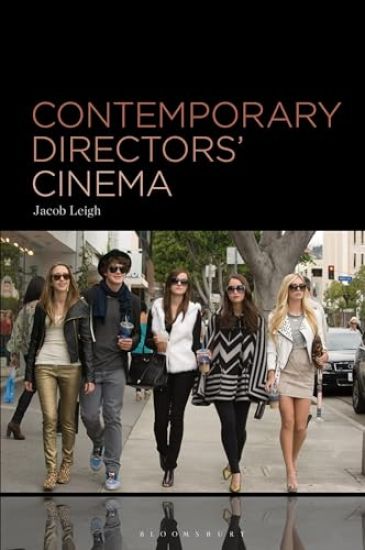
Contemporary Directors’ Cinema refreshes the argument about the role of the director through the practice of evaluative criticism. The book identifies what makes nine recent films successful achievements by their directors and collaborators. Each chapter gives some context for the director’s work, but the central argument focuses on the style, form and themes of each film, while explicating aspects of point of view and tone. Contemporary Directors’ Cinema argues that in each of its nine case studies the director’s work is central to the achievement of economy, unity, eloquence, subtlety, depth, vigour, vividness and intensity. By offering critical readings of nine films from mainstream film culture, Contemporary Directors’ Cinema demonstrates that cinema remains vital as a directors’ medium.The films discussed in this book are: Pain and Glory (2019); Shoplifters (2018); Parasite (2019); The White Ribbon (2009); Les Chansons d'amour (2007); The Bling Ring (2013); The Great Beauty (2013); Leviathan (2014); and Winter Sleep (2014).