Kirjojen hintavertailu. Mukana 11 342 296 kirjaa ja 12 kauppaa.

Kirjahaku

Etsi kirjoja tekijän nimen, kirjan nimen tai ISBN:n perusteella.

255 kirjaa tekijältä Jacob Neusner

Neusner on Judaism

Neusner on Judaism

Jacob Neusner

CRC Press Inc
2017
sidottu
Jacob Neusner has published more than 1000 books and articles, scholarly and academic, popular and journalistic, and is one of the most published humanities scholars in the world. Over a period of fifty years he has made significant, insightful and challenging contributions to the study of Rabbinic Judaism, particularly in the disciplines covered in the three volumes which make up Neusner on Judaism: the study of history (volume 1), literature (volume 2), and religion and theology (volume 3). These unique volumes of selective writings by Jacob Neusner, with new introductions by the author, offer scholars an invaluable resource in the field of Judaic Studies.
Neusner on Judaism

Neusner on Judaism

Jacob Neusner

Routledge
2022
nidottu
Jacob Neusner has published more than 1000 books and articles, scholarly and academic, popular and journalistic, and is one of the most published humanities scholars in the world. Over a period of fifty years he has made significant, insightful and challenging contributions to the study of Rabbinic Judaism, particularly in the disciplines covered in the three volumes which make up Neusner on Judaism: the study of history (volume 1), literature (volume 2), and religion and theology (volume 3). These unique volumes of selective writings by Jacob Neusner, with new introductions by the author, offer scholars an invaluable resource in the field of Judaic Studies.
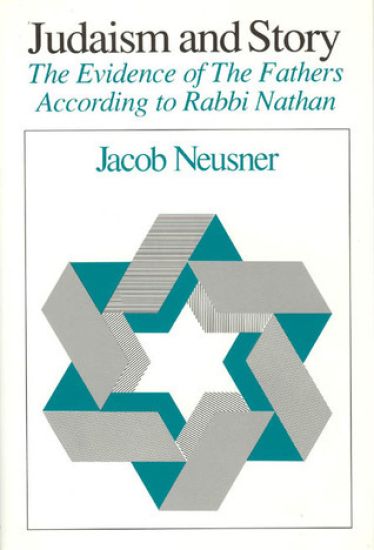
Judaism and Story

Judaism and Story

Jacob Neusner

University of Chicago Press
1992
sidottu
In this close analysis of The Fathers According to Rabbi Nathan, a sixth-century commentary on the Mishnah-tractate The Fathers (Avot), Jacob Neusner considers the way in which the story, as a distinctive type of narrative, entered the canonical writings of Judaism. The final installment in Neusner's cycle of analyses of the major texts of the Judaic canon, Judaism and Story shows that stories about sages exist in far greater proportion in The Fathers According to Rabbi Nathan than in any of the other principal writings in the canon of Judaism of late antiquity. Neusner's detailed comparison of The Fathers and The Fathers According to Rabbi Nathan demonstrates the transmission and elaboration of these stories and shows how these processes incorporated the newer view of the sage as a supernatural figure and of the eschatological character of Judaic teleology. These distinctions, as Neusner describes them, mark a shift in Jewish orientation to world history. Judaism and Story documents a chapter of rabbinic tradition that explored the possibility of historical orientation by means of stories. As Neusner demonstrates, this experiment with narrative went beyond the borders of rabbinic preoccupation with rhetorical argumentation focused on the explication of the Torah. The sage story moved in the direction of biography, but without allowing biography to emerge. This development, in Neusner's account, parallels the movement from epistle to Gospel in early Christianity and thus has broad implications for the history of religions.
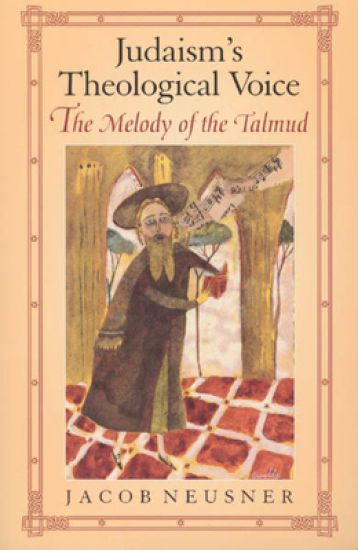
Judaism's Theological Voice

Judaism's Theological Voice

Jacob Neusner

University of Chicago Press
1995
sidottu
Taking the everyday life of contemporary Judaism as his beginning in this text, Neusner asks when in the life of the living faith of the Torah does Israel, the holy community, meet God? Where does the meeting take place? What is the medium of the encounter? Neusner sets forth the character and the form of the Torah as sung theology. Israel, the holy community, meets God in the synagogue, while at prayer, and in the yeshiva, when studying the Torah - at the moment in each setting when the Torah is received. In both circumstances people do not read but sing out its words. With the written part of the Torah sung in the synagogue, and the oral part declaimed in centres of sacred learning, music provides the medium for Judaism's theological voice. Neusner identifies a reciprocal exchange between the holy community Israel and God: Israel sings to God when the Torah is studied, and God sings to Israel when the Torah is declaimed. Through the metaphor of music, Neusner offers an account of how he believes those faithful to the Torah meet God in the Torah, and how they should listen to the melody of God's self-revelation.
Judaism's Theological Voice

Judaism's Theological Voice

Jacob Neusner

University of Chicago Press
1995
nidottu
Taking the everyday life of contemporary Judaism as his beginning in this text, Neusner asks when in the life of the living faith of the Torah does Israel, the holy community, meet God? Where does the meeting take place? What is the medium of the encounter? Neusner sets forth the character and the form of the Torah as sung theology. Israel, the holy community, meets God in the synagogue, while at prayer, and in the yeshiva, when studying the Torah - at the moment in each setting when the Torah is received. In both circumstances people do not read but sing out its words. With the written part of the Torah sung in the synagogue, and the oral part declaimed in centres of sacred learning, music provides the medium for Judaism's theological voice. Neusner identifies a reciprocal exchange between the holy community Israel and God: Israel sings to God when the Torah is studied, and God sings to Israel when the Torah is declaimed. Through the metaphor of music, Neusner offers an account of how he believes those faithful to the Torah meet God in the Torah, and how they should listen to the melody of God's self-revelation.
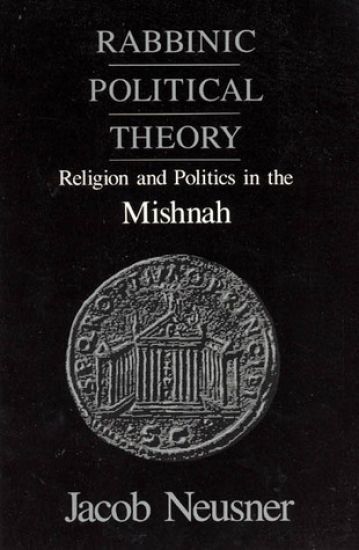
Rabbinic Political Theory

Rabbinic Political Theory

Jacob Neusner

University of Chicago Press
1991
nidottu
In The Economics of the Mishnah Jacob Neusner showed how economics functioned as an active and generative ingredient in the system of the Mishnah. With this new study, Rabbinic Political Theory, he moves from the economics to the politics of the Mishnah, placing that politics in the broader context of ancient political theory. Neusner begins his study with a modification of Weber's categories for a theory of politics: myth, institutions, administration, passion, responsibility, and proportion. Detailing the Mishnah's conception of politics, Neusner considers what he calls the stable and static structure and system through comparison with Aristotle. Although Aristotle's Politics and the Mishnah share a common economic theory based on the fundamental unit of the householder, they diverge in their conceptions of political structure and order. Aristotle embeds economics within political economy, while, Neusner argues, the Mishnah presents the anomaly of an economics separated from politics. Using modern political terms, this study explicates the complicated politics developed by the philosopher-theologians of the Mishnah. It is a first-rate contribution to our understanding of the intersection of politics, political philosophy, and the Mishnaic system.
Judaism and Christianity in the Age of Constantine

Judaism and Christianity in the Age of Constantine

Jacob Neusner

University of Chicago Press
1987
sidottu
With the conversion of Constantine in 312, Christianity began a period of political and cultural dominance that it would enjoy until the twentieth century. Jacob Neusner contradicts the prevailing view that following Christianity's ascendancy, Judaism continued to evolve in isolation. He argues that because of the political need to defend its claims to religious authenticity, Judaism was forced to review itself in the context of a triumphant Christianity. The definition of issues long discussed in Judaism—the meaning of history, the coming of the Messiah, and the political identity of Israel—became of immediate and urgent concern to both parties. What emerged was a polemical dialogue between Christian and Jewish teachers that was unprecedented. In a close analysis of texts by the Christian theologians Eusebius, Aphrahat, and Chrysostom on one hand, and of the central Jewish works the Talmud of the Land of Israel, the Genesis Rabbah, and the Leviticus Rabbah on the other, Neusner finds that both religious groups turned to the same corpus of Hebrew scripture to examine the same fundamental issues. Eusebius and Genesis Rabbah both address the issue of history, Chrysostom and the Talmud the issue of the Messiah, and Aphrahat and Leviticus Rabbah the issue of Israel. As Neusner demonstrates, the conclusions drawn shaped the dialogue between the two religions for the rest of their shared history in the West.
Judaism and Christianity in the Age of Constantine

Judaism and Christianity in the Age of Constantine

Jacob Neusner

University of Chicago Press
2007
nidottu
With the conversion of Constantine in AD 312, Christianity began a period of political and cultural dominance that it would enjoy until the twentieth century. Jacob Neusner contradicts the prevailing view that following Christianity's ascendancy, Judaism continued to evolve in isolation. He argues that because of the political need to defend its claims to religious authenticity, Judaism was forced to review itself in the context of a triumphant Christianity. The definition of issues long discussed in Judaism - the meaning of history, the coming of the Messiah, and the political identity of Israel - became of immediate and urgent concern to both parties. What emerged was a polemical dialogue between Christian and Jewish teachers that was unprecedented. In a close analysis of texts by the Christian theologians Eusebius, Aphrahat, and Chrysostom, and of central Jewish works such as the Talmud of the Land of Israel, the Genesis Rabbah, and the Leviticus Rabbah, Neusner finds that both religious groups turned to the same corpus of Hebrew scripture to examine the same fundamental issues. As Neusner demonstrates, the conclusions drawn in these texts shaped the dialogue between the two religions for the rest of their shared history in the West.
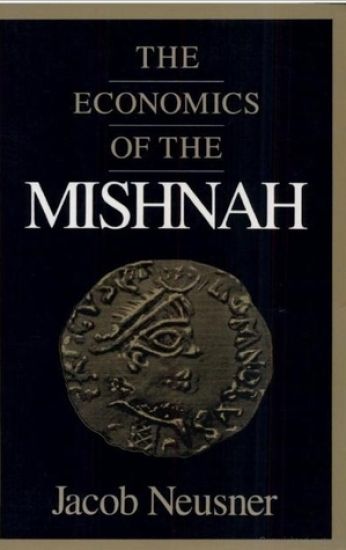
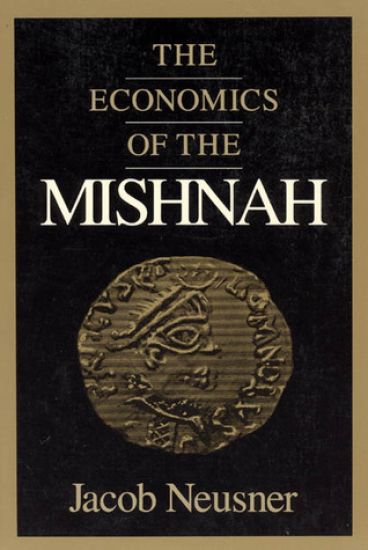
The Economics of the Mishnah

The Economics of the Mishnah

Jacob Neusner

University of Chicago Press
1990
sidottu
In this compelling study, Jacob Neusner argues that economics is an active and generative ingredient of the system of the Mishnah. The Mishnah directly addresses such economic concerns as the value of work, agronomics, currency, commerce and the marketplace, and correct management of labor and of the household. In all its breadth, the Mishnah poses the question of the critical place occupied by the economy in society under God's rule. The Economics of the Mishnah is the first book to examine the place of economic theory generally in the Judaic system of the Mishnah. Jacob Neusner begins by surveying previous work on economics and Judaism, the best known being Werner Sombart's The Jews and Modern Capitalism. The mistaken notion that Jews have had a common economic history has outlived the demise of Sombart's argument, and it is a notion that Neusner overturns before discussing the Mishnaic economics. Only in Aristotle, Neusner argues, do we find an equal to the Mishnah's accomplishment in engaging economics in the service of a larger systemic statement. Neusner shows that the framers of the Mishnah imagined a distributive economy functioning through the Temple and priesthood, while also legislating for the action of markets. The economics of the Mishnah, then, is to some extent a mixed economy. The dominant, distributive element in this mixed economy, Neusner contends, derives from the belief that the Temple and its designated castes on earth exercise God's claim to the ownership of the holy land. He concludes by considering the implications of the derivation of the Mishnah's economics from the interests of the undercapitalized and overextended farmer.
The Economics of the Mishnah

The Economics of the Mishnah

Jacob Neusner

University of Chicago Press
1990
nidottu
In this compelling study, Jacob Neusner argues that economics is an active and generative ingredient of the system of the Mishnah. The Mishnah directly addresses such economic concerns as the value of work, agronomics, currency, commerce and the marketplace, and correct management of labor and of the household. In all its breadth, the Mishnah poses the question of the critical place occupied by the economy in society under God's rule. The Economics of the Mishnah is the first book to examine the place of economic theory generally in the Judaic system of the Mishnah. Jacob Neusner begins by surveying previous work on economics and Judaism, the best known being Werner Sombart's The Jews and Modern Capitalism. The mistaken notion that Jews have had a common economic history has outlived the demise of Sombart's argument, and it is a notion that Neusner overturns before discussing the Mishnaic economics. Only in Aristotle, Neusner argues, do we find an equal to the Mishnah's accomplishment in engaging economics in the service of a larger systemic statement. Neusner shows that the framers of the Mishnah imagined a distributive economy functioning through the Temple and priesthood, while also legislating for the action of markets. The economics of the Mishnah, then, is to some extent a mixed economy. The dominant, distributive element in this mixed economy, Neusner contends, derives from the belief that the Temple and its designated castes on earth exercise God's claim to the ownership of the holy land. He concludes by considering the implications of the derivation of the Mishnah's economics from the interests of the undercapitalized and overextended farmer.
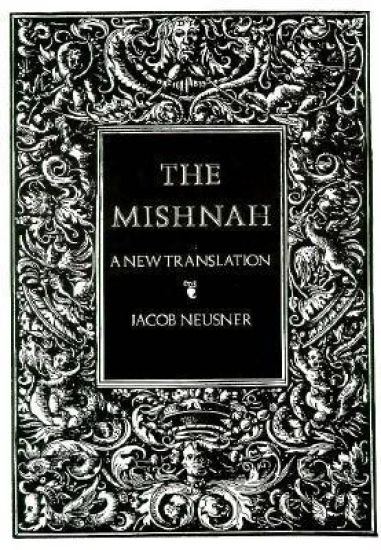
The Mishnah

The Mishnah

Jacob Neusner

Yale University Press
1991
pokkari
The eminent Judaica scholar Jacob Neusner provides here the first form-analytical translation of the Mishnah. This path-breaking edition provides as close to a literal translation as possible, following the syntax of Mishnaic Hebrew in its highly formalized and syntactically patterned language. Demonstrating that the Mishnah is a work of careful and formal poetry and prose, Neusner not only analyzes the repeated construction but also divides the thoughts on the printed page so that the patterned language and the poetry comprised in those patterns emerge visually.“With meticulous methodology and with rare stylistic beauty of expression, Neusner. . . has produced an incomparable translation of the Mishnah, both new and innovative, which reflects the genius of the original Hebrew idiom. Neusner penetrates the Tannaitic mind, capturing its spirit, its subtle nuances, and its poetic cadences. . . A most impressive volume which transcends all previous versions of the Mishnah.”—Choice“The overall effect is a linguistic purity and simplicity which strives to capture not only the substance, but the spirit and style of the Mishnah’s universe. . . . An artful and impressive addition. . . . It deserves not only admiration but serious attention as well.”—Charles Raffel, Judaica Book News“The work is significant because for the first time it makes available to student and scholar alike a rendition of the Mishnah which attempts to convey not only the substance of that document, but the highly patterned and formalized language which Neusner believes is the key to comprehending its contents.”—Daniel H. Gordis, Hebrew Studies
Israel and Zion in American Judaism

Israel and Zion in American Judaism

Jacob Neusner

TAYLOR FRANCIS LTD
2023
nidottu
First published in 1993, Israel and Zion in American Judaism: The Zionist Fulfillment is a collection of 24 essays exploring the concept of who or what is "Israel" following the establishment of the Jewish State in 1948 and the subsequent crisis of self-definition in American Jewry.
Israel and Zion in American Judaism
First published in 1993, Israel and Zion in American Judaism: The Zionist Fulfillment is a collection of 24 essays exploring the concept of who or what is "Israel" following the establishment of the Jewish State in 1948 and the subsequent crisis of self-definition in American Jewry.
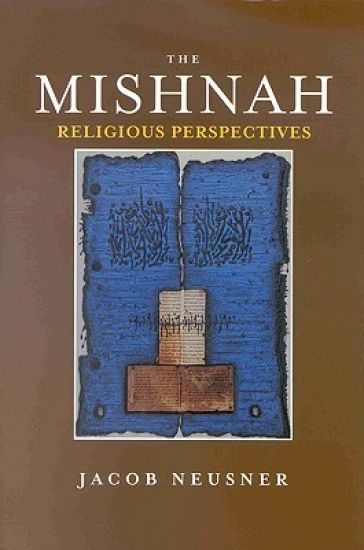
The Mishnah, Religious Perspectives Volume 1
What is the relationship of the Mishnah to Scripture for understanding the religion of Judaism? What is the relationship between religious ideas and the world in which those ideas emerged? What is the formal religious significance of the language of the Mishnah? The religious perspectives of the Mishnah do not simply record the rules and regulations of bygone times; rather, they mirror the way of life and the social and religious history of Judaism. This publication has also been published in hardback, please click here for details.
Judaism: The Basics

Judaism: The Basics

Jacob Neusner

Routledge
2006
sidottu
The oldest of the world’s major faiths, Judaism as practiced today represents a tradition that goes back nearly 6,000 years. Accessible and wide-ranging, Judaism: The Basics is a must-have resource covering the stories, beliefs and expressions of that tradition.Key topics covered include:the TorahIsrael – the state and its peoplePassoverReform Judaism, Orthodox Judaism and Zionismthe impact of the Holocaust.With a glossary of terms and extensive suggestions for further reading, Judaism: The Basics is an essential guide through the rich intricacies of the Jewish faith and people.
Judaism: The Basics

Judaism: The Basics

Jacob Neusner

Routledge
2006
nidottu
The oldest of the world’s major faiths, Judaism as practiced today represents a tradition that goes back nearly 6,000 years. Accessible and wide-ranging, Judaism: The Basics is a must-have resource covering the stories, beliefs and expressions of that tradition.Key topics covered include:the TorahIsrael – the state and its peoplePassoverReform Judaism, Orthodox Judaism and Zionismthe impact of the Holocaust.With a glossary of terms and extensive suggestions for further reading, Judaism: The Basics is an essential guide through the rich intricacies of the Jewish faith and people.
Vanquished Nation, Broken Spirit

Vanquished Nation, Broken Spirit

Jacob Neusner

Cambridge University Press
1987
sidottu
From the destruction of the Second Temple in 70 A.D. to the creation of the State of Israel in 1948, the Jews were a conquered nation. Yet Jewish sages and holy works preached a doctrine of both interior and exterior virtue that allowed the Jewish people to feel and believe in the dignity and nobility of their earthly condition. Neusner’s book explores the attitudes in Jewish canonical writings and asks how these virtues relate to the politics of the Jews as a vanquished people. Jacob Neusner, the author of over 166 books on Judaism and Jewish history, is a frequent lecturer both in America and throughout the world. He has been a Fulbright Fellow at the Hebrew University, and twice has been a Guggenheim Fellow.
Judaism and its Social Metaphors

Judaism and its Social Metaphors

Jacob Neusner

Cambridge University Press
1989
sidottu
The crisis in Palestine is a manifestation of Israel's historical significance to the Jewish people. Jacob Neusner examines the crucial role of the definition of Israel in the history of Judaic thought. He argues that Judaic sages have constructed various metaphoric images of Israel - as family, as chosen people, as a nation - in order to express changing theological concerns as the religion evolved. The history of the definition of Israel is revealed as the reflection of the history of Judaism itself. This is a bold and original interpretation of the way in which Jews, as well as other peoples, define themselves.
Uniting the Dual Torah

Uniting the Dual Torah

Jacob Neusner

Cambridge University Press
1990
sidottu
In this book Jacob Neusner analyzes the text of Sifra, a commentary on the book of Leviticus, arguing that Sifra should be understood as successfully relating the Mishnah, the authoritative writing down of the Oral Torah, to Jewish Scripture, or the written Torah. Neusner shows how Sifra's authors adopted a mediating position between the written Torah and the Mishnah, reconstructing large tracts of the Mishnah according to the logic and program of the written Torah of Leviticus.