Kirjojen hintavertailu. Mukana 12 016 292 kirjaa ja 12 kauppaa.

Kirjahaku

Etsi kirjoja tekijän nimen, kirjan nimen tai ISBN:n perusteella.

5 kirjaa tekijältä Jacqueline Riding

Jacobites

Jacobites

Jacqueline Riding

Bloomsbury Publishing PLC
2017
nidottu
The 1745 Jacobite Rebellion was a turning point in British history. When Charles Edward Stuart, commonly known as the Young Pretender, sailed from France to Scotland in July 1745, and with only a handful of supporters to claim the throne for his exiled father, few people within Britain were alarmed. But after he raised the Stuart standard at Glenfinnan in the Western Highlands, destroyed a contingent of the British army at Prestonpans near Edinburgh, and then marched south into England, swiftly reaching Derby, the rising threatened to destabilise the British state, dethrone King George and the Hanoverian dynasty, while disrupting Britain’s military capability in Europe and colonial activities in America and beyond. Less than four decades after the controversial Act of Union between Scotland and England, arrogance and incompetence on the part of government ministers had allowed the small danger Charles and his Jacobite army had initially posed to escalate into a full-scale civil war: part of the on-going dynastic, political and ideological struggle for the heart and soul of this new nation. Yet the reality of the ’45 continues to be obscured by fiction and myth, as personified by the heroic, gallant but doomed ‘Bonnie Prince Charlie’ versus the heartless victor, ‘Butcher’ Cumberland. In the years 1745-6 nothing was certain. While utilising past and recent scholarship, this magnificent account draws extensively on a wealth of contemporary sources, revealing the thoughts and feelings of the key players and local eyewitnesses as these extraordinary events played out. What emerges is a story more complex, paradoxical and even tragic than the myth suggests.From the exiled Stuart court in Rome to the palaces of Versailles and Holyroodhouse, from the battlefields of Flanders to Falkirk and Culloden, Jacobites brilliantly sets the ’45 in its full and proper context on the stage of European history. And in our own time of seismic shift for the Union, the British political system, constitution and monarchy, Jacobites offers a timely re-telling of this critical episode in our island’s shared past.
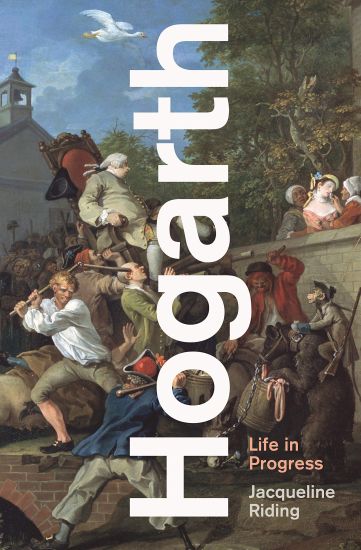
Hogarth

Hogarth

Jacqueline Riding

Profile Books Ltd
2022
pokkari
THE SUNDAY TIMES ART BOOK OF THE YEAR A Sunday Times Best Paperback of 2022 Christie's Best Art Books of the Year 'Deft and richly detailed ... rescues the artist from John Bull caricature' - Michael Prodger, Sunday Times 'Marvellous ... a vivid and compelling reconstruction of the settings of Hogarth's life and artistic achievements, and of the nature of the man' - Professor Linda Colley, author of The Gun, the Ship, and the Pen 'Full of richness, originality and considered humour, unafraid to shock with thrilling new insight ... terrific' - Dr Gus Casely-Hayford, Director of V&A Stratford & Sky Arts 'The full technicolour panorama of Georgian life laid out in a huge and passionate book' - Lucy Worsley, Chief Curator at Historic Royal Palaces and author of Courtiers: The Secret History of the Georgian Court On a late spring night in 1732, a boisterous group of friends set out from their local pub. They are beginning a journey, a 'peregrination' that will take them through the gritty streets of Georgian London and along the River Thames as far as the Isle of Sheppey. And among them is an up-and-coming engraver and painter, just beginning to make a name for himself: William Hogarth. Hogarth's vision, to a vast degree, still defines the eighteenth century. In this, the first biography for over twenty years, Jacqueline Riding brings him to vivid life, immersing us in the world he inhabited and from which he drew inspiration. At the same time, she introduces us to an artist who was far bolder and more various than we give him credit for: an ambitious self-made man, a devoted husband, a sensitive portraitist, an unmatched storyteller, philanthropist, technical innovator and author of a seminal work of art theory. Following in his own footsteps from humble beginnings to professional triumph (and occasional disaster), Hogarth illuminates the work and life of a great artist who embraced the highest principles even while charting humanity's lowest vices.
Basic Instincts

Basic Instincts

Jacqueline Riding

Paul Holberton Publishing
2017
pokkari
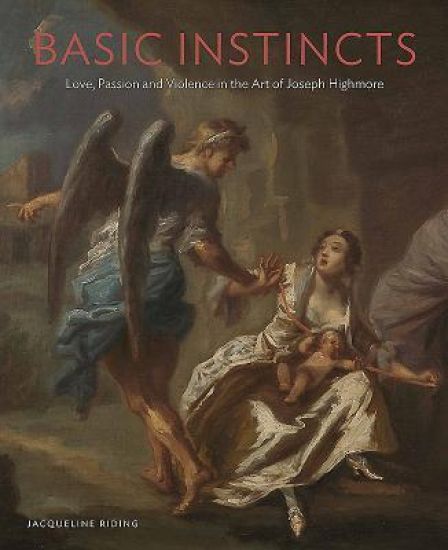
Published to coincide with an exhibition at the Foundling Museum in London, this fascinating book will re-introduce Joseph Highmore (1692–1780), an artist of status and substance in his day, who is now largely unknown. It takes as its focus Highmore’s small oil painting known as The Angel of Mercy (1746), one of the most original and controversial images in 18th-century British art. The painting depicts a woman in fashionable mid-18th-century dress strangling the infant lying on her lap. A cloaked, barefooted figure cowers to the right as an angel intervenes, pointing towards the Foundling Hospital, the recently built refuge for abandoned infants, in the distance. The image attempts to address one of the most disturbing aspects of the Foundling Hospital story – certainly a subject that many (now as then) would consider beyond depiction. But if any artist of the period had attempted such a subject it would surely be William Hogarth, not the portrait painter Joseph Highmore? In fact, the painting was attributed to Hogarth for almost two centuries, until reattribution in the 1990s. Even so, it is surprising that despite the wealth of scholarship associated with Hogarth and the ‘modern moral subject’ of the 1730s and 1740s, The Angel of Mercy has received little attention until now. The book (and exhibition) seeks to address this, while encouraging greater interest in, and appreciation for, an important but underrated British artist. The author will set this extraordinary painting within the context of Highmore’s life and work, as well as broader historical and artistic contexts. This will include the exploration of prime examples of Highmore’s portraiture, such as his complex, monumental group portrait The Family of Sir Eldred Lancelot Lee and the small-scale ‘conversations’ The Vigor Family and The Artist and his Family, juxtaposed with analysis of key subject paintings, Hagar and Ishmael and the ‘Pamela’ series. Collectively they address relevant and highly contentious issues around the status and care of women and children, master/servant relations, motherhood, abuse, abandonment, infant death and murder.
Hogarth's Britons

Hogarth's Britons

Jacqueline Riding

Paul Holberton Publishing Ltd
2023
nidottu
Hogarth’s Britons explores how the English painter and graphic satirist William Hogarth (1697–1764) set out to define British nationhood and identity at a time of division at home and conflict abroad. With notions of community cohesion, good citizenship and patriotism, wrapped up in a unifying idea of British national character and spirit in all its variety, and set alongside the ongoing national debate on Britain’s past, present and future within European and World affairs, Hogarth and his art has never been more relevant. In the summer of 1745, Prince Charles Edward Stuart ‘Bonnie Prince Charlie’ landed with his supporters, the ‘Jacobites’, in a remote corner of Scotland. This signalled the start of his audacious military campaign, with the backing of Britain’s global adversary France and during a Europe-wide war, to topple the Hanoverian, Protestant monarch George II and restore the Catholic Stuarts, exiled in France and then Rome since 1688, to the throne. The country descended into turmoil, with regional, local and family loyalty for these rival royal dynasties severely tested, and opposing visions for the new nation of Great Britain – since the Union of England and Scotland in 1707 – laid bare. By early December the prince and his 6,000 troops arrived in Derby, just 120 miles and five days’ march from London. For both sides everything was at stake. From the 1720s, through the crises of the early 1740s, to the civil war called the 1745 Jacobite Rebellion or Rising, Prince Charles’s defeat at Culloden in April 1746 and beyond, Hogarth created some of the most iconic images in British and European art, including Marriage A-La-Mode, O the Roast Beef of Old England (The Gate of Calais) and The March of the Guards to Finchley. Through such vibrant scenes, rich in topical commentary, he conveyed a sense of external threat (real and imagined) from foreign powers and internal political, social and cultural upheaval. At the same time he offered his fellow Britons a confident, reassuring idea of the rights and liberties they enjoyed under King George and his government: a flawed status quo, as Hogarth would readily admit, yet certainly better, he would argue, than the regime that would replace it under the ‘popish’ Stuarts as client monarchs of the self-serving French king, Louis XV. With British society and politics in flux, and the Union between Scotland and England arguably more vulnerable now than at any moment since 1746, the themes explored in Hogarth’s Britons have profound resonance with our own time.