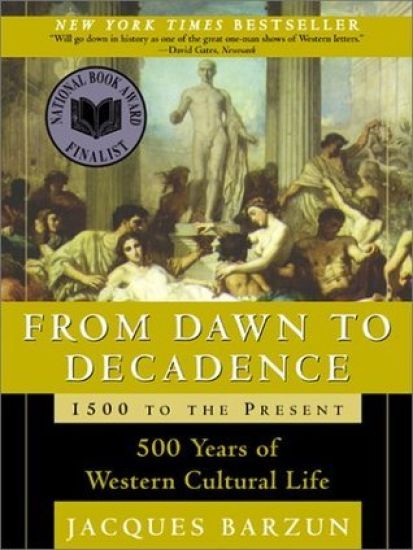
Throughout his career Jacques Barzun, author of the New York Times bestseller and National Book Award Finalist From Dawn to Decadence, has always been known as a witty and graceful essayist, one who combines a depth of knowledge and a rare facility with words.Now Michael Murray has carefully selected eighty of Barzun's most inventive, accomplished, and insightful essays, and compiled them in one impressive volume. With subjects ranging from history to baseball to crime novels, A Jacques Barzun Reader is a feast for any reader.
"A stunning five-century study of civilization's cultural retreat." -- William Safire, New York TimesHighly regarded here and abroad for some thirty works of cultural history and criticism, master historian Jacques Barzun has set down in one continuous narrative the sum of his discoveries and conclusions about the whole of Western culture since 1500.Barzun describes what Western Man wrought from the Renaissance and Reformation down to the present in the double light of its own time and our pressing concerns. He introduces characters and incidents with his unusual literary style and grace, bringing to the fore those that have been forgotten or obscured. His compelling chapters--such as "Puritans as Democrats," "The Monarchs' Revolution," and "The Artist Prophet and Jester"--show the recurrent role of great themes throughout the era. The triumphs and defeats of five hundred years form an inspiring saga that modifies the current impression of one long tale of oppression by white European males. Women and their deeds are prominent, and freedom (even in sexual matters) is not an invention of the last decades. And when Barzun rates the present not as a culmination but a decline, he is in no way a prophet of doom. Instead, he shows decadence as the normal close of great periods and a necessary condition of the creative novelty that will burst forth--tomorrow or the next day.Only after a lifetime of separate studies covering a broad territory could a writer create with such ease the synthesis displayed in this magnificent volume.
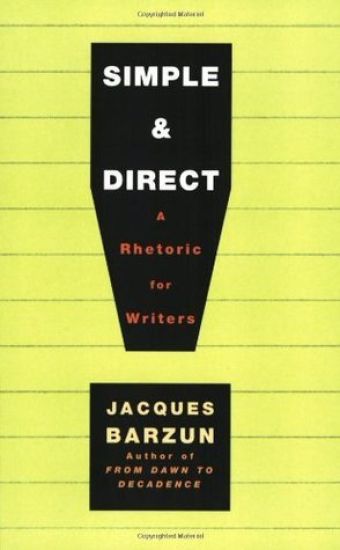
A fter a lifetime of writing and editing prose, Jacques Barzun has set down his view of the best ways to improve one's style. His discussions of diction, syntax, tone, meaning, composition, and revision guide the reader through the technique of making the written word clear and agreeable to read. Exercises, model passages both literary and casual, and hundreds of amusing examples of usage gone wrong show how to choose the right path to self-expression in forceful and distinctive words.
The House of Intellect embraces: persons who consciously and methodically employ the mind, the forms and habits governing the activities in which the mind is so employed, and the conditions under which these people and activities exist.
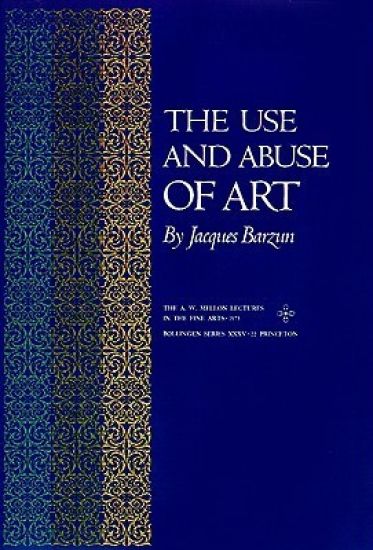
The lecturer traces the historical development of attitudes toward the arts over the past 150 years, suggesting that the present is a period of cultural liquidation, nothing less than the ending of the modern age that began with the Renaissance.
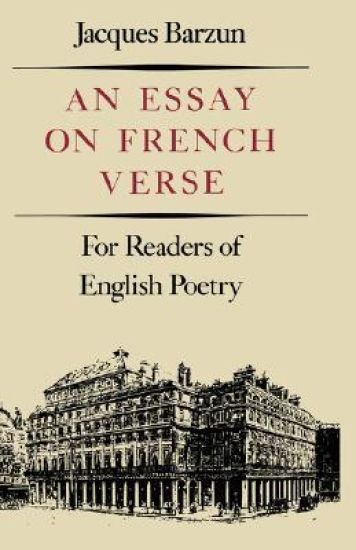
In An Essay on French Verse-For Readers of English Poetry, Jacques Barzun addresses the baffling English prejudice against French poetry. Barzun's many-faceted and entertaining study muses on six hundred years of French verse, its rules and forms and how they evolved. It also has significant sections on the French language itself, its sounds and difficulties; on verse music in language generally; on the character and achievements of the greatest French poets; and finally, on the social and political conditions that encouraged successive innovations, including the prevailing wordwide practice of free verse. The Essay, moreover, draws not only on a lifetime's reading, but on personal reminiscences as well: of stuffy poetry lessons in the French lyc e; of the poet Apollinaire expounding his views on language to amuse the child sitting on his knee; of the author's great-grandmother telling him about proper French pronunciation, as it was in her youth, eighty years earlier. In sum, Barzun's book goes a long way toward answering the question posed in 1917 by A. E. Housman to Andr Gide: How is it that every nation has produced poetry except France?
Now considered a classic, this volume is one of the most widely read and highly acclaimed works ever published in the field of education. It is a provocative, often witty and irreverent personal commentary on teaching by one of America's most brilliant philosophers and historians. The book goes beyond a mere discussion of education by attempting to illuminate the whole question of our national culture. Originally published by Atlantic Monthly Press in 1944.
With his customary wit and grace, Dr. Barzun contrasts the ritual of education with the lost art of teaching. Twenty-one chapters deal with three major issues: the practice of teaching, the subject matter to be taught, and the institutional and cultural aspects of teaching.