Kirjojen hintavertailu. Mukana 11 244 527 kirjaa ja 12 kauppaa.

Kirjahaku

Etsi kirjoja tekijän nimen, kirjan nimen tai ISBN:n perusteella.

139 kirjaa tekijältä Jacques Derrida

Signature Derrida

Signature Derrida

Jacques Derrida

University of Chicago Press
2013
sidottu
Throughout his long career, Jacques Derrida had a close, collaborative relationship with "Critical Inquiry" and its editors. He saved some of his most important essays for the journal, and he relished the ensuing arguments and polemics that stemmed from the responses to his writing that "Critical Inquiry" encouraged. Collecting the best of Derrida's work that was published in the journal between 1980 and 2002, "Signature Derrida" provides a remarkable introduction to the philosopher and the evolution of his thought. These essays define three significant "periods" in Derrida's writing: his early, seemingly revolutionary phase; a middle stage, often autobiographical, that included spirited defense of his work; and his late period, when his persona as a public intellectual was prominent, and he wrote on topics such as animals and religion. The first period is represented by essays like "The Law of Genre," in which Derrida produces a kind of phenomenological narratology. Another essay, "The Linguistic Circle of Geneva," embodies the second, presenting deconstructionism at its best: Derrida shows that what was imagined to be an epistemological break in the study of linguistics was actually a repetition of earlier concepts. The final period of Derrida's writing includes the essays "Of Spirit" and "The Animal That Therefore I Am (More to Follow)" and eulogies for Michel Foucault, Louis Marin, and Emmanuel Levinas, in which Derrida uses the ideas of each thinker to push forward the implications of their theories. Gathering a small but crucial portion of the oeuvre of this singular philosopher, "Signature Derrida" is the most wide-ranging, and thus most representative, anthology of Derrida's work to date.
Signature Derrida

Signature Derrida

Jacques Derrida

University of Chicago Press
2013
nidottu
Throughout his long career, Jacques Derrida had a close, collaborative relationship with "Critical Inquiry" and its editors. He saved some of his most important essays for the journal, and he relished the ensuing arguments and polemics that stemmed from the responses to his writing that "Critical Inquiry" encouraged. Collecting the best of Derrida's work that was published in the journal between 1980 and 2002, "Signature Derrida" provides a remarkable introduction to the philosopher and the evolution of his thought. These essays define three significant "periods" in Derrida's writing: his early, seemingly revolutionary phase; a middle stage, often autobiographical, that included spirited defense of his work; and his late period, when his persona as a public intellectual was prominent, and he wrote on topics such as animals and religion. The first period is represented by essays like "The Law of Genre," in which Derrida produces a kind of phenomenological narratology. Another essay, "The Linguistic Circle of Geneva," embodies the second, presenting deconstructionism at its best: Derrida shows that what was imagined to be an epistemological break in the study of linguistics was actually a repetition of earlier concepts. The final period of Derrida's writing includes the essays "Of Spirit" and "The Animal That Therefore I Am (More to Follow)" and eulogies for Michel Foucault, Louis Marin, and Emmanuel Levinas, in which Derrida uses the ideas of each thinker to push forward the implications of their theories. Gathering a small but crucial portion of the oeuvre of this singular philosopher, "Signature Derrida" is the most wide-ranging, and thus most representative, anthology of Derrida's work to date.
A Derrida Reader

A Derrida Reader

Jacques Derrida

Columbia University Press
1991
pokkari
Jacques Derrida is one of the most prolific and influential contemporary French intellectuals. Twenty-two essays and excerpts from Derrida's writings over the last twenty-five years are gathered in this accessible introduction, A Derrida Reader. The book's five sections are carefully introduced by the editor, and each selection of Derrida's work is presented succinctly in context. A general introduction to the volume by Peggy Kamuf provides an original interpretation and overview of Derrida's work and philosophy.
Derrida and Negative Theology

Derrida and Negative Theology

Jacques Derrida

State University of New York Press
1992
pokkari
This book explores the thought of Jacques Derrida as it relates to the tradition of apophatic thought-negative theology and philosophy-in both Western and Eastern traditions. Following the Introduction by Toby Foshay, two of Derrida's essays on negative theology, Of an Apocalyptic Tone Newly Adopted in Philosophy and How to Avoid Speaking: Denials, are reprinted here. These are followed by essays from a Western perspective by Mark C. Taylor and Michel Despland, and essays from an Eastern perspective by David Loy, a Buddhist, and Harold Coward, a Hindu. In the Conclusion, Jacques Derrida responds to these discussions.
Thinking Out of Sight

Thinking Out of Sight

Jacques Derrida

University of Chicago Press
2021
sidottu
Jacques Derrida remains a leading voice of philosophy, his works still resonating today—and for more than three decades, one of the main sites of Derridean deconstruction has been the arts. Collecting nineteen texts spanning from 1979 to 2004, Thinking out of Sight brings to light Derrida’s most inventive ideas about the making of visual artworks. The book is divided into three sections. The first demonstrates Derrida’s preoccupation with visibility, image, and space. The second contains interviews and collaborations with artists on topics ranging from the politics of color to the components of painting. Finally, the book delves into Derrida’s writings on photography, video, cinema, and theater, ending with a text published just before his death about his complex relationship to his own image. With many texts appearing for the first time in English, Thinking out of Sight helps us better understand the critique of representation and visibility throughout Derrida’s work, and, most importantly, to assess the significance of his insights about art and its commentary.
The Problem of Genesis in Husserl's Philosophy

The Problem of Genesis in Husserl's Philosophy

Jacques Derrida

University of Chicago Press
2003
sidottu
Derrida's first book-length work, "The Problem of Genesis in Husserl's Philosophy", was originally written for his "diplome d'etudes superieurs" in 1953 and 1954. Surveying Husserl's major works on phenomenology, Derrida reveals what he sees as an internal tension in Husserl's central notion of "genesis" and gives us our first glimpse into the concerns and frustrations that would later lead him to abandon phenomenology and develop his now famous method of deconstruction. For Derrida, the problem of genesis in Husserl's philosophy is that both temporality and meaning must be generated by prior acts of the transcendental subject, but transcendental subjectivity must itself be constituted by an act of genesis. Hence, the notion of genesis in the phenomenological sense underlies both temporality and atemporality, history and philosophy, resulting in a tension that Derrida sees as ultimately unresolvable yet central to the practice of phenomenology. "The Problem of Geneses" complements Husserl's posthumously published "Origin of Geometry" and Derrida's own "Speech and Phenomena", showing the development of Derrida's approach to phenomenology as well as documenting the state of phenomenological thought in France during a particularly fertile period, when Levinas, Sartre, Merleau-Ponty, Ricoeur and Tran-Duc-Thao, as well as Derrida, were all working through it. But the book is most important in allowing us to follow Derrida's own development as a philosopher by tracing the roots of his later work in deconstruction to these early critical reflections on Husserl's phenomenology.
The Post Card

The Post Card

Jacques Derrida

University of Chicago Press
1987
nidottu
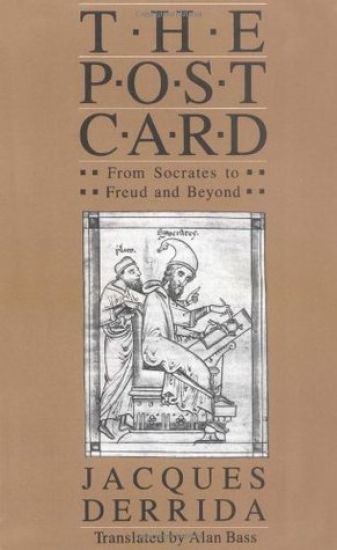
17 November 1979You were reading a somewhat retro loveletter, the last in history. But you have not yet received it. Yes, its lack or excess of address prepares it to fall into all hands: a post card, an open letter in which the secret appears, but indecipherably. What does a post card want to say to you? On what conditions is it possible? Its destination traverses you, you no longer know who you are. At the very instant when from its address it interpellates, you, uniquely you, instead of reaching you it divides you or sets you aside, occasionally overlooks you. And you love and you do not love, it makes of you what you wish, it takes you, it leaves you, it gives you. On the other side of the card, look, a proposition is made to you, S and p, Socrates and plato. For once the former seems to write, and with his other hand he is even scratching. But what is Plato doing with his outstretched finger in his back? While you occupy yourself with turning it around in every direction, it is the picture that turns you around like a letter, in advance it deciphers you, it preoccupies space, it procures your words and gestures, all the bodies that you believe you invent in order to determine its outline. You find yourself, you, yourself, on its path. The thick support of the card, a book heavy and light, is also the specter of this scene, the analysis between Socrates and Plato, on the program of several others. Like the soothsayer, a "fortune-telling book" watches over and speculates on that-which-must-happen, on what it indeed might mean to happen, to arrive, to have to happen or arrive, to let or to make happen or arrive, to destine, to address, to send, to legate, to inherit, etc., if it all still signifies, between here and there, the near and the far, da und fort, the one or the other. You situate the subject of the book: between the posts and the analytic movement, the pleasure principle and the history of telecommunications, the post card and the purloined letter, in a word the transference from Socrates to Freud, and beyond. This satire of epistolary literature had to be farci, stuffed with addresses, postal codes, crypted missives, anonymous letters, all of it confided to so many modes, genres, and tones. In it I also abuse dates, signatures, titles or references, language itself.J. D."With The Post Card, as with Glas, Derrida appears more as writer than as philosopher. Or we could say that here, in what is in part a mock epistolary novel (the long section is called "Envois," roughly, "dispatches" ), he stages his writing more overtly than in the scholarly works. . . . The Post Card also contains a series of self-reflective essays, largely focused on Freud, in which Derrida is beautifully lucid and direct."—Alexander Gelley, Library Journal
Margins of Philosophy

Margins of Philosophy

Jacques Derrida

University of Chicago Press
1984
nidottu
"In this densely imbricated volume Derrida pursues his devoted, relentless dismantling of the philosophical tradition, the tradition of Plato, Kant, Hegel, Nietzsche, Husserl, Heidegger—each dealt with in one or more of the essays. There are essays too on linguistics (Saussure, Benveniste, Austin) and on the nature of metaphor ("White Mythology"), the latter with important implications for literary theory. Derrida is fully in control of a dazzling stylistic register in this book—a source of true illumination for those prepared to follow his arduous path. Bass is a superb translator and annotator. His notes on the multilingual allusions and puns are a great service."—Alexander Gelley, Library Journal
Positions

Positions

Jacques Derrida

University of Chicago Press
1982
nidottu
Positions is a collection of three interviews with Jacques Derrida that illuminate and make more accessible the complex concepts and terms treated extensively in such works as Writing and Difference and Dissemination. Derrida takes positions on his detractors, his supporters, and the two major preoccupations of French intellectual life, Marxism and psychoanalysis. The interviews included in this volume offer a multifaceted view of Derrida. "Implications: Interview with Henri Ronse" contains a succinct statement of principles. "Seminology and Grammatology: Interview with Julia Kristeva" provides important clarifications of the role played by linguistics in Derrida's work. "Positions: Interview with Jean-Louis Houdebine and Guy Scarpetta" is a wide-ranging discussion that touches on many of the polemics that Derrida's work has provoked. Alan Bass, whose translation of Writing and Difference was highly praised for its clarity, accuracy, and readability, has provided extremely useful critical notes, full of vital information, including historical background.
The Beast and the Sovereign, Volume I

The Beast and the Sovereign, Volume I

Jacques Derrida

University of Chicago Press
2009
sidottu
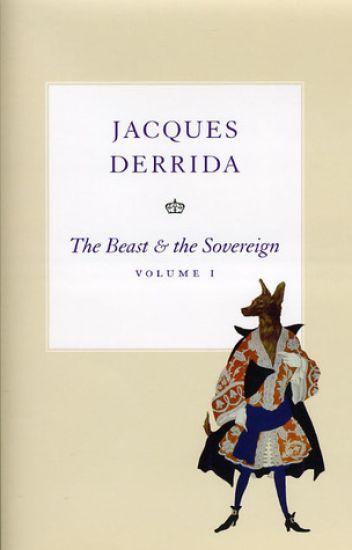
When he died in 2004, Jacques Derrida left behind a vast legacy of unpublished material, much of it in the form of written lectures. With "The Beast and the Sovereign, Volume I", the University of Chicago Press inaugurated an ambitious series, edited by Geoffrey Bennington and Peggy Kamuf, translating these important works into English. This volume, now in paperback, launched the series with Derrida's exploration of the persistent association of animality with sovereignty. "The Beast and The Sovereign" are connected, he contends, because neither animals nor kings are subject to the law - the sovereign stands above it, while the beast falls outside the law from below. An astonishing array of texts - from La Fontaine's fable "The Wolf and the Lamb" to Machiavelli's "Prince" - come into critical play as Derrida focuses in on questions of force, right, justice, and philosophical interpretations of the limits between man and animal.
The Beast and the Sovereign, Volume I

The Beast and the Sovereign, Volume I

Jacques Derrida

University of Chicago Press
2011
nidottu
When he died in 2004, Jacques Derrida left behind a vast legacy of unpublished material, much of it in the form of written lectures. With "The Beast and the Sovereign, Volume I", the University of Chicago Press inaugurated an ambitious series, edited by Geoffrey Bennington and Peggy Kamuf, translating these important works into English. This volume, now in paperback, launched the series with Derrida's exploration of the persistent association of animality with sovereignty. "The Beast and The Sovereign" are connected, he contends, because neither animals nor kings are subject to the law - the sovereign stands above it, while the beast falls outside the law from below. An astonishing array of texts - from La Fontaine's fable "The Wolf and the Lamb" to Machiavelli's "Prince" - come into critical play as Derrida focuses in on questions of force, right, justice, and philosophical interpretations of the limits between man and animal.
The Death Penalty, Volume I

The Death Penalty, Volume I

Jacques Derrida

University of Chicago Press
2013
sidottu
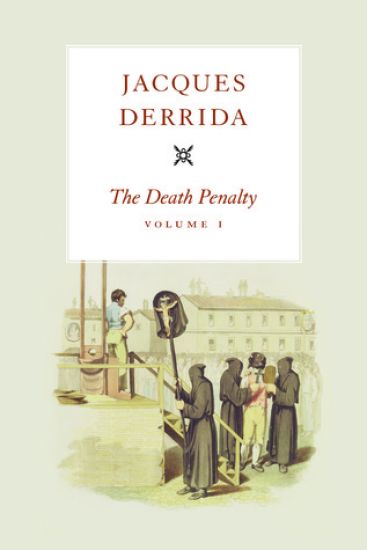
In this newest installment in Chicago's series of Jacques Derrida's seminars, the renowned philosopher attempts one of his most ambitious goals: the first truly philosophical argument against the death penalty. While much has been written against the death penalty, Derrida contends that Western philosophy is massively, if not always obviously, complicit with a logic in which a sovereign state has the right to take a life. Haunted by this notion, he turns to the key places where such logic has been established - and to the place it has been most effectively challenged: literature. With his signature genius and patient yet dazzling readings of an impressive breadth of texts, Derrida examines everything from the Bible to Plato to Camus to Jean Genet, with special attention to Kant and post-World War II juridical texts, to draw the landscape of death penalty discourses. Keeping clearly in view the death rows and execution chambers of the United States, he shows how arguments surrounding cruel and unusual punishment depend on what he calls an "anaesthesial logic," which has also driven the development of death penalty technology from the French guillotine to lethal injection. Confronting a demand for philosophical rigor, he pursues provocative analyses of the shortcomings of abolitionist discourse. Above all, he argues that the death penalty and its attendant technologies are products of a desire to put an end to one of the most fundamental qualities of our finite existence: the radical uncertainty of when we will die. Arriving at a critical juncture in history - especially in the United States, one of the last Christian-inspired democracies to resist abolition - The Death Penalty is both a timely response to an important ethical debate and a timeless addition to Derrida's esteemed body of work.
The Death Penalty, Volume II

The Death Penalty, Volume II

Jacques Derrida

University of Chicago Press
2017
sidottu
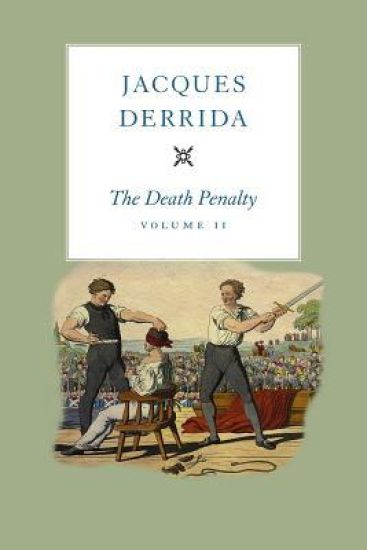
In the first volume of his extraordinary analysis of the death penalty, Jacques Derrida began a journey toward an ambitious end: the first truly philosophical argument against the death penalty. Exploring an impressive breadth of thought, he traced a deeply entrenched logic throughout the whole of Western philosophy that has justified the state's right to take a life. He also marked literature as a crucial place where this logic has been most effectively challenged. In this second and final volume, Derrida builds on these analyses toward a definitive argument against capital punishment. Of central importance in this second volume is Kant's explicit justification of the death penalty in the Metaphysics of Morals. Thoroughly deconstructing Kant's position which holds the death penalty as exemplary of the eye-for-an-eye Talionic law Derrida exposes numerous damning contradictions and exceptions. Keeping the current death penalty in the United States in view, he further explores the "anesthesial logic" he analyzed in volume one, addressing the themes of cruelty and pain through texts by Robespierre and Freud, reading Heidegger, and in a fascinating, improvised final session the nineteenth-century Spanish Catholic thinker Donoso Cortes. Ultimately, Derrida shows that the rationality of the death penalty as represented by Kant involves an imposition of knowledge and calculability on a fundamental condition of non-knowledge that we don't otherwise know what or when our deaths will be. In this way, the death penalty acts out a phantasm of mastery over one's own death. Derrida's thoughts arrive at a particular moment in history: when the death penalty in the United States is the closest it has ever been to abolition, and yet when the arguments on all sides are as confused as ever. His powerful analysis will prove to be a paramount contribution to this debate as well as a lasting entry in his celebrated oeuvre.
The Beast and the Sovereign, Volume II

The Beast and the Sovereign, Volume II

Jacques Derrida

University of Chicago Press
2017
nidottu
Following on from The Beast and the Sovereign, Volume I, this book extends Jacques Derrida's exploration of the connections between animality and sovereignty. In this second year of the seminar, originally presented in 2002 2003 as the last course he would give before his death, Derrida focuses on two markedly different texts: Heidegger's 1929 1930 course The Fundamental Concepts of Metaphysics, and Daniel Defoe's Robinson Crusoe. As he moves back and forth between the two works, Derrida pursuesthe relations between solitude, insularity, world, violence, boredom and death as they supposedly affect humans and animals in different ways. Hitherto unnoticed or underappreciated aspects of Robinson Crusoe are brought out in strikingly original readings of questions such as Crusoe's belief in ghosts, his learning to pray, his parrot Poll, and his reinvention of the wheel. Crusoe's terror of being buried alive or swallowed alive by beasts or cannibals gives rise to a rich and provocative reflection on death, burial, and cremation, in part provoked by a meditation on the death of Derrida's friend Maurice Blanchot. Throughout, these readings are juxtaposed with interpretations of Heidegger's concepts of world and finitude to produce a distinctively Derridean account that will continue to surprise his readers.
Archive Fever

Archive Fever

Jacques Derrida

University of Chicago Press
2017
nidottu
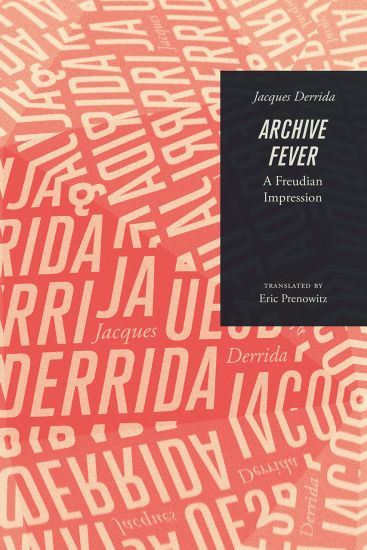
In Archive Fever, Jacques Derrida deftly guides us through an extended meditation on remembrance, religion, time, and technology—fruitfully occasioned by a deconstructive analysis of the notion of archiving. Intrigued by the evocative relationship between technologies of inscription and psychic processes, Derrida offers for the first time a major statement on the pervasive impact of electronic media, particularly e-mail, which threaten to transform the entire public and private space of humanity. Plying this rich material with characteristic virtuosity, Derrida constructs a synergistic reading of archives and archiving, both provocative and compelling."Judaic mythos, Freudian psychoanalysis, and e-mail all get fused into another staggeringly dense, brilliant slab of scholarship and suggestion."—The Guardian"[Derrida] convincingly argues that, although the archive is a public entity, it nevertheless is the repository of the private and personal, including even intimate details."—Choice"Beautifully written and clear."—Jeremy Barris, Philosophy in Review"Translator Prenowitz has managed valiantly to bring into English a difficult but inspiring text that relies on Greek, German, and their translations into French."—Library Journal
The Work of Mourning

The Work of Mourning

Jacques Derrida

University of Chicago Press
2017
nidottu
Jacques Derrida is, in the words of the New York Times, "perhaps the world's most famous philosopher if not the only famous philosopher." He often provokes controversy as soon as his name is mentioned. But he also inspires the respect that comes from an illustrious career, and, among many who were his colleagues and peers, he inspired friendship. The Work of Mourning is a collection that honors those friendships in the wake of passing. Gathered here are texts letters of condolence, memorial essays, eulogies, funeral orations written after the deaths of well-known figures: Roland Barthes, Paul de Man, Michel Foucault, Louis Althusser, Edmond Jab\u00e8s, Louis Marin, Sarah Kofman, Gilles Deleuze, Emmanuel Levinas, Jean-Fran\u00e7ois Lyotard, Max Loreau, Jean-Marie Benoist, Joseph Riddel, and Michel Servi\u00e8re. With his words, Derrida bears witness to the singularity of a friendship and to the absolute uniqueness of each relationship. In each case, he is acutely aware of the questions of tact, taste, and ethical responsibility involved in speaking of the dead the risks of using the occasion for one's own purposes, political calculation, personal vendetta, and the expiation of guilt. More than a collection of memorial addresses, this volume sheds light not only on Derrida's relation to some of the most prominent French thinkers of the past quarter century but also on some of the most important themes of Derrida's entire oeuvre-mourning, the "gift of death," time, memory, and friendship itself. "In his rapt attention to his subjects' work and their influence upon him, the book also offers a hesitant and tangential retelling of Derrida's own life in French philosophical history. There are illuminating and playful anecdotes how Lyotard led Derrida to begin using a word-processor; how Paul de Man talked knowledgeably of jazz with Derrida's son. Anyone who still thinks that Derrida is a facetious punster will find such resentful prejudice unable to survive a reading of this beautiful work." Steven Poole, Guardian "Strikingly simpa meditations on friendship, on shared vocations and avocations and on philosophy and history." Publishers Weekly
Writing and Difference

Writing and Difference

Jacques Derrida

University of Chicago Press
2017
nidottu
First published in 1967, Writing and Difference, a collection of Jacques Derrida's essays written between 1959 and 1966, has become a landmark of contemporary French thought. In it we find Derrida at work on his systematic deconstruction of Western metaphysics. The book's first half, which includes the celebrated essay on Descartes and Foucault, shows the development of Derrida's method of deconstruction. In these essays, Derrida demonstrates the traditional nature of some purportedly nontraditional currents of modern thought-one of his main targets being the way in which "structuralism" unwittingly repeats metaphysical concepts in its use of linguistic models. The second half of the book contains some of Derrida's most compelling analyses of why and how metaphysical thinking must exclude writing from its conception of language, finally showing metaphysics to be constituted by this exclusion. These essays on Artaud, Freud, Bataille, Hegel, and L vi-Strauss have served as introductions to Derrida's notions of writing and diff rence-the untranslatable formulation of a nonmetaphysical "concept" that does not exclude writing-for almost a generation of students of literature, philosophy, and psychoanalysis. Writing and Difference reveals the unacknowledged program that makes thought itself possible. In analyzing the contradictions inherent in this program, Derrida foes on to develop new ways of thinking, reading, and writing, -new ways based on the most complete and rigorous understanding of the old ways. Scholars and students from all disciplines will find Writing and Difference an excellent introduction to perhaps the most challenging of contemporary French thinkers-challenging because Derrida questions thought as we know it.
The Gift of Death, Second Edition & Literature in Secret

The Gift of Death, Second Edition & Literature in Secret

Jacques Derrida

University of Chicago Press
2017
nidottu
The Gift of Death, Jacques Derrida’s most sustained consideration of religion, explores questions first introduced in his book Given Time about the limits of the rational and responsible that one reaches in granting or accepting death, whether by sacrifice, murder, execution, or suicide. Derrida analyzes Czech philosopher Jan Patocka’s Heretical Essays in the Philosophy of History and develops and compares his ideas to the works of Heidegger, Lévinas, and Kierkegaard. One of Derrida’s major works, The Gift of Death resonates with much of his earlier writing, and this highly anticipated second edition is greatly enhanced by David Wills’s updated translation. This new edition also features the first-ever English translation of Derrida’s Literature in Secret. In it, Derrida continues his discussion of the sacrifice of Isaac, which leads to bracing meditations on secrecy, forgiveness, literature, and democracy. He also offers a reading of Kafka’s Letter to His Father and uses the story of the flood in Genesis as an embarkation point for a consideration of divine sovereignty. “An important contribution to the critical study of ethics that commends itself to philosophers, social scientists, scholars of religion . . . [and those] made curious by the controversy that so often attends Derrida.”—Booklist, on the first edition
Spurs

Spurs

Jacques Derrida

University of Chicago Press
2017
nidottu
Nietzsche has recently enjoyed much scrutiny from the nouveaux critiques. Jacques Derrida, the leader of that movement, here combines in his strikingly original and incisive fashion questions of sexuality, politics, writing, judgment, procreation, death, and even the weather into a far-reaching analysis of the challenges bequeathed to the modern world by Nietzsche. Spurs, then, is aptly titled, for Derrida's "deconstructions" of Nietzsche's meanings will surely act as spurs to further thought and controversy. This dual-language edition offers the English-speaking reader who has some knowledge of French an opportunity to examine the stylistic virtuosity of Derrida's writing of particular significance for his analysis of "the question of style."
Dissemination

Dissemination

Jacques Derrida

University of Chicago Press
2017
nidottu
"The English version of Dissemination is] an able translation by Barbara Johnson . . . . Derrida's central contention is that language is haunted by dispersal, absence, loss, the risk of unmeaning, a risk which is starkly embodied in all writing. The distinction between philosophy and literature therefore becomes of secondary importance. Philosophy vainly attempts to control the irrecoverable dissemination of its own meaning, it strives--against the grain of language--to offer a sober revelation of truth. Literature--on the other hand--flaunts its own meretriciousness, abandons itself to the Dionysiac play of language. In Dissemination--more than any previous work--Derrida joins in the revelry, weaving a complex pattern of puns, verbal echoes and allusions, intended to 'deconstruct' both the pretension of criticism to tell the truth about literature, and the pretension of philosophy to the literature of truth."--Peter Dews, New Statesman