Kirjojen hintavertailu. Mukana 11 627 220 kirjaa ja 12 kauppaa.

Kirjahaku

Etsi kirjoja tekijän nimen, kirjan nimen tai ISBN:n perusteella.

3 kirjaa tekijältä Jacques Khalip

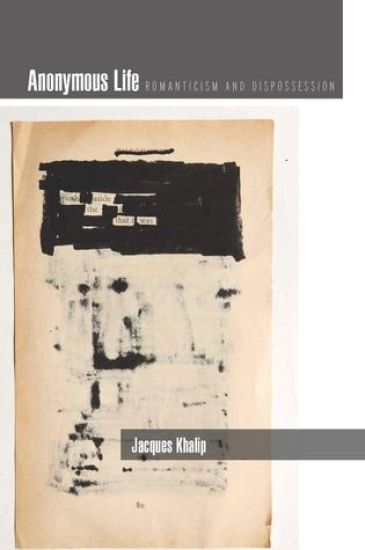
Anonymous Life

Anonymous Life

Jacques Khalip

Stanford University Press
2008
sidottu
Romanticism is often synonymous with models of identity and action that privilege individual empowerment and emotional autonomy. In the last two decades, these models have been the focus of critiques of Romanticism's purported self-absorption and alienation from politics. While such critiques have proven useful, they often draw attention to the conceptual or material tensions of romantic subjectivity while accepting a conspicuous, autonomous subject as a given, thus failing to appreciate the possibility that Romanticism sustains an alternative model of being, one anonymous and dispossessed, one whose authority is irreducible to that of an easily recognizable, psychologized persona. In Anonymous Life, Khalip goes against the grain of these dominant critical stances by examining anonymity as a model of being that is provocative for writers of the era because it resists the Enlightenment emphasis on transparency and self-disclosure. He explores how romantic subjectivity, even as it negotiates with others in the social sphere, frequently rejects the demands of self-assertion and fails to prove its authenticity and coherence.
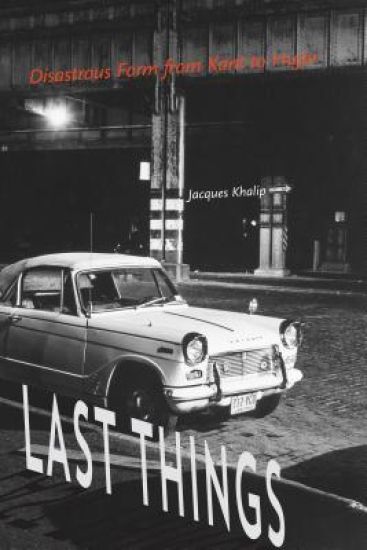
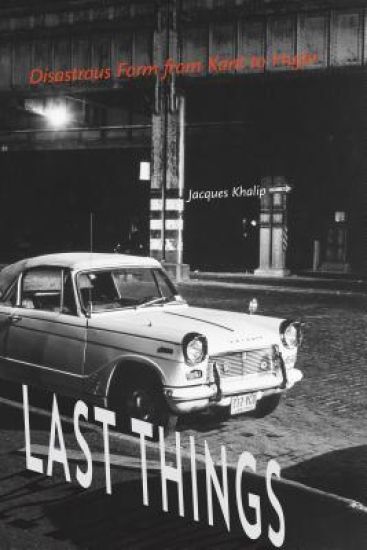
Last Things

Last Things

Jacques Khalip

FORDHAM UNIVERSITY PRESS
2018
sidottu
The arrival of the Anthropocene brings the suggestion that we are only now beginning to speculate on an inhuman world that is not for us, only now confronting fears and anxieties of ecological, political, social, and philosophical extinction. While pointing out that reflections on disaster were not foreign to what we historically call romanticism, Last Things pushes romantic thought toward an altogether new way of conceiving the "end of things," one that treats lastness as neither privation nor conclusion. Through quieter, non-emphatic modes of thinking the end of human thought, Khalip explores lastness as what marks the limits of our life and world. Reading the fate of romanticism—and romantic studies—within the key of the last, Khalip refuses to elegize or celebrate our ends, instead positing romanticism as a negative force that exceeds theories, narratives, and figures of survival and sustainability. Each chapter explores a range of romantic and contemporary materials: poetry by John Clare, Emily Dickinson, John Keats, Percy Shelley, and William Wordsworth; philosophical texts by William Godwin, David Hume, Immanuel Kant, and Jean-Jacques Rousseau; paintings by Hubert Robert, Caspar David Friedrich, and Paterson Ewen; installations by Tatsuo Miyajima and James Turrell; and photography by John Dugdale, Peter Hujar, and Joanna Kane. Shuttling between temporalities, Last Things undertakes an original reorganization of romantic thought for contemporary culture. It examines an archive on the side of disappearance, perishing, the inhuman, and lastness.
Last Things

Last Things

Jacques Khalip

Fordham University Press
2018
pokkari
The arrival of the Anthropocene brings the suggestion that we are only now beginning to speculate on an inhuman world that is not for us, only now confronting fears and anxieties of ecological, political, social, and philosophical extinction. While pointing out that reflections on disaster were not foreign to what we historically call romanticism, Last Things pushes romantic thought toward an altogether new way of conceiving the "end of things," one that treats lastness as neither privation nor conclusion. Through quieter, non-emphatic modes of thinking the end of human thought, Khalip explores lastness as what marks the limits of our life and world. Reading the fate of romanticism—and romantic studies—within the key of the last, Khalip refuses to elegize or celebrate our ends, instead positing romanticism as a negative force that exceeds theories, narratives, and figures of survival and sustainability. Each chapter explores a range of romantic and contemporary materials: poetry by John Clare, Emily Dickinson, John Keats, Percy Shelley, and William Wordsworth; philosophical texts by William Godwin, David Hume, Immanuel Kant, and Jean-Jacques Rousseau; paintings by Hubert Robert, Caspar David Friedrich, and Paterson Ewen; installations by Tatsuo Miyajima and James Turrell; and photography by John Dugdale, Peter Hujar, and Joanna Kane. Shuttling between temporalities, Last Things undertakes an original reorganization of romantic thought for contemporary culture. It examines an archive on the side of disappearance, perishing, the inhuman, and lastness.