Kirjojen hintavertailu. Mukana 11 342 296 kirjaa ja 12 kauppaa.

Kirjahaku

Etsi kirjoja tekijän nimen, kirjan nimen tai ISBN:n perusteella.

26 kirjaa tekijältä Jacques Le Goff

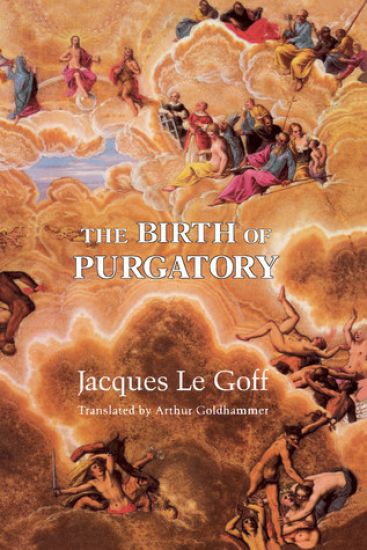
The Birth of Purgatory

The Birth of Purgatory

Jacques Le Goff

University of Chicago Press
1986
nidottu
Noting that the doctrine of Purgatory does not appear in the Latin theology of the West before the late twelfth century, the author identifies the profound social and intellectual changes which caused its widespread acceptance
Must We Divide History Into Periods?

Must We Divide History Into Periods?

Jacques Le Goff

Columbia University Press
2015
sidottu
We have long thought of the Renaissance as a luminous era that marked a decisive break with the past, but the idea of the Renaissance as a distinct period arose only during the nineteenth century. Though the view of the Middle Ages as a dark age of unreason has softened somewhat, we still locate the advent of modern rationality in the Italian thought and culture of the fifteenth and sixteenth centuries. Jacques Le Goff pleads for a strikingly different view. In this, his last book, he argues persuasively that many of the innovations we associate with the Renaissance have medieval roots, and that many of the most deplorable aspects of medieval society continued to flourish during the Renaissance. We should instead view Western civilization as undergoing several "renaissances" following the fall of Rome, over the course of a long Middle Ages that lasted until the mid-eighteenth century. While it is indeed necessary to divide history into periods, Le Goff maintains, the meaningful continuities of human development only become clear when historians adopt a long perspective. Genuine revolutions-the shifts that signal the end of one period and the beginning of the next-are much rarer than we think.
Must We Divide History Into Periods?

Must We Divide History Into Periods?

Jacques Le Goff

Columbia University Press
2017
pokkari
We have long thought of the Renaissance as a luminous era that marked a decisive break with the past, but the idea of the Renaissance as a distinct period arose only during the nineteenth century. Though the view of the Middle Ages as a dark age of unreason has softened somewhat, we still locate the advent of modern rationality in the Italian thought and culture of the fifteenth and sixteenth centuries. Jacques Le Goff pleads for a strikingly different view. In this, his last book, he argues persuasively that many of the innovations we associate with the Renaissance have medieval roots, and that many of the most deplorable aspects of medieval society continued to flourish during the Renaissance. We should instead view Western civilization as undergoing several "renaissances" following the fall of Rome, over the course of a long Middle Ages that lasted until the mid-eighteenth century. While it is indeed necessary to divide history into periods, Le Goff maintains, the meaningful continuities of human development only become clear when historians adopt a long perspective. Genuine revolutions-the shifts that signal the end of one period and the beginning of the next-are much rarer than we think.
Saint Louis

Saint Louis

Jacques Le Goff

University of Notre Dame Press
2009
sidottu
Canonized in 1297 as Saint Louis, King Louis IX of France (1214-1270) was the central figure of Christendom in the thirteenth century. He ruled when France was at the height of power; he commanded the largest army in Europe and controlled the wealthiest kingdom. Renowned for his patronage of the arts, Louis was equally famous for his choice to imitate the suffering Christ as a humbly attired, bearded penitent. Armed with the considerable resources of the nouvel historien, Jacques Le Goff mines existing materials about Saint Louis to forge a new historical biography of the king. Part of his ambitious project is to reconstruct the mental universe of the thirteenth century: Le Goff describes the scholastic and intellectual background of Louis's reign and, most importantly, he discusses methodology and the interpretation of written sources—their composition, provenance, and reliability. Le Goff divides his unconventional biography into three parts. In the first, he gives us the contours of Louis's life from birth to death in the usual context of family dynamics and genealogy, courtly and regional politics, and shifts in economic, social, and cultural life. In sifting through the historical accounts of the king's life, Le Goff determines that it is Louis IX's profound sense of moral and religious purpose—his desire to become the ideal Christian ruler—that colors his every action from boyhood on; it is also, for Le Goff, what renders contemporary accounts problematic and what necessitates further scrutiny. That dissection of sources occupies the second part. Le Goff's intention is to pare away the layers of homily and anecdote produced by the king's early biographers to discover the true St. Louis. Questioning whether St. Louis was merely the invention of his eulogists, Le Goff penetrates beyond the literary and hagiographical evidence to the human behind the legend. He brilliantly analyzes Louis's progression toward his unique self-creation and its subsequent mythologizing. In the third part, Le Goff highlights the contradictions within Louis and his historical image that previous chroniclers have elided and overlooked. In the end, he leaves us with the saint, rather than the king, with all the paradoxes embedded within that dual role. A prolific medievalist of international renown, Jacques Le Goff (1924- ) is the former director of studies at the L'École des Hautes Études en Sciences Sociales, Paris. Among his honors is the Dr. A. H. Heineken Prize for History, bestowed in 2004 by the Royal Netherlands Academy of Arts and Sciences to Le Goff for "fundamentally changing our view of the Middle Ages." He was also among the recipients of the 2007 Dan David Prize in recognition of contributions to his discipline. of Louis' life from birth to death in the usual context of family dynamics and genealogy, courtly and regional politics, and shifts in economic, social, and cultural life. In sifting through the historical accounts of the king's life, Le Goff determines that it is Louis IX's profound sense of moral and religious purpose—his desire to become the ideal Christian ruler—that colors his every action from boyhood on; it is also, for Le Goff, what renders contemporary accounts problematic and what necessitates further scrutiny. That dissection of sources occupies the second part. Le Goff's intention is to pare away the layers of homily and anecdote produced by the king's early biographers to discover the true Saint Louis. Questioning whether Saint Louis was merely the invention of his eulogists, Le Goff penetrates beyond the literary and hagiographical evidence to the human behind the legend. He brilliantly analyzes Louis' progress toward his unique self-creation and its subsequent mythologizing. In the third part, Le Goff highlights the contradictions within Louis and his historical image that previous chroniclers have elided or overlooked. In the end, he leaves us with the saint, rather than the king, with all the paradoxes embedded in that role.
Medieval Civilization 400 - 1500

Medieval Civilization 400 - 1500

Jacques Le Goff

JOHN WILEY AND SONS LTD
1990
nidottu
This one thousand year history of the civilization of western Europe has already been recognized in France as a scholarly contribution of the highest order and as a popular classic. Jacques Le Goff has written a book which will not only be read by generations of students and historians, but which will delight and inform all those interested in the history of medieval Europe. Part one, Historical Evolution , is a narrative account of the entire period, from the barbarian settlement of Roman Europe in the fifth, sixth and seventh centuries to the war-torn crises of Christian Europe in the fourteenth and fifteenth centuries. Part two, Medieval Civilization , is analytical, concerned with the origins of early medieval ideas of culture and religion, the constraints of time and space in a pre-industrial world and the reconstruction of the lives and sensibilities of the people during this long period. Medieval Civilization combines the narrative and descriptive power characteristic of Anglo-Saxon scholarship with the sensitivity and insight of the French historical tradition.
In Search of Sacred Time

In Search of Sacred Time

Jacques Le Goff

Princeton University Press
2014
sidottu
It is impossible to understand the late Middle Ages without grasping the importance of The Golden Legend, the most popular medieval collection of saints' lives. Assembled for clerical use in the thirteenth century by Genoese archbishop Jacobus de Voragine, the book became the medieval equivalent of a best seller. By 1500, there were more copies of it in circulation than there were of the Bible itself. Priests drew on The Golden Legend for their sermons, the faithful used it for devotion and piety, and artists and writers mined it endlessly in their works. In Search of Sacred Time is the first comprehensive history and interpretation of this crucial book. Jacques Le Goff, one of the world's most renowned medievalists, provides a lucid, compelling, and unparalleled account of why and how The Golden Legend exerted such a profound influence on medieval life. In Search of Sacred Time explains how The Golden Legend--an encyclopedic work that followed the course of the liturgical calendar and recounted the life of the saint for each feast day--worked its way into the fabric of medieval life. Le Goff describes how this ambitious book was carefully crafted to give sense and shape to the Christian year, underscoring its meaning and drama through the stories of saints, miracles, and martyrdoms. Ultimately, Le Goff argues, The Golden Legend influenced how medieval Christians perceived the passage of time, Christianizing time itself and reconciling human and divine temporality. Authoritative, eloquent, and original, In Search of Sacred Time is a major reinterpretation of a book that is central to comprehending the medieval imagination.
In Search of Sacred Time

In Search of Sacred Time

Jacques Le Goff

Princeton University Press
2020
pokkari
How The Golden Legend shaped the medieval imaginationIt is impossible to understand the Middle Ages without grasping the importance of The Golden Legend, the most popular medieval collection of saints' lives. Assembled in the thirteenth century by Genoese archbishop Jacobus de Voragine, the book became the medieval equivalent of a bestseller. In Search of Sacred Time is the first comprehensive history and interpretation of this crucial book. Jacques Le Goff, who was one of the world's most renowned medievalists, provides a lucid and compelling account that shows how The Golden Legend Christianized time itself, reconciling human and divine temporality. Authoritative, eloquent, and original, In Search of Sacred Time is a major reinterpretation of a book that is central to comprehending the medieval imagination.
Money and the Middle Ages

Money and the Middle Ages

Jacques Le Goff

Polity Press
2012
sidottu
Jacques Le Goff sets out in this book to explain the role of money, or rather of the various types of money, in the economy, life and mentalities of the Middle Ages. He seeks also to explain how, in a society dominated by religion, the Church viewed money, and how it taught Christians what attitudes they should adopt towards it and towards the uses to which it could be put. He shows that, although money played an important role in the rise of towns and trade and in state formation, there was no capitalism but only a pre-capitalism in the Middle Ages, even by their end, in the absence of a truly global market. This is why economic development remained slow and limited, in spite of some remarkable success stories. It was a period in which it was as important to give money as it was to earn it. True wealth was not yet the wealth of this world, even though money played an increasingly large role in reality and in mentalities.No similar discussion of this subject, aimed at a wide readership, has previously been published. Written by one of the greatest medievalists, this book will be recognized as a standard work on the topic.
Money and the Middle Ages

Money and the Middle Ages

Jacques Le Goff

Polity Press
2012
nidottu
Jacques Le Goff sets out in this book to explain the role of money, or rather of the various types of money, in the economy, life and mentalities of the Middle Ages. He seeks also to explain how, in a society dominated by religion, the Church viewed money, and how it taught Christians what attitudes they should adopt towards it and towards the uses to which it could be put. He shows that, although money played an important role in the rise of towns and trade and in state formation, there was no capitalism but only a pre-capitalism in the Middle Ages, even by their end, in the absence of a truly global market. This is why economic development remained slow and limited, in spite of some remarkable success stories. It was a period in which it was as important to give money as it was to earn it. True wealth was not yet the wealth of this world, even though money played an increasingly large role in reality and in mentalities.No similar discussion of this subject, aimed at a wide readership, has previously been published. Written by one of the greatest medievalists, this book will be recognized as a standard work on the topic.
My Quest for the Middle Ages

My Quest for the Middle Ages

Jacques Le Goff

Edinburgh University Press
2005
sidottu
In this fascinating book, which takes the form of a series of edited interviews with noted journalist Jean-Maurice de Montremy, Jacques Le Goff offers us a synthesis of his work. In the course of these conversations he explains how he came to write his books and how an overall view of the civilisation of the Middle Ages gradually emerged; a civilisation which shaped 'western' culture both for better and for worse. Each conversation touches upon one of the major themes of his work and the book as a whole presents the reader with a fascinating attempt to recover, define, and understand the Middle Ages.
My Quest for the Middle Ages

My Quest for the Middle Ages

Jacques Le Goff

Edinburgh University Press
2005
nidottu
In this fascinating book, which takes the form of a series of edited interviews with noted journalist Jean-Maurice de Montremy, Jacques Le Goff offers us a synthesis of his work. In the course of these conversations he explains how he came to write his books and how an overall view of the civilisation of the Middle Ages gradually emerged; a civilisation which shaped 'western' culture both for better and for worse. Each conversation touches upon one of the major themes of his work and the book as a whole presents the reader with a fascinating attempt to recover, define, and understand the Middle Ages.
Saint Francis of Assisi

Saint Francis of Assisi

Jacques Le Goff

TAYLOR FRANCIS LTD
2023
nidottu
Known for speaking with the birds, for professing poverty, receiving the stigmata and for initiating the Franciscan order, Francis of Assisi is one of the most radical and inspiring figures in Christianity.In this outstanding and celebrated biography, the distinguished medievalist Jacques Le Goff paints a fascinating picture of the life of Francis of Assisi. Locating Francis in the feudal world of the twelfth and thirteenth centuries and exploring the social and political changes taking place at the time, Le Goff assess the dramatic influence of the saint on the medieval church and celebrates his role in the spiritual revival of the Catholic Church.This Routledge Classics edition includes a new Foreword by Sean L. Field.
Saint Francis of Assisi

Saint Francis of Assisi

Jacques Le Goff

TAYLOR FRANCIS LTD
2023
sidottu
Known for speaking with the birds, for professing poverty, receiving the stigmata and for initiating the Franciscan order, Francis of Assisi is one of the most radical and inspiring figures in Christianity.In this outstanding and celebrated biography, the distinguished medievalist Jacques Le Goff paints a fascinating picture of the life of Francis of Assisi. Locating Francis in the feudal world of the twelfth and thirteenth centuries and exploring the social and political changes taking place at the time, Le Goff assess the dramatic influence of the saint on the medieval church and celebrates his role in the spiritual revival of the Catholic Church.This Routledge Classics edition includes a new Foreword by Sean L. Field.
The Birth of Europe

The Birth of Europe

Jacques Le Goff

Wiley-Blackwell (an imprint of John Wiley Sons Ltd)
2006
nidottu
In this ground-breaking new study,Jacques Le Goff, arguably the leading medievalist of his generation, presents his view of the primacy of the Middle Ages in the development of European history. "[A] superb and necessary book. This provocative assessment from a lifetime of scholarship might help us to place ourselves, not just territorially, but in that other precious element of history: time."—The Guardian"A book that never fails to be informative, readable and provocative. Le Goff... has been the bravest and best of champions for medieval history. This book... is in every sense an inspiration."—BBC History MagazinePraised by prominent figures in Europe and history including: Rt Hon Christopher Patten, CH, Former Member of the European Commission, and Neil Kinnock, Vice-President, European Commission.
Heroes and Marvels of the Middle Ages

Heroes and Marvels of the Middle Ages

Jacques Le Goff

Reaktion Books
2020
sidottu
Heroes and Marvels of the Middle Ages is a history like no other: it is a history of the imagination, presented through two celebrated groups of the period. One group consists of heroes: Charlemagne, El Cid, King Arthur, Orlando, Pope Joan, Melusine, Merlin the Wizard, and also the fox and the unicorn. The other is the miraculous, represented here by three forms of power that dominated medieval society: the cathedral, the castle and the cloister.This imaginative history is a continuing story that presents the heroes and marvels of the Middle Ages as the times defined them: venerated, then bequeathed to future centuries where they have continued to live and transform through remembrance of the past, adaptation to the present and openness to the future.
Tsivilizatsija srednevekovogo zapada

Tsivilizatsija srednevekovogo zapada

Jacques Le Goff

Alma Mater
2022
sidottu
Odin iz samykh avtoritetnykh istorikov XX veka, Zhak Le Goff rassmatrivaet srednevekovyj Zapad v zadannykh im parametrakh materialnoj kultury i sotsialnoj ierarkhii, otkryvajuschikh nam kak cheloveka prostranstva vremeni, Srednevekovja v ego povsednevnosti i v ego mentalnosti, tak i osobennosti dukhovnoj kultury ljudej v Srednie veka.Avtor knigi, predprinimaet popytku szhato, no predelno jarko i ubeditelno okharakterizovat osnovnye osobennosti srednevekovoj tsivilizatsii. V tsentre vnimanija avtora - Prostranstvo i Vremja v zhizni i vosprijatii cheloveka srednevekovoj Evropy, ego materialnaja zhizn, kharakteristika sotsialnoj sistemy i, glavnoe, analiz mentaliteta, kollektivnoj psikhologii, sposobov chuvstvovat i myslit.