Kirjojen hintavertailu. Mukana 11 538 565 kirjaa ja 12 kauppaa.

Kirjahaku

Etsi kirjoja tekijän nimen, kirjan nimen tai ISBN:n perusteella.

6 kirjaa tekijältä Jacqui True

Violence against Women

Violence against Women

Jacqui True

Oxford University Press Inc
2021
nidottu
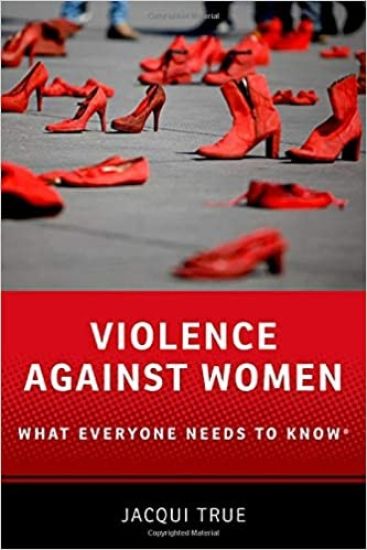
Violence against women and girls (VAWG) is a longstanding problem that has increasingly come to the forefront of international and national policy debates and news: from the US reauthorization of the Violence against Women Act and a United Nations declaration to end sexual violence in war, to coverage of gang rapes in India, cyberstalking and "revenge porn", honor killings, female genital mutilation, and international trafficking. Yet, while we frequently read or learn about particular experiences or incidents of VAWG, we are often unaware of the full picture. Jacqui True, an internationally renowned scholar of globalization and gender, provides an expansive frame for understanding VAWG in this book. Among the questions she addresses include: What are we talking about when we discuss VAWG? What kinds of violence does it encompass? Who does it affect most and why? What are the risk factors for victims and perpetrators? Does VAWG occur at the same level in all societies? Are there cultural explanations for it? What types of legal redress do victims have? How reliable are the statistics that we have? Are men and boys victims of gender-based violence? What is the role of the media in exacerbating VAWG? And, what sorts of policy and advocacy routes exist to end VAWG? This volume addresses the current state of knowledge and research on these questions. True surveys our best understanding of the causes and consequences of violence against women in the home, local community, workplace, public, and transnationally. In so doing, she brings together multidisciplinary perspectives on the problem of violence against women and girls, and sets out the most promising policy and advocacy frameworks to end this violence.
Violence against Women

Violence against Women

Jacqui True

Oxford University Press Inc
2021
sidottu
Violence against women and girls (VAWG) is a longstanding problem that has increasingly come to the forefront of international and national policy debates and news: from the US reauthorization of the Violence against Women Act and a United Nations declaration to end sexual violence in war, to coverage of gang rapes in India, cyberstalking and "revenge porn", honor killings, female genital mutilation, and international trafficking. Yet, while we frequently read or learn about particular experiences or incidents of VAWG, we are often unaware of the full picture. Jacqui True, an internationally renowned scholar of globalization and gender, provides an expansive frame for understanding VAWG in this book. Among the questions she addresses include: What are we talking about when we discuss VAWG? What kinds of violence does it encompass? Who does it affect most and why? What are the risk factors for victims and perpetrators? Does VAWG occur at the same level in all societies? Are there cultural explanations for it? What types of legal redress do victims have? How reliable are the statistics that we have? Are men and boys victims of gender-based violence? What is the role of the media in exacerbating VAWG? And, what sorts of policy and advocacy routes exist to end VAWG? This volume addresses the current state of knowledge and research on these questions. True surveys our best understanding of the causes and consequences of violence against women in the home, local community, workplace, public, and transnationally. In so doing, she brings together multidisciplinary perspectives on the problem of violence against women and girls, and sets out the most promising policy and advocacy frameworks to end this violence.
The Political Economy of Violence against Women

The Political Economy of Violence against Women

Jacqui True

Oxford University Press Inc
2012
nidottu
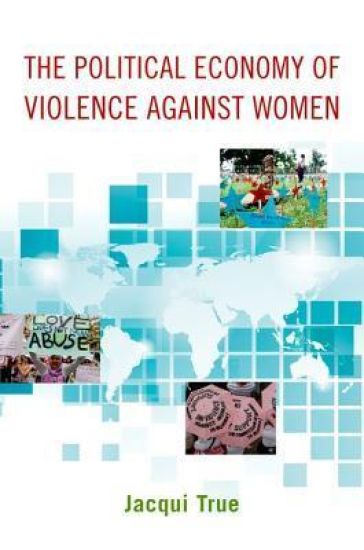
Violence against women is a major problem in all countries, affecting women in every socio-economic group and at every life stage. Nowhere in the world do women share equal social and economic rights with men or the same access as men to productive resources. Economic globalization and development are creating new challenges for women's rights as well as some new opportunities for advancing women's economic independence and gender equality. Yet, when women have access to productive resources and they enjoy social and economic rights they are less vulnerable to violence across all societies. The Political Economy of Violence against Women develops a feminist political economy approach to identify the linkages between different forms of violence against women and macro structural processes in strategic local and global sites - from the household to the transnational level. In doing so, it seeks to account for the globally increasing scale and brutality of violence against women. These sites include economic restructuring and men's reaction to the loss of secure employment, the abusive exploitation associated with the transnational migration of women workers, the growth of a sex trade around the creation of free trade zones, the spike in violence against women in financial liberalization and crises, the scourge of sexual violence in armed conflict and post-crisis peacebuilding or reconstruction efforts and the deleterious gendered impacts of natural disasters. Examples are drawn from South Africa, Kenya, the Democratic Republic of Congo, China, Ciudad Juarez in Mexico, the Pacific Islands, Argentina, Eastern Europe, Central Asia, Haiti, Sri Lanka, Indonesia, New Zealand, Ireland, the United Kingdom, the United States and Iceland.
The Political Economy of Violence against Women

The Political Economy of Violence against Women

Jacqui True

Oxford University Press Inc
2012
sidottu
Violence against women is a major problem in all countries, affecting women in every socio-economic group and at every life stage. Nowhere in the world do women share equal social and economic rights with men or the same access as men to productive resources. Economic globalization and development are creating new challenges for women's rights as well as some new opportunities for advancing women's economic independence and gender equality. Yet, when women have access to productive resources and they enjoy social and economic rights they are less vulnerable to violence across all societies. The Political Economy of Violence against Women develops a feminist political economy approach to identify the linkages between different forms of violence against women and macro structural processes in strategic local and global sites - from the household to the transnational level. In doing so, it seeks to account for the globally increasing scale and brutality of violence against women. These sites include economic restructuring and men's reaction to the loss of secure employment, the abusive exploitation associated with the transnational migration of women workers, the growth of a sex trade around the creation of free trade zones, the spike in violence against women in financial liberalization and crises, the scourge of sexual violence in armed conflict and post-crisis peacebuilding or reconstruction efforts and the deleterious gendered impacts of natural disasters. Examples are drawn from South Africa, Kenya, the Democratic Republic of Congo, China, Ciudad Juarez in Mexico, the Pacific Islands, Argentina, Eastern Europe, Central Asia, Haiti, Sri Lanka, Indonesia, New Zealand, Ireland, the United Kingdom, the United States and Iceland.
Gender, Globalization, and Postsocialism

Gender, Globalization, and Postsocialism

Jacqui True

Columbia University Press
2003
sidottu
How are changing gender relations shaping and being shaped by post-socialist marketization and liberalization? Do new forms of economic and cultural globalization open spaces for women's empowerment and feminist politics? The rapid social transformations experienced by the people of the Czech Republic in the wake of the collapse of communism in 1989 afford political scientist Jacqui True with an opportunity to answer these questions by examining political and gendered identities in flux. She argues that the privatization of a formerly state economy and the adoption of consumer-oriented market practices were shaped by ideas and attitudes about gender roles. Though finely tuned to the particular, local traditions that have defined the boundaries of globalization for Czech men and women, Gender, Globalization, and Postsocialism also offers a provocative general thesis about the inextricable linkages between political and economic changes and gender identities.
Gender, Globalization, and Postsocialism

Gender, Globalization, and Postsocialism

Jacqui True

Columbia University Press
2003
pokkari
How are changing gender relations shaping and being shaped by post-socialist marketization and liberalization? Do new forms of economic and cultural globalization open spaces for women's empowerment and feminist politics? The rapid social transformations experienced by the people of the Czech Republic in the wake of the collapse of communism in 1989 afford political scientist Jacqui True with an opportunity to answer these questions by examining political and gendered identities in flux. She argues that the privatization of a formerly state economy and the adoption of consumer-oriented market practices were shaped by ideas and attitudes about gender roles. Though finely tuned to the particular, local traditions that have defined the boundaries of globalization for Czech men and women, Gender, Globalization, and Postsocialism also offers a provocative general thesis about the inextricable linkages between political and economic changes and gender identities.