Kirjojen hintavertailu. Mukana 12 016 292 kirjaa ja 12 kauppaa.

Kirjahaku

Etsi kirjoja tekijän nimen, kirjan nimen tai ISBN:n perusteella.

7 kirjaa tekijältä Jaime Schultz

Women's Sports

Women's Sports

Jaime Schultz

Oxford University Press Inc
2019
nidottu
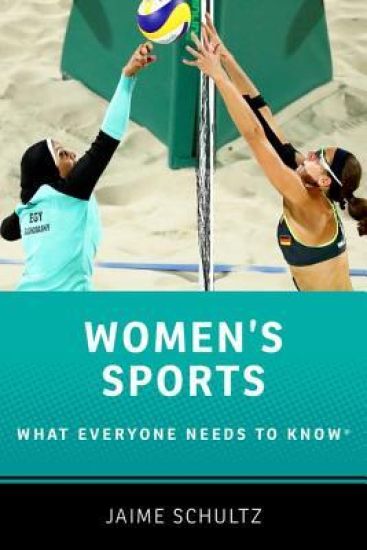
Although girls and women account for approximately 40 percent of all athletes in the United States, they receive only 4 percent of the total sport media coverage. SportsCenter, ESPN's flagship program, dedicates less than 2 percent of its airtime to women. Local news networks devote less than 5 percent of their programming to women's sports. Excluding Sports Illustrated's annual "Swimsuit Issue," women appear on just 4.9 percent of the magazine's covers. Media is a powerful indication of the culture surrounding sport in the United States. Why are women underrepresented in sports media? Sports Illustrated journalist Andy Benoit infamously remarked that women's sports "are not worth watching." Although he later apologized, Benoit's comment points to more general lack of awareness. Consider, for example, the confusion surrounding Title IX, the U.S. Law that prohibits sex discrimination in any educational program that receives federal financial assistance. Is Title IX to blame when administrators drop men's athletic programs? Is it lack of interest or lack of opportunity that causes girls and women to participate in sport at lower rates than boys and men? In Women's Sports, Jaime Schultz tackles these questions, along with many others, to upend the misunderstandings that plague women's sports. Using historical, contemporary, scholarly, and popular sources, Schultz traces the progress and pitfalls of women's involvement in sport. In the signature question-and-answer format of the What Everyone Needs to Know® series, this short and accessible book clarifies misconceptions that dog women's athletics and offers much needed context and history to illuminate the struggles and inequalities sportswomen continue to face. By exploring issues such as gender, sexuality, sex segregation, the Olympic and Paralympic Games, media coverage, and the sport-health connection, Schultz shows why women's sports are not just worth watching, but worth playing, supporting, and fighting for.
Women's Sports

Women's Sports

Jaime Schultz

Oxford University Press Inc
2019
sidottu
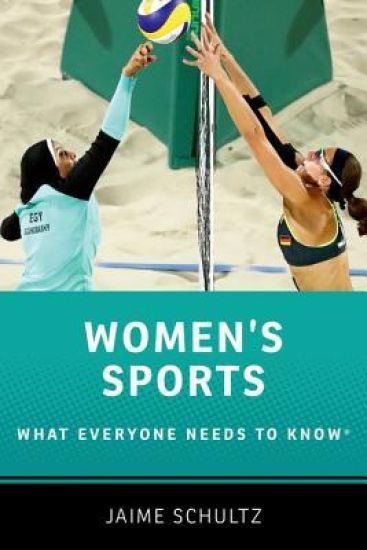
Although girls and women account for approximately 40 percent of all athletes in the United States, they receive only 4 percent of the total sport media coverage. SportsCenter, ESPN's flagship program, dedicates less than 2 percent of its airtime to women. Local news networks devote less than 5 percent of their programming to women's sports. Excluding Sports Illustrated's annual "Swimsuit Issue," women appear on just 4.9 percent of the magazine's covers. Media is a powerful indication of the culture surrounding sport in the United States. Why are women underrepresented in sports media? Sports Illustrated journalist Andy Benoit infamously remarked that women's sports "are not worth watching." Although he later apologized, Benoit's comment points to more general lack of awareness. Consider, for example, the confusion surrounding Title IX, the U.S. Law that prohibits sex discrimination in any educational program that receives federal financial assistance. Is Title IX to blame when administrators drop men's athletic programs? Is it lack of interest or lack of opportunity that causes girls and women to participate in sport at lower rates than boys and men? In Women's Sports, Jaime Schultz tackles these questions, along with many others, to upend the misunderstandings that plague women's sports. Using historical, contemporary, scholarly, and popular sources, Schultz traces the progress and pitfalls of women's involvement in sport. In the signature question-and-answer format of the What Everyone Needs to Know® series, this short and accessible book clarifies misconceptions that dog women's athletics and offers much needed context and history to illuminate the struggles and inequalities sportswomen continue to face. By exploring issues such as gender, sexuality, sex segregation, the Olympic and Paralympic Games, media coverage, and the sport-health connection, Schultz shows why women's sports are not just worth watching, but worth playing, supporting, and fighting for.
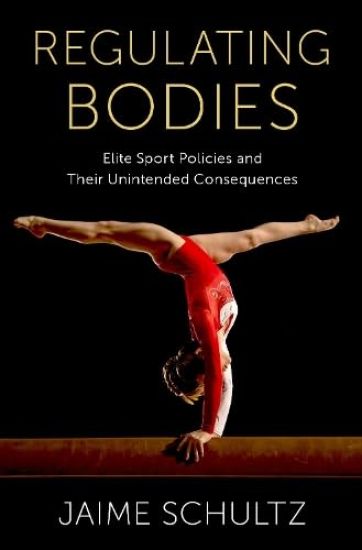
Regulating Bodies

Regulating Bodies

Jaime Schultz

OXFORD UNIVERSITY PRESS INC
2024
sidottu
How far are we willing to go in the name of "better sport"? Athletes have long sought to push the limits of human potential, but the advent and application of new knowledge, science, and technologies has taken elite sports into uncharted territory. It's no longer enough to break records—today's sport is about athletes surpassing their "natural" limits in the name of accomplishing the impossible. With highlights across the spectrum of professional athletics from ski jumping to horse racing, Regulating Bodies narrates the global scientization of the sports industry and the lasting influence of protective sports policies on international discourses around race, sex, identity, and impairment. While these classifications are designed to protect athletes' wellbeing in the spirit of fair play, protective policies can be shallow solutions to deeper problems—offering the appearance of care while failing to safeguard athletes from more pressing concerns. Regulating Bodies investigates the development of protective policies across topics such as gene doping and sex testing to show how current policies impede the progress of athletic development by engendering unethical and unhealthy practices at the expense of an athlete's individual rights. It offers a pathway forward beyond traditional sports categorization with alternative regulatory strategies to reflect the next generation of high-performance athletes. A scoping inquiry into the modern sports industry, Regulating Bodies asks us whether the unending quest for sporting excellence is worth the financial, social, and human toll it inevitably takes on participants at every level of elite sports.
Qualifying Times

Qualifying Times

Jaime Schultz

University of Illinois Press
2014
sidottu
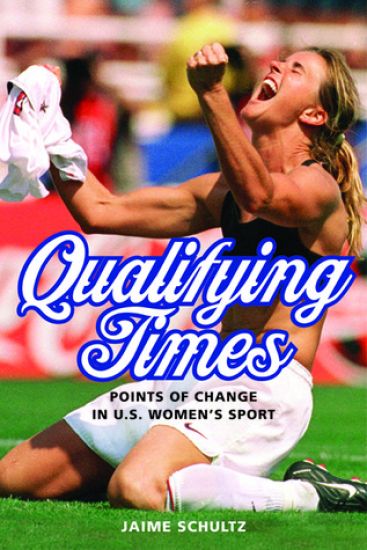
This perceptive, lively study explores U.S. women's sport through historical "points of change": particular products or trends that dramatically influenced both women's participation in sport and cultural responses to women athletes. Beginning with the seemingly innocent ponytail, the subject of the Introduction, scholar Jaime Schultz challenges the reader to look at the historical and sociological significance of now-common items such as sports bras and tampons and ideas such as sex testing and competitive cheerleading. Tennis wear, tampons, and sports bras all facilitated women's participation in physical culture, while physical educators, the aesthetic fitness movement, and Title IX encouraged women to challenge (or confront) policy, financial, and cultural obstacles. While some of these points of change increased women's physical freedom and sporting participation, they also posed challenges. Tampons encouraged menstrual shame, sex testing (a tool never used with male athletes) perpetuated narrowly-defined cultural norms of femininity, and the late-twentieth-century aesthetic fitness movement fed into an unrealistic beauty ideal. Ultimately, Schultz finds that U.S. women's sport has progressed significantly but ambivalently. Although participation in sports is no longer uncommon for girls and women, Schultz argues that these "points of change" have contributed to a complex matrix of gender differentiation that marks the female athletic body as different than--as less than--the male body, despite the advantages it may confer.
Qualifying Times

Qualifying Times

Jaime Schultz

University of Illinois Press
2014
nidottu
This perceptive, lively study explores U.S. women's sport through historical "points of change": particular products or trends that dramatically influenced both women's participation in sport and cultural responses to women athletes. Beginning with the seemingly innocent ponytail, the subject of the Introduction, scholar Jaime Schultz challenges the reader to look at the historical and sociological significance of now-common items such as sports bras and tampons and ideas such as sex testing and competitive cheerleading. Tennis wear, tampons, and sports bras all facilitated women's participation in physical culture, while physical educators, the aesthetic fitness movement, and Title IX encouraged women to challenge (or confront) policy, financial, and cultural obstacles. While some of these points of change increased women's physical freedom and sporting participation, they also posed challenges. Tampons encouraged menstrual shame, sex testing (a tool never used with male athletes) perpetuated narrowly-defined cultural norms of femininity, and the late-twentieth-century aesthetic fitness movement fed into an unrealistic beauty ideal. Ultimately, Schultz finds that U.S. women's sport has progressed significantly but ambivalently. Although participation in sports is no longer uncommon for girls and women, Schultz argues that these "points of change" have contributed to a complex matrix of gender differentiation that marks the female athletic body as different than--as less than--the male body, despite the advantages it may confer.
Moments of Impact

Moments of Impact

Jaime Schultz

University of Nebraska Press
2016
sidottu
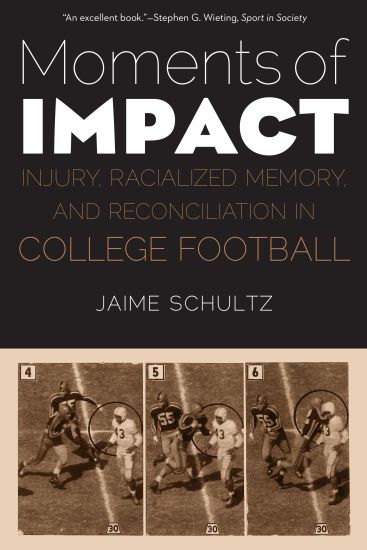
In the first half of the twentieth century, Jack Trice, Ozzie Simmons, and Johnny Bright played college football for three Iowa institutions: Iowa State University, the University of Iowa, and Drake University, respectively. At a time when the overwhelming majority of their opponents and teammates were white, the three men, all Black, sustained serious injuries on the gridiron due to foul play, either because of their talents, their race, or, most likely, an ugly combination of the two. Moments of Impact tells their stories and examines how the local communities of which they were once a part have forgotten and remembered those assaults over time. Of particular interest are the ways those memories have been expressed in a number of commemorations, including a stadium name, a trophy, and the dedication of a football field. Jaime Schultz focuses on the historical and racial circumstances of the careers of Trice, Simmons, and Bright as well as the processes and politics of cultural memory. Schultz develops the concept of “racialized memory”-a communal form of remembering imbued with racial significance-to suggest that the racial politics of contemporary America have generated a need to redress historical wrongs, congratulate Americans on the ostensible racial progress they have made, and divert attention from the unrelenting persistence of structural and ideological racism.
Moments of Impact

Moments of Impact

Jaime Schultz

University of Nebraska Press
2019
pokkari
In the first half of the twentieth century, Jack Trice, Ozzie Simmons, and Johnny Bright played college football for three Iowa institutions: Iowa State University, the University of Iowa, and Drake University, respectively. At a time when the overwhelming majority of their opponents and teammates were white, the three men, all Black, sustained serious injuries on the gridiron due to foul play, either because of their talents, their race, or, most likely, an ugly combination of the two. Moments of Impact tells their stories and examines how the local communities of which they were once a part have forgotten and remembered those assaults over time. Of particular interest are the ways those memories have been expressed in a number of commemorations, including a stadium name, a trophy, and the dedication of a football field. Jaime Schultz focuses on the historical and racial circumstances of the careers of Trice, Simmons, and Bright as well as the processes and politics of cultural memory. Schultz develops the concept of “racialized memory”-a communal form of remembering imbued with racial significance-to suggest that the racial politics of contemporary America have generated a need to redress historical wrongs, congratulate Americans on the ostensible racial progress they have made, and divert attention from the unrelenting persistence of structural and ideological racism.