Kirjojen hintavertailu. Mukana 12 390 323 kirjaa ja 12 kauppaa.

Kirjahaku

Etsi kirjoja tekijän nimen, kirjan nimen tai ISBN:n perusteella.

5 kirjaa tekijältä Jaimey Fisher

Christian Petzold

Christian Petzold

Jaimey Fisher

University of Illinois Press
2013
nidottu
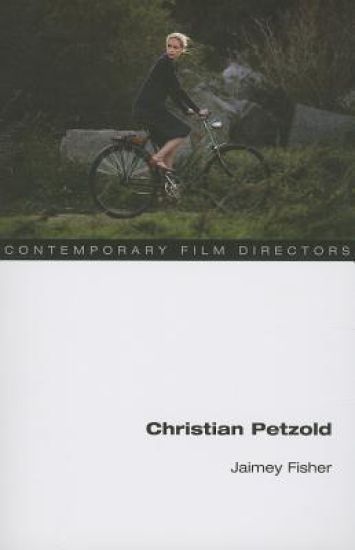
In eleven feature films across two decades, Christian Petzold has established himself as the most critically celebrated director in contemporary Germany. The best-known and most influential member of the Berlin School, Petzold's career reflects the trajectory of German film from 1970s New German Cinema to more popular fare in the 1990s and back again to critically engaged and politically committed filmmaking.In the first book-length study on Petzold in English, Jaimey Fisher frames Petzold's cinema at the intersection of international art cinema and sophisticated genre cinema. This approach places his work in the context of global cinema and invites comparisons to the work of directors like Pedro Almodovar and Rainer Werner Fassbinder, who repeatedly deploy and reconfigure genre cinema to their own ends. These generic aspects constitute a cosmopolitan gesture in Petzold's work as he interprets and elaborates on cult genre films and popular genres, including horror, film noir, and melodrama. Fisher explores these popular genres while injecting them with themes like terrorism, globalization, and immigration, central issues for European art cinema. The volume also includes an extended original interview with the director about his work.
Treme

Treme

Jaimey Fisher

Wayne State University Press
2019
nidottu
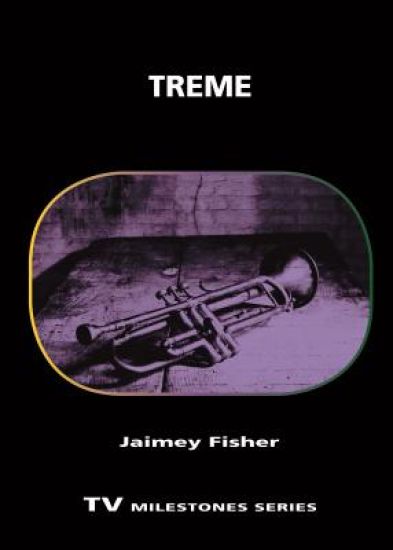
In Treme, Jaimey Fisher analyzes how the HBO television series Treme treads new ground by engaging with historical events and their traumatic aftermaths, in particular, with Hurricane Katrina in 2005 and subsequent flooding in New Orleans. Instead of building up to a devastating occurrence, David Simon's much anticipated follow-up to The Wire (2002-8) unfolds with characters coping in the wake of catastrophe, in a mode of what Fisher explores as a prevailing mode of ""afterness."" Treme charts these changes while also memorializing the number of New Orleans cultures that were immediately endangered. David Simon's and Eric Overmyer's Treme (2010-13) attempts something unprecedented for a multi-season series. Although the show follows, in some ways, in the celebrated footsteps of The Wire-for example, in its elegiac tracking of the historical struggles of an American city-Fisher investigates how Treme varies from The Wire's work with genre and what replaces it: The Wire is a careful, even baroque variation on the police drama, while Treme dispenses with genre altogether. This poses considerable challenges for popular television, which Simon and Overmyer address in several ways, including offering a carefully montaged map of New Orleans and foregrounding the distance witnessing of watershed events there. Another way in which Treme sets itself apart is its memorialization of the city's inestimable contributions to American music, especially to jazz, soul, rhythm and blues, rap, rock, and funk. Treme gives such music and its many makers unprecedented attention, both in terms of screen time for music and narrative exposition around musicians. A key element of the volume is its look at the show's themes of race, crime, and civil rights as well as the corporate versus community recovery and remaking of the city. Treme's synthesizing mélange of the arts in their specific geographical context, coupled with political and socio-economic analysis of the city, highlights the show's unique approach. Fans of the works of Simon and Overmyer, as well as television studies students and scholars, will enjoy this keen-eyed approach to a beloved show.
German Ways of War

German Ways of War

Jaimey Fisher

RUTGERS UNIVERSITY PRESS
2022
nidottu
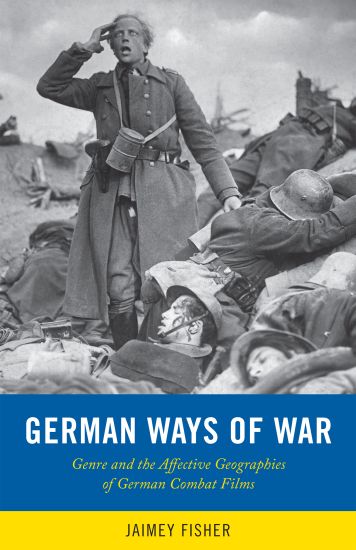
German Ways of War deploys theories of space, mobility, and affect to investigate how war films realize their political projects. Analyzing films across the decades, from the 1910s to 2000s, German Ways of War addresses an important lacuna in media studies: while scholars have tended to focus on the similarities between cinematic looking and weaponized targeting -- between shooting a camera and discharging a gun – this book argues that war films negotiate spaces throughout that frame their violence in ways more revealing than their battle scenes. Beyond that well-known intersection of visuality and violence, German Ways of War explores how the genre frames violence within spatio-affective operations. The production of novel spaces and evocation of new affects transform war films, including the genre’s manipulation of mobility, landscape, territory, scales, and topological networks. Such effects amount to what author Jaimey Fisher terms the films’ “affective geographies” that interweave narrative-generated affects, spatial depictions, and political processes.
German Ways of War

German Ways of War

Jaimey Fisher

RUTGERS UNIVERSITY PRESS
2022
sidottu
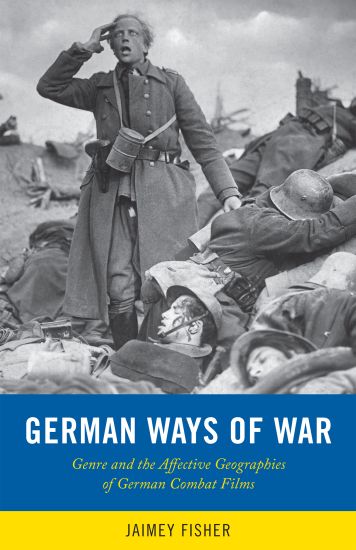
German Ways of War deploys theories of space, mobility, and affect to investigate how war films realize their political projects. Analyzing films across the decades, from the 1910s to 2000s, German Ways of War addresses an important lacuna in media studies: while scholars have tended to focus on the similarities between cinematic looking and weaponized targeting -- between shooting a camera and discharging a gun – this book argues that war films negotiate spaces throughout that frame their violence in ways more revealing than their battle scenes. Beyond that well-known intersection of visuality and violence, German Ways of War explores how the genre frames violence within spatio-affective operations. The production of novel spaces and evocation of new affects transform war films, including the genre’s manipulation of mobility, landscape, territory, scales, and topological networks. Such effects amount to what author Jaimey Fisher terms the films’ “affective geographies” that interweave narrative-generated affects, spatial depictions, and political processes.