Kirjojen hintavertailu. Mukana 11 244 527 kirjaa ja 12 kauppaa.

Kirjahaku

Etsi kirjoja tekijän nimen, kirjan nimen tai ISBN:n perusteella.

3 kirjaa tekijältä James Clay Moltz

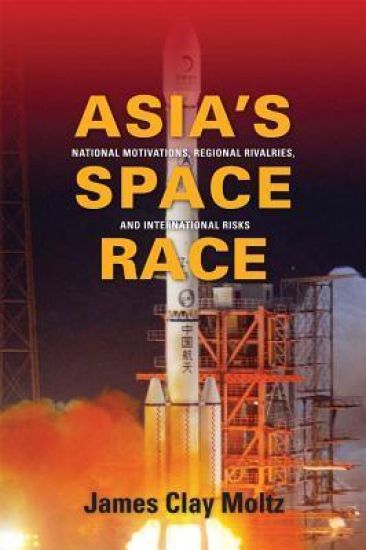
Asia's Space Race

Asia's Space Race

James Clay Moltz

Columbia University Press
2011
sidottu
In contrast to the close cooperation practiced among European states, space relations among Asian states have become increasingly tense. If current trends continue, the Asian civilian space competition could become a military race. To better understand these emerging dynamics, James Clay Moltz conducts the first in-depth policy analysis of Asia's fourteen leading space programs, concentrating especially on developments in China, Japan, India, and South Korea. Moltz isolates the domestic motivations driving Asia's space actors, revisiting critical events such as China's 2007 antisatellite weapons test and manned flights, Japan's successful Kaguya lunar mission and Kibo module for the International Space Station (ISS), India's Chandrayaan lunar mission, and South Korea's astronaut visit to the ISS, along with plans to establish independent space-launch capability. He investigates these nations' divergent space goals and their tendency to focus on national solutions and self-reliance rather than regionwide cooperation and multilateral initiatives. He concludes with recommendations for improved intra-Asian space cooperation and regional conflict prevention. Moltz also considers America's efforts to engage Asia's space programs in joint activities and the prospects for future U.S. space leadership. He extends his analysis to the relationship between space programs and economic development in Australia, Indonesia, Malaysia, North Korea, Pakistan, the Philippines, Singapore, Taiwan, Thailand, and Vietnam, making this a key text for international relations and Asian studies scholars.
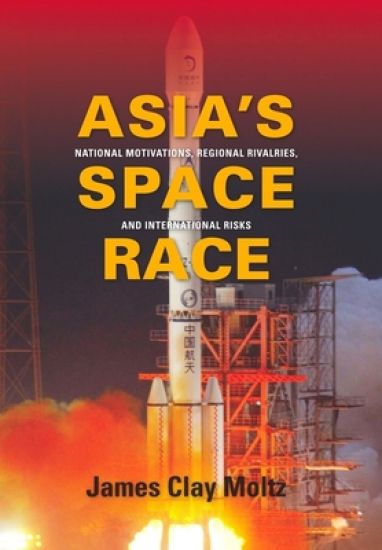
Asia's Space Race

Asia's Space Race

James Clay Moltz

Columbia University Press
2018
pokkari
In contrast to the close cooperation practiced among European states, space relations among Asian states have become increasingly tense. If current trends continue, the Asian civilian space competition could become a military race. To better understand these emerging dynamics, James Clay Moltz conducts the first in-depth policy analysis of Asia's fourteen leading space programs, concentrating especially on developments in China, Japan, India, and South Korea. Moltz isolates the domestic motivations driving Asia's space actors, revisiting critical events such as China's 2007 antisatellite weapons test and manned flights, Japan's successful Kaguya lunar mission and Kibo module for the International Space Station (ISS), India's Chandrayaan lunar mission, and South Korea's astronaut visit to the ISS, along with plans to establish independent space-launch capability. He investigates these nations' divergent space goals and their tendency to focus on national solutions and self-reliance rather than regionwide cooperation and multilateral initiatives. He concludes with recommendations for improved intra-Asian space cooperation and regional conflict prevention. Moltz also considers America's efforts to engage Asia's space programs in joint activities and the prospects for future U.S. space leadership. He extends his analysis to the relationship between space programs and economic development in Australia, Indonesia, Malaysia, North Korea, Pakistan, the Philippines, Singapore, Taiwan, Thailand, and Vietnam, making this a key text for international relations and Asian studies scholars.

Crowded Orbits

Crowded Orbits

James Clay Moltz

Columbia University Press
2014
sidottu
Space has become increasingly crowded since the end of the Cold War, with new countries, companies, and even private citizens operating satellites and becoming spacefarers. This book offers general readers a valuable primer on space policy from an international perspective. It examines the competing themes of space competition and cooperation while providing readers with an understanding of the basics of space technology, diplomacy, commerce, science, and military applications. The recent expansion of human space activity poses new challenges to existing treaties and other governance tools for space, increasing the likelihood of conflict over a diminishing pool of beneficial locations and resources close to Earth. Drawing on more than twenty years of experience in international space policy debates, James Clay Moltz examines possible avenues for cooperation among the growing pool of space actors, considering their shared interests in space traffic management, orbital debris control, division of the radio frequency spectrum, and the prevention of military conflict. Moltz concludes with policy recommendations for enhanced international collaboration in space situational awareness, scientific exploration, and restraining harmful military activities.