Kirjojen hintavertailu. Mukana 12 390 323 kirjaa ja 12 kauppaa.

Kirjahaku

Etsi kirjoja tekijän nimen, kirjan nimen tai ISBN:n perusteella.

4 kirjaa tekijältä James A. Grymes

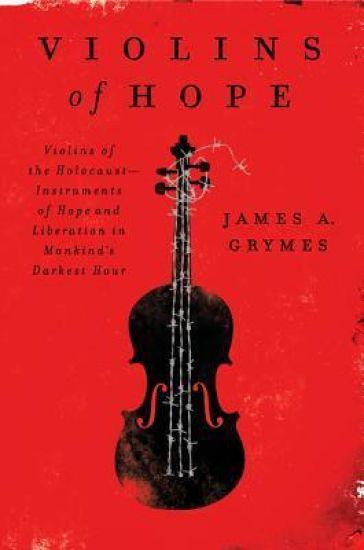
Violins of Hope

Violins of Hope

James A. Grymes

HarperPerennial
2014
nidottu
A stirring testament to the strength of the human spirit and the power of music, Violins of Hope tells the remarkable stories of violins played by Jewish musicians during the Holocaust, and the Israeli violin maker dedicated to bringing these inspirational instruments back to life. The violin has formed an important aspect of Jewish culture for centuries, both as a popular instrument with classical Jewish musicians-Jascha Heifetz, Yehudi Menuhin, Itzhak Perlman-and also a central factor of social life as part of the enduring Klezmer tradition. But during the Holocaust, the violin assumed extraordinary new roles within the Jewish community. For some musicians, the instrument was a liberator; for others, it was a savior that spared their lives. For many, the violin provided comfort in mankind's darkest hour, and, in at least one case, helped avenge murdered family members. Above all, the violins of the Holocaust represented strength and optimism for the future. In Violins of Hope, music historian James A. Grymes tells the amazing, horrifying, and inspiring story of the violins of the Holocaust, and of Amnon Weinstein, the renowned Israeli violinmaker who has devoted the past twenty years to restoring these instruments in tribute to those who were lost, including 400 members of his own family. Juxtaposing tales of individual violins with one man's harrowing struggle to reconcile his own family's history and the history of his people, it is a poignant, affecting, and ultimately uplifting look at the Holocaust and its enduring impact.
Ernst von Dohnányi

Ernst von Dohnányi

James A. Grymes

Greenwood Press
2001
sidottu
As a result of both his political reputation--destroyed by false charges of Nazism after World War II--and his rejection of avant-garde techniques, the recordings and compositions of Ernst von Dohnányi went largely ignored for most of the 20th century. In recent years, however, musicians have begun to revise their interpretations of 20th century music to include compositional and performance styles that, like Dohnányi's, adhered more closely to 19th century aesthetics. Although performers and audiences worldwide have started to rediscover his musical legacy, scholarship has not kept pace with their growing interest. This bio-bibliography corrects that. As the first scholarly examination in English of Dohnányi's life and work, it serves as the perfect introduction to an unfairly neglected 20th century artist. A brief but insightful biography is followed by a list of works that reflects the most current research of Dohnányi's creative output. It includes nearly 200 entries, each of which collects such information as the date of composition, the instrumentation of the work, the publisher of its first edition, the location of the manuscript, and the date and location of its premiere. The discography lists 400 sound recordings of the composer's work, and the annotated bibliography includes 500 entries, emphasizing performance reviews that offer substantial information about Dohnányi's works and style.
The Last Romantic in His Own Words

The Last Romantic in His Own Words

James A. Grymes; Veronika Kusz

OXFORD UNIVERSITY PRESS INC
2025
sidottu
The Last Romantic in His Own Words combines carefully curated personal and professional letters with reminiscences, pedagogical essays, and statements on public affairs that Hungarian musician Ernst von Dohnányi (1877-1960) wrote throughout his lengthy career. Also included are a selection of interviews he gave in various capacities: as a celebrated and versatile performer, as the composer of beloved masterworks, as an internationally respected pedagogue, and as a leader in Hungary's leading musical institutions. These texts--many of which have never appeared in English--shed new light on Dohnányi's singular aesthetics, as well as on his career as a charismatic and at times controversial public figure who was one of the most influential musicians of the twentieth century, particularly in Hungary. The result of twenty-five years of archival research in England, Hungary, and the United States, the documents outline the major chapters in Dohnányi's long and fascinating life, from his joyful childhood in Hungary, through a globetrotting career that witnessed the advent of the radio as well as air travel, and ultimately to his final years in political exile. Along the way, readers will gain valuable insights into not only Dohnányi's musical influences and personal philosophies as a performer, music educator, and composer, but more broadly musical life and the dissemination of musical knowledge and public taste in the first half of the twentieth century. The documents facilitate a much-needed reevaluation of a public figure and private individual caught up in the web of twentieth-century politics, resulting in a picture that is more complete than ever of one of the most elusive musicians of the twentieth century.