Kirjojen hintavertailu. Mukana 12 016 292 kirjaa ja 12 kauppaa.

Kirjahaku

Etsi kirjoja tekijän nimen, kirjan nimen tai ISBN:n perusteella.

39 kirjaa tekijältä James Barr

Bible and Interpretation: The Collected Essays of James Barr
This is a three volume collection of the most important published papers of James Barr (1924-2006). The papers deal with questions of theology (especially biblical theology), biblical interpretation and ideas about biblical inspiration and authority, and questions to do with biblical Hebrew and Greek, along with several lexicographical studies, essays and obituaries on major figures in the history of biblical interpretation, and a number of important reviews. Many of pieces collected here have hitherto been available only in journals and hard-to-access collections. This collection will prove indispensable for anyone seeking a rounded picture of Barr's work. It incorporates work from every period of his academic life, and includes a number of discussions of fundamentalism and conservative biblical interpretation. Some pieces also shed light on less well-known aspects of Barr's work, such as his abiding interest in biblical chronology. Barr's characteristic incisive, clear, and forthright style is apparent throughout the collection. The three volumes are thematically compiled. Each is accompanied by an introduction by John Barton, providing a guide to the contents. Volume 1 begins with a biographical essay by Ernest Nicholson and John Barton. It contains major articles on theology in relation to the Bible, programmatic studies of the past and future of biblical study, and reflections on specific topics in the study of the Old Testament. Volume 2 is concerned with detailed biblical interpretation and with the history of the discipline. It also contains material on biblical fundamentalism. Volume 3 is a collection of Barr's extensive papers on linguistic matters relating to Biblical Hebrew and Greek, and to biblical translation in the ancient and the modern world.
Bible and Interpretation: The Collected Essays of James Barr
This is the first volume of a three volume collection which collates the most important published papers of James Barr (1924-2006). The papers deal with questions of theology (especially biblical theology), biblical interpretation and ideas about biblical inspiration and authority, and questions to do with biblical Hebrew and Greek, along with several lexicographical studies, essays and obituaries on major figures in the history of biblical interpretation, and a number of important reviews. Many of pieces collected here have hitherto been available only in journals and hard-to-access collections. This collection will prove indispensable for anyone seeking a rounded picture of Barr's work. It incorporates work from every period of his academic life, and includes a number of discussions of fundamentalism and conservative biblical interpretation. Some pieces also shed light on less well-known aspects of Barr's work, such as his abiding interest in biblical chronology. Barr's characteristic incisive, clear, and forthright style is apparent throughout the collection. The three volumes are thematically compiled. Each is accompanied by an introduction by John Barton, providing a guide to the contents. Volume 1 begins with a biographical essay by Ernest Nicholson and John Barton. It contains major articles on theology in relation to the Bible, programmatic studies of the past and future of biblical study, and reflections on specific topics in the study of the Old Testament. Volume 2 is concerned with detailed biblical interpretation and with the history of the discipline. It also contains material on biblical fundamentalism. Volume 3 is a collection of Barr's extensive papers on linguistic matters relating to Biblical Hebrew and Greek, and to biblical translation in the ancient and the modern world.
Bible and Interpretation: The Collected Essays of James Barr
This is the second volume of three volume collection which collates the most important published papers of James Barr (1924-2006). The papers deal with questions of theology (especially biblical theology), biblical interpretation and ideas about biblical inspiration and authority, and questions to do with biblical Hebrew and Greek, along with several lexicographical studies, essays and obituaries on major figures in the history of biblical interpretation, and a number of important reviews. Many of pieces collected here have hitherto been available only in journals and hard-to-access collections. This collection will prove indispensable for anyone seeking a rounded picture of Barr's work. It incorporates work from every period of his academic life, and includes a number of discussions of fundamentalism and conservative biblical interpretation. Some pieces also shed light on less well-known aspects of Barr's work, such as his abiding interest in biblical chronology. Barr's characteristic incisive, clear, and forthright style is apparent throughout the collection. The three volumes are thematically compiled. Each is accompanied by an introduction by John Barton, providing a guide to the contents. Volume 1 begins with a biographical essay by Ernest Nicholson and John Barton. It contains major articles on theology in relation to the Bible, programmatic studies of the past and future of biblical study, and reflections on specific topics in the study of the Old Testament. Volume 2 is concerned with detailed biblical interpretation and with the history of the discipline. It also contains material on biblical fundamentalism. Volume 3 is a collection of Barr's extensive papers on linguistic matters relating to Biblical Hebrew and Greek, and to biblical translation in the ancient and the modern world.
Bible and Interpretation: The Collected Essays of James Barr
This is the third volume of a three volume collection which collates the most important published papers of James Barr (1924-2006). The papers deal with questions of theology (especially biblical theology), biblical interpretation and ideas about biblical inspiration and authority, and questions to do with biblical Hebrew and Greek, along with several lexicographical studies, essays and obituaries on major figures in the history of biblical interpretation, and a number of important reviews. Many of pieces collected here have hitherto been available only in journals and hard-to-access collections. This collection will prove indispensable for anyone seeking a rounded picture of Barr's work. It incorporates work from every period of his academic life, and includes a number of discussions of fundamentalism and conservative biblical interpretation. Some pieces also shed light on less well-known aspects of Barr's work, such as his abiding interest in biblical chronology. Barr's characteristic incisive, clear, and forthright style is apparent throughout the collection. The three volumes are thematically compiled. Each is accompanied by an introduction by John Barton, providing a guide to the contents. Volume 1 begins with a biographical essay by Ernest Nicholson and John Barton. It contains major articles on theology in relation to the Bible, programmatic studies of the past and future of biblical study, and reflections on specific topics in the study of the Old Testament. Volume 2 is concerned with detailed biblical interpretation and with the history of the discipline. It also contains material on biblical fundamentalism. Volume 3 is a collection of Barr's extensive papers on linguistic matters relating to Biblical Hebrew and Greek, and to biblical translation in the ancient and the modern world. Contents List
Holy Scripture

Holy Scripture

James Barr

Oxford University Press
1983
nidottu
The Sprunt Lectures delivered at Union Theological Seminary, Richmond, Virginia, February 1982. The men of the Bible did not themselves have a Bible to be their supreme guide and authority. This book discusses the way in which the canon of scripture was formed and the effects that it has.
Biblical Faith and Natural Theology

Biblical Faith and Natural Theology

James Barr

Clarendon Press
1994
nidottu
Do people know about God just by being human beings? Or do they need special divine assistance, through the Bible and the church? `Natural Theology' is the idea that human beings `by nature', that is just through being human, know something of God; or that perhaps they gain such knowledge from observing the world we live in. Its opposite is `revealed theology', or the knowledge of God communicated only through special channels - through Jesus Christ, through the Bible, through the church. Natural theology was long accepted as a basic ingredient in all theology, but in the twentieth century it was rejected by important theologians, especially Karl Barth. His views denied all natural theology and placed greater emphasis on the Bible. But what if the Bible itself uses, depends on, and supports natural theology? In this book, Professor Barr pursues these questions within the Bible itself and within the history of ideas, earlier and more recent; and he looks at their implications for religion and theology in the future.
History and Ideology in the Old Testament

History and Ideology in the Old Testament

James Barr

Oxford University Press
2000
sidottu
The end of the millennium sees biblical study in a state of transition. The traditional position of historical approaches is widely questioned and 'historical criticism' is regarded as passé. There is a search for approaches literary or sociological that are less tied to history. On the other hand there is a more radical approach to the history of Israel, that sees true history as distinct from the biblical narrative and dependent on sources other than the Bible. Biblical narratives thus express not the actual events but the ideological and religious aspirations of writers in much later times. 'Ideology' has become one of the key words, but is used in very divergent ways. All this is linked with the intellectual movement known as post-modernism. Some connections between post-modernism and theology are suggested by Professor Barr in the final chapter. This book is important because it tries to bring together various threads of these different movements and to state a position from which we may advance into the next millennium.
History and Ideology in the Old Testament

History and Ideology in the Old Testament

James Barr

Oxford University Press
2005
nidottu
The end of the millennium sees biblical study in a state of transition. The traditional position of historical approaches is widely questioned and `historical criticism' is regarded as passé. There is a search for approaches - literary or sociological - that are less tied to history. On the other hand there is a more radical approach to the history of Israel, that sees true history as distinct from the biblical narrative and dependent on sources other than the Bible. Biblical narratives thus express not the actual events but the ideological and religious aspirations of writers in much later times. `Ideology' has become one of the key words, but is used in very divergent ways. All this is linked with the intellectual movement known as post-modernism. Some connections between post-modernism and theology are suggested by Professor Barr in the final chapter. This book is important because it tries to bring together various threads of these different movements and to state a position from which we may advance into the new millennium.
Escaping from Fundamentalism

Escaping from Fundamentalism

James Barr

SCM Press
2012
nidottu
This is a pastoral rather than a controversial book. Its main aim is not to show fundamentalists that they are wrong, but rather to help those who have grown up in the world of fundamentalism or have become committed to it but in the end have come to feel that it is a prison from which they must escape.
Fundamentalism

Fundamentalism

James Barr

SCM Press
1981
nidottu
James Barr has never been an uncontroversial writer, and this book, eirenic though its purpose was, has proved no exception. It was widely noticed on its first appearance and led to a lively discussion, not least in evangelical circles. At the same time it was welcomed by reviewers as an important contribution to the nature of biblical criticism. 'This books breaks much new ground,' said British Book News, 'and will be welcomed by many who are interested in the intellectual basis of a biblical faith. Indeed, it is a measure of the author's coverage and penetration of a variety of issues that the book can be taken as, among other things, a useful introduction to modern critical methods of biblical scholarship.' The Scottish Journal of Theology remarked: 'One of the most urgent theological tasks in the field of biblical studies is to expose and evaluate the hidden presuppositions of the methods used, and this is necessary alike in liberal and conservative circles. Professor Barr's book is an important contribution to this task, and it is to be hoped that response to it will further clarify the issues that he raises.' Not all the responses were in fact favourable. Professor Barr was accused of having an outdated view of fundamentalism, of attacking positions which are being quite rapidly abandoned, and neglecting promising new developments. In this second edition of his book, he has added a long preface discussing these criticisms at length. Noting and commenting on the new developments, at the same time he points out that if anything, in many areas fundamentalism is becoming even more regressive. The debate is obviously by no means over, and critics of the first edition may well have to think again. James Barr's sequel to this study, Escaping from Fundamentalism, is also published by SCM Press. James Barr was Professor of Hebrew Bible at Vanderbilt Divinity School.
The Garden of Eden and the Hope of Immortality
In this book, Professor Barr presents a reading of the story of the Garden of Eden, not as a tale of the origins of sin and death, but as a tale of a chance of immortality, briefly accessible to humanity but quickly lost. Old Testament scholars have long been aware that the traditional reading of the story of Adam and Eve as the 'Fall of Man', though hallowed by St Paul's use of it, cannot stand up to close examination of the text. However, they have not succeeded in formulating an alternative interpretation which rivals the force of this traditional reading or is relevant to such a wide range of biblical and theological issues. Professor Barr's new interpretation has such force, and with its challenges to many conventional views it is likely to cause a considerable stir among traditionalists and to excite those dissatisfied with aspects of traditional thought. Central to the book is its stress on the role and prevalence of the idea of immortality, commonly thought to be a later Greek and un-biblical import into Christian thinking. Reflection on immortality also leads to a reconsideration of ideas about death in the Hebrew Bible; about Sheol. the Hebrew underworld; and about the soul. Professor Barr brings out the importance of time for the Hebrew Bible and the concept of length of days, showing that the threat is not so much death as such, but the manner and time of death. His study of chronology leads to a reconsideration of the story of Noah's ark, and the book ends by seeing resurrection and immortality as complementary, rather than conflicting, ideas.
Comparative Philology and the Text of the Old Testament
This book applies, in a more specialist area, a similar treatment to that used by Professor Barr in The Semantics of Biblical Language, and like the earlier volume criticizes much of previous scholarship. In recent Old Testament studies, increasing reliance has been placed on the resources of languages other than Hebrew itself -Arabic, Aramaic, Accadian and Ugaritic. Scholars have used these languages as a source from which the meaning of unusual Hebrew words might be deduced. Professor Barr discusses the principles involved in this process. He considers such questions as the degree of coincidence in the vocabularies of cognate languages, the extent of homonymy in Hebrew, the history of the transmission of meanings in Hebrew and the value of the ancient translations.
The Semantics of Biblical Language
Behind the academic and innocently descriptive title of this book is to be found one of the most explosive works of biblical scholarship to be published this century. Certainly many of those who read it on its first appearance were never the same again, and it signalled the end of what had hitherto been a flourishing literature on 'biblical theology'. 'In recent years,' Professor Bar wrote in his Preface, 'I have come to believe that one of the greatest dangers to sound and adequate interpretation of the Bible comes from the prevailing use of procedure, which, while claiming to rest upon a knowledge of the Israelite and Greek ways of thinking, constantly mishandle and distort the linguistic evidence of the Hebrew and Greek languages as they are used in the Bible. The increasing sense of dependence upon the Bible in the modern church only makes this danger more serious. The fact that these procedures have never to my knowledge been collected, analysed and criticized in detail was the chief stimulus to my undertaking of this task myself.' His conclusions were devastating and drew down on him a good deal of often hurt criticism: however, twenty years later, they still stand and the passage of time has made them more widely accepted. Certainly this book, issued for the first time in a paperback edition, is essential reading for any student of the Bible, if he is to learn from the mistakes of others.
The Scope and Authority of the Bible
This volume brings together seven essays which are representative of the author's style, approach to and outlook on contemporary biblical topics. Characterized throughout by openness of thought and iconoclasm, this collection serves as an introduction to one of the most important issues - the authority of the Bible - facing churches today, as well as the author's thoughts as a whole.
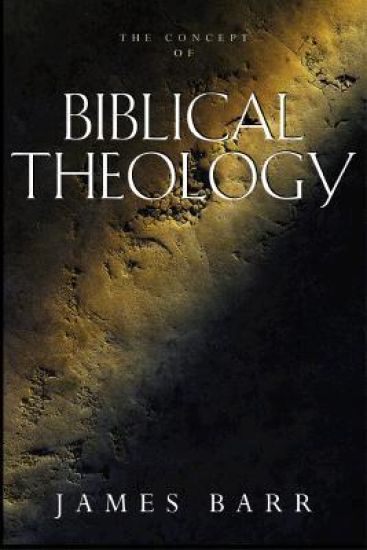
Concept of Biblical Theology

Concept of Biblical Theology

James Barr

SCM Press
2003
nidottu
Barr views Old Testament theology and New Testament theology as sub-sections of 'biblical theology' as opposed to 'doctrinal' or 'philosophical' theology. e Barr guides the reader through the various supportive and opposing arguments with his own conclusion that elements of biblical theology still have validity in theological scholarship.
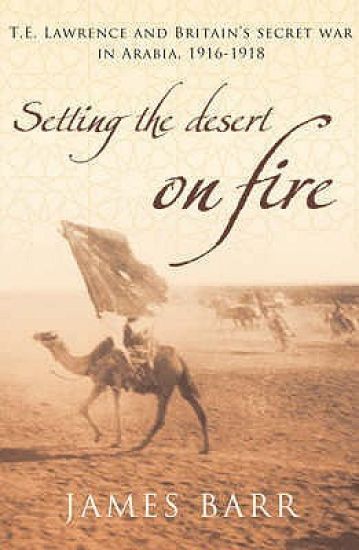
Setting the Desert on Fire

Setting the Desert on Fire

James Barr

WW Norton Co
2009
pokkari
T. E. Lawrence s classic Seven Pillars of Wisdom made the Arab revolt a legend and helped turn him into the mythical Lawrence of Arabia. Setting the Desert on Fire is both a masterly account of the intrigue behind the revolt and its startling consequences for the present-day Middle East and a portrait of Lawrence that brings fresh insight to the true nature of the master mythmaker."
A Line in the Sand

A Line in the Sand

James Barr

WW Norton Co
2013
pokkari
In the twentieth century, while fighting a common enemy in Europe, Britain and France were locked in a clandestine struggle for power in the Middle East. From the first agreement to divide the region between them to the birth of Israel, A Line in the Sand is a gripping narrative of the last gasp of imperialism, with tales of unscrupulous double-dealing, cynical manipulation, and all-too-frequent violence that continues to the present day.
Setting the Desert on Fire

Setting the Desert on Fire

James Barr

Bloomsbury Publishing PLC
2007
nidottu
_______________ ‘Packs as much punch as one of Lawrence's train-blowing explosives' - Sunday Times ‘Barr's cogent, vividly written book puts Lawrence centre stage but does not lose sight of the uprising's larger historical context' - Financial Times ‘[Barr] introduces fresh materials to give new context to Lawrence and the present difficulties in Iraq' - The Times _______________ The full story behind the desert revolt made famous by T.E. Lawrence in Seven Pillars of Wisdom and the film Lawrence of Arabia It is 1916. The Allies are struggling in the Great War. The Ottoman Sultan calls for a pan-Islamic jihad against all non-Muslims except Germans. But Sharif Husein, ruler of the holy city of Mecca, is smarting under Turkish rule, fomenting Arab nationalism and lobbying the British to support him. It seems to the British a good idea secretly to encourage an Arab revolt. Setting the Desert on Fire is a masterly account of this key moment made legendary by T. E. Lawrence, but here filled with a wide range of characters including the British Prime Minister Lloyd George, whose desire to capture ‘Jerusalem by Christmas' had consequences that reverberate to this day.