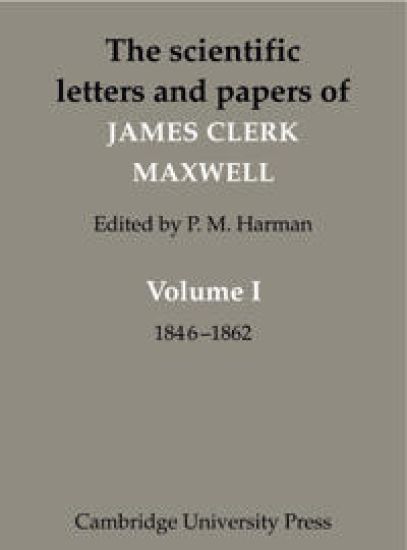
This is a comprehensive edition of Maxwell's manuscript papers published virtually complete and largely for the first time. Maxwell's work was of central importance in establishing and developing the major themes of the physics of the nineteenth century: his theory of the electromagnetic field and the electromagnetic theory of light and his special place in the history of physics. His fecundity of imagination and the sophistication of his examination of the foundations of physics give particular interest and importance to his writings. Volume I: 1846–1862 documents Maxwell's education and early scientific work and his major period of scientific innovation - his first formulation of field theory, the electromagnetic theory of light and the statistical theory of gases. Important letters and manuscript drafts illuminate this fundamental early work and the volume includes his letters to friends and family, general essays and lectures and juvenilia.
This is a comprehensive edition of Maxwell's manuscript papers published virtually complete and largely for the first time. Maxwell's work was of central importance in establishing and developing the major themes of the physics of the nineteenth century: his theory of the electromagnetic field and the electromagnetic theory of light and his special place in the history of physics. His fecundity of imagination and the sophistication of his examination of the foundations of physics give particular interest and importance to his writings. Volume III: 1874–1879 covers the period of Maxwell's direction of the Cavendish Laboratory and documents the espousal of his theories by a wider circle of physicists. During this last period of his life his work began to achieve the pre-eminence in the classical physics of the nineteenth century, which it has retained ever since.
Originally published between 1990 and 2002 this set is now available in paperback for the first time. This is a comprehensive edition of Maxwell's manuscript papers, published in a virtually complete form. Maxwell's work was of central importance in establishing and developing the major themes of the physics of the nineteenth century. His theory of the electromagnetic field and the electromagnetic theory of light, and his development of statistical molecular theory, have established his special place in the history of physics. His fecundity of imagination and the sophistication of his examination of the foundation of physics give particular interest and importance to his writings. This edition includes Maxwell's letters to William Thomson (Lord Kelvin), Michael Faraday, George Gabriel Stokes, Lord Rayleigh, Peter Guthrie Tait, and many other physicists, mathematicians and scholars. These letters, together with numerous drafts of his published scientific papers and reports on papers submitted to the Royal Society, illuminate his scientific thought, providing a unique perspective on classical physics at a crucial stage in its development.
The publication in 1890 of the two-volume Scientific Papers of James Clerk Maxwell, edited by W. D. Niven, was one of the two objects of a committee formed 'for the purpose of securing a fitting memorial of him' (the other object being the commissioning of a marble bust for the Cavendish Laboratory). Before his death in 1879 at the age of 48, Clerk Maxwell had made major contributions to many areas of theoretical physics and mathematics, not least his discoveries in the fields of electromagnetism and of the kinetic theory of gases, which have been regarded as laying the foundations of all modern physics. He is generally considered the third most important physicist of all time, after Newton and Einstein. These collected shorter works, beginning with a paper written at the age of 15, show the wide range of Clerk Maxwell's interests across mathematics, physics and chemistry.
The publication in 1890 of the two-volume Scientific Papers of James Clerk Maxwell, edited by W. D. Niven, was one of the two objects of a committee formed 'for the purpose of securing a fitting memorial of him' (the other object being the commissioning of a marble bust for the Cavendish Laboratory). Before his death in 1879 at the age of 48, Clerk Maxwell had made major contributions to many areas of theoretical physics and mathematics, not least his discoveries in the fields of electromagnetism and of the kinetic theory of gases, which have been regarded as laying the foundations of all modern physics. He is generally considered the third most important physicist of all time, after Newton and Einstein. These collected shorter works, beginning with a paper written at the age of 15, show the wide range of Clerk Maxwell's interests across mathematics, physics and chemistry.
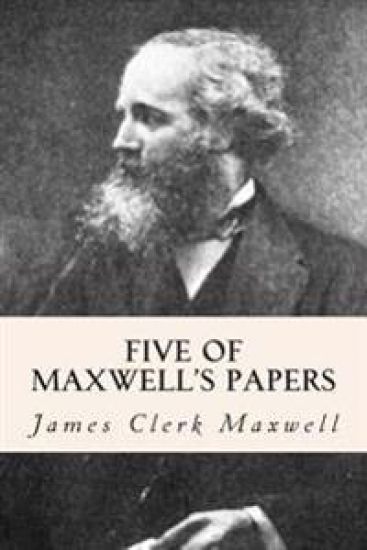
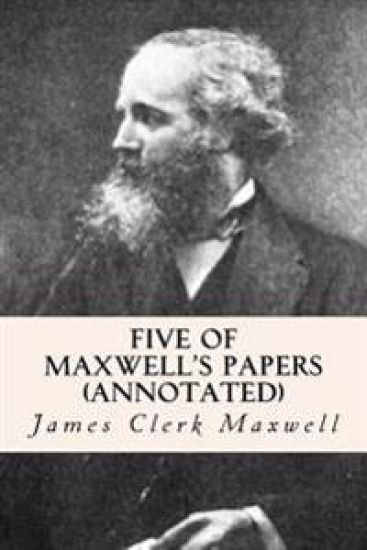
Five of Maxwell's Papers is a classic collection of physics papers by James Clerk Maxwell. Contents: On the unequal sensibility of the Foramen Centrale to light of different colours -- On the theory of compound colours with reference to mixtures of blue and yellow light -- On an instrument to illustrate Poinsot's theory of rotation -- Address to the Mathematical and Physical Sections of the British Association -- Introductory lecture on experimental physics. James Clerk Maxwell FRS FRSE (13 June 1831 - 5 November 1879) was a Scottish scientist in the field of mathematical physics. His most notable achievement was to formulate the classical theory of electromagnetic radiation, bringing together for the first time electricity, magnetism, and light as different manifestations of the same phenomenon. Maxwell's equations for electromagnetism have been called the "second great unification in physics" 5] after the first one realised by Isaac Newton. With the publication of "A Dynamical Theory of the Electromagnetic Field" in 1865, Maxwell demonstrated that electric and magnetic fields travel through space as waves moving at the speed of light. Maxwell proposed that light is an undulation in the same medium that is the cause of electric and magnetic phenomena. 6] The unification of light and electrical phenomena led to the prediction of the existence of radio waves. Maxwell helped develop the Maxwell-Boltzmann distribution, a statistical means of describing aspects of the kinetic theory of gases. He is also known for presenting the first durable colour photograph in 1861 and for his foundational work on analysing the rigidity of rod-and-joint frameworks (trusses) like those in many bridges. His discoveries helped usher in the era of modern physics, laying the foundation for such fields as special relativity and quantum mechanics. Many physicists regard Maxwell as the 19th-century scientist having the greatest influence on 20th-century physics. His contributions to the science are considered by many to be of the same magnitude as those of Isaac Newton and Albert Einstein. 7] In the millennium poll - a survey of the 100 most prominent physicists - Maxwell was voted the third greatest physicist of all time, behind only Newton and Einstein. 8] On the centenary of Maxwell's birthday, Einstein described Maxwell's work as the "most profound and the most fruitful that physics has experienced since the time of Newton. James Clerk Maxwell was born on 13 June 1831 at 14 India Street, Edinburgh, to John Clerk Maxwell of Middlebie, an advocate, and Frances Cay 10] 11] daughter of Robert Hodshon Cay and sister of John Cay. (His birthplace now houses a museum operated by the James Clerk Maxwell Foundation.) His father was a man of comfortable means 12] of the Clerk family of Penicuik, holders of the baronetcy of Clerk of Penicuik. His father's brother was the 6th Baronet. 13] He had been born "John Clerk", adding the surname Maxwell to his own after he inherited (as an infant in 1793) the Middlebie country estate near Corsock, Kirkcudbrightshire, from connections to the Maxwell family, themselves members of the peerage. 10] James was a first cousin of both the artist Jemima Blackburn 14] (the daughter of his father's sister) and the civil engineer William Dyce Cay (the son of his mother's brother). Cay and Maxwell were close friends and Cay acted as his best man when Maxwell married. Maxwell's parents met and married when they were well into their thirties; 16] his mother was nearly 40 when he was born. They had had one earlier child, a daughter named Elizabeth, who died in infancy.
Five of Maxwell's Papers is a classic collection of physics papers by James Clerk Maxwell. Contents: On the unequal sensibility of the Foramen Centrale to light of different colours -- On the theory of compound colours with reference to mixtures of blue and yellow light -- On an instrument to illustrate Poinsot's theory of rotation -- Address to the Mathematical and Physical Sections of the British Association -- Introductory lecture on experimental physics. James Clerk Maxwell FRS FRSE (13 June 1831 - 5 November 1879) was a Scottish scientist in the field of mathematical physics. His most notable achievement was to formulate the classical theory of electromagnetic radiation, bringing together for the first time electricity, magnetism, and light as different manifestations of the same phenomenon. Maxwell's equations for electromagnetism have been called the "second great unification in physics" 5] after the first one realised by Isaac Newton. With the publication of "A Dynamical Theory of the Electromagnetic Field" in 1865, Maxwell demonstrated that electric and magnetic fields travel through space as waves moving at the speed of light. Maxwell proposed that light is an undulation in the same medium that is the cause of electric and magnetic phenomena. 6] The unification of light and electrical phenomena led to the prediction of the existence of radio waves. Maxwell helped develop the Maxwell-Boltzmann distribution, a statistical means of describing aspects of the kinetic theory of gases. He is also known for presenting the first durable colour photograph in 1861 and for his foundational work on analysing the rigidity of rod-and-joint frameworks (trusses) like those in many bridges. His discoveries helped usher in the era of modern physics, laying the foundation for such fields as special relativity and quantum mechanics. Many physicists regard Maxwell as the 19th-century scientist having the greatest influence on 20th-century physics. His contributions to the science are considered by many to be of the same magnitude as those of Isaac Newton and Albert Einstein. 7] In the millennium poll - a survey of the 100 most prominent physicists - Maxwell was voted the third greatest physicist of all time, behind only Newton and Einstein. 8] On the centenary of Maxwell's birthday, Einstein described Maxwell's work as the "most profound and the most fruitful that physics has experienced since the time of Newton. James Clerk Maxwell was born on 13 June 1831 at 14 India Street, Edinburgh, to John Clerk Maxwell of Middlebie, an advocate, and Frances Cay 10] 11] daughter of Robert Hodshon Cay and sister of John Cay. (His birthplace now houses a museum operated by the James Clerk Maxwell Foundation.) His father was a man of comfortable means 12] of the Clerk family of Penicuik, holders of the baronetcy of Clerk of Penicuik. His father's brother was the 6th Baronet. 13] He had been born "John Clerk", adding the surname Maxwell to his own after he inherited (as an infant in 1793) the Middlebie country estate near Corsock, Kirkcudbrightshire, from connections to the Maxwell family, themselves members of the peerage. 10] James was a first cousin of both the artist Jemima Blackburn 14] (the daughter of his father's sister) and the civil engineer William Dyce Cay (the son of his mother's brother). Cay and Maxwell were close friends and Cay acted as his best man when Maxwell married. Maxwell's parents met and married when they were well into their thirties; 16] his mother was nearly 40 when he was born. They had had one earlier child, a daughter named Elizabeth, who died in infancy.
Five of Maxwell's PapersJames Clerk MaxwellJames Clerk Maxwell FRS FRSE (13 June 1831 - 5 November 1879) was a Scottish scientist in the field of mathematical physics. His most notable achievement was to formulate the classical theory of electromagnetic radiation, bringing together for the first time electricity, magnetism, and light as manifestations of the same phenomenon. Maxwell's equations for electromagnetism have been called the "second great unification in physics" after the first one realised by Isaac Newton.With the publication of A Dynamical Theory of the Electromagnetic Field in 1865, Maxwell demonstrated that electric and magnetic fields travel through space as waves moving at the speed of light. Maxwell proposed that light is an undulation in the same medium that is the cause of electric and magnetic phenomena. The unification of light and electrical phenomena led to the prediction of the existence of radio waves.Maxwell helped develop the Maxwell-Boltzmann distribution, a statistical means of describing aspects of the kinetic theory of gases. He is also known for presenting the first durable colour photograph in 1861 and for his foundational work on analysing the rigidity of rod-and-joint frameworks (trusses) like those in many bridges.Table of ContentsOn the Unequal Sensibility of the Foramen Centrale to Light of different ColoursOn the Theory of Compound Colours with reference to Mixtures of Blue and Yellow LightOn an Instrument to illustrate Poinsot's Theory of RotationAddress to the Mathematical and Physical Sections of the British AssociationIntroductory Lecture on Experimental Physics
This slender book opens a path through Maxwell's massive Treatise on Electricity and Magnetism that attains two important objectives: first, in Maxwell's own words and mathematics, it presents an overview of the revolutionary field theory of electricity and magnetism, from the most basic phenomena to the complete theory; and second, it shows, using additional original papers by Maxwell, how the four Maxwellian equations familiar to later physicists emerge from the more discursive general theory. The final part of the path, leading from the Treatise to the equations, passes, surprisingly and delightfully, through Maxwell's presentation of the wave theory of light as a direct consequence of electromagnetic field theory. Maxwell's numerous clear physical examples and illustrations, and Howard Fisher's lucid explanatory notes, allow even those without a knowledge of calculus to understand the general features of electromagnetic theory, as Maxwell himself developed it.
Reproduction of the original. The publishing house Megali specialises in reproducing historical works in large print to make reading easier for people with impaired vision.
Reproduction of the original. The publishing house Megali specialises in reproducing historical works in large print to make reading easier for people with impaired vision.
This book has been considered important throughout the human history, and so that this work is never forgotten we have made efforts in its preservation by republishing this book in a modern format for present and future generations. This whole book has been reformatted, retyped and designed. These books are not made of scanned copies and hence the text is clear and readable.