Kirjojen hintavertailu. Mukana 11 699 587 kirjaa ja 12 kauppaa.

Kirjahaku

Etsi kirjoja tekijän nimen, kirjan nimen tai ISBN:n perusteella.

2 kirjaa tekijältä James Decker

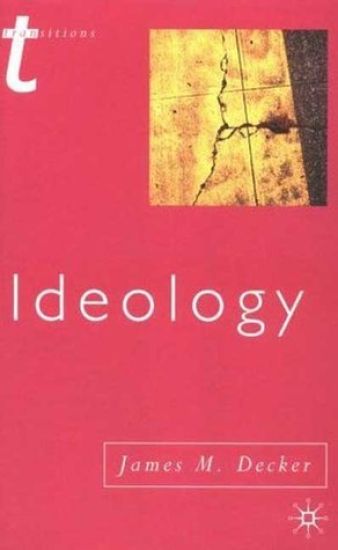
Ideology

Ideology

James Decker

Red Globe Press
2003
nidottu
This concise introduction to the concept of ideology provides an overview of the term and considers its impact on literary theory. James M. Decker analyzes the history of Western ideology from its pre-Enlightenment roots to its current incarnations, providing readers with both an essential overview of key terms and issues and a thoughtful assessment of some of the important critical thinkers associated with the notion, including Marx, Gramsci and Althusser. Ideological theories are introduced within three broad categories - the subjective, the institutional and the political - which helps students to synthesize a concept that sprawls across the traditional disciplinary lines of philosophy, politics, economics, history and cultural and literary studies. Close readings of key texts demonstrate the impact of ideology on critical practice and literary reputation. Texts include: - Toni Morrison's Sula - William Faulkner's 'Barn Burning' - George Orwell's 1984Compact and easy-to-follow, Decker's study finally asks: are we now in a 'post-ideological' era?
Henry Miller and Narrative Form

Henry Miller and Narrative Form

James Decker

Routledge
2005
sidottu
In this bold study James M. Decker argues against the commonly held opinion that Henry Miller’s narratives suffer from ‘formlessness’. He instead positions Miller as a stylistic pioneer, whose place must be assured in the American literary canon.From Moloch to Nexus through such widely-read texts as Tropic of Cancer and Tropic of Capricorn, Decker examines what Miller calls his ‘spiral form’, a radically digressive style that shifts wildly between realism and the fantastic. Drawing on a variety of narratological and critical sources, as well as Miller’s own aesthetic theories, he highlights that this fragmented narrative style formed part of a sustained critique of modern spiritual decay. A deliberate move rather than a compositional weakness, then, Miller’s style finds a wide variety of antecedents in the work of such figures as Nietzsche, Rabelais, Joyce, Bergson and Whitman, and is viewed by Decker as an attempt to chart the journey of the self through the modern city.Henry Miller and Narrative Form affords readers new insights into some of the most challenging writings of the twentieth century and provides a template for understanding the significance of an extraordinary and inventive narrative form.