Kirjojen hintavertailu. Mukana 11 717 486 kirjaa ja 12 kauppaa.

Kirjahaku

Etsi kirjoja tekijän nimen, kirjan nimen tai ISBN:n perusteella.

5 kirjaa tekijältä James Delbourgo

A Noble Madness: The Dark Side of Collecting from Antiquity to Now
Collectors are often praised for their taste in art or contributions to science, and considered great public benefactors. But collectors have also been seen as dangerous obsessives who love objects too much. Why? From looters and idolaters to fin de si cle decadents and Freudian psychos, A Noble Madness is a captivating history of obsessive collectors from ancient times to today.From Roman emperors lusting after statues to modern-day hoarders, award-winning author James Delbourgo tells the extraordinary story of fanatical collectors throughout history. He explains how the idea first emerged that when we look at someone's collection, we see a portrait of their soul: complex, intriguing, yet possibly insane. What Delbourgo calls "the Romantic collecting self" has always lurked on the dark side of humanity.But this dark side has a silver lining. Because obsessive collectors are driven by passion, not profit, they have been countercultural heroes in the modern imagination, defying respectability and taste in the name of truth to self.A grand portrait gallery of collectors in all their decadent glory, A Noble Madness recounts the saga of the human urge to accumulate, from Caligula to Marie Antoinette, Balzac to Freud, Norman Bates to Andy Warhol. Collectors' love of objects may be mad, even dangerous. But we want to believe their love's a noble madness because by expressing that love, they are themselves.
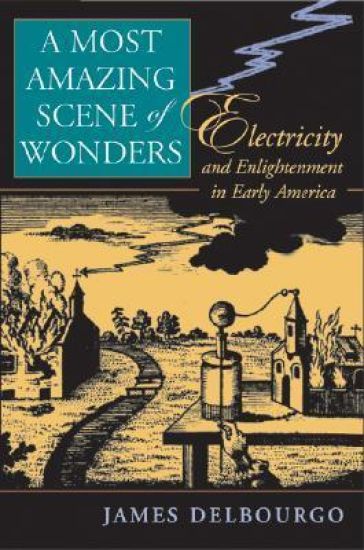
A Most Amazing Scene of Wonders

A Most Amazing Scene of Wonders

James Delbourgo

Harvard University Press
2006
sidottu
Benjamin Franklin's invention of the lightning rod is the founding fable of American science, but Franklin was only one of many early Americans fascinated by electricity. As a dramatically new physical experience, electricity amazed those who dared to tame the lightning and set it coursing through their own bodies. Thanks to its technological and medical utility, but also its surprising ability to defy rational experimental mastery, electricity was a powerful experience of enlightenment, at once social, intellectual, and spiritual.In this compelling book, James Delbourgo moves beyond Franklin to trace the path of electricity through early American culture, exploring how the relationship between human, natural, and divine powers was understood in the eighteenth century. By examining the lives and visions of natural philosophers, spectacular showmen, religious preachers, and medical therapists, he shows how electrical experiences of wonder, terror, and awe were connected to a broad array of cultural concerns that defined the American Enlightenment. The history of lightning rods, electrical demonstrations, electric eels, and medical electricity reveals how early American science, medicine, and technology were shaped by a culture of commercial performance, evangelical religion, and republican politics from mid-century to the early republic.The first book to situate early American experimental science in the context of a transatlantic public sphere, A Most Amazing Scene of Wonders offers a captivating view of the origins of American science and the cultural meaning of the American Enlightenment. In a story of shocks and sparks from New England to the Caribbean, Delbourgo brilliantly illuminates a revolutionary New World of wonder.
Collecting the World

Collecting the World

James Delbourgo

Penguin Books Ltd
2018
pokkari
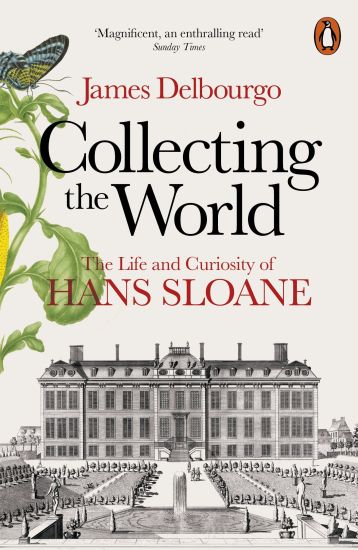
Hans Sloane was the greatest collector of his time, and one of the greatest of all time. His name is familiar today through the London streets and squares named after him, but the man himself, and his achievements, are almost forgotten.Born in the north of Ireland, Sloane made his fortune as a physician to London's wealthiest residents. In 1687 he travelled to Jamaica, then at the heart of Britain's commercial empire, to survey its natural history, and later organised a network of correspondents who sent him curiosities from across the world. He became one of the eighteenth century's preeminent natural historians and assembled an astonishing collection of specimens, artefacts and oddities - the most famous curiosity cabinet of the age. Shortly after his death, Sloane's vast collection was then acquired - as he had hoped - by the nation. It became the nucleus of the world's first national public museum, the British Museum.This is the first biography of Sloane in over sixty years and the first based on his surviving collections. Early modern science and collecting are shown to be global endeavours intertwined with empire and slavery but which nonetheless produced one of the great public institutions of the Enlightenment, as the cabinet of curiosities gave way to the encyclopaedic museum. Collecting the World describes this pivotal moment in the emergence of modern knowledge, and brings this totemic figure back to life.
A Noble Madness

A Noble Madness

James Delbourgo

Quercus Publishing
2025
sidottu
'Magnificent . . . so compulsive and entertaining' Stephen Fry'Give it to the collector in your life, and watch sparks fly!' Cathy Gere'A delight to read and ponder' Jackson Lears'A tour de force of scholarship and storytelling' Daniel WeissA captivating history of obsessive collectors: from ancient looters and idolaters to fin de siècle decadents, Freudian psychos, and hoarders.Collectors are often praised for their taste in art or contributions to science, but there can be a darker side: their passion is sometimes driven by dangerous obsession. Roman emperors who lusted after statues; Chinese scholars obsessed with rocks and flowers; fin de siècle dandies surrounded by bibelots. History is full of stories about those who love things more than people, presenting a danger either to themselves or others. In this sweeping history from antiquity to today, James Delbourgo tells the extraordinary story of the mad collector as a cultural figure from the tyrant and idolater to the sexually repressed "psycho" of the Freudian imagination and the modern-day hoarder. His conclusion is surprising: Because they are driven by passion rather than profit, obsessive collectors also have been cultural heroes, seen as authentic and true to themselves. Some may be mad, but theirs is a noble madness.