Kirjojen hintavertailu. Mukana 11 576 504 kirjaa ja 12 kauppaa.

Kirjahaku

Etsi kirjoja tekijän nimen, kirjan nimen tai ISBN:n perusteella.

6 kirjaa tekijältä James Ellman

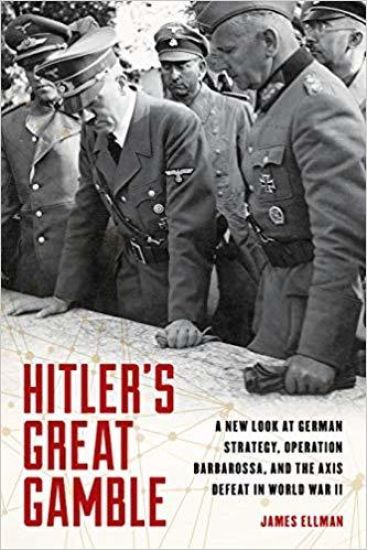
Hitler's Great Gamble

Hitler's Great Gamble

James Ellman

Stackpole Books
2019
sidottu
On June 22, 1941, Hitler invaded the Soviet Union in Operation Barbarossa, one of the turning points of World War II. Within six months, the invasion bogged down at the gates of Moscow, and the Eastern Front proved to be the decisive theater in the defeat of the Third Reich. Ever since, most historians have agreed that this was one of Hitler’s great mistakes. In Hitler’s Great Gamble, James Ellman argues that Barbarossa was a gamble, but that it was not doomed from the start: that it was a reasonable gamble spoiled not by strategic shortsightedness, but by diplomatic setbacks and poor execution. In Ellman’s recounting, the invasion of the Soviet Union was not a doomed act of madness or hubris, but a logical gamble that maximized the Third Reich’s attempts at achieving its war aims, however perverted, of “living space” and subjugating the Slavs. Had Finland and Japan made good on their alliance with Germany—had Hitler been more committed to diplomacy and not military invasion—Germany might well have succeeded in defeating the Soviet Union and, perhaps, winning World War II. Drawing on a wealth of primary and secondary sources (including many recently released), Hitler’s Great Gamble is a provocative work that will appeal to a wide cross-section of World War II buffs, enthusiasts, and historians
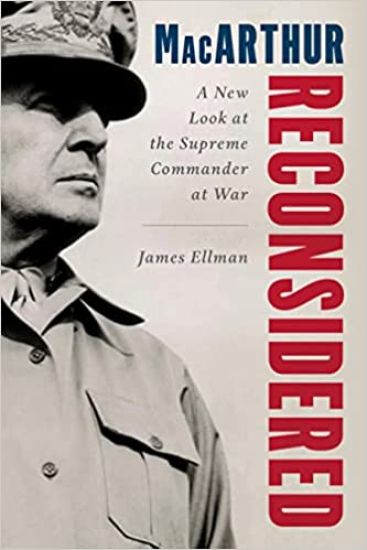
MacArthur Reconsidered

MacArthur Reconsidered

James Ellman

STACKPOLE BOOKS
2023
sidottu
Douglas MacArthur is one of the most controversial generals in American military history. During World War II, some adored him while others mocked him as “Dugout Doug.” His superiors, like President Franklin Roosevelt and General George Marshall, considered him indispensable as well as intolerable. Dwight Eisenhower, who once served under MacArthur, was not alone in thinking, “My God, but he was smart” and also “I just can’t understand how such a damn fool could have gotten to be a general.” Historians have been similarly conflicted, but while acknowledging that MacArthur was imperious, egotistical, insubordinate, paranoid, unfair to subordinates, and more, many have concluded that he was still a military genius. In this carefully researched and argued book that’s sure to be as controversial as the general himself, James Ellman digs deep, connects the dots, and concludes that General MacArthur was decidedly not a military genius.Highly intelligent, outspoken, old-fashioned as well as surprisingly modern, a self-promoter extraordinaire, a bonafide World War I hero who lived in the shadow of his Civil War hero father and under the thumb of his doting mother, Douglas MacArthur’s rise through the U.S. Army’s ranks was meteoric during an era when promotions came slowly. In 1930, he became Chief of Staff.As Chief of Staff, MacArthur disobeyed President Hoover’s orders during the Bonus Army March. A scandal surrounding his Filipino mistress saw him sue journalists, only to end up paying them a settlement. Even as he privately excoriated Roosevelt, he worked well with FDR, who found the general politically useful even while considering him and Huey Long “the two most dangerous men in America.” MacArthur then became field marshal of the Philippine Army, but when war came in December 1941, the Philippines were caught ill-prepared. Recalled to United States service, MacArthur’s vacillation led to the virtual destruction of the American bomber force in the Philippines, and during the fall of Bataan and Corregidor, he pursued unsound tactics and did not venture to the front lines. Awarded a politically motivated Medal of Honor by Roosevelt and paid a vast sum by the Filipino president, MacArthur escaped to Australia. For the next four years, as Supreme Commander of the Southwest Pacific theater, MacArthur was obsessed with retaking the Philippines – and in pursuing that self-centered goal, he ignored U.S. global strategy, insulted Allied partners like Australia, tried to one-up the U.S. Navy, and gave at least tacit approval to a presidential campaign to nominate him to run against Roosevelt in 1944. Today MacArthur still polarizes. Many biographies agree he was a great commander marred by a few failures. Ellman argues the opposite: MacArthur was a lackluster commander whose reputation has been elevated by a few successes.
Hitler's Great Gamble

Hitler's Great Gamble

James Ellman

STACKPOLE BOOKS
2025
pokkari
On June 22, 1941, Hitler invaded the Soviet Union in Operation Barbarossa, one of the turning points of World War II. Within six months, the invasion bogged down on the outskirts of Moscow, and the Eastern Front proved to be the decisive theater in the defeat of the Third Reich. Ever since, most historians have agreed that this was Hitler’s gravest mistake. In Hitler’s Great Gamble, James Ellman argues that while Barbarossa was a gamble and perverted by genocidal Nazi ideology, it was not doomed from the start. Rather it represented Hitler’s best chance to achieve his war aims for Germany which were remarkably similar to those of the Kaiser’s government in 1914. Other options, such as an invasion of England, or an offensive to seize the oil fields of the Middle East were considered and discarded as unlikely to lead to Axis victory.In Ellman’s recounting, Barbarossa did not fail because of flaws in the Axis invasion strategy, the size of the USSR, or the brutal cold of the Russian winter. Instead, German defeat was due to errors of Nazi diplomacy. Hitler chose not to coordinate his plans with his most militarily powerful allies, Finland and Japan, and ensure the seizure of the ports of Murmansk and Vladivostok. Had he done so, Germany might well have succeeded in defeating the Soviet Union and, perhaps, winning World War II. Drawing on a wealth of primary and secondary sources (including many recently released), Hitler’s Great Gamble is a provocative work that will appeal to a wide cross-section of World War II buffs, enthusiasts, and historians.
Seeds of Victory

Seeds of Victory

James Ellman

STACKPOLE BOOKS
2025
sidottu
Like all armed forces, the United States military—often celebrated for its victories—has been defeated on the battlefield throughout its long history. Unlike some others, the United States has shown a remarkable ability to bounce back from defeat: to learn from the loss, recover, and turn it into victory. In this book James Ellman, who has established a reputation for his reconsiderations of military history, takes a close look at nine such pivot points on the ground, in the air, and at sea, from the American Revolution through the Korean War:Long Island (1776) to Saratoga (1777)Charleston (1780) to Cowpens and Guilford Court House (1781)Invasion of Canada (1812) to Battle of Lake Erie (1813)First Bull Run (1861) to Antietam (1862)Pearl Harbor (1941) to Midway (1942)Luzon (1942) to Buna-Gona (1943)Kasserine Pass (1943) to El Guettar (1943)Schweinfurt/Ploesti (1943) to “Big Week” (1944)Chongchon (1950) to Operation Ripper (1951)In brisk narratives, Ellman describes each battle, explaining how it was fought and lost, and then shifts gears to detail how leaders—military as well as civilian—such as George Washington, Abraham Lincoln, Douglas MacArthur, Dwight Eisenhower, and George Patton assessed the factors that led to defeat, made changes to training, tactics, and strategy, and entered the next battle wiser and better prepared. Ellman finally recounts the subsequent battle, focusing on how it was shaped by what came before and how the victory was gained. As this book makes clear, the history of the United States at war is, to a surprising degree, the story of tenacity in the wake of defeat, of flexibility and adaptability on the path to victory. This is essential reading for understanding how battles are lost and won.
Risk Capital: A Portfolio of Financial Shenanigans

Risk Capital: A Portfolio of Financial Shenanigans

James Ellman

Independently Published
1998
nidottu
The growth of the capital markets since the 1990s has handed enormous power to a handful of men and women answerable to no one except their investors. What happens when this power is used for personal greed and ambition? RISK CAPITAL takes you on a global ride from the cool glass towers of Manhattan to the steamy jungles of the Yucatan - from secret meetings in a mountain-top Swiss castle to the very depths of evil mens' souls.
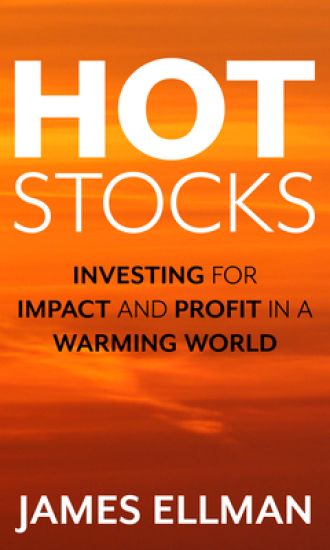
Hot Stocks

Hot Stocks

James Ellman

Rowman Littlefield
2020
sidottu
The costs of global warming and its mitigation will have a major impact on equity market performance over the next two decades. As the climate changes, investors will need to understand which are the best-positioned market sectors and stocks as well as those to avoid. Hot Stocks provides a roadmap detailing how to invest in this new reality. It evaluates the many ways global warming will affect profit flows in the economy: ?Impacts of a warmer climate, rising ocean levels, more frequent extreme storm events, land desertification and ocean acidification. ?Potential for government taxation on greenhouse gas emissions. ?Accelerating switching to renewable power systems that are increasingly cost competitive with those powered by oil fossil fuels. ?Government bans on sales of cars powered by internal combustion engines and the electrification of the terrestrial vehicle fleet. ?Potential for hydrocarbon reserves and equipment becoming impaired or ‘stranded assets’. ?Rising demand for major infrastructure projects to protect valuable coastal real estate from inundation. ?Litigation aimed at forcing legacy polluters to pay mitigation costs. ? The book drills down on how these myriad changes will depress or support stocks in sectors such as the petroleum industry, automakers, renewable power providers, regional banking, property insurance, heavy equipment manufacturers, Real Estate Investment Trusts (REITs) and agricultural chemicals. The analysis then pivots away from a US-centric focus to identify those nations around the world whose economies are best positioned to successfully adjust to the impact of rising prevailing temperatures, as well as those likely to suffer the most from the trend. Hot Stocks introduces readers to investing in ways that that will likely succeed as the world warms, climates change, populations move, and businesses change. Accessibly written and well-researched, this work is for the novice and the seasoned investor alike.