Kirjojen hintavertailu. Mukana 12 083 983 kirjaa ja 12 kauppaa.

Kirjahaku

Etsi kirjoja tekijän nimen, kirjan nimen tai ISBN:n perusteella.

18 kirjaa tekijältä James Fenton

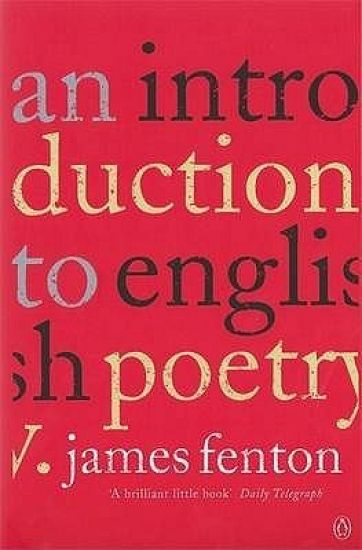
An Introduction to English Poetry

An Introduction to English Poetry

James Fenton

Penguin Books Ltd
2003
pokkari
James Fenton's An Introduction to English Poetry offers a master class for both the reader and writer of poetry. Simply and elegantly written and discussing the work of poets as wide ranging as W. H. Auden, Dylan Thomas, Tennyson, Kipling, Milton and Blake, it covers all varieties of poetic practice in English.'It is hard to imagine a beginner who could not learn from [this book]. If you know a young poet, give them this' The Times Literary Supplement
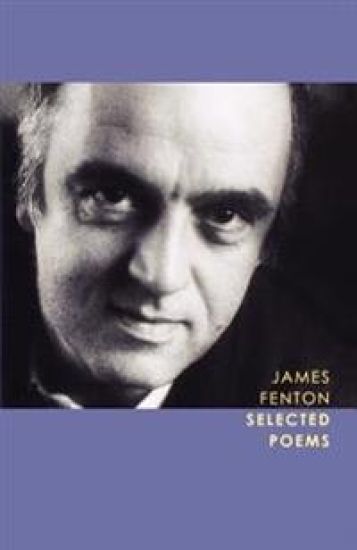
Selected Poems

Selected Poems

James Fenton

Farrar, Strauss Giroux-3pl
2006
nidottu
Listen to what they did.Don't listen to what they said.What was written in bloodHas been set up in lead.--from "Blood and Lead" The leading poet of his generation, James Fenton has over the course of his career built a body of work breathtaking in its range and sensibility. From the passionate political poems that launched him into fame to the intimate illuminations of love--and loss of love--in his later work, Fenton's poetry has always been marked by formal daring, wit, and an abiding empathy for the victims of war and political oppression. With selections from all of his published work since The Memory of War, the entire text of his libretto The Love Bomb, and new, previously uncollected poems, Selected Poems is an imaginative and formal tour de force.
Children in Exile: Poems 1968-1984

Children in Exile: Poems 1968-1984

James Fenton

Farrar, Straus and Giroux
1994
nidottu
Fenton's work is elegant, highly finished, reticent, witty. Disturbing and deeply affecting, Children in Exile remains an exhilarating and memorable performance. "Quite simply, Fenton's poems are frightening." - The New York Times Book Review
Out of Danger: Poems

Out of Danger: Poems

James Fenton

Farrar, Straus and Giroux
1995
nidottu
Out of Danger (1994) was Fenton's first collection of poems in ten years, and the poems in it renew and amplify the qualities of unflinching observation and freewheeling verbal play that made his earlier Children in Exile so distinctive and distinguished. The poems in this book's title sequence address the dangers of love, and the love of danger; Fenton proposes that in love, politics, and poetry alike the truth is "something you say at your peril" and yet "something you shouldn't contain." Part II of the book, "Out of the East," is a series of ironical fight songs about political violence-- in Manila, the Middle East, Tiananmen Square, and elsewhere. Part III, "Maski Paps," reveals again Fenton's celebrated talents for light-verse nonsense. And in "The Manila Manifesto" he turns his gifts loose upon the world of poetry itself in ways that will both enrage and delight. Out of Danger is refined and daring, jocular and deeply challenging.
The Strength of Poetry: Oxford Lectures

The Strength of Poetry: Oxford Lectures

James Fenton

Farrar, Straus and Giroux
2002
nidottu
Sharp-eyed critiques and appreciations of the essential poets of our time. James Fenton is unique among contemporary writers in having achieved equal distinction as a poet and -- in his reportage and criticism -- as a master of trenchant prose. What is more, he has shown himself a devoted critic of both American and British modern poetry, an explainer of each tradition to the other and to itself. In these lectures, delivered at Oxford (where he succeeded Seamus Heaney as Professor of Poetry from 1994 to 1999), Fenton moves easily from Philip Larkin's laments for the British Empire, to Heaney's uneasy rebellion against it, to Robert Frost's celebrations of American conquest; from W. H. Auden on Shakespeare's homoeroticism to the vexed "feminism" of Elizabeth Bishop; from Wilfred Owen's juvenilia to Marianne Moore's youthful agitation for women's suffrage.In these lectures -- many of which appeared in "The New York Review of Books" -- Fenton makes sense of the last century in poetry, and explores its antecedents and its legacies, with the lucidity, wit, and gusto that have made his criticism famous.
A Garden from a Hundred Packets of Seed

A Garden from a Hundred Packets of Seed

James Fenton

Farrar, Straus and Giroux
2005
pokkari
An engaging mix of the serious and the playful, and Fenton writes with a lightness of touch perfectly suited to the subject. --Alexander Urquhart, The Times Literary Supplement Forget structure. Forget trees, shrubs, and perennials. As James Fenton writes, This is not a book about huge projects. It is about thinking your way toward the essential flower garden, by the most traditional of routes: planting some seeds and seeing how they grow. In this light hearted, instructive, original game of lists, Fenton selects one hundred plants he would choose to grow from seed. Flowers for color, size, and exotic interest; herbs and meadow flowers; climbing vines, tropical species--Fenton describes readily available varieties, and tells how to acquire and grow them. Here is a happy, stylish, unpretentious, and thought-provoking gardening book that will beguile and inspire both novice and expert alike.
An Introduction to English Poetry

An Introduction to English Poetry

James Fenton

Farrar, Straus and Giroux
2004
pokkari
A wise, absorbing, and surprising introduction to poetry written in English, from one of England's leading poetsJames Fenton is that rare scholar "not ashamed to admit that he mostly reads for pleasure" (Charles Simic, "The New York Review of Books"). In this eminently readable guide to his abiding passion, he has distilled the essense of a library's--and a lifetime's--worth of delight.The pleasures of his own verse can be found in abundance here: economy, a natural ease, and most of all, surprise. What is English poetry? Fenton argues that it includes any recited words in English that marshall rhythm for their meaning--among them prisoners's work songs, Broadway show tunes, and the cries of street vendors captured in verse. From these beginnings, Fenton describes the rudiments of--and, most important, the inspiration for--the musical verse we find in books, and concludes with an illuminating discussion of operas and songs. Fenton illustrates his comments with verse from all over the English-speaking world.Catholic in his taste, shrewd in his distinctions, and charmingly frank, Fenton is an ideal guide to everything to do with poetry, from the temperament of poets to their accomplishment, in all its variety. In all his writing, prose or verse, Fenton has always had the virtue of saying, in a way that seems effortless, precisely what lies at the heart of the matter. In this vein, "An Introduction to English Poetry" is one of his highest accomplishments.
The Love Bomb and Other Musical Pieces

The Love Bomb and Other Musical Pieces

James Fenton

Farrar, Straus and Giroux
2003
nidottu
Three Libretti--Ranging In Setting From Ancient Jerusalem To Pre-Apocalyptic London--From An Acclaimed Poet This volume of libretti marks new work--and new terrain--for James Fenton. Commissioned by companies in New York and England, these musical pieces make the most of the poet's poignant, witty, and characteristically lyrical verse. Whether evoking modern-day London on the edge of apocalypse in The Love Bomb, a timeless land beyond the moon in this version of Salman Rushdie's children's novel Haroun and the Sea of Stories, or ancient Jerusalem in his stirring oratorio The Fall of Jerusalem, which was composed to mark the millennium, Fenton's lucid storytelling and stylish wordplay bring these pieces vividly to life--with equal power in performance or on the page. Haroun and the Sea of Stories was commissioned by the New York City Opera and had its premiere at Lincoln Center in September 2003. " James Fenton] writes as no one else dares to--with clarity, wit, and the simplest of rhymes."--Voice Literary Supplement
William Blake

William Blake

James Fenton

Faber Faber
2010
nidottu
In this series, a contemporary poet selects and introduces a poet of the past. By their choice of poems and by the personal and critical reactions they express in their prefaces, the editors offer insights into their own work as well as providing an accessible and passionate introduction to some of the greatest poets of our literature.A painter, poet and engraver William Blake (1757-1827) was born in London. Poetical Sketches, his first volume of poetry, was published in 1783 and was followed by several of his best known works: Songs of Innocence (1789), The Book of Thel (1789), The Marriage of Heaven and Hell (1790-93), Songs of Experience (1794) and Jerusalem (1804-20).
Yellow Tulips

Yellow Tulips

James Fenton

Faber Faber
2013
nidottu
Winner of both the Queen's Gold Medal and the Whitbread Prize for Poetry, James Fenton has given readers some of the most memorable lyric verse of the past decades, from the formal skill that marked his debut, Terminal Moraine, to the dramatic and political monologues of The Memory of War and Children in Exile, through to the unforgettable love poems of Out of Danger and his most recent work: Poems is an essential selection by, as Stephen Spender put it, 'a brilliant poet of technical virtuosity'.Don't talk to me of love. I've had an earfulAnd I get tearful when I've downed a drink or two.I'm one of your talking wounded.I'm a hostage. I'm maroonded.But I'm in Paris with you.From 'In Paris With You' by James Fenton
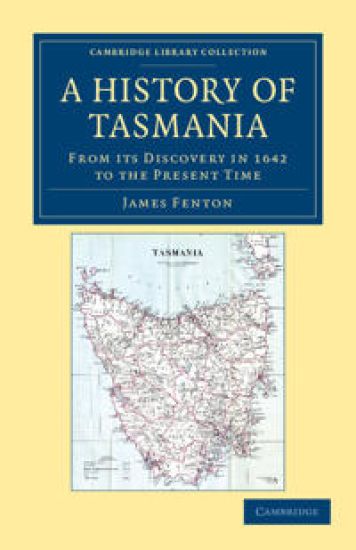
A History of Tasmania

A History of Tasmania

James Fenton

Cambridge University Press
2011
pokkari
James Fenton (1820–1901) was born in Ireland and emigrated to Tasmania (then known as Van Diemen's Land) with his family in 1833. He became a pioneer settler in an area on the Forth River and published this history of the island in 1884. The book begins with the discovery of the island in 1642 and concludes with the deaths of some significant public figures in the colony in 1884. The establishment of the colony on the island, and the involvement of convicts in its building, is documented. A chapter on the native aborigines gives a fascinating insight into the attitudes of the colonising people, and a detailed account of the removal of the native Tasmanians to Flinders Island, in an effort to separate them from the colonists. The book also contains portraits of some aboriginal people, as well as a glossary of their language.
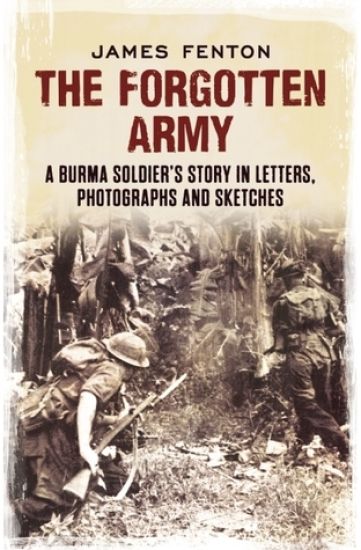
Forgotten Army

Forgotten Army

James Fenton

Fonthill Media
2012
sidottu
The Forgotten Army consists of the letters, photos and sketches of a soldier fighting the Japanese in Burma that were sent home to the author's parents in Lancashire. Call-up documents, medical certificate, service pay book, discharge papers, letter index, family tree, news cuttings, leaflets, and 440 letters spanning military service in the army at home, India, Burma and Malaya. Copies of sketches, illustrations, photographs and paintings have been placed with original letters where reference is made. Sketches of the attack on Myitson, and copies of illustrations printed in the magazine Soldier, are the only drawings of wartime actions that have survived. Original portraits in watercolour, pictorial scenes and photographs, have been exhibited at various venues, a larger number have never been on show. In additions to the letters sent to his family, many more were written to his brother Harry serving with the Royal Corps of Signals. Strict censorship regulations on leaving England prohibited the disclosure of troop ships, military activities, locations and place names, or information that may be of value to an enemy. Hostile encounters with Japanese forces during the Burma campaign were not allowed to be repeated until the closing days of the war. The last of the author's experiences as a soldier serving in uniform is related to letters to his wife. This is a continuous account of military service during World War 2, from the very first day in the army, to the last.
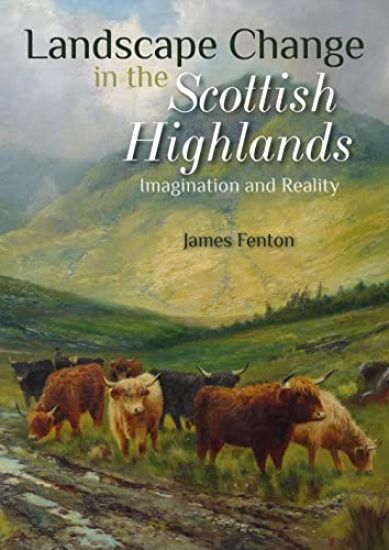
Landscape Change in the Scottish Highlands

Landscape Change in the Scottish Highlands

James Fenton

WHITTLES PUBLISHING
2023
nidottu
The Scottish Highlands have a strong appeal to the public imagination. Indeed, as a result of the writings of Sir Walter Scott, they are now symbolic of Scotland as a whole: a land of mountains, glens and lochs, of golden eagles and red deer; a land with a rich cultural history of clans and clanship, of kilts and castles, of crofts, crofting, Highland cows and sheep, of music and dance. But does this imagined landscape relate to the actuality? Is it in fact a wild landscape which has escaped the pressures of the modern world, or does such untrammelled wildness only reside in the mind? The aim of this book is to answer this last question by taking an objective look at the history of the Highland landscape, how it has changed over the centuries and how it is still changing. It challenges the view that the Highlands are, to quote the famous ecologist Frank Fraser Darling, ‘a devastated landscape’ – that is a landscape damaged by centuries of overgrazing and human exploitation. Instead it points out that the evidence suggests that the traditional unwooded Highland landscape of open hill and moor is one of the most natural remaining in northwest Europe, showing only minimal signs of human impact over the millennia; apart, that is, from the areas of human settlement. The occurrence of woodland as only isolated fragments scattered across the land is in fact a key biodiversity feature of the Highlands, distinguishing the far northwest of Britain from most of western Europe, where woodland would undoubtedly be the dominant habitat. There certainly were significantly more trees in the past but the woodland declined naturally over the millennia for a complex variety of reasons. Hence the current approach of putting trees back in the landscape, nowadays termed ‘reforesting’ or ‘rewilding’ is in fact destroying the very essence of the land. Similarly, the current activity of ‘restoring’ peatland can also result in a loss of the naturalness of the landscape. Indeed, loss of natural habitat is seen as a serious global issue, with humans slowly taking over for themselves the whole planet, leaving little space available for the wildness of nature. It is not only reforesting and peatland restoration which is destroying the naturalness of the Highland landscape, but also the continuing encroachment of infrastructure, whether hill tracks, wind turbines, dams, phone masts, ski development, fences, and commercial forestry plantations. At the current rate of attrition, the wild landscape will soon remain only in the imagination, the open hills and moors having been dumped into the dustbin of history. The Highlands, sadly, will be like everywhere else in the world: developed and managed to extinction! Why can we not just let the hills be? After all, this is how they were for thousands of years until landownership entered the Highlands following the Battle of Culloden.