Kirjojen hintavertailu. Mukana 11 342 296 kirjaa ja 12 kauppaa.

Kirjahaku

Etsi kirjoja tekijän nimen, kirjan nimen tai ISBN:n perusteella.

16 kirjaa tekijältä James Gleick

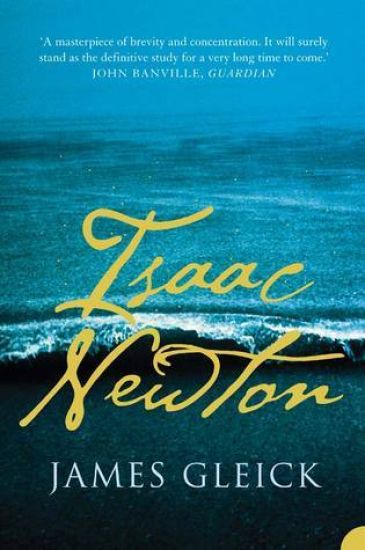
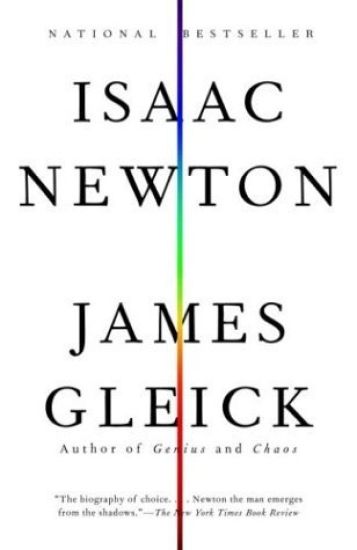
Isaac Newton

Isaac Newton

James Gleick

Harpercollins Publishers
2004
pokkari
From one of the best writers on science, a remarkable portrait of Isaac Newton. The man who changed our understanding of the universe, of science, and of faith.
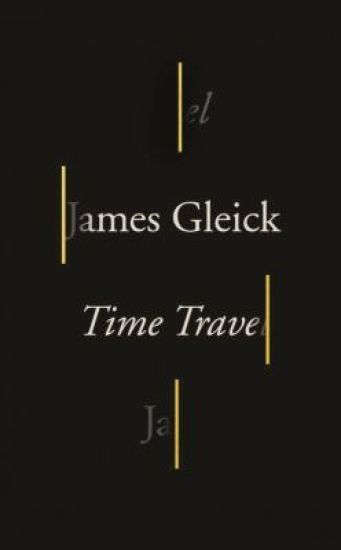
Time Travel

Time Travel

James Gleick

Harpercollins Publishers
2017
sidottu
AN OBSERVER BOOK OF THE YEAR From the acclaimed author of The Information and Chaos, a mind-bending exploration of time travel: its subversive origins, its evolution in literature and science, and its influence on our understanding of time itself.
Time Travel

Time Travel

James Gleick

Harpercollins Publishers
2017
pokkari
AN OBSERVER BOOK OF THE YEAR From the acclaimed author of The Information and Chaos, a mind-bending exploration of time travel: its subversive origins, its evolution in literature and science, and its influence on our understanding of time itself.
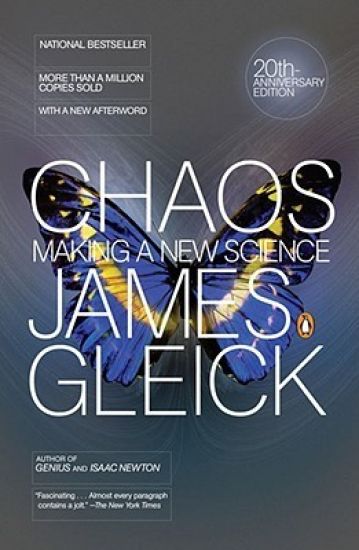
Chaos: Making a New Science

Chaos: Making a New Science

James Gleick

PENGUIN BOOKS
2008
nidottu
The million-copy New York Times bestseller and finalist for both the Pulitzer Prize and the National Book Award that reveals the science behind chaos theory A work of popular science in the tradition of Stephen Hawking and Carl Sagan, this 20th-anniversary edition of James Gleick's groundbreaking bestseller Chaos introduces a whole new readership to chaos theory, one of the most significant waves of scientific knowledge in our time. From Edward Lorenz's discovery of the Butterfly Effect, to Mitchell Feigenbaum's calculation of a universal constant, to Benoit Mandelbrot's concept of fractals, which created a new geometry of nature, Gleick's engaging narrative focuses on the key figures whose genius converged to chart an innovative direction for science. In Chaos, Gleick makes the story of chaos theory not only fascinating but also accessible to beginners, and opens our eyes to a surprising new view of the universe.
Faster

Faster

James Gleick

Abacus
2000
pokkari
Time rules our lives. The frenetic purpose - more than we want to admit, is to save time. Think of one of those conveniences that best convey the most elemental feeling of power over the passing seconds: the microwave oven. In your hurry sickness, you may find yourself punching 88 seconds instead of 90 because it is faster to tap the same digit twice. Do you stand at the microwave for that minute and a half? Or is that long enough to make a quick call or run in the next room to finish paying a bill? If haste is the gas pedal for the pace of our lives, then multi-tasking is overdrive. FASTER dissects with acute insight and mordant wit our unceasing daily struggle to squeeze as much as we can - but never enough - into the 1440 minutes of each day.Speed is the key strategy for saving time, and James Gleick shows us how in just about every area - from business cycle time to beeper medicine, from Federal Express to quick playback buttons on answering machines, from the pace of television to our growing need to do two things at once, how speed has become the experience we all have in common - it, more than the message, is what connects us.
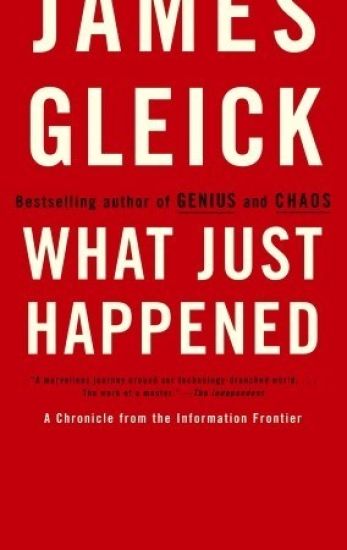
What Just Happened: A Chronicle from the Information Frontier

What Just Happened: A Chronicle from the Information Frontier

James Gleick

Knopf Doubleday Publishing Group
2003
nidottu
For the past decade change seemed to happen over night, every night. Fueled by the exponential rise of technology, the digital revolution was difficult for many to make sense of, but James Gleick watched and analyzed, criticized and commended, participated in and prophesized about the instantaneous transformations of the world as we knew it. What Just Happened is a collection of Gleick's articles from this equally exciting and terrifying decade--remember Y2K?--that range from condemnations of maddeningly pervasive bugs in Microsoft software to the invisible shackles we wear in an "Inescapably Connected" world. Combining insight and reason with wit and passion, What Just Happened is an essential tour of our technology-driven mania.
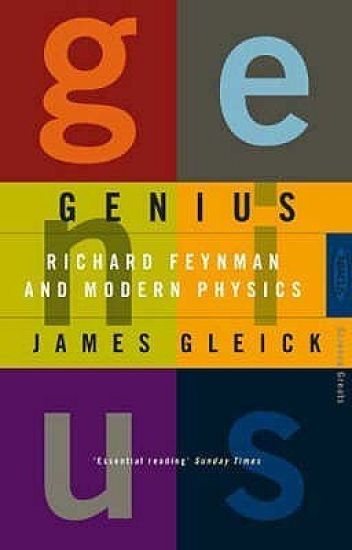
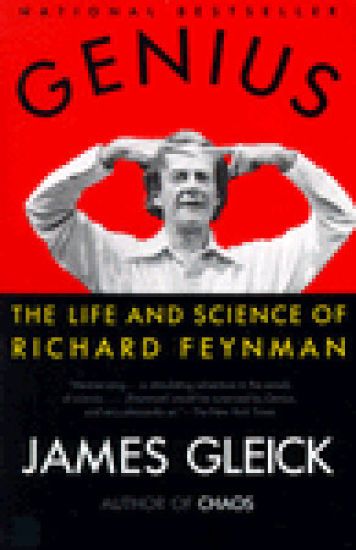
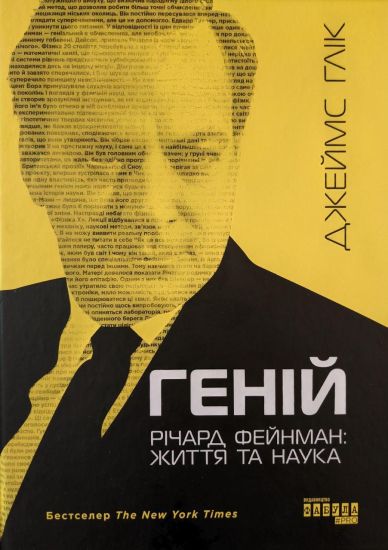
Genius: The Life and Science of Richard Feynman
To his colleagues, Richard Feynman was not so much a genius as he was a full-blown magician: someone who "does things that nobody else could do and that seem completely unexpected." The path he cleared for twentieth-century physics led from the making of the atomic bomb to a Nobel Prize-winning theory of quantam electrodynamics to his devastating expos of the Challenger space shuttle disaster. At the same time, the ebullient Feynman established a reputation as an eccentric showman, a master safe cracker and bongo player, and a wizard of seduction. Now James Gleick, author of the bestselling Chaos, unravels teh dense skein of Feynman's thought as well as the paradoxes of his character in a biography--which was nominated for a National Book Award--of outstanding lucidity and compassion.
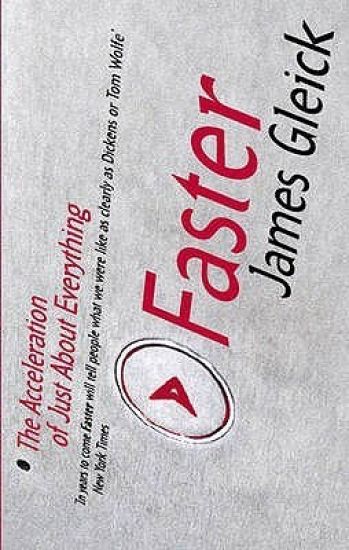
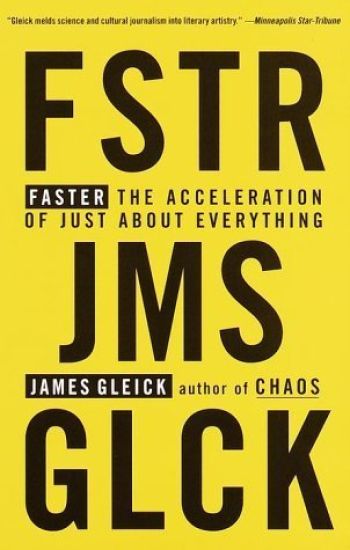
Faster: The Acceleration of Just about Everything
From the bestselling, National Book Award-nominated author of Genius and Chaos, a bracing new work about the accelerating pace of change in today's world. Most of us suffer some degree of "hurry sickness." a malady that has launched us into the "epoch of the nanosecond," a need-everything-yesterday sphere dominated by cell phones, computers, faxes, and remote controls. Yet for all the hours, minutes, and even seconds being saved, we're still filling our days to the point that we have no time for such basic human activities as eating, sex, and relating to our families. Written with fresh insight and thorough research, Faster is a wise and witty look at a harried world not likely to slow down anytime soon.
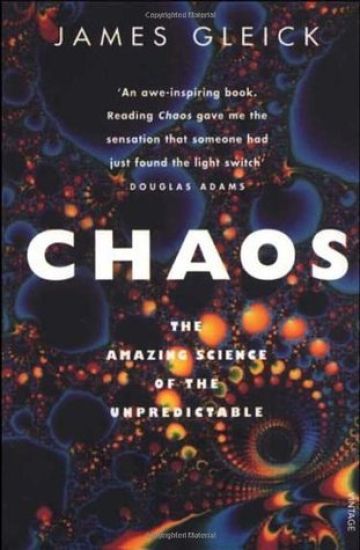
Chaos

Chaos

James Gleick

Vintage
1997
pokkari
Brings together work in the field of chaos theory, an extension of classical mechanics, in which simple and complex causes are seen to interact.
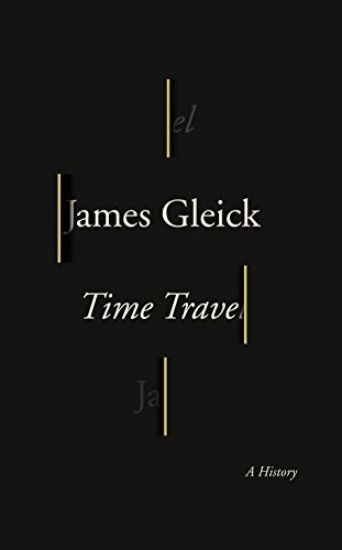
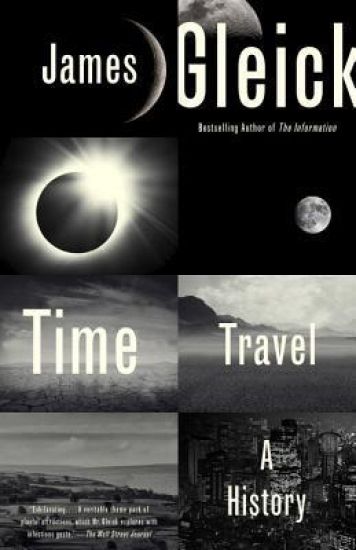
Time Travel: A History

Time Travel: A History

James Gleick

VINTAGE
2017
nidottu
A time-jumping, head-tripping odyssey. The Millions A bracing swim in the waters of science, technology and fiction. Washington Post A thrilling journey of ideas. Boston Globe From the acclaimed author of The Information and Chaos, here is a mind-bending exploration of time travel: its subversive origins, its evolution in literature and science, and its influence on our understanding of time itself. The story begins at the turn of the previous century, with the young H. G. Wells writing and rewriting the fantastic tale that became his first book and an international sensation: The Time Machine. It was an era when a host of forces was converging to transmute the human understanding of time, some philosophical and some technological: the electric telegraph, the steam railroad, the discovery of buried civilizations, and the perfection of clocks. James Gleick tracks the evolution of time travel as an idea that becomes part of contemporary culture from Marcel Proust to Doctor Who, from Jorge Luis Borges to Woody Allen. He investigates the inevitable looping paradoxes and examines the porous boundary between pulp fiction and modern physics. Finally, he delves into a temporal shift that is unsettling our own moment: the instantaneous wired world, with its all-consuming present and vanishing future.
Isaac Newton

Isaac Newton

James Gleick

VINTAGE
2004
nidottu
Isaac Newton was born in a stone farmhouse in 1642, fatherless and unwanted by his mother. When he died in London in 1727 he was so renowned he was given a state funeral--an unheard-of honor for a subject whose achievements were in the realm of the intellect. During the years he was an irascible presence at Trinity College, Cambridge, Newton imagined properties of nature and gave them names--mass, gravity, velocity--things our science now takes for granted. Inspired by Aristotle, spurred on by Galileo's discoveries and the philosophy of Descartes, Newton grasped the intangible and dared to take its measure, a leap of the mind unparalleled in his generation. James Gleick, the author of Chaos and Genius, and one of the most acclaimed science writers of his generation, brings the reader into Newton's reclusive life and provides startlingly clear explanations of the concepts that changed forever our perception of bodies, rest, and motion--ideas so basic to the twenty-first century, it can truly be said: We are all Newtonians.
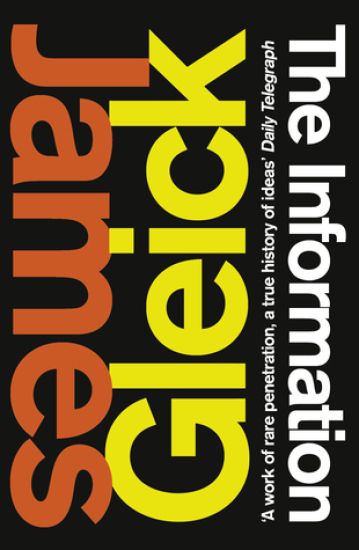
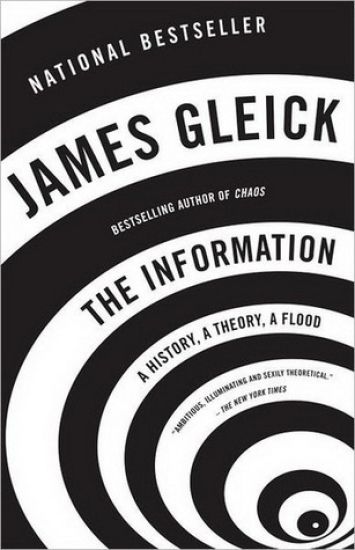
The Information: A History, a Theory, a Flood
From the bestselling author of the acclaimed Chaos and Genius comes a thoughtful and provocative exploration of the big ideas of the modern era: Information, communication, and information theory. Acclaimed science writer James Gleick presents an eye-opening vision of how our relationship to information has transformed the very nature of human consciousness. A fascinating intellectual journey through the history of communication and information, from the language of Africa's talking drums to the invention of written alphabets; from the electronic transmission of code to the origins of information theory, into the new information age and the current deluge of news, tweets, images, and blogs. Along the way, Gleick profiles key innovators, including Charles Babbage, Ada Lovelace, Samuel Morse, and Claude Shannon, and reveals how our understanding of information is transforming not only how we look at the world, but how we live. A New York Times Notable BookA Los Angeles Times and Cleveland Plain Dealer Best Book of the YearWinner of the PEN/E. O. Wilson Literary Science Writing Award
Genius

Genius

James Gleick

Fabula
2021
sidottu
To his colleagues, Richard Feynman was not so much a genius as he was a full-blown magician: someone who "does things that nobody else could do and that seem completely unexpected." The path he cleared for twentieth-century physics led from the making of the atomic bomb to a Nobel Prize-winning theory of quantam electrodynamics.
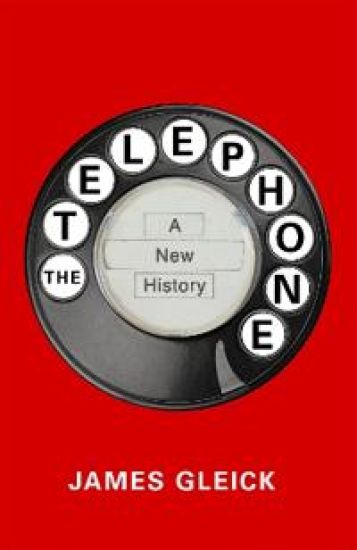
The Telephone

The Telephone

James Gleick

PAN MACMILLAN
2027
sidottu
One hundred and fifty years ago, the telephone burst onto the world stage like magic, a supernatural instrument bringing voices from afar. Instantly, the ability to speak across vast distances began to transform every part of life: from business organization to military tactics, from news gathering to sex work. Telephones, though an extraordinary invention, became so ubiquitous – in offices and on streets, on bedside tables and kitchen walls – that they came to seem ordinary. People forgot how they ever lived without them. In The Telephone, renowned science historian James Gleick explodes myths about the telephone’s invention and reveals the corrupt scheming and ruthless tactics of those who sought to make money from it. As dial telephones, landlines, telephone books and telephone booths vanish into the past, he shows how this commonplace object ushered in the information age, and changed not only the world but who we are as human beings. PRAISE FOR JAMES GLEICK 'Some writers excel at crafting a historical narrative, others at elucidating esoteric theories, still others at humanizing scientists. Gleick is a master of all these skills' – The Wall Street Journal 'Gleick does what only the best science writers can do: take a subject of which most of us are only peripherally aware and put it at the center of the universe' – Time