Kirjojen hintavertailu. Mukana 11 342 296 kirjaa ja 12 kauppaa.

Kirjahaku

Etsi kirjoja tekijän nimen, kirjan nimen tai ISBN:n perusteella.

3 kirjaa tekijältä James Graham Wilson

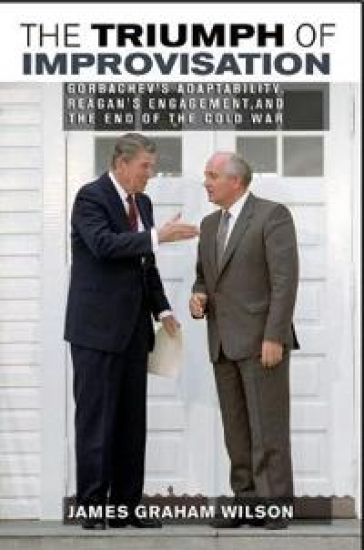
The Triumph of Improvisation

The Triumph of Improvisation

James Graham Wilson

Cornell University Press
2014
sidottu
In The Triumph of Improvisation, James Graham Wilson takes a long view of the end of the Cold War, from the Soviet invasion of Afghanistan in December 1979 to Operation Desert Storm in January 1991. Drawing on deep archival research and recently declassified papers, Wilson argues that adaptation, improvisation, and engagement by individuals in positions of power ended the specter of a nuclear holocaust. Amid ambivalence and uncertainty, Mikhail Gorbachev, Ronald Reagan, George Shultz, and George H. W. Bush—and a host of other actors—engaged with adversaries and adapted to a rapidly changing international environment and information age in which global capitalism recovered as command economies failed. Eschewing the notion of a coherent grand strategy to end the Cold War, Wilson paints a vivid portrait of how leaders made choices; some made poor choices while others reacted prudently, imaginatively, and courageously to events they did not foresee. A book about the burdens of responsibility, the obstacles of domestic politics, and the human qualities of leadership, The Triumph of Improvisation concludes with a chapter describing how George H. W. Bush oversaw the construction of a new configuration of power after the fall of the Berlin Wall, one that resolved the fundamental components of the Cold War on Washington's terms.
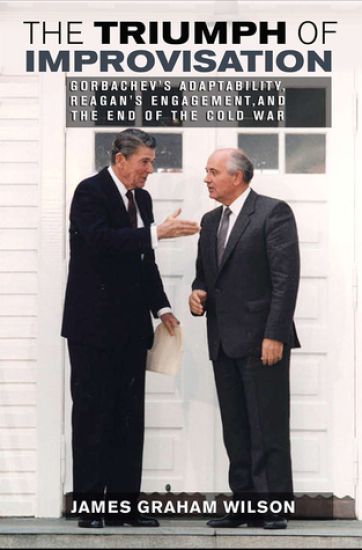
The Triumph of Improvisation

The Triumph of Improvisation

James Graham Wilson

Cornell University Press
2015
pokkari
In The Triumph of Improvisation, James Graham Wilson takes a long view of the end of the Cold War, from the Soviet invasion of Afghanistan in December 1979 to Operation Desert Storm in January 1991. Drawing on deep archival research and recently declassified papers, Wilson argues that adaptation, improvisation, and engagement by individuals in positions of power ended the specter of a nuclear holocaust. Amid ambivalence and uncertainty, Mikhail Gorbachev, Ronald Reagan, George Shultz, and George H. W. Bush—and a host of other actors—engaged with adversaries and adapted to a rapidly changing international environment and information age in which global capitalism recovered as command economies failed. Eschewing the notion of a coherent grand strategy to end the Cold War, Wilson paints a vivid portrait of how leaders made choices; some made poor choices while others reacted prudently, imaginatively, and courageously to events they did not foresee. A book about the burdens of responsibility, the obstacles of domestic politics, and the human qualities of leadership, The Triumph of Improvisation concludes with a chapter describing how George H. W. Bush oversaw the construction of a new configuration of power after the fall of the Berlin Wall, one that resolved the fundamental components of the Cold War on Washington's terms.
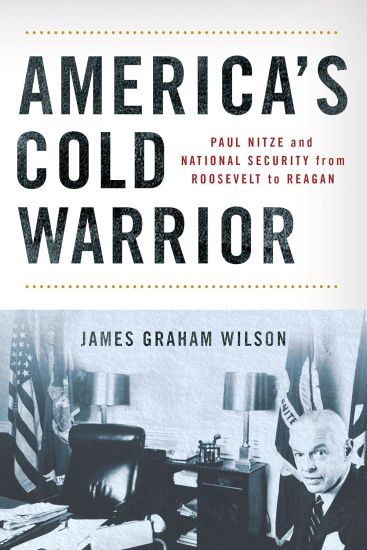
America's Cold Warrior

America's Cold Warrior

James Graham Wilson

CORNELL UNIVERSITY PRESS
2024
sidottu
In America's Cold Warrior, James Graham Wilson traces Paul Nitze's career path in national security after World War II, a time when many of his mentors and peers returned to civilian life. Serving in eight presidential administrations, Nitze commanded White House attention even when he was out of government, especially with his withering criticism of Jimmy Carter during Carter's presidency. While Nitze is perhaps best known for leading the formulation of NSC-68, which Harry Truman signed in 1950, Wilson contends that Nitze's most significant contribution to American peace and security came in the painstaking work done in the 1980s to negotiate successful treaties with the Soviets to reduce nuclear weapons while simultaneously deflecting skeptics surrounding Ronald Reagan. America's Cold Warrior connects Nitze's career and concerns about strategic vulnerability to the post-9/11 era and the challenges of the 2020s, where the United States finds itself locked in geopolitical competition with the People's Republic of China and Russia.