

Kirjahaku
Etsi kirjoja tekijän nimen, kirjan nimen tai ISBN:n perusteella.
27 kirjaa tekijältä James Gregory

C'est la Guerre: The Memoir of Capt. James McBrayer Sellers, USMC
James Gregory
Storied Publishing
2020
nidottu
In June 1917, shortly after the United States entered World War I, James McBrayer Sellers joined the United States Marine Corps and was commissioned as a 2nd Lieutenant in the 78th Company, 2nd Battalion, 6th Regiment, 4th Brigade (Marine), 2nd Division, AEF. Wounded during the Battle of Belleau Wood, he recuperated and later returned to command the 78th Company. He led them through the Battle of Blanc Mont Ridge and the Meuse-Argonne Offensive. The 78th was engaged in heavy fighting at Blanc Mont Ridge resulting in Sellers writing up the citations for two of his men, Cpl. John H. Pruitt and Pvt. John J. Kelly who both received the Medal of Honor. For his own personal bravery in action, Sellers was awarded the Distinguished Service Cross, the Navy Cross, two Silver Stars, the Purple Heart, and the French Croix de Guerre. He remained in the Marines in active service until 1920. James McBrayer Sellers' account of his time during the war is a fantastic look from enlistment to the discharge of a U.S. Marine Corps Officer during World War I. Starting at his enlistment and then training at Winthrop, MD and Quantico, VA, to the battlefields of France, the Occupation of Germany, and eventual settling after the war, this account illuminates a new perspective in Marine Corps history. His unique position within the Marine Corps gave him access to more sensitive information than regular enlisted men. This is shown through his letters that were slipped passed the censor, since he himself did the censoring for his company, revealing detailed information to his family in the states. He also kept track of locations and dates, as seen in the appendix. These, paired with his near perfect memory, create a very detailed and interesting account. This work will benefit any and all Marine Corps and World War I historians as a primary source and fascinating look at what it was like to be a young commissioned Marine Corps Platoon and Company Commander while in the French & German Theater of Operations from 1918 to 1919.

Olivia Kname is haunted by the murder of her grandfather. Although their relationship was minimal at best she blames herself for not pursuing facts around his death. The official police report indicated that the murder was most likely committed by a hired hit man. She was informed that the investigation had been placed in the cold case files. To add to the mystery she learned that he may have written a book prior to his death. It was alleged that the contents of the book may have been stolen and used by another author as the basis of a best- selling novel. Olivia picks up and moves to her grandfather's former home in Texas. She meets two of his friends and they provide details unknown to her regarding his life. In a series of twists and turns she discovers that her grandfather and his killer had something in common.

The most widely published book in the world is the Bible. It is also the most criticized book in print. With the development of modern communication technology, critics can attack the Bible on a global scale, bypass reviews and quality-control processes, and make unchallenged claims. The information appears to be truthful and is presented with authority but ignores the real truth. The objective of this book is to compare Bible statements primarily from Genesis with modern scientific knowledge. The result is an excellent match between the Bible, written thousands of years ahead of the scientific discoveries, and science.

This is the fourth poem book by James M. Gregory. This book has a variety of poems most of which relate to Bible stories, events, or people. Some are nonbiblical with a little humor. Each of the 50 plus poems has an introduction and documentation: Bible and/or science. There are poems near the end that deal with current cultures and the sinful nature of men and women. Currently, there is a decline in the percentage of people in the US who profess a faith in a creator God. As a result, there is a decline in people attending worship services and a decline in work ethic, commitment to marriage, and desire to live as a family unit. Crime is on the increase. People want stuff for free and are unhappy. All these changes seem to be a warning that our society is becoming weak. Without God there is little hope.



If you have trouble reading the Bible from beginning to end, this book is your solution. Each of the 52 poems in this collection describes a Bible event, person, or message. Each poem is simple, easy to read, and provides focus on a biblical topic. The rhythm of a poem increases both interest and long-term retention of message. Thought-provoking and in-depth message content enhance the value of each poem. Furthermore, many of the poems provide encouragement for living life with a purpose and to the fullest. With 52 poems, this book can be used as a yearly devotional or Bible study with one poem or message per week. Topics include creation, salvation, treasures in heaven, and many more. Because poems and topics range across both the Old and New Testaments, this book provides a brief overview of the Bible. The Bible verses on which each poem is based are provided along with commentary about the Bible information.

If you have trouble reading the Bible from beginning to end, this book is your solution. Each of the 52 poems in this collection describes a Bible event, person, or message. Each poem is simple, easy to read, and provides focus on a biblical topic. This book of poems features both Christmas and Easter sections. Poems range from Creation to Revelation.
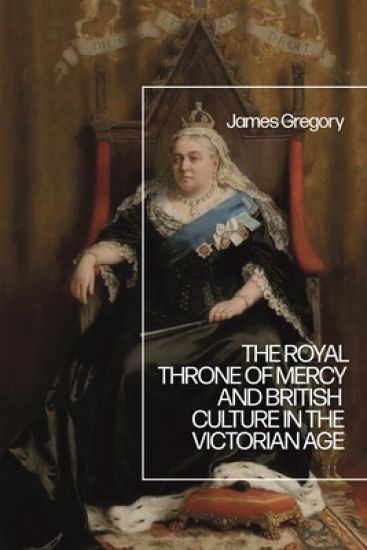
The Royal Throne of Mercy and British Culture in the Victorian Age
James Gregory
Bloomsbury Academic
2020
sidottu
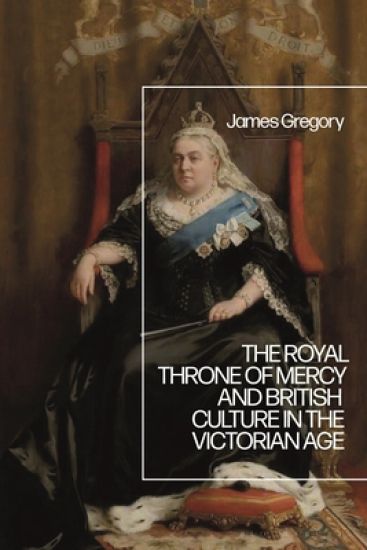
In the first detailed study of its kind, James Gregory's book takes a historical approach to mercy by focusing on widespread and varied discussions about the quality, virtue or feeling of mercy in the British world during Victoria’s reign. Gregory covers an impressive range of themes from the gendered discourses of ‘emotional’ appeal surrounding Queen Victoria to the exercise and withholding of royal mercy in the wake of colonial rebellion throughout the British empire. Against the backdrop of major events and their historical significance, a masterful synthesis of rich source material is analysed, including visual depictions (paintings and cartoons in periodicals and popular literature) and literary ones (in sermons, novels, plays and poetry).Gregory’s sophisticated analysis of the multiple meanings, uses and operations of royal mercy duly emphasise its significance as a major theme in British cultural history during the ‘long 19th century’. This will be essential reading for those interested in the history of mercy, the history of gender, British social and cultural history and the legacy of Queen Victoria’s reign.
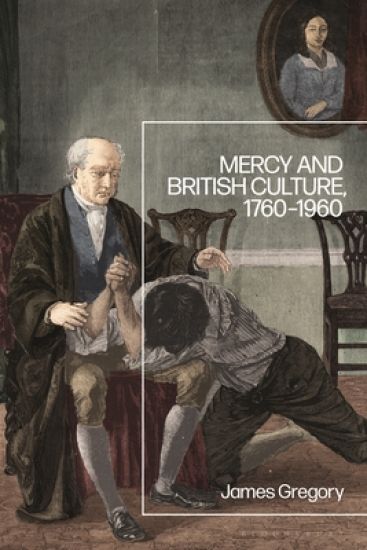
Spanning over 2 centuries, James Gregory's Mercy and British Culture, 1760 -1960 provides a wide-reaching yet detailed overview of the concept of mercy in British cultural history. While there are many histories of justice and punishment, mercy has been a neglected element despite recognition as an important feature of the 18th-century criminal code. Mercy and British Culture, 1760-1960 looks first at mercy’s religious and philosophical aspects, its cultural representations and its embodiment. It then looks at large-scale mobilisation of mercy discourses in Ireland, during the French Revolution, in the British empire, and in warfare from the American war of independence to the First World War. This study concludes by examining mercy's place in a twentieth century shaped by total war, atomic bomb, and decolonisation.
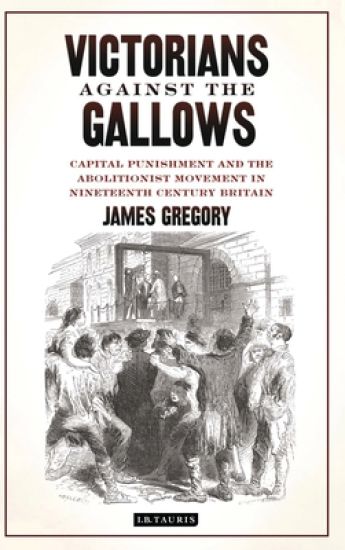
By the time that Queen Victoria ascended the throne in 1837, the list of crimes liable to attract the death penalty had been reduced to murder, yet the gallows remained a source of controversy in Victorian Britain and there was growing unease in liberal quarters surrounding the question of capital punishment.Focusing in part on the activities of the Society for the Abolition of Capital Punishment, James Gregory examines abolitionist strategies, leaders and personnel. He locates the 'gallows question' in an imperial context and explores the ways in which debates about the gallows and abolition featured in literature, from poetry to 'novels of purpose' and popular romances of the underworld. He places the abolitionist movement within the wider Victorian worlds of philanthropy, religious orthodoxy and social morality in a study which will be essential reading for students and researchers of Victorian history.
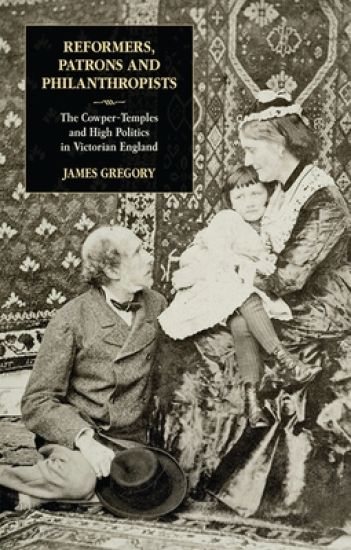
William and Georgina Cowper-Temple were significant figures in nineteenth-century Britain. William Cowper-Temple, later Lord Mount Temple, was private secretary to Prime Minister Lord Melbourne and minister in the government of Lord Palmerston. He sought to improve the nation's health and rebuild London, and famously amended the Education Act in 1870. His charismatic wife, Georgina, was also champion of diverse social and moral reforms, and friend to such worthies as John Ruskin, Dante Gabriel Rossetti, Frances Power Cobbe and Mrs Oscar Wilde. In the first full-length biography of this distinguished couple, James Gregory explores the Cowper-Temples' roles within Whig-Liberalism, philanthropy and social reform, and provides a fascinating insight into the private lives of two aristocrats dedicated to using their powers of influence to alleviate problems in Victorian society.
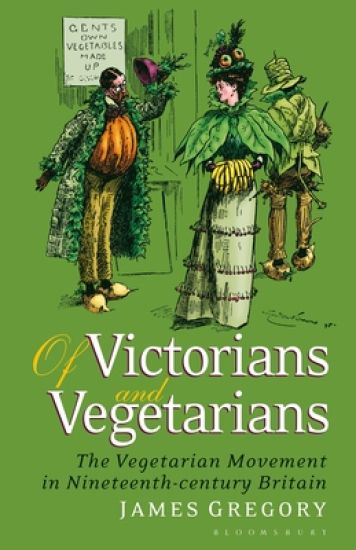
Nineteenth-century Britain was one of the birthplaces of modern vegetarianism in the west, and was to become a reform movement attracting thousands of people. From the Vegetarian Society's foundation in 1847, men, women and their families abandoned conventional diet for reasons as varied as self-advancement, personal thrift, dissatisfaction with medical orthodoxy and repugnance for animal cruelty. They joined in the pursuit of a perfect society in which food reform combined with causes such as socialism and land reform, stimulated by the concern that carnivorism was in league with alcoholism and bellicosity.Gregory provides a thorough exploration of the movement, with its often colourful and sometimes eccentric leaders and grass-roots supporters. He explores the rich culture of branch associations, competing national societies, proliferating restaurants and food stores and experiments in vegetarian farms and colonies. Of Victorians and Vegetarians examines the wider significance of Victorian vegetarians, embracing concerns about gender and class, national identity, race and empire and religious authority.Vegetarianism embodied the Victorians' complicated response to modernity in its hostility to aspects of the industrial world's exploitation of technology, rejecting entrepreneurial attempts to create the foods and substitute artefacts of the future. Hostile, like the associated anti-vivisectionists and anti-vaccinationists, to a new 'priesthood' of scientists, vegetarians defended themselves through the new sciences of nutrition and chemistry. Of Victorians and Vegetarians uncovers who the vegetarians were, how they attempted to convert their fellow Britons (and the world beyond) to their 'bloodless diet' and the response of contemporaries in a variety of media and genres. Through a close study of the vegetarian periodicals and organisational archives, extensive biographical research and a broader examination of texts relating to food, dietary reform and allied reform movements, James Gregory provides us with the first fascinating foray into the impact of vegetarianism on the Victorians, the history of animal welfare, reform movements and food history.
The Royal Throne of Mercy and British Culture in the Victorian Age
James Gregory
BLOOMSBURY PUBLISHING PLC
2022
nidottu
In the first detailed study of its kind, James Gregory's book takes a historical approach to mercy by focusing on widespread and varied discussions about the quality, virtue or feeling of mercy in the British world during Victoria’s reign. Gregory covers an impressive range of themes from the gendered discourses of ‘emotional’ appeal surrounding Queen Victoria to the exercise and withholding of royal mercy in the wake of colonial rebellion throughout the British empire. Against the backdrop of major events and their historical significance, a masterful synthesis of rich source material is analysed, including visual depictions (paintings and cartoons in periodicals and popular literature) and literary ones (in sermons, novels, plays and poetry).Gregory’s sophisticated analysis of the multiple meanings, uses and operations of royal mercy duly emphasise its significance as a major theme in British cultural history during the ‘long 19th century’. This will be essential reading for those interested in the history of mercy, the history of gender, British social and cultural history and the legacy of Queen Victoria’s reign.
Spanning over 2 centuries, James Gregory's Mercy and British Culture, 1760 -1960 provides a wide-reaching yet detailed overview of the concept of mercy in British cultural history. While there are many histories of justice and punishment, mercy has been a neglected element despite recognition as an important feature of the 18th-century criminal code. Mercy and British Culture, 1760-1960 looks first at mercy’s religious and philosophical aspects, its cultural representations and its embodiment. It then looks at large-scale mobilisation of mercy discourses in Ireland, during the French Revolution, in the British empire, and in warfare from the American war of independence to the First World War. This study concludes by examining mercy's place in a twentieth century shaped by total war, atomic bomb, and decolonisation.
This book studies British cultural engagement with Napoleon Bonaparte from his 1815 surrender and time in British custody, until the return of his remains to France in 1840.Adopting a chronological approach, James Gregory studies the British use of Bonaparte in various spheres – covering political, dramatic, literary, and visual culture, and popular entertainment over a 25-year period. Gregory acknowledges not only canonical literary treatments, but also appearances of the figure in novels, anecdotes, travelling shows, and private collections – in order to analyse contemporary fascination with Napoleon.Centring on key themes such as responses to Napoleon’s presence on British territory, and later reactions to his death, Gregory also takes into account the influence of factors such as geography and gender, in order to craft a comprehensive picture of cultural engagement with Napoleon in the period 1815-40. Covering factors including the role of commemoration, the impact of Peterloo and Queen Caroline's death, and the rise of Romanticism, this book demonstrates how truly pervasive the myth of Napoleon became in 19th-century Britain.
The growing demand for social housing is one of the most pressing public issues in the UK today, and this book analyses its role and impact. Anchored in a discussion of different approaches to the meaning and measurement of wellbeing, the author explores how these perspectives influence our views of the meaning, value and purpose of social housing in today’s welfare state. The closing arguments of the book suggest a more universalist approach to social housing, designed to meet the common needs of a wide range of households, with diverse socioeconomic characteristics, but all sharing the same equality of social status.