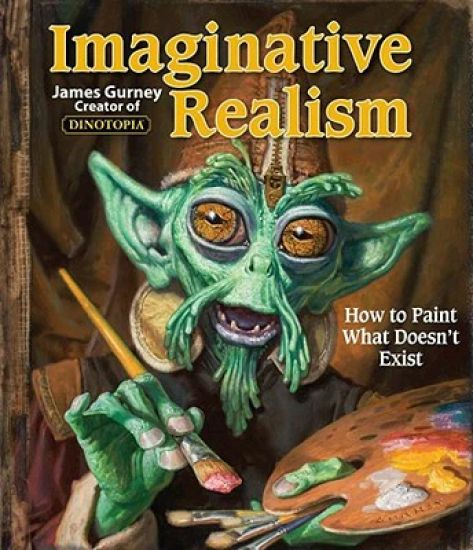
This book explores the question of how to paint a realistic picture of something that doesn't exist. It is intended not only for artists interested in fantasy and science fiction, but also for anyone who wants to recreate history, visualize extinct wildlife, or simply tell a story with a picture.
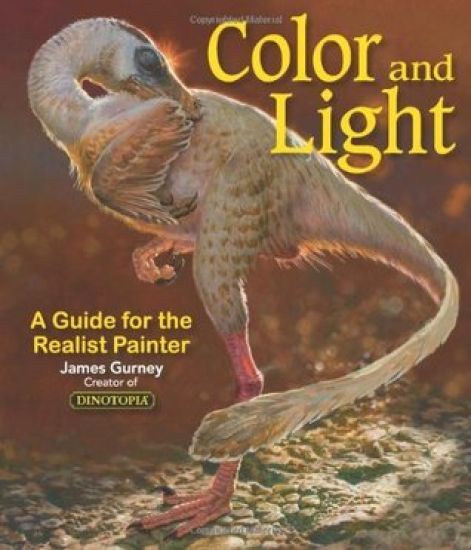
A researched study on two of art's most fundamental themes, Color and Lightbridges the gap between abstract theory and practical knowledge. Beginning with a survey of underappreciated masters who perfected the use of color and light, the book examines how light reveals form, the properties of color and pigments, and the wide variety of atmospheric effects. Gurney cuts though the confusing and contradictory dogma about color, testing it in the light of science and observation. A glossary, pigment index, and bibliography complete what will ultimately become an indispensable tool for any artist. This book is the second in a series based on his blog, gurneyjourney.com. His first in the series, Imaginative Realism, was widely acclaimed in the fantastical art world, and was ranked the #1 Bestseller on the Amazon list for art instruction.
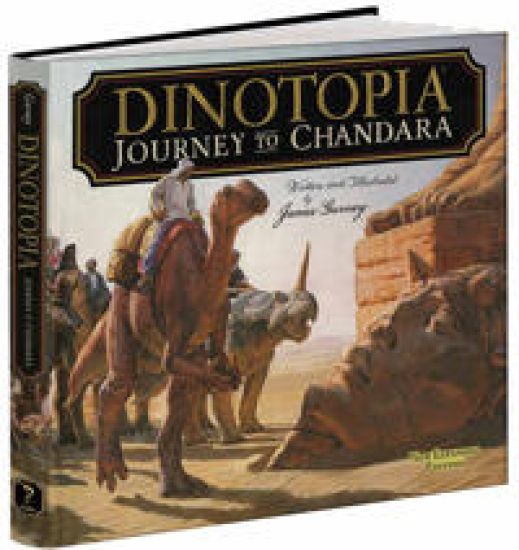
After many years of searching, artist James Gurney discovered in a used bookstore a never-before-seen journal by the nineteenth-century explorer Arthur Denison. Denison's previous travel accounts, published as Dinotopia: A Land Apart from Time and Dinotopia: The World Beneath, introduced a lost island where dinosaurs and humans live together in peaceful interdependence. Now Professor Denison and his saurian companion, Bix, set out on a perilous journey to the forbidden empire of Chandara. When their personal invitation from the emperor goes missing, they are forced to cross the border penniless and in disguise. Every step of the way, Denison documents in exquisite detail and the creatures, characters, and architecture he encounters: a village composed of three ships propped by on end, a fifty-foot-tall Brachiosaurus outfitted for fire fighting, an Allosaurus tending its hatchlings, young pilots air jousting on giant pterosaurs, and much more.
A lighthearted collection of homespun wisdom from dinosaurs, featuring beautifully painted scenes from the New York Times bestselling Dinotopia books by author James Gurney.As the original dominant species on planet Earth, what advice might dinosaurs have for another species on the possible verge of extinction? And who better than to bring language to tyrant lizards than James Gurney, whose Dinotopia books have sold millions of copies over the last three decades. Gurney, a painter, instructor, and storyteller, adds a philosopher’s touch to this gift book perfect for anyone looking to bygone era for a bit of life advice and perspective. You’ll marvel at these Triassic truisms, Jurassic aphorisms, and Mesazoic meditations.
Gouache is the paint that’s hard to spell but easy to love. It’s a form of watercolor that dries fast, travels well, and cleans up easily, with a natural opacity that lets you improvise, change your mind, and fix mistakes. Get started with gouache and hone your skills with this groundbreaking guide by acclaimed painter and bestselling author James Gurney.This comprehensive guide to gouache grew out of Dinotopia creator and New York Times bestselling author James Gurney's long-running love affair with opaque watercolor. Gurney's instructional videos on YouTube have attracted half a million subscribers and millions of views, and his decades of experience in artistic instruction make him the perfect ambassador and instructor for this rapidly growing, readily accessible, and artistically rewarding form of painting. In this book you'll learn the fine art of painting on location, the nuances of capturing still life as well as human subjects, and the joys and challenges of working with this lively, versatile, and vivid medium.
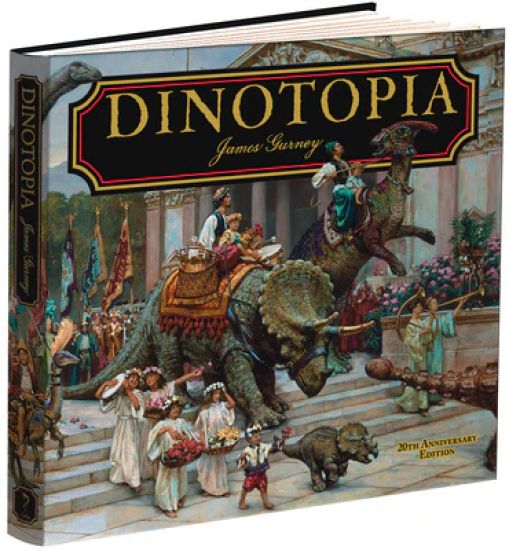
Calla Editions brings James Gurney's bestselling tale of mystical humans and intelligent dinosaurs to a new generation in this 20th anniversary edition. Digitally re-rendered from the original transparencies, Gurney's spectacular artistry takes on new vitality. Includes a new Afterword by Gurney as well as a special section of behind-the-scenes studies and maquettes he used in developing his paintings.
Hailed by science-fiction doyen Arthur C. Clarke as “pure magic,” Dinotopia: A Land Apart from Time debuted in 1992. Now, 20 years later, the magnificent sequel to James Gurney’s bestseller finally returns to print. Enhanced by more than 160 full-color illustrations, The World Beneath follows an intrepid band of Dinotopians — members of a society in which humans and animals peace- fully coexist — as they explore the mysterious depths of an unexplored island. For this 20th Anniversary Edition, Gurney provides new hand-illustrated calligraphy, an Afterword, and a special section of behind-the-scenes studies and maquettes. Also includes a new Foreword by dinosaur paleontologist M. K. Brett-Surman, Ph.D. A Calla Edition, originally published by Scholastic, Inc., New York, 1995
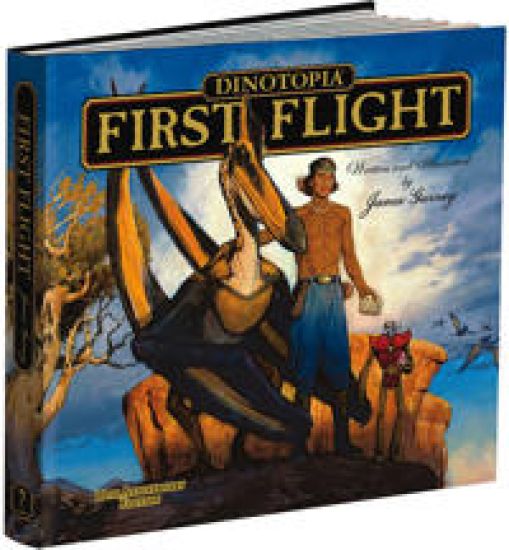
"Critics have gushed over Gurney's phantasmagorical creation, likening him to such venerated literary fantasists as Jules Verne, Wells, and J. R. R. Tolkien." — People Magazine James Gurney's illustrated Dinotopia series has been an imaginative touchstone for a generation of readers of all ages. This new definitive edition of Dinotopia: First Flight brings together an extensive collection of James Gurney's stories, artwork, and story notes from the ancient origins of the land where humans and dinosaurs coexist. That peaceful world was forged on the flames of conflict in a dramatic Age of Heroes. First Flight tells a timeless tale of partnership and courage, where unlikely heroes cooperate to overcome the greatest challenge yet to face Dinotopia. This lavishly produced volume begins with an unabridged republication of Gurney's influential 1999 story about the adventures of Gideon Altaire. Gideon escapes from his post as a drone pilot, befriends a small band of animal characters, and becomes the first human to fly on the back of a giant pterosaur known as a skybax. Together they challenge a bold attempt by the rogue leaders of Poseidos to overturn the tenuous balance between humans and dinosaurs. The second half of the book includes a bonus of over 45 new images, including never-before-published storyboards, concept sketches, and production paintings, plus new characters, stories, and backstory notes from James Gurney's creative archives. The supplement begins with a cinematic treatment about a character named Blake Terrapin, who leads the resistance on the ground while Gideon takes to the air. Together, the elements of this richly imagined volume combine to conjure a richly textured world, and will serve as an exciting companion volume to Gurney's other Dinotopia books.
Professor Denison, the intrepid 19th-century explorer, is back! Some time ago, the professor discovered a lost island where humans and dinosaurs dwell in harmony. Now the professor and Bix, his dinosaur companion, are ready to set off on a perilous journey to the forbidden empire of Chandara. Every step of the way is documented with the striking art for which author/illustrator James Gurney is justly famed: magnificent full-color images of people, animals, and locations, complemented by cutaway views and mechanical diagrams. This lavish hardcover edition is a stand-alone sequel to the first two Dinotopia books and a splendid introduction to the series for readers of all ages.
Dette er den ultimate dinosaurboka for store og små! Bli med til Dinotopia, en verden der dinosaurer og mennesker lever side om side. De storslåtte illustrasjonene og den spennende handlingen gjør DINOTOPIA til en perfekt bok for fantasy-fans, dinosaurdiggere og unge eventyrere!Året er 1860: Biologen Arthur Denison og sønnen Will legger ut på en oppdagelsesreise. Når skipet deres blir tatt av stormen, reddes de i land på Dinotopia, øya der mennesker lever sammen med dinosaurer. Gjennom dagboken hans, der han går i fascinerende detalj om livet på øya, får vi et unikt innblikk i menneskene og skapningene de to oppdagerne møter der.Resultatet er et helt unikt og eventyrlig univers, med preg av Jules Verne og Jurassic Park, illustrert med vakre fargeillustrasjoner på hver side. Det fascinerende universet har begeistret lesere og kritikere over hele verden, og nå kan en ny generasjon drømme seg bort til DINOTOPIA. Denne nyutgivelsen byr også på bonusmateriale.En perfekt gavebok til barn og unge mellom 8 og 15 år, som garantert gir mye leseglede!
James Gurney; Emmanuel Katongole; Rabbi Jonathan Sacks; Sally Thomas; Wesley Hill; Karen Swallow Prior; Jacaueline C. Rivers; Noah Van Niel; Ashley Lucas; James Crews; Nathan Beacom; Antje Vollmer; Eberhard Arnold
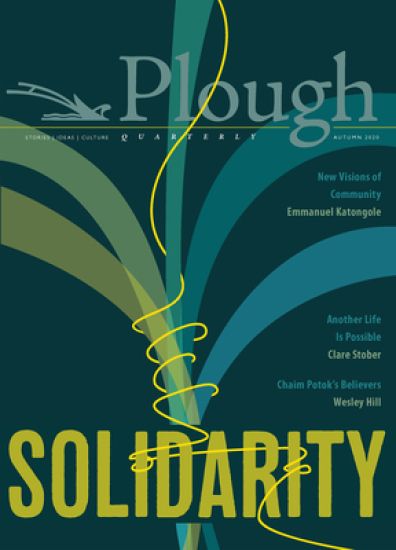
The summer of 2020 has shown us how much we all depend on one another. Whatever else they do, pandemics show us we are not alone. Covid-19 is proof that, yes, there is such a thing as society; the disease has spread precisely because we aren’t autonomous individuals disconnected from each other, but rather all belong to one great body of humanity. The pain inflicted by the pandemic is far from equally distributed. Yet it reveals ever more clearly how much we all depend on one another, and how urgently necessary it is for us to bear one another’s burdens. It’s a good time, then, to talk about solidarity. The more so because it’s a theme that’s also raised by this year’s other major development, the international protests for racial justice following George Floyd’s death. The protests, too, raised the question of solidarity in guilt, even guilt across generations. By taking up our common guilt with all humanity, we come into solidarity with the one who bears it and redeems it all. In Christ, sins are forgiven, guilt abolished, and a new way of living together becomes possible. This solidarity in forgiveness gives rise to a life of love. This issue of Plough explores what solidarity means, and what it looks like to live it out today, whether in Uganda, Bolivia, or South Korea, in an urban church, a Bruderhof, or a convent.
A bold new edition of the groundbreaking book by two of America's most prominent visual artists, James Gurney (Dinotopia, Color and Light), and Thomas Kinkade, freshly updated with a new introduction, archival photographs, and illuminating text to guide a new generation of illustrators. "If I could only have one drawing book on my shelf, it would be this one." –Shari Blaukopf, author of the Urban Sketching Handbook: Working With ColorSince its release in 1982, The Artist’s Guide to Sketching has become a classic art guide for students and laypeople around the world. The book includes instruction and artwork by James Gurney and Thomas Kinkade—two students who would go on to fame with Dinotopia (Gurney) and as the “Painter of Light” (Kinkade). This new edition restores the classic text with updated full-color visuals and a special section chronicling the book’s origins and the friendship, drawing on archives from Gurney and the Kinkade family estate. Chapters and topics include: Chapter 1: THE EXPERIENCE OF SKETCHING (Coping with the Weather, Sketching at Night, Sitting or Standing?, Dealing with Curious Spectators, Being Inconspicuous, At Home Amid the ElementsChapter 2: MATERIALS (Sketchbooks, Pencils, Pens, Markers, Wash and Drybrush, Sketchboxes and Carrying Cases, Experiencing Your Materials)Chapter 3: ACHIEVING ACCURACY: (When to Use an Underdrawing, How Much Underdrawing is Necessary, Establishing the Large Shapes, Measuring Lengths, Measuring Slopes, Using Perspective Guidelines, Constructing with Geometric Forms, Completed Underdrawing, The Final Execution)Chapter 4: CAPTURING MOTION (Freezing Motion: A New Way of Drawing, Learning to Observe Motion, Training Your Memory, Getting It Down Fast, The Scribble Approach, The Gestural Approach, The Mannikin Approach, The Tonal Mass Approach, When Your Subject Moves Unexpectedly, Places to Go for Motion Sketching)Chapter 5: CREATING MOOD (Choosing a Subject, Noting Impressions, Composing with Thumbnails, Selectivity, Center of Interest, Dramatic Opposition, Delicacy, Mystery, Structure and Expression)Chapter 6: USING IMAGINATION (Dare to be Creative, Being Imaginative On-the-Spot, Exaggeration, Changing Context and Scale, Using Anthropomorphism, Additions and Combinations, Feeding the Imagination, Becoming More Imaginative)Chapter 7: STUDYING NATURE (Nature: Your Personal Drawing Workshop, The Experience of Nature Sketching, Plants, Animals, Sketching at the Zoo, Natural History Museum, Clouds, Rocks and Landforms, The Benefits of Studying Nature)Chapter 8: SKETCHING PEOPLE (Finding Raw Material, Exaggerating Character Traits, The Cartoon Approach, Portraying People in Their Environment, Two Characters, Group Composition, The On-The-Spot Portrait, Making People Sketches Come Alive, Family and Friends: Your Free Models)Chapter 9: EXPLORING THE MAN-MADE WORLD (Begin with the Commonplace, Sketching the Home, Indicating Building Exteriors, Signs and Letterforms, A New Look at Machines, Using Clutter, On-The-Spot Spot Research, Using Written Notes, Thinking As a Documentary Artist, The Joy of Exploration)Chapter 10: SKETCHING IN YOUR LIFE (Keeping Specialized Sketchbooks, Developing Sketches into Paintings, Sharing Sketches With Others, Sketching Alone or With Others)
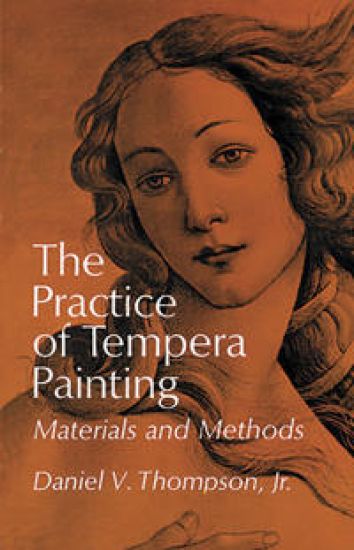
Tempera painting, the method in which colors are mixed with some binding material other than oil (primarily egg yolk), is the earliest type of painting known to man. The wall paintings of ancient Egypt and Babylon are tempera, as are many of the paintings of Giotto, Lippi, Botticelli, Raphael, Titian, Tintoretto, and many other masters. But in spite of the time-proven excellence of this technique -- which boasts many clear advantages over oil paint -- it does not receive the degree of attention from modern painters that it deserves.Part of the explanation for this neglect, surely, is the absence of sufficient information about the materials and procedures involved in tempera painting. The present volume, in fact, is virtually the only complete, authoritative, step-by-step treatment of the subject in the English language, D.V. Thompson wrote this book after an exhaustive study, over many years, of countless medieval and Renaissance manuscripts in the British Museum and elsewhere, and is unquestionably the world's leading authority on tempera materials and processes.Beginning with an introductory chapter on the uses and limitations of tempera, the author covers such topics as the choice of material for the panel; propensities of various woods; preparing the panel for gilding; making the gesso mixture; methods of applying the gesso; planning the design of a tempera painting; use of tinted papers; application of metals to the panel; tools for gliding; handling and laying gold; combination gold and silver leafing; pigments and brushes; choice of palette; mixing the tempera; tempering and handling the colors; techniques of the actual painting; mordant gilding; permanence of tempera painting; varnishing; and artificial emulsion painting. The drawings and diagrams, illustrating the various materials and techniques, infinitely increase the clarity of the discussions. As a careful exposition of all aspects of authentic tempera painting, including many of the possible modern uses for this ancient method, this book actually stands alone. No one who is interested in tempera painting as a serious pursuit can afford to be without it.