The 18th century was a wealth of knowledge, exploration and rapidly growing technology and expanding record-keeping made possible by advances in the printing press. In its determination to preserve the century of revolution, Gale initiated a revolution of its own: digitization of epic proportions to preserve these invaluable works in the largest archive of its kind. Now for the first time these high-quality digital copies of original 18th century manuscripts are available in print, making them highly accessible to libraries, undergraduate students, and independent scholars.Delve into what it was like to live during the eighteenth century by reading the first-hand accounts of everyday people, including city dwellers and farmers, businessmen and bankers, artisans and merchants, artists and their patrons, politicians and their constituents. Original texts make the American, French, and Industrial revolutions vividly contemporary.++++The below data was compiled from various identification fields in the bibliographic record of this title. This data is provided as an additional tool in helping to insure edition identification: ++++Cambridge University LibraryN024587Bristol: printed by J. Rudhall, 1797. 16p., plates; 8
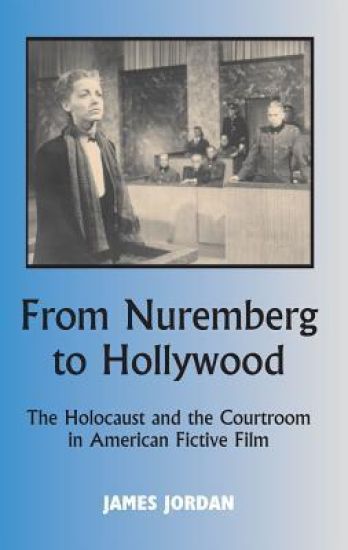
From Nuremberg to Hollywood is a transformative book that explores the evolving relationship between the act of bearing witness to the Holocaust in the courtroom, and how this is perceived and imagined by American film. The book transforms the discipline by providing a cultural history of the intersection of the courtroom and the Holocaust in American film from 1944-2008, using case studies to question the ever-changing relationship between testimony, history, memory, truth, and film. It deconstructs the accepted notion of the Holocaust as being an event at the limits of the imagination. The book is divided into two sections that are delimited by the two real-life courtroom proceedings which have had the greatest influence on American film's representation of the Holocaust: the Nuremberg trials of 1945-46 and the Eichmann trial in 1961. The methodology is to evaluate the filmic trials by comparison with the real-life trials on which they are based, and then to place these films and trials within their broader social context. From Nuremberg to Hollywood asks questions of the spectator, both on and off screen: How does one witness such events, and then how does one bear witness in the form of a credible narrative? How is this presented on screen? In doing so, the book seeks to understand how one of the most horrific and chaotic of events of the 20th century is contained and controlled by the strict demands of the courtroom and the courtroom film genre.
The first writing attempt by this author, occupational hazards is the story of a young college graduate struggling to make his way in a world for which he was not ready. This humorous account takes you through the struggles of possessing limited maturity in situations that require more. The author recounts his experiences that range from witnessing bull castrations on a beef farm to trying not to purchase automatic weapons for selling on the black market. These witty, sarcastic, and bitingly funny true stories span the scope of human emotions, cultural relationships, and finding what is actually important in life; a must-read for anyone just starting out on their own and thought they knew everything there was to know.
This is a text based on the primary author's course notes presented over the past five years at Carnegie-Mellon U. This text is an overview of the US healthcare system, with specific emphasis on flow charting the entire system as to how it's integrated. Coverage of the reimbursement system, along with extensive coverage on health care IT, is also included. Issues such as operational efficiency, quality improvement and big data opportunites are covered in detail. There will be numerous examples and end-of-chapter pedagogy to enhance learning.
A new threat has come to Valeris. Though this time, it is no Man. It is no Dwarf, it is no Elf, it is no Orc, it is no Pixie. It is something far worse. Harwick Kellington and his crew will come face to face with this new threat, will meet new people, encounter new challenges, and will truly learn the meaning of fear. As will all of Valeris.Book #2 in the Valeris series.
Valeris is a vast, beautiful world, filled with strange, curious, gorgeous, massive, and sometimes scary things. From floating islands, to Orcs and Elves, to a strangely built city. Mystery and beauty are Valeris' key features. Some things are bound to be explored and found. Other things are not, and are better left undisturbed. However, there are some that are bold enough to venture to every corner of this vast world, facing dangers and solving mysteries. There is much to do, and much to explore, in the world of Valeris.Book #1 in a Valeris series.
This transformative book is the first to explore the evolving relationship between the act of bearing witness to the Holocaust in the courtroom, and how that is perceived and imagined by American film. It transforms the discipline by providing a cultural history of the intersection of the courtroom and the Holocaust in American film from 1944–2008, and deconstructs the accepted notion of the Holocaust as being an event at the limits of the imagination. This book is divided into two sections that are delimited by the two real-life courtroom proceedings which have had the greatest influence on American film's representation of the Holocaust: the Nuremberg Trials 1945–46 and the Eichmann trial in 1961. The methodology is to evaluate the filmic trials by comparison with the real-life trials on which they are based, and then to place these films and trials within their broader social context. The author asks questions of the spectator both on and off screen: How does one witness such events and then how does one bear witness in the form of a credible narrative? How is this presented on-screen? In doing so, he seeks to understand how one of the most horrific and chaotic of events of the twentieth century is contained and controlled by the strict demands of the courtroom and the courtroom genre.
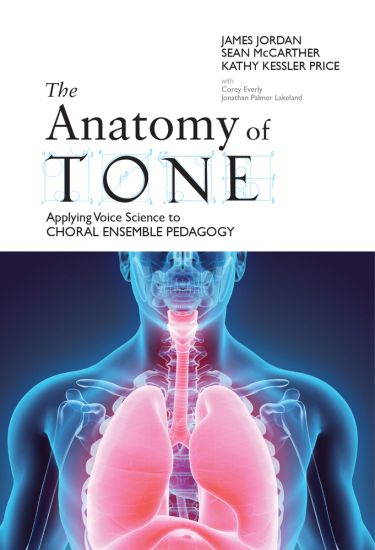
A valuable resource for choral conductors, no matter the age or experience of their ensembles, this volume explores essential aspects of anatomy, physiology, and acoustics, then describes their impact on choral teaching and rehearsal. In addition, this book reviews groundbreaking scientific information on spacing of singers and its effect upon intonation and vocal health. This volume contains pedagogical information pertaining to: breathing, resonance, and formants in the choral rehearsal; structuring warm-ups; using the breath as a foundation of expression; using legato in rehearsal; choral spacing for balanced resonance; teaching specific vowels and their internal architectures; piano accompanying to support good vocalism; building listening skills; and more.
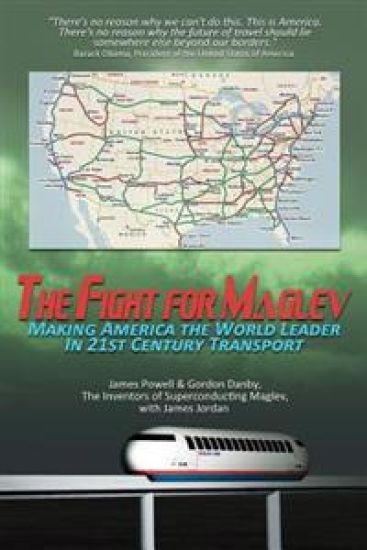
The Fight for Maglev tells how Maglev, the first new transport mode since the airplane, will soon transform transportation in America and the World. 300 mph magnetically levitated and propelled vehicles have no engine, do not burn oil, do not emit pollutants and greenhouse gases, and are very quiet and comfortable. They carry passengers, personal autos, highway trucks, and freight without weather or congestion delays, at much lower cost than driving or flying, saving every American $1000 dollars per year. The book tells how the authors, James Powell and Gordon Danby, invented Maglev in 1966 and why the US failed to develop it. Their 1st generation Maglev now operates in Japan. The authors describe how their new, more capable 2nd generation Maglev system, built as a 29,000 mile National Maglev network, will provide millions of new manufacturing jobs and billions of dollars in exports, while greatly reducing highway deaths and injuries and oil imports, if the U.S. acts to implement it. Otherwise another country will become the World leader in Maglev.For Science and Technology Readers: The authors describe the catastrophic global warming "tipping points" that threaten human survival and suggest large-scale experiments that will predict when these tipping points will occur. The authors show how humanity can avoid becoming part of the ongoing 6th extinction if we implement Maglev in place of our present fossil fueled transport path. For Public Policy Readers: James Jordan, with over 30 years' experience on Capitol Hill narrates the Inside Story of why the Congress and the Executive Branch have ignored this technology and not made the modest investment to develop and demonstrate the American invented 2nd generation superconducting Maglev technology the way that the German and Japanese governments did with 1st generation Maglev transport systems. Congress can overcome the special interests who lobby to kill Maglev technology if it hears a thoughtful and solid protest from the American people. Thus this book. Don't miss this story, America's economic, environmental, and energy future and the quality of life of every American is at stake.
Silent Earth describes what humanity must do to prevent global catastrophe from our massive consumption of fossil fuels. Silent Earth warns, if we do not soon transition to non-fossil energy sources, Earth will pass the Trigger Point where global warming will runaway, even if we stop using fossil fuels. There are immense amounts of carbon - much more than now in the atmosphere - stored as decomposing organic matter in the warming Arctic permafrost and barely stable frozen methane hydrates in the warming ocean beds.At the Trigger Point, the process will become self-sustaining and global temperatures will increase exponentially, even if humanity stops consuming fossil fuels. The environmental effects will be catastrophic When will this Trigger Point happen? We don't know. Sadly, nobody is trying to find out. Most likely, humanity won't know until after it happens. Our only hope is to transition to non-fossil fuel energy sources, and be more energy efficient, as soon as possible.So far, there has been some limited efforts to transition to non-fossil energy sources and to increase energy efficiencyFossil fuels power our electricity, transport, industries, homes, and commerce. The ONLY way to stop using fossil fuels is to develop and implement new and practical non-fossil energy sources that are cheaper both in investment and operation, than fossil fuels. Otherwise, people and nations will continue to burn fossil fuels.Human civilization, and very possibly humanity itself, is not survivable, if we continue to burn fossil fuels. Silent Earth reviews the non-fossil energy possibilities? and finds most alternatives are not practical to reach the scale required. For example: Nuclear? It would take 6,500 reactors, each 1,000 megawatt capacity to supply 54,000 million Megawatt hours in 2050 AD. And more than double that amount to supply our other energy needs for transport, industrial purposes, etc. Today, we have 437 reactors in the World. We would have to build 600 reactors every year. Would the public accept that? Probably not.Clearly, new technologies are required.Silent Earth, describes how Superconducting Maglev, a new transport technology, can enable passenger, truck, and logistics transport at much lower cost and much greater energy efficiency, can store very large amounts of electrical energy at very low cost to meet time varying energy demands, and launch space solar satellites into orbit that can beam down electric power 24/7 to any spot on Earth at very low cost.Low-cost power beamed from space can be used to manufacture a wide range of products, including hydrocarbon fuels for transport and other applications, using the decades old Fischer-Tropsch process. Combining carbon dioxide extracted from the atmosphere with hydrogen generated by electrolyzing water: gasoline, diesel, jet fuels, and other hydrocarbons can be manufactured at acceptable cost. Superconducting Maglev was invented 50 years ago by Gordon Danby and the author, James Powell, when they were scientists at Brookhaven National Laboratory, located on Long Island, New York.Gordon Danby, James Powell and their colleagues have continued working on Maglev to evolve Maglev to a 2nd Generation transport system that can transport trucks and freight as well as passengers on 300 mph networks, that can be built at lower cost than other high speed surface transport and also perform 2 new applications - storage of electric energy from intermittent renewable energy sources, like windmills and ground solar farms at very low cost, and launch payloads into orbit at 1/100th the cost of chemical rockets making it possible to create very cheap solar electricity the foundation of the future world economy.
Earth, our wonderful planet that nourishes humanity and keeps us alive as we hurtle through space, is in danger. Without Spaceship Earth, humans would just be tiny particles of cosmic dust drifting aimlessly through the universe.The danger we face? The Sixth Mass Extinction. Over the last Billion years, Earth has experienced 5 Mass Extinctions caused by enormous asteroid impacts, massive volcanic eruptions, and other events. Each of the 5 extinctions wiped out most of Earth's life forms, leaving only a small fraction that survived. The 5th Extinction 60 million years ago, caused by an asteroid 10 miles in diameter impacting the Earth, wiped out the dinosaurs, leaving our ancestors, a few small mammals, to take over the planet.The Sixth Extinction, if it occurs, will be very different. Instead of some natural event, humans will be the cause. It is inevitable if we keep burning fossil fuels, dumping carbon dioxide into the atmosphere. The planet is already warming, sea levels rising, droughts and crop failures, deadly heat waves, etc. By 2100 we will be deep into the Sixth Extinction and Billions of humans will die.Spaceship Earth describes 3 new critical technologies that can prevent the 6th Extinction, provided we implement them.The first technology is beamed clean energy to Earth from Space Solar Power Satellites in orbit. Using StarTram Maglev to launch payloads into orbit at 1/100th the cost of rockets. Beamed solar power is unlimited, 24/7, and much cheaper that power from fossil fuels.The second is desalination of hundreds of billions of gallons of very low cost fresh water using ocean thermal energy to evaporate sea water. The ICE/DESAL process can provide ample fresh water for food crops and people in drought areas.The third is an economically practical system that can remove Billions of tons of carbon dioxide from Earth's atmosphere and bury it underground, preventing global warming and the 6th Mass Extinction.