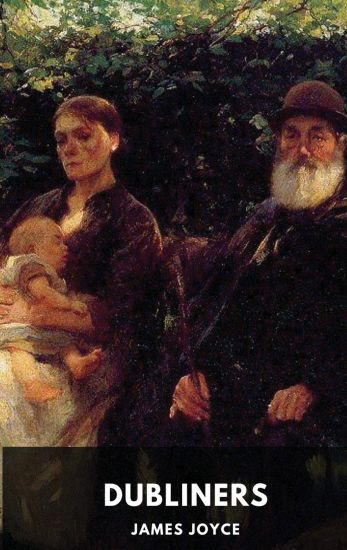
The Portable James Joyce, edited and with an introduction by Harry Levin, includes four of the six books on which Joyce's astonishing reputatuion is founded: A Portrait of the Artist As a Young Man; his Collected Poems (including Chamber Music); Exiles, Joyce's only drama; and his volume of short stories, Dubliners. In addition, there is a generous sampling from Ulysses and Finnegans Wake, including the famous "Anna Livia Plurabelle" episode.
This book offers the first critical edition of the forty short texts James Joyce called “epiphanies.” Among Joyce’s earliest literary compositions, although published posthumously, the epiphanies are a series of highly polished miniatures, many of which Joyce reused in his later writings. By presenting the epiphanies with background details and thorough annotations, this edition provides a vivid insight into his art.Collected Epiphanies of James Joyce features an introduction to the texts that summarizes Joyce’s concept of epiphany; their biographical and cultural context; their echoes and adaptations in Stephen Hero, Dubliners, A Portrait of the Artist as a Young Man, Ulysses, and Finnegans Wake; and their critical reception and editorial history. Each epiphany is transcribed directly from its original manuscript, accompanied by extensive notes that include more information specific to each piece, as well as textual variants.Styled as prose poems, dramatic sketches, or combinations of the two, the epiphanies can be seen not only as lyrical counterparts to Joyce’s poetry in Chamber Music but also as bridges to the writer’s landmark fiction. This collection demonstrates that the epiphanies offer a paradigm case for studying the development of Joyce’s work as a whole, prompting a reassessment of their literary significance.
Joyce’s early texts, which informed his later masterpieces, available for the first time in a comprehensive critical edition This book offers the first critical edition of the forty short texts James Joyce called “epiphanies.” Among Joyce’s earliest literary compositions, although published posthumously, the epiphanies are a series of highly polished miniatures, many of which Joyce reused in his later writings. By presenting the epiphanies with background details and thorough annotations, this edition provides a vivid insight into his art.Collected Epiphanies of James Joyce features an introduction to the texts that summarizes Joyce’s concept of epiphany; their biographical and cultural context; their echoes and adaptations in Stephen Hero, Dubliners, A Portrait of the Artist as a Young Man, Ulysses, and Finnegans Wake; and their critical reception and editorial history. Each epiphany is transcribed directly from its original manuscript, accompanied by extensive notes that include more information specific to each piece, as well as textual variants.Styled as prose poems, dramatic sketches, or combinations of the two, the epiphanies can be seen not only as lyrical counterparts to Joyce’s poetry in Chamber Music but also as bridges to the writer’s landmark fiction. This collection demonstrates that the epiphanies offer a paradigm case for studying the development of Joyce’s work as a whole, prompting a reassessment of their literary significance.A volume in the Florida James Joyce Series, edited by Sam Slote
This book contains the collected poetry of James Joyce. It includes 'Chamber Music', 'Pomes Penyeach', and 'Ecce Puer'. James Joyce was born in Dublin, Ireland in 1882 and is considered to be one of the most influential writers in the modernist avant-garde of the early 20th century. He published his first short story in 1904 and wrote many poems and novels including A Portrait of the Artist as a Young Man (1914), Ulysses (1922), and Finnegans Wake in 1939. This book is a perfect addition to the bookshelf of those who admire James Joyce and collect his works.
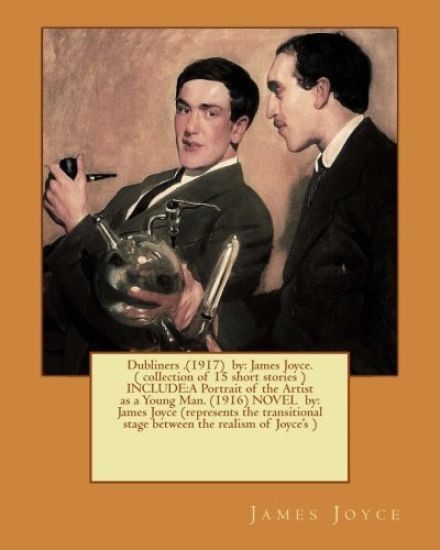
A Portrait of the Artist as a Young Man is a semi-autobiographical novel by James Joyce, first serialized in The Egoist from 1914 to 1915 and published in book form in 1916. It depicts the formative years in the life of Stephen Dedalus, a fictional alter ego of Joyce and a pointed allusion to the consummate craftsman of Greek mythology, Daedalus. A Portrait is a key example of the K nstlerroman (an artist's bildungsroman) in English literature. Joyce's novel traces the intellectual and religio-philosophical awakening of young Stephen Dedalus as he begins to question and rebel against the Catholic and Irish conventions he has been brought up in. He finally leaves for Paris to pursue his calling as an artist. The work pioneers some of Joyce's modernist techniques that would later come to fruition in Ulysses and Finnegans Wake. The Modern Library ranked Portrait as the third greatest English-language novel of the twentieth century.
A Portrait of the Artist as a Young Man is the first novel of Irish writer James Joyce. A K nstlerroman in a modernist style, it traces the religious and intellectual awakening of young Stephen Dedalus, a fictional alter ego of Joyce and an allusion to Daedalus, the consummate craftsman of Greek mythology. Stephen questions and rebels against the Catholic and Irish conventions under which he has grown, culminating in his self-exile from Ireland to Europe. The work uses techniques that Joyce developed more fully in Ulysses (1922) and Finnegans Wake (1939). A Portrait began life in 1903 as Stephen Hero-a projected 63-chapter autobiographical novel in a realistic style. After 25 chapters, Joyce abandoned Stephen Hero in 1907 and set to reworking its themes and protagonist into a condensed five-chapter novel, dispensing with strict realism and making extensive use of free indirect speech that allows the reader to peer into Stephen's developing consciousness. American modernist poet Ezra Pound had the novel serialised in the English literary magazine The Egoist in 1914 and 1915, and published as a book in 1916 by B. W. Huebsch of New York. The publication of A Portrait and the short story collection Dubliners (1914) earned Joyce a place at the forefront of literary modernism.In 1998, the Modern Library named the novel third on its list of the 100 best English-language novels of the 20th century.Stephen Dedalus - The main character of A Portrait of the Artist as a Young Man. Growing up, Stephen goes through long phases of hedonism and deep religiosity. He eventually adopts a philosophy of aestheticism, greatly valuing beauty and art. Stephen is essentially Joyce's alter ego, and many of the events of Stephen's life mirror events from Joyce's own youth.His surname is taken from the ancient Greek mythical figure Daedalus, who also engaged in a struggle for autonomy. Simon Dedalus - Stephen's father, an impoverished former medical student with a strong sense of Irish nationalism. Sentimental about his past, Simon Dedalus frequently reminisces about his youth.Loosely based on Joyce's own father and their relationship. Mary Dedalus - Stephen's mother who is very religious and often argues with Stephen about attending services. Emma Clery - Stephen's beloved, the young girl to whom he is fiercely attracted over the course of many years. Stephen constructs Emma as an ideal of femininity, even though (or because) he does not know her well. Charles Stewart Parnell - An Irish political leader who is not an actual character in the novel, but whose death influences many of its characters. Parnell had powerfully led the Irish Parliamentary Party until he was driven out of public life after his affair with a married woman was exposed. Cranly - Stephen's best friend at university, in whom he confides some of his thoughts and feelings. In this sense Cranly represents a secular confessor for Stephen. Eventually Cranly begins to encourage Stephen to conform to the wishes of his family and to try harder to fit in with his peers, advice that Stephen fiercely resents. Towards the conclusion of the novel he bears witness to Stephen's exposition of his aesthetic philosophy. It is partly due to Cranly that Stephen decides to leave, after witnessing Cranly's budding (and reciprocated) romantic interest in Emma. Dante (Mrs. Riordan) - The governess of the Dedalus children. She is very intense and a dedicated Catholic. Lynch - Stephen's friend from university who has a rather dry personality...... James Augustine Aloysius Joyce (2 February 1882 - 13 January 1941) was an Irish novelist, short story writer, and poet. He contributed to the modernist avant-garde and is regarded as one of the most influential and important authors of the 20th century.....
Exiles is James Joyce's only extant play and draws on the story of "The Dead", the final short story in Joyce's story collection Dubliners. The play was rejected by W. B. Yeats for production by the Abbey Theatre. Its first major London performance was in 1970, when Harold Pinter directed it at the Mermaid Theatre. In terms of both its critical and popular reception, Exiles has proven the least successful of all of Joyce's published works. In making his case for the defence of the play, Padraic Colum conceded: "...critics have recorded their feeling that Exiles] has not the enchantment of Portrait of the Artist nor the richness of Ulysses]... They have noted that Exiles has the shape of an Ibsen play and have discounted it as being the derivative work of a young admirer of the great Scandinavian dramatist."Summary: Joyce himself described the structure of the play as "three cat and mouse acts". The play follows four players and two couples, Richard Rowan, a writer and his "common-law wife"Bertha, and Robert Hand with his cousin and previous lover Beatrice, both old friends of the previous couple. "The plot is deceptively simple: Richard, a writer, returns to Ireland from Rome with Bertha, the mother of his illegitimate son, Archie. While there, he meets his former lover and correspondent Beatrice Justice and former drinking partner and now successful journalist Robert Hand. Robert was also Beatrice's lover, and here the complications begin." 2] As jealousy develops throughout the relationships the action meditates mostly in a budding relationship between Hand and Bertha and thus in Hand's attempts at seduction with the lover of his friend. The first act takes place at Rowan's house where Hand makes his first advance at Bertha. After kissing her "with passion" several times Hand requests she join him in his home for a second meeting later that evening. Bertha in turn confides in Rowan and questions whether or not to accept his invitation. To this, Rowan retorts she must do whatever she pleases. In the second act, Hand waits, expecting Bertha at the appointed hour but instead is surprised when Rowan appears. Calmly, Rowan explains his knowledge of Hand's attempts at wooing Bertha but is interrupted when Bertha herself knocks at the door. Rowan returns home, leaving his wife alone with Hand who continues his advances toward Bertha. The act ends inconclusively, with Hand asking if Bertha loves him, and Bertha explaining: "I like you, Robert. I think you are good... Are you satisfied?" The third act returns to Rowan's home at seven o'clock the following morning. Bertha's maid informs her of Rowan's departure from the home an hour earlier, as he left for a walk on the strand. Printed in the morning newspapers is a favourable article written about Rowan, written the previous evening by Hand himself. The events of the previous night between Bertha and Hand are unclear, as both parties agree it was a "dream." But appearances demonstrate Hand and Bertha shared "a sacred night of love." Hand reports to Rowan, assuring him Bertha in fact did not stay the night but instead Hand spent the night alone. Claiming to have visited the Vice-Chancellor's lodge, returned home to write the newspaper article, then gone to a nightclub where he picked up a divorc e and had sex with her ("what the subtle Duns Scotus calls a death of the spirit took place") in the cab on the way home. Following this conversation, Hand leaves his cousin's house in Surrey while Rowan and Bertha are reconciled. Bertha admits that she longs to meet her lover, but asserts that the lover is Rowan himself.The resolution of the play lies precisely in the sense of doubt about what occurred between Hand and Bertha between Acts Two and Three. Rowan is wounded by the sense of doubt that he admits he longed for.... James Augustine Aloysius Joyce (2 February 1882 - 13 January 1941) was an Irish novelist, short story writer, and poet.
James Joyce (1882 - 1941) one of the most influential writers in the20th Century modernist movement. In 1999, Time Magazine named Joyce one of the 100 Most Important People of the 20th century, stating that "Joyce ... revolutionised 20th century fiction". In 1998, the Modern Library, ranked Ulysses No. 1 and A Portrait of the Artist as a Young Man No. 3, on its list of the 100 best English-language novels of the 20th century. This Omnibus Edition features his two greatest novels - A Portrait of the Artist as a Young Man and Ulysses, as well as his famous book of short stories - Dubliners and an example of his poetry - Chamber Music. -A Portrait of the Artist as a Young Man- is heavily autobiographical, it is a coming of age novel where a young man gradually comes to recognise his artistic gifting. -Ulysses- is a novel that takes place in a single day, 16 June 1904. Joyce uses every literary technique in the book including the stream of consciousness that characterise his works. The characters and incidents of the Odyssey of Homer are set instead in Dublin amongst common folk. The book is both fondly describing in immense and accurate detail the city of Dublin and also dwelling on the squalor and misery within the city. -Dubiners- is a series of short stories, which like all his fiction is set in Ireland. They are incisive investigations into the inertia of Dublin society at the time. -Chamber Music- is his first full-length poetry collection, consisting of 36 short lyrics.
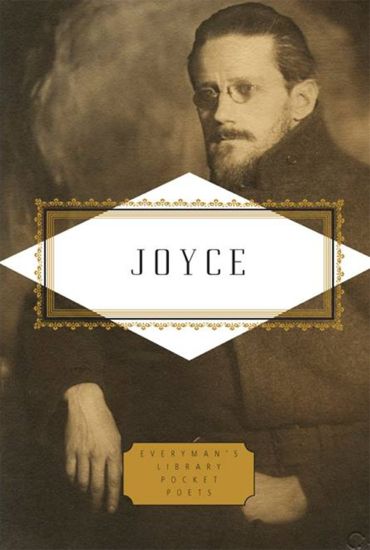
James Joyce is most celebrated for his remarkable novel Ulysses, and yet he was also an accomplished poet. Chamber Music, his debut collection, fused the styles of the Celtic Revival with his own brand of ironic exuberance. Pomes Penyeach, a collection written when Joyce had published Dubliners and was completing A Portrait of the Artist as a Young Man, explores intimate themes of adultery, jealousy, and betrayal that would reappear transformed in the later Ulysses. Joyce's occasional verse includes the well-known "Ecce Puer," written for his newborn grandson, and his satirical poems "The Holy Office" and "Gas from a Burner." These poems are brought together here with Joyce's play, Exiles--about an unconventional couple involved in a love triangle--in a beautiful, accessible hardcover edition for the general reader.
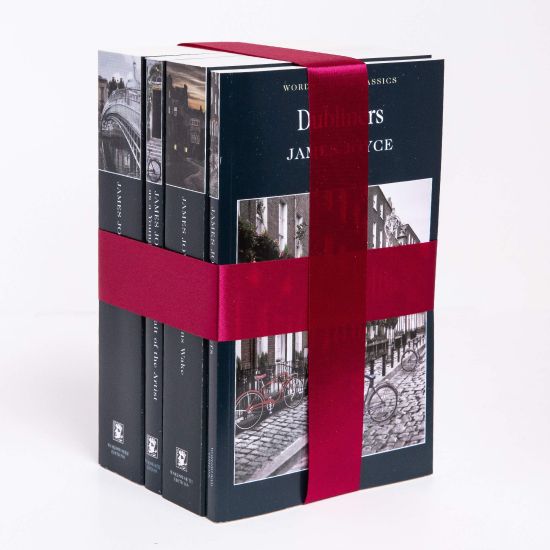
Wordsworth Classics' new 'Best of' series enables you to buy a collection of the key works of the finest authors at an unbeatable price. James Joyce was an Irish novelist and poet who is regarded as one of the most powerful and significant authors of the twentieth-century. Joyce is best known for his novel Ulysses; other well-known works are the short-story collection Dubliners and the novels A Portrait of the Artist as a Young Man and Finnegans Wake. This collection contains: - Dubliners; Finnegans Wake; Portrait of the Artist as a Young Man; Ulysses