Kirjojen hintavertailu. Mukana 11 627 463 kirjaa ja 12 kauppaa.

Kirjahaku

Etsi kirjoja tekijän nimen, kirjan nimen tai ISBN:n perusteella.

17 kirjaa tekijältä James L. Crenshaw

Defending God

Defending God

James L. Crenshaw

Oxford University Press Inc
2005
sidottu
In the ancient Near East, when the gods detected gross impropriety in their ranks, they subjected their own to trial. When mortals suspect their gods of wrongdoing, do they have the right to put them on trial? What lies behind the human endeavor to impose moral standards of behavior on the gods? Is this effort an act of arrogance, as Kant suggested, or a means of keeping theological discourse honest? It is this question James Crenshaw seeks to address in this wide-ranging study of ancient theodicies. Crenshaw has been writing about and pondering the issue of theodicy - the human effort to justify the ways of the gods or God - for many years. In this volume he presents a synthesis of his ideas on this perennially thorny issue. The result sheds new light on the history of the human struggle with this intractable problem.
Education in Ancient Israel

Education in Ancient Israel

James L. Crenshaw

Yale University Press
2007
sidottu
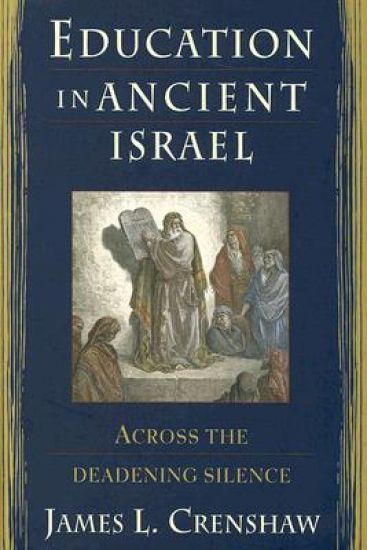
In this groundbreaking new book, distinguished biblical scholar James L. Crenshaw investigates both the pragmatic hows and the philosophical whys of education in ancient Israel and its surroundings. Asking questions as basic as "Who were the teachers and students and from what segment of Israelite society did they come?" and "How did instructors interest young people in the things they had to say?" Crenshaw explores the institutions and practices of education in ancient Israel. The results are often surprising and more complicated than one would expect.Education, for the people who lived in the biblical world, was more than a simple matter of memorizing information and taking tests. It was a search for the hidden plan and presence of God. Knowledge was gained, according to biblical texts such as Ecclesiastes and Proverbs, not only by means of patient observation and listening, but through communication with Wisdom, the feminine incarnation of the Divine. Drawing upon a broad range of ancient sources, Crenshaw examines this religious dimension of education in ancient Israel, demonstrating how the practice of teaching and learning was transformed into the supreme act of worship.
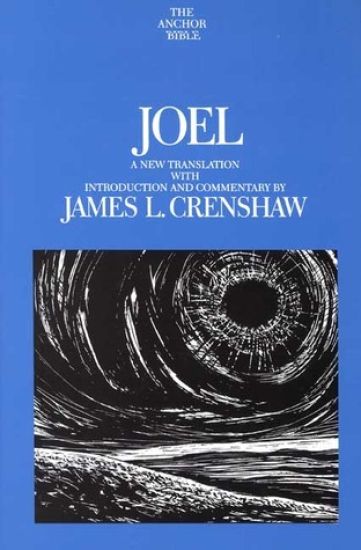
Joel

Joel

James L. Crenshaw

Yale University Press
2007
sidottu
Scripture scholar James L. Crenshaw captures the ominous, yet hopeful spirit of Joel's prophecy in his New Translation and commentary. Joel's Prophecy has an unexpectedly familiar ring to it. The biblical book of Joel is relevant to our late-twentieth-century world because it confronts an age when people tolerated almost anything, did not want someone telling them how to live their lives, and had difficulty distinguishing right from wrong. It was at once a time of self-indulgence and a time of spiritual decay. The economic and political disparity of the day, combined with widespread social injustice and deviant religious practices, brought about God's judgment on his chosen people, the judahites. Pleading the litany of sins in Joel is like reading the newspaper, things have not changed much in 2,500 years. Leading Scripture scholar James L. Crenshaw's fresh translation of the biblical prophecy of Joel combines the latest research into Hebrew language and literature with down-to-earth insights into how Joel's words relate to the modern world. Drawing upon a thorough analysis of the book's grammar and philology, literary forms and context, religious and social situation, and historical setting, Crenshaw offers the most informed and up-to-date commentary available. For those who want to read and understand Joel, this book is indispensable.
Ecclesiastes

Ecclesiastes

James L. Crenshaw

Westminster/John Knox Press,U.S.
1987
nidottu
This volume, a part of the Old Testament Library series, explores the book of Ecclesiastes.The Old Testament Library provides fresh and authoritative treatments of important aspects of Old Testament study through commentaries and general surveys. The contributors are scholars of international standing.
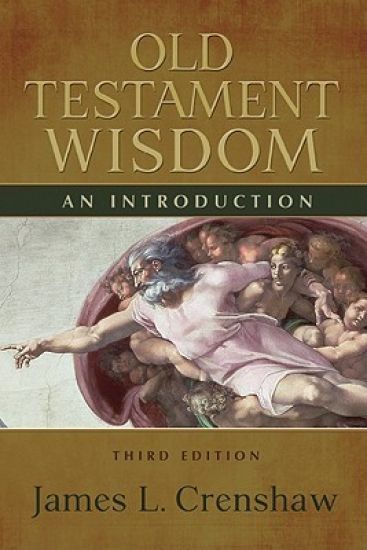
Old Testament Wisdom, Third Edition

Old Testament Wisdom, Third Edition

James L. Crenshaw

Westminster/John Knox Press,U.S.
2010
nidottu
For thirty years, James Crenshaw's Old Testament Wisdom has been the premier introduction to the wisdom books of the Old Testament. That tradition continues with this newly updated edition. This popular textbook introduces readers to the wisdom tradition as well as the biblical books of Proverbs, Job, Ecclesiastes, Sirach, and the Wisdom of Solomon. In addition, Crenshaw offers expert analysis of the legacy of wisdom in other parts of the canon and in other cultures, offering new insights and fresh perspectives that can only come from one so well versed on the significance of Old Testament wisdom.
Old Testament Wisdom

Old Testament Wisdom

James L. Crenshaw

Westminster/John Knox Press,U.S.
1999
nidottu
When Old Testament Wisdom appeared in 1981, new perspectives on biblical theology, an increasing awareness of ancient Near Eastern texts resembling biblical wisdom, and an emerging interest in ethnic proverbs were mere intimations of what was to become a dramatic outpouring of scholarship on wisdom literature. In this expanded edition, James Crenshaw takes stock of the wealth of new material produced by contemporary interpreters. Liberation and feminists critics, scholars in comparative religion, specialists in devotional theology, and researchers exploring educational systems in the ancient Near East all have enriched our understanding of wisdom literature in recent years, and all receive insightful treatment in this new volume. Now as before, Crenshaw's Old Testament Wisdom is an invaluable asset for anyone wishing to understand the rich and complex legacy of wisdom literature.
The Psalms

The Psalms

James L. Crenshaw

William B Eerdmans Publishing Co
2001
pokkari
This volume offers one of the best available introductions to the psalms literature of the Bible. Specially designed for general readers, James L. Crenshaw's new book will help beginning students read the psalms with understanding and appreciation. Part 1 examines the composition and major features of the book of Psalms. Comparisons to other biblical psalms and to deutero- and noncanonical psalms are also made. Part 2 surveys the various approaches to the Psalter, illustrating with great clarity the various modes of interpreting the book. Crenshaw looks in particular at the types of psalms, their social settings, and the historical reconstruction of the Israelite experience, with special attention to ancient Near Eastern iconography. Artistic design and theological editing are also discussed. In Part 3 Crenshaw offers in-depth exegesis of four notable psalms-24, 71, 73, and 115-to show how one might fruitfully engage the text. Given its range of discussion and highly accessible style, The Psalms: An Introduction will quickly become a favorite resource for study of the psalms.
Monotheism and Wisdom in the Hebrew Bible

Monotheism and Wisdom in the Hebrew Bible

James L. Crenshaw

Cambridge University Press
2025
sidottu
Monotheism, belief in only one God, and wisdom, learning to cope by reason alone and teaching others to do so, faced resistance in the polytheistic world of ancient Egypt, Mesopotamia, and lesser states including Israel. Paradoxically, in early biblical wisdom (Proverbs, Job, and Ecclesiastes) the deity was thought to be both human-like, with disturbing attributes, and increasingly transcendent-silent, disembodied, and inactive. Like Egyptian Ma'at, God the creator established the universe by decree, a law rewarding goodness and punishing evil, the flaw in creation, never satisfactorily resolved. Satan, a semi-divine rival, bore responsibility for bad things, while Wisdom, a personified female, communicated God's will to the discerning. Combining biblical revelation and Hellenism, Sirach and Wisdom of Solomon chose piety over Job's realism and the vanity literature of Ecclesiastes. Over millennia, the concept of God evolved, continuing a process begun in Paleolithic times.
Monotheism and Wisdom in the Hebrew Bible

Monotheism and Wisdom in the Hebrew Bible

James L. Crenshaw

Cambridge University Press
2025
pokkari
Monotheism, belief in only one God, and wisdom, learning to cope by reason alone and teaching others to do so, faced resistance in the polytheistic world of ancient Egypt, Mesopotamia, and lesser states including Israel. Paradoxically, in early biblical wisdom (Proverbs, Job, and Ecclesiastes) the deity was thought to be both human-like, with disturbing attributes, and increasingly transcendent-silent, disembodied, and inactive. Like Egyptian Ma'at, God the creator established the universe by decree, a law rewarding goodness and punishing evil, the flaw in creation, never satisfactorily resolved. Satan, a semi-divine rival, bore responsibility for bad things, while Wisdom, a personified female, communicated God's will to the discerning. Combining biblical revelation and Hellenism, Sirach and Wisdom of Solomon chose piety over Job's realism and the vanity literature of Ecclesiastes. Over millennia, the concept of God evolved, continuing a process begun in Paleolithic times.
Sipping from the Cup of Wisdom, Volume One: Exploring Diverse Paths of Research

Sipping from the Cup of Wisdom, Volume One: Exploring Diverse Paths of Research

James L. Crenshaw

Smyth Helwys Publishing, Incorporated
2017
nidottu
In Sipping from the Cup of Wisdom: Exploring Diverse Paths of Research, renowned scholar James L. Crenshaw updates the history of research on wisdom literature found in his Prolegomenon to Studies in Ancient Israelite Wisdom (1976). His introduction addresses the social setting of the sages, the personification of Wisdom, mythical images of creation, and wisdom and apocalyptic. In the next five chapters, he describes major trends of interpretation on each wisdom book: Proverbs, Job, Qoheleth (Ecclesiastes), Sirach, and Wisdom of Solomon. The sixth chapter explores recent attempts to define the wisdom corpus.
Qoheleth

Qoheleth

James L. Crenshaw

University of South Carolina Press
2013
sidottu
Rarely does a biblical book evoke admiration from a Nobel laureate in literature, a newspaper columnist, a prize-winning poet, and a popular songwriter. Ecclesiastes has done that, and for good reason. Its author, who called himself Qoheleth, stared death in the face and judged all human endeavours to be futile. For Qoheleth observation is the only avenue to understanding; an arbitrarily wrathful and benevolent deity created and rules over the world; and death is unpredictable, absolute, and final. His message is simple: seize the moment, for death awaits. James L. Crenshaw begins by examining the essential mysteries of the book of Ecclesiastes: the speaker's identity, his emphasis on hidden or contradictory truths, and his argument of the insubstantiality of most things and the ultimate futility of all efforts. Moving from the ancient to the contemporary, Crenshaw again analyses Qoheleth's observations about the human condition, this time testing if they can stand up against rational inquiry today. In exploring Qoheleth's identity, the foundations of his outlook, and his recommendations, Crenshaw engages modern readers in a conversation about one of the most disagreed upon biblical books. In Qoheleth, Crenshaw draws on related literature from the ancient Near East and traces the impact of Qoheleth in both Christian and Jewish traditions, summarising a lifetime of scholarship on the book of Ecclesiastes. While exploring Ecclesiastes and its enigmatic author, Crenshaw engages scholars and modern interpreters in genuine debate over the lasting relevance of Qoheleth's teachings and the place of Ecclesiastes in the biblical canon.