Kirjojen hintavertailu. Mukana 12 390 323 kirjaa ja 12 kauppaa.

Kirjahaku

Etsi kirjoja tekijän nimen, kirjan nimen tai ISBN:n perusteella.

6 kirjaa tekijältä James Lees-Milne

Harold Nicolson: Volume I

Harold Nicolson: Volume I

James Lees-Milne

Faber Faber
2012
pokkari
'An absorbing portrait of an extinct type of Englishman.' Sunday Times 'A scintillating, pointillist portrait of the beginnings of a career and a marriage.' Times Harold Nicolson - great diplomat, diarist and raconteur - moved in numerous worlds and knew an extraordinary number of distinguished people. This, the first volume of James Lee-Milne's superb two-part biography, traces the life through Nicolson's nomadic childhood in Budapest, Tehran, Constantinople and Bulgaria, his education at Wellington and Balliol, his independent travels in Europe, his early diplomatic service in Spain, his stormy courtship of and marriage to Vita Sackville-West, and his service to the Foreign Office during the Great War. Subsequently he worked in Paris and there encountered Cocteau, Gide and Proust while also embarking on his own literary career. This volume carries the story up to 1929 when Nicolson joined the staff of the Evening Standard.
Harold Nicolson: Volume II

Harold Nicolson: Volume II

James Lees-Milne

Faber Faber
2012
nidottu
This second volume of James Lees-Milne's masterly biography opens at a turning point in Harold Nicolson's life: he was miserable at the Evening Standard and disillusioned with Mosley's New Party but his move to Sissinghurst, where he and his wife would design one of the most beautiful gardens in England, offered a fresh start. Thereafter he became increasingly involved in politics (spending ten years as National Labour Party MP, close to the heart of government during the worst months of the war.) After the war he turned royal biographer, writing the life of George V, two books on manners and a study of his hero, Sainte-Beuve. Thus James Lee-Milne, drawing on mostly unpublished letters and diaries, completes this vivid study of a man of uncommon talents and energies.
Tudor Renaissance

Tudor Renaissance

James Lees-Milne

Hassell Street Press
2021
sidottu
This work has been selected by scholars as being culturally important and is part of the knowledge base of civilization as we know it.This work is in the public domain in the United States of America, and possibly other nations. Within the United States, you may freely copy and distribute this work, as no entity (individual or corporate) has a copyright on the body of the work.Scholars believe, and we concur, that this work is important enough to be preserved, reproduced, and made generally available to the public. To ensure a quality reading experience, this work has been proofread and republished using a format that seamlessly blends the original graphical elements with text in an easy-to-read typeface.We appreciate your support of the preservation process, and thank you for being an important part of keeping this knowledge alive and relevant.
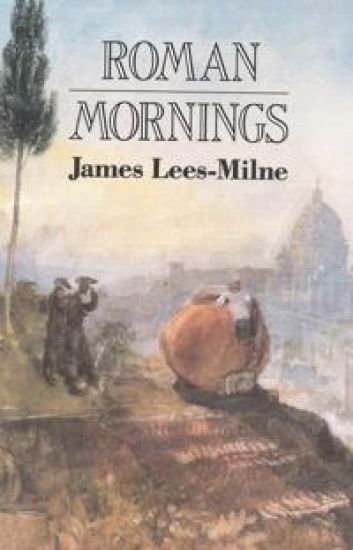
Roman Mornings

Roman Mornings

James Lees-Milne

New Amsterdam Books
1998
pokkari
The author writes in his introduction that evening is the magical moment to wander about Rome: "That is the moment to see the city of conflicting moods as it always has been and still is, hateful and holy, wicked and wise, pagan and papal, sometimes so beautiful that it is scarcely to be endured, and always quite inscrutable. That is the supreme moment to rhapsodize and pay homage, to make the final assault upon the hidden secret of Rome's eternal decay, and to be deliciously deceived… The early morning on the other hand is more to our purpose, for it is not at all romantic." The early morning serves to light for Lees-Milne the eight Roman buildings–from the somber Pantheon first built by Marcus Agrippa in 27 B.C. to the Trevi fountain, whose waters were brought to Rome via aqueduct by the same Agrippa, but whose completion had to await the eighteenth century–that are in the author's opinion the chef architectural monuments of the city. All of them, he says, are powerful archetypes, and two among them, the Pantheon and the Tempietto, have individual features that are reflected in practically every town in Europe, the British Commonwealth, and America.
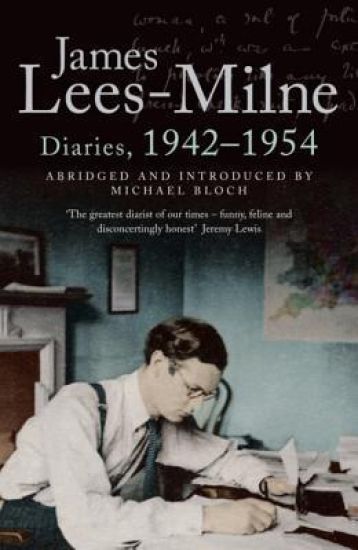
Diaries, 1942-1954

Diaries, 1942-1954

James Lees-Milne; Michael Bloch

John Murray Publishers Ltd
2007
pokkari
James Lees-Milne (1908-97) made his name as the country house expert of the National Trust and for being a versatile author. But he is now best known for the remarkable diary he kept for most of his adult life, which has been compared with that of Samuel Pepys and hailed as 'a treasure of contemporary English literature'. The first of three, this volume covers its first dozen years, beginning with his return to work for the National Trust during the Second World War, and ending with his tempestuous marriage to the exotic Alvilde Chaplin. The diary vividly portrays the hectic social life of London during the Blitz, when in the intervals between struggling to save a disintegrating architectural heritage he enjoys a dizzying variety of romantic experiences with both sexes. His descriptions of visits to harassed country-house owners are as perceptive as they are hilarious. With the war's end, the mood changes as he portrays a world of gloom and austerity. He shares the prevailing pessimism, yet during these years arranges the transfer of some of England's loveliest houses to the safe keeping of the National Trust. Finally he escapes from England to live on the Continent with his beautiful paramour, yet remains restless and dissatisfied. The diaries of James Lees-Milne were originally published in twelve volumes between 1975 and 2005. Michael Bloch, James Lees-Milne's literary executor and editor of the last five volumes of the complete work, has produced this skilful compilation from the first five volumes - including interesting new material omitted from the original publications.
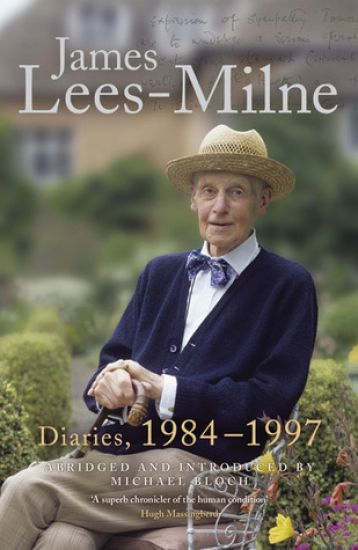
Diaries, 1984-1997

Diaries, 1984-1997

James Lees-Milne; Michael Bloch

John Murray Publishers Ltd
2009
pokkari
Despite advancing years, James Lees-Milne's descriptions of the people he meets, the houses he visits and country life on the Duke of Beaufort's Badminton estate are sharper than ever.He continues to enjoy a wide variety of experiences, and vividly recaptures a weekend at Chatsworth, a monastic retreat, a journey in a helicopter, an encounter with Mick Jagger and an intimate lunch with the Prince of Wales. As the grand old man of country house conservation, he becomes a media celebrity, but declines a CBE and refuses to be photographed by Lord Snowdon. In old age, he draws close to his formidable wife Alvilde, whose death in 1994 both shatters and liberates him, but he remains emotionally interested in members of his own sex. As always, he is a penetrating commentator on the times. A tour of the Cotswolds makes him ruefully aware of the yuppy trends of the Thatcher era, while he predicts that the victory of New Labour will herald a descent into American-style vulgarity and yob culture. Witty, waspish, poignant and self-revealing, James Lees-Milnes last diaries contain as much to delight as the first, and confirm his reputation as one of the twentieth century's great English diarists.