"As he usually does, Professor Buchanan has produced an interesting and provocative piece of work. [Cost and Choice] starts off as an essay in the history of cost theory; the central ideas of the book are traced to Davenport and Knight in the United States, and to a series of distinguished writers associated at various times with the London School of Economics. The author emerges from this discussion with what can be described as the ultimate in subjectivist cost doctrines. . . . Economists should learn the lessons offered to us in this little book—and learn them well. It can save them from serious errors."—William J. Baumol, Journal of Economic Literature
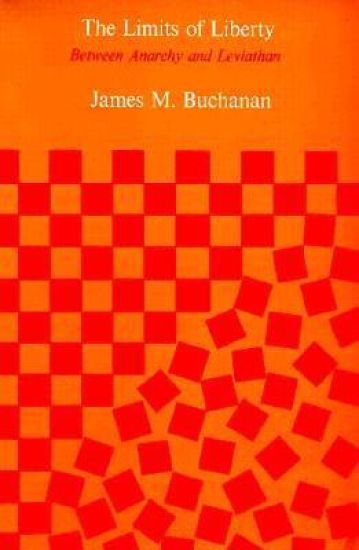
"The Limits of Liberty is concerned mainly with two topics. One is an attempt to construct a new contractarian theory of the state, and the other deals with its legitimate limits. The latter is a matter of great practical importance and is of no small significance from the standpoint of political philosophy."—Scott Gordon, Journal of Political EconomyJames Buchanan offers a strikingly innovative approach to a pervasive problem of social philosophy. The problem is one of the classic paradoxes concerning man's freedom in society: in order to protect individual freedom, the state must restrict each person's right to act. Employing the techniques of modern economic analysis, Professor Buchanan reveals the conceptual basis of an individual's social rights by examining the evolution and development of these rights out of presocial conditions.
How do persons live together in peace, prosperity, liberty, and justice? This ancient question requires continuing analysis, discussion, and attention – by economists, by philosophers, by political leaders, and by members of the body politic. Buchanan’s interests have always centered on the issues relevant to this question, and his most recent essays reflect a new broadening of perspective. In this collection of twenty distinctly but closely related essays, written over the period 1986-89 following the author’s receipt of the Nobel Prize in Economic Science, Professor Buchanan records his increasing interest in and developing ideas on the constitutional order of a free society, especially in its ethical foundations. The essays in this collection extend beyond the boundaries of economics into moral philosophy, political philosophy, methodology, and epistemology Many of the separate essays were initially delivered by special invitation as lectures to general audiences throughout the world. The linking theme of the essays in The Economics and the Ethics of Constitutional Order is the continuing relevance of Adam Smith’s ideas to issues emerging in the 1990s – issues that have gained a new immediacy since the revolutionary events of 1989. How can societies organize their economies so as to produce goods and services efficiently while at the same time allowing individuals the liberties to make their own choices? Buchanan’s contributions here are directly addressed to this question.
Studies of public finance, as traditionally developed, have analyzed the effects of fiscal institutions on the market-choice behavior of individuals and firms, but this book takes a different approach. It analyzes the effects of fiscal institutions on the political-choice behavior of individuals as they participate variously in the decision-making processes of democracies. What effect will the form of a new tax have on individuals' attitudes toward more or less public spending? To what extent does the private sector--public sector mix depend on the way in which tax payments are made? How do the various taxes affect the fiscal consciousness of individual citizens? These are questions that have been ignored for the most part. They are, nonetheless, important and worthy of examination. This book is an attempt to provide some provisional answers. By the use of simplified models of existing tax institutions, Buchanan predicts the effects that these exert on individual behavior in the area of political choice. The relative effects of direct and indirect taxes, the ""old tax--new tax"" distinction, the effects of fiscal earmarking, the effects of unbalanced budgets -- these are a few of the topics examined. Before these questions can be fully answered, research must be conducted to find out just how much individuals know about the taxes they pay and the benefits they receive. Comparatively little research of this kind has been completed, but the author devotes a chapter to a careful review of the present state of this sort of research. Individuals' choice among alternative fiscal institutions is examined in the second part of the book. If given the opportunity, how would the individual choose to pay his or her taxes? Progressive income taxes, excise taxes, and public debt are analyzed in terms of this question. Because of its interdisciplinary approach, this imaginative study will be of interest to both economists and political scientists. |Although much has been written about the ways in which Confederate politics affected the course of the Civil War, George Rable is the first historian to investigate Confederate political culture in its own right. Focusing on the assumptions, values, and b
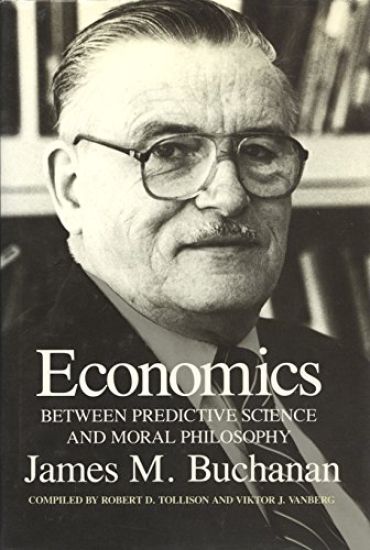
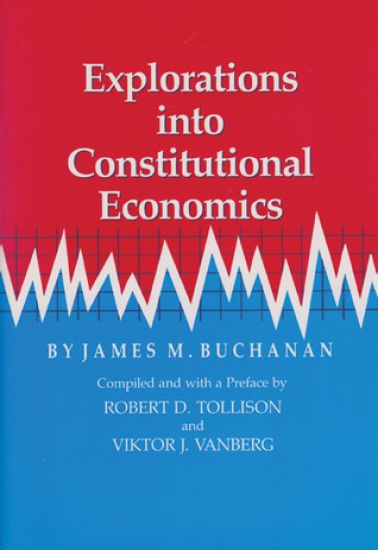
This book presents twenty-six of the major papers of 1986 Nobel Laureate James M. Buchanan, who played a key role in the development of "theoretical institutional economics" and was awarded the Nobel Prize in economic science for his contributions to a theory of political economy as well as his leadership of the public choice movement. These articles, written from the early 1950s to the mid-1980s and spanning various subfields of economics from public finance to methodology, form the core of Buchanan's work. In each paper the constitutional economics paradigm--viewed by the author as a modern revival of classical political economy--is modified, extended, and applied to particular issues. Contemporary economics grew out of the eighteenth century's moral philosophy--today's social science. Over years of disciplinary separation and specialization within the social sciences, economics has increasingly moved away from the issues about which its founders were concerned, issues that are central to the identity of the economic paradigm. A particular target of criticism has been the tendency to define and analyze economic processes as if they occur in an institutional vacuum. A number of new theoretical developments--among them public choice and the new political economy--have been initiated to refocus economists' attention to the institutional framework of economic activity. Buchanan is perhaps best known as a man who changed the ideas of a generation of scholars about the way the social and economic world works. Rather than working within a tradition, he created his own in the Virginia school of political economy. Aside from published works, his influence has been felt in lectures, conferences, and comments on his colleagues' work. This book will be valuable both to first-time readers of Buchanan's writings and to those already familiar with his contributions to economics.
These thirtyone essays form the foundation of 1986 Nobel Laureate James M. Buchanan's work on the constitutional economics paradigm he founded. Following the earlier collection, Economics: Between Predictive Science and Moral Philosophy, these essays include many that appeared in journals not easily accessible as well as some which have not previously been published.The volume is organized in two parts: theoretical foundations and applications. The latter part includes papers on aspects of voting, monetary and fiscal constitutions, public goods supply, taxation and public debt, and property rights and externalities. This edition provides easier access and gives a wider exposure to a set of arguments and ideas that mark important steps in Buchanan's building of the Constitutional Economics Paradigm.The vision of a new political economy developed and applied in the contributions of this volume will be of interest to scholars and students of economics as well as other disciplines from political science to philosophy, providing a valuable perspective and orientation to anyone who is concerned with the practical issues of policy making.
This work has been selected by scholars as being culturally important and is part of the knowledge base of civilization as we know it.This work is in the public domain in the United States of America, and possibly other nations. Within the United States, you may freely copy and distribute this work, as no entity (individual or corporate) has a copyright on the body of the work.Scholars believe, and we concur, that this work is important enough to be preserved, reproduced, and made generally available to the public. To ensure a quality reading experience, this work has been proofread and republished using a format that seamlessly blends the original graphical elements with text in an easy-to-read typeface.We appreciate your support of the preservation process, and thank you for being an important part of keeping this knowledge alive and relevant.
This work has been selected by scholars as being culturally important and is part of the knowledge base of civilization as we know it.This work is in the public domain in the United States of America, and possibly other nations. Within the United States, you may freely copy and distribute this work, as no entity (individual or corporate) has a copyright on the body of the work.Scholars believe, and we concur, that this work is important enough to be preserved, reproduced, and made generally available to the public. To ensure a quality reading experience, this work has been proofread and republished using a format that seamlessly blends the original graphical elements with text in an easy-to-read typeface.We appreciate your support of the preservation process, and thank you for being an important part of keeping this knowledge alive and relevant.
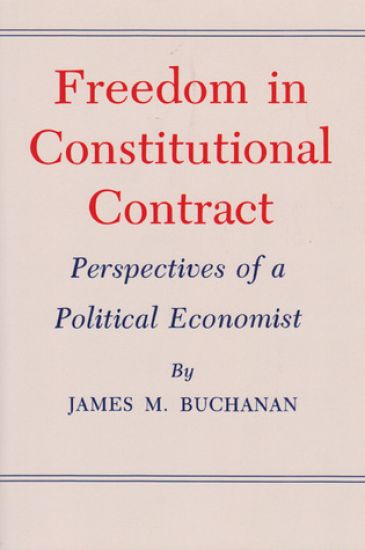
Though written by an economist, this book's subject is not "economics" in the ordinary sense of that term. Instead, it is James Buchanan's contribution to what he has called the "contractarian revival," the renewed interest in and emphasis on the metaphor of the social contract in evaluating political alternatives. He believes that genuine constitutional dialogue must take place in this country if America is to remain a free society and that the perspectives of an economist are valuable in the discussion of basic issues of social philosophy. The author critically examines the basic alternatives for social order: anarchy, natural law, historical determinism, and revealed reason. He rejects each of these and opts instead for "freedom in constitutional contract." In this stance he is explicitly constructivist, holding the view that reform in constitutional-legal rules or institutions is possible. Reform or improvement in such rules is determined, however, by conceptual contractual agreement or consensus and not by external ethical norms. Further, the choice among alternative sets of rules, alternative "constitutions," is categorically distinguished from attempts to suggest policy norms within an existing set of rules. In developing his analysis, Buchanan critically analyzes recent contributions by John Rawls, Robert Nozick, F. A. Hayek, Michael Polanyi, Frank H. Knight, and other social philosophers
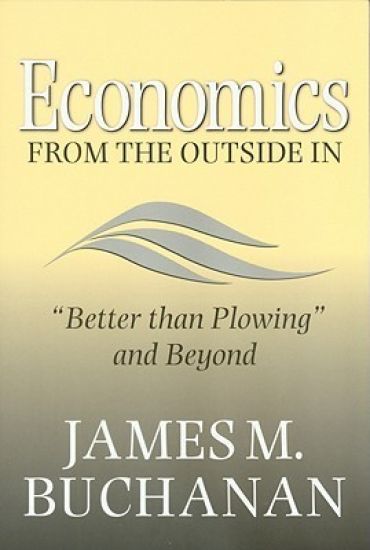
Nobel laureate in economics James Buchanan has been called - and indeed, calls himself - an outsider in American economics. Original and even unorthodox in his pioneering contributions to public choice theory and variously revered or berated for his influence on the economic policies that took hold in the Reagan years, he has stimulated a productive vein of economic inquiry and an important strain of public policy. First published in 1992 under the title ""Better Than Plowing And Other Personal Essays"", this collection of autobiographic writings was hailed as engaging, honest, and fascinating. The four new chapters of the present volume fill some gaps in his earlier reflections and add valuable assessments of the roots of his academic work. ""Economics from the Outside In"" provides a fascinating look at the humble origins and academic development of a recipient of the Nobel Prize, the intellectual underpinnings of a key American economic policy, and the role of the academician in today's society.
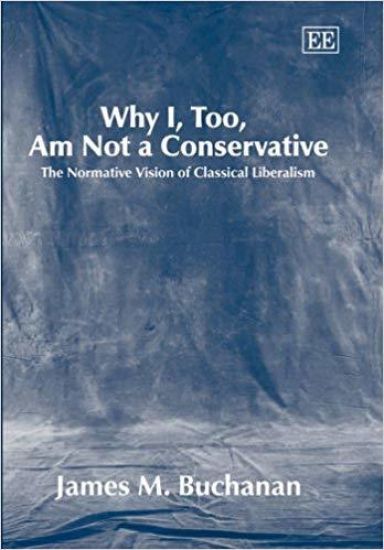
Nobel Laureate James Buchanan collects in this volume original and recent hard-to-find essays exploring liberalism and conservatism as distinct ways of looking at and thinking about the realm of human interaction. Classical liberalism is presented here as a coherent political and economic position, as distinguished from both modern liberalism and conservatism. The book comprises chapters which, taken together, assign a central and critical role to individual liberty. The liberalism is classical in its continuation of normative arguments made by the great liberal thinkers of three centuries, including the American Founders and culminating in the recent works of F.A. Hayek and Milton Friedman. The author discusses the status quo in the conservative position, normative presuppositions for democracy, and examines what seem to be the conservative assumptions about the nature of human beings. The introductory and concluding chapters, written specifically for this volume, are designed to place both the essays and his own position in the broader perspective of political philosophy. Students and scholars of economics, political science and philosophy will find this collection a provocative and necessary addition to their library. Liberals and conservatives alike will find the arguments insightful and absorbing.
This book presents a critical assessment of the political and social order in the post-revolutionary decade of the 1990s in both the transitional economies and Western welfare states confronting fiscal crises. As we enter the new post-socialist century, James M. Buchanan argues that we need to think and act on the premise that the future is uncertain.James M. Buchanan examines the political economy of the post-socialist era, analysing the events of 1989-91 and some of their predicted consequences. In addition he reflects upon the influence of those revolutionary years and the reactions to the changes, as well as the role of economists in the new socio-political environment. The political economy of the post-socialist era will be determined by the forces of historical development, social and cultural evolution, directed political change and exogenous shocks. To a large extent, many of these forces cannot be planned for, except directed political change. This insightful new book will be welcomed by political economists, legal and political philosophers, political scientists and public choice economists.