Kirjojen hintavertailu. Mukana 11 627 220 kirjaa ja 12 kauppaa.

Kirjahaku

Etsi kirjoja tekijän nimen, kirjan nimen tai ISBN:n perusteella.

4 kirjaa tekijältä James Pattison

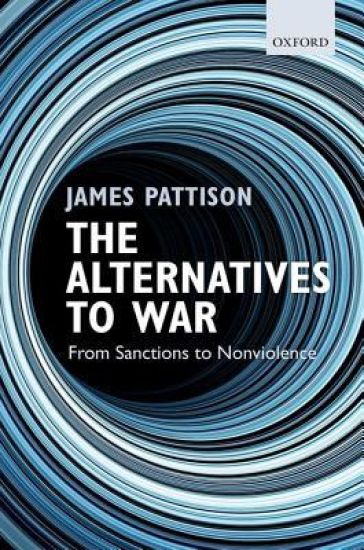
The Alternatives to War

The Alternatives to War

James Pattison

Oxford University Press
2018
sidottu
If states are not to go to war, what should they do instead? In The Alternatives to War, James Pattison considers the case for the alternatives to military action to address mass atrocities and aggression. The volume examines the normative issues raised by measures ranging from comprehensive economic sanctions, diplomacy, and positive incentives, to criminal prosecutions, nonviolent resistance, accepting refugees, and arming rebels. For instance, given the indiscriminateness of many sanctions regimes, are sanctions any better than war? Should states avoid 'megaphone diplomacy' and adopt more subtle measures? What, if anything, can nonviolent methods such as civilian defence and civilian peacekeeping do in the face of a ruthless opponent? Is it a serious concern that positive incentives can appear to reward aggressors? Overall, Pattison provides a comprehensive account of the ethics of the alternatives to war. In doing so, he argues that the case for war is weaker and the case for many of the alternatives is stronger than commonly thought. The upshot is that, when reacting to mass atrocities and aggression, states are generally required to pursue the alternatives to war rather than military action. The volume concludes that this has significant implications for pacifism, just war theory, and the responsibility to protect doctrine.

Humanitarian Intervention and the Responsibility To Protect
This book considers who should undertake humanitarian intervention in response to an ongoing or impending humanitarian crisis, such as found in Rwanda in early 1994, Kosovo in 1999, and Darfur more recently. The doctrine of the responsibility to protect asserts that when a state is failing to uphold its citizens' human rights, the international community has a responsibility to protect these citizens, including by undertaking humanitarian intervention. It is unclear, however, which particular agent should be tasked with this responsibility. Should we prefer intervention by the UN, NATO, a regional or subregional organization (such as the African Union), a state, a group of states, or someone else? This book answers this question by, first, determining which qualities of interveners are morally significant and, second, assessing the relative importance of these qualities. For instance, is it important that an intervener have a humanitarian motive? Should an intervener be welcomed by those it is trying to save? How important is it that an intervener will be effective and what does this mean in practice? The book then considers the more empirical question of whether (and to what extent) the current interveners actually possess these qualities, and therefore should intervene. For instance, how effective can we expect UN action to be in the future? Is NATO likely to use humanitarian means? Overall, it develops a particular normative conception of legitimacy for humanitarian intervention. It uses this conception of legitimacy to assess not only current interveners, but also the desirability of potential reforms to the mechanisms and agents of humanitarian intervention.
The Morality of Private War

The Morality of Private War

James Pattison

Oxford University Press
2014
sidottu
The increased use of private military and security companies (PMSCs) is often said to be one of the most significant changes to the military in recent times. The Morality of Private War: The Challenge of Private Military and Security Companies provides a detailed assessment of the moral arguments for and against the use of PMSCs. In doing so, it considers objections to private force at the employee, employer, and international levels. For instance, does the potential for private contractors to possess mercenary motives affect whether they can use military force? Does a state abdicate an essential responsibility when it employs PMSCs? Is the use of PMSCs morally preferable to the alternatives, such as an all-volunteer force and a conscripted army? What are the effects of treating military services as a commodity for the governing rules of the international system? Overall, The Morality of Private War argues that private military force leads to not only contingent moral problems stemming from the lack of effective regulation, but also several deeper, more fundamental problems that mean that public force should be preferred. Nevertheless, it also argues that, despite these problems, PMSCs can sometimes (although rarely) be morally permissibly used. Ultimately, The Morality of Private War argues that the challenges posed by the use of PMSCs mean that we need to reconsider how military force ought to be organized and to reform our thinking about the ethics of war and, in particular, Just War Theory.
Humanitarian Intervention and the Responsibility To Protect
Humanitarian Intervention and the Responsibility To Protect considers who should undertake humanitarian intervention in response to an ongoing or impending humanitarian crisis, such as found in Rwanda in early 1994, Kosovo in 1999, and Darfur more recently. The doctrine of the responsibility to protect asserts that when a state is failing to uphold its citizens' human rights, the international community has a responsibility to protect these citizens, including by undertaking humanitarian intervention. It is unclear, however, which particular agent should be tasked with this responsibility. Should we prefer intervention by the UN, NATO, a regional or subregional organization (such as the African Union), a state, a group of states, or someone else? This book answers this question by, first, determining which qualities of interveners are morally significant and, second, assessing the relative importance of these qualities. For instance, is it important that an intervener have a humanitarian motive? Should an intervener be welcomed by those it is trying to save? How important is it that an intervener will be effective and what does this mean in practice? The book then considers the more empirical question of whether (and to what extent) the current interveners actually possess these qualities, and therefore should intervene. For instance, how effective can we expect UN action to be in the future? Is NATO likely to use humanitarian means? Overall, it develops a particular normative conception of legitimacy for humanitarian intervention. It uses this conception of legitimacy to assess not only current interveners, but also the desirability of potential reforms to the mechanisms and agents of humanitarian intervention.