Kirjahaku
Etsi kirjoja tekijän nimen, kirjan nimen tai ISBN:n perusteella.
20 kirjaa tekijältä James Pearson

Essential Cyber Security for Your Small Business: How to Protect Your Small Business from Cyber Attacks, Hackers, and Identity Thieves Without Breaking the Bank
James Pearson
Lulu.com
2019
nidottu
One in five small businesses fall victim to cybercrime each year. Cybercrime costs the global economy billions of dollars each year and is expected to continue to rise because small businesses are considered low-hanging fruit and easy prey for criminals. Inside You'll find practical, cost-effective ways to protect you, your clients' data, and your reputation from hackers, ransomware and identity thieves.You'll learn:-The truth about Windows updates and software patches-The 7 layers of security every small business must have-The top 10 ways hackers get around your firewall and anti-virus software-46 security tips to keep you safeand more.



This work has been selected by scholars as being culturally important, and is part of the knowledge base of civilization as we know it. This work was reproduced from the original artifact, and remains as true to the original work as possible. Therefore, you will see the original copyright references, library stamps (as most of these works have been housed in our most important libraries around the world), and other notations in the work.This work is in the public domain in the United States of America, and possibly other nations. Within the United States, you may freely copy and distribute this work, as no entity (individual or corporate) has a copyright on the body of the work.As a reproduction of a historical artifact, this work may contain missing or blurred pages, poor pictures, errant marks, etc. Scholars believe, and we concur, that this work is important enough to be preserved, reproduced, and made generally available to the public. We appreciate your support of the preservation process, and thank you for being an important part of keeping this knowledge alive and relevant.

Dagmar the Diabetic Cat: Based on the True Story of Our Beloved Cat, Dagmar
James Pearson
Createspace Independent Publishing Platform
2017
nidottu

The Lawyer's Technology Trap: How to Transform Your Technology from a Pain to Billable Time Gain - Are your computers hindering you and your staff's productivity, instead of helping it? - Has dealing with constant, recurring computer issues become your full-time job? - Do you feel like you spend more time waiting for your computers than getting any work done? - Is your current IT provider or "go-to guy" not returning your calls or resolving issues in a timely fashion? - Do you feel like your technology is nickel-and-diming you to death? - Are you repeatedly spending money on the same issues? - Have you done everything you can or should to protect you and your clients' data? - Would a disaster or complete system outage that lasted more than a few hours bring your firm to a grinding halt? If you answered "YES " to any of these questions, then your firm is caught in the Technology Trap and this book is for you. Thirty-year IT veteran and author of Essential Cyber Security for Your Small Firm, James Pearson, will show you how to escape the trap and transform your technology from something you loath, into a tool to increase your billable hours and bottom line. You'll learn: - 8 ways the technology trap is affecting your billable hours - 4 keys to regaining control and increasing your billable hours - How to select the right support solution to serve your firm's goals - Why most IT companies get it wrong - The 7 Levels of Security all law firms must have in place - What you should do right now to escape the trap, and increase your billable time
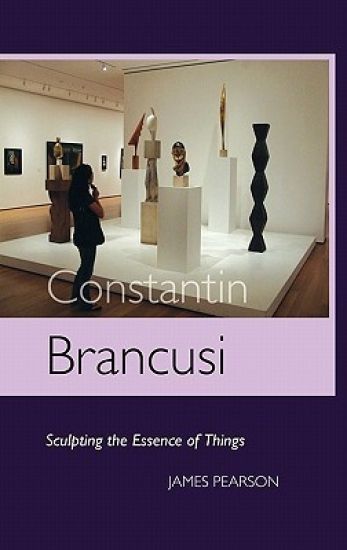
CONSTANTIN BRANCUSI Constantin Brancusi is one of the greatest of all sculptors, and a key sculptor of the modern era, with Auguste Rodin and Pablo Picasso. Brancusi's influence can be seen in a wide range of Western sculptors, including Donald Judd, Carl Andre, Henry Moore, Jean Arp, Barbara Hepworth, Minimalists and land artists. This new book studies the religious and mythical dimensions of Constantin Brancusi's distinctive scultpural forms, the 'eggs', 'fishes', 'heads' and 'columns'. His central quest was for the 'essence of things', which resulted in purifying a form until only the essence was left. It was Constantin Brancusi's project to strip away the detritus that had accumulated around sculpture, Henry Moore said, and to offer the pure, simple shape. What Brancusi did was 'to concentrate on very simple shapes, to keep his sculpture, as it were, one-cylindered, to refine and polish a single shape to a degree almost too precious.' As well as being a sculptor, Constantin Brancusi was also an accomplished photographer. Quite a few artists (not all of them sculptors) have expressed for Brancusi's photographs, and the way he would set up his sculptures in his studio and photograph them at particular times of the day, when the lighting was just right. They are early examples of installation art (and some of the best, too). Andy Goldsworthy said he admired how Brancusi created the right conditions in his studio so that his work 'comes alive at a particular time of the day as the light momentarily touches it'. For Goldsworthy, Brancusi's works were at their best when they were arranged by the sculptor in his studio and photographed. Somehow, it wasn't quite the same when they were displayed in modern art museums (such as the Pompidou Centre in Paris or the Museum of Modern Art in Gotham, which have important Brancusi pieces). Fully illustrated, including many photos of Brancusi's studio in Paris, and the art of his contemporaries.
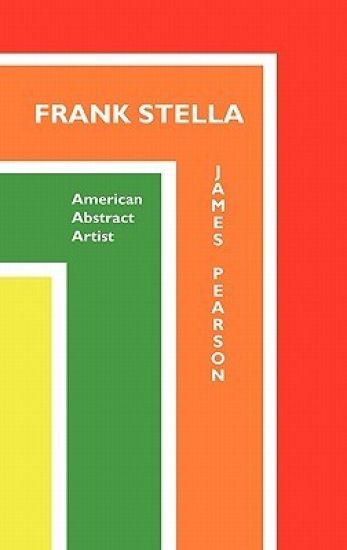
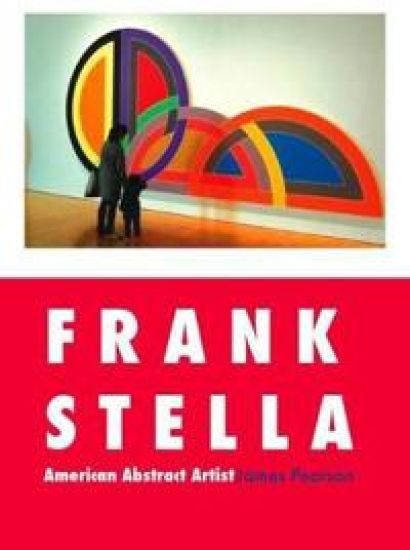
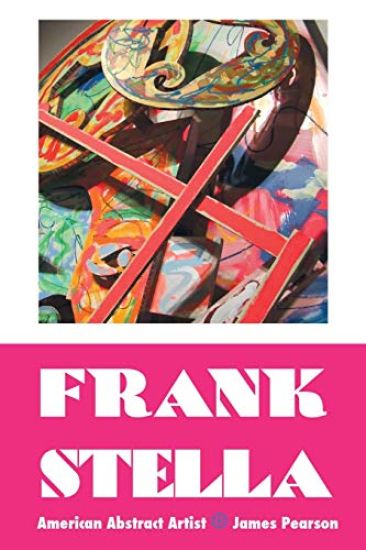
FRANK STELLA A study of the American abstract artist Frank Stella (b. 1936), surveying his career from the famous Black Paintings of the late 1950s up to the present. Frank Stella has become become among America's premier contemporary artists. Unlike many 20th century artists, Stella has always worked in abstraction. His art is irrepressible, daring, hugely enjoyable, and refreshingly angst-free. This book begins with the celebrated Black Paintings of 1959, moves on through the Minimalist Copper and Aluminium paintings of the early Sixties, to the exuberant Protractor series, the expansion into three dimensions in the 1970s, and closing with the 3-dimensional Polish Village, Exotic Birds and Brazilian 'maximalist' works of the 1980s and 1990s. Employing the most up-to-date art criticism of Frank Stella, James Pearson also looks at Stella's contemporaries: Jasper Johns, Robert Rauschenberg, Kenneth Noland, Jules Olitski, Morris Louis, Robert Ryman, Brice Marden, Mark Rothko and Barnett Newman among others. Includes new illustrations. EXTRACT FROM CHAPTER 5 There does not seem to be much going on in some of Frank Stella's 1960s Minimal paintings. But there is, in fact, a lot going on. Stella limits himself to a narrow set of rules. Like Brice Marden, Barnett Newman, Morris Louis and Mark Rothko, Stella sets himself to explore a few configurations of painting. But these things - the shape of the canvas, internal organization of the stripes, colour of the bands - offer up endless permutations. Frank Stella's paintings are lean, but leanness does not necessarily mean unfeelingness. This is the problem that monochrome painting creates, and Minimal art in general. Certainly Stella is intense: his Black Stripe Paintings, his Protractor series, his copper paintings, his India Birds, are intense works of art. The Stella exhibitions of the late 1980s and early 1990s were affairs, in which one was impressed by a sense of colour and light, a spaciousness to the works, and a huge scale, so that each work dominated the gallery rooms. Stella is in no way a quiet, unobtrusive artist: his paintings are domineering, self-confident, assured of their own effects. Stella has always been an artist who knows what he's doing. His paintings do not lurk in gallery corners, shyly. His paintings announce themselves instantly and powerfully. Stella's June-July 1985 show at the ICA in London was typical: massive multi-media works were squeezed into the ubiquitous sparse white rooms, completely taking over the sedate spaces.
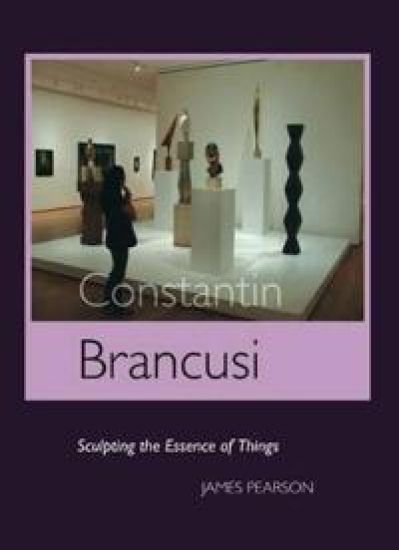
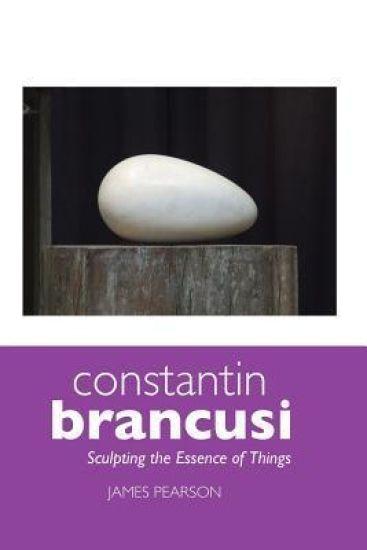
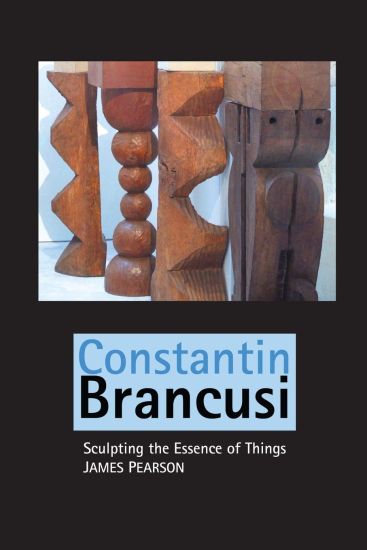
CONSTANTIN BRANCUSI By James Pearson Constantin Brancusi is one of the greatest of all sculptors, and a key sculptor of the modern era, along with Auguste Rodin and Pablo Picasso. Brancusi's influence can be seen in a wide range of Western sculptors, including Donald Judd, Carl Andre, Henry Moore, Jean Arp, Barbara Hepworth, Minimalists and land artists. This new book studies the religious and mythical dimensions of Constantin Brancusi's distinctive sculptural forms, the 'eggs', 'fishes', 'heads' and 'columns'. His central quest was for the 'essence of things', which resulted in purifying a form until only the essence was left. It was Constantin Brancusi's project to strip away the detritus that had accumulated around sculpture, Henry Moore said, and to offer the pure, simple shape. What Brancusi did was 'to concentrate on very simple shapes, to keep his sculpture, as it were, one-cylindered, to refine and polish a single shape to a degree almost too precious.' As well as being a sculptor, Constantin Brancusi was also an accomplished photographer. Quite a few artists (not all of them sculptors) have expressed for Brancusi's photographs, and the way he would set up his sculptures in his studio and photograph them at particular times of the day, when the lighting was just right. They are early examples of installation art (and some of the best, too). Andy Goldsworthy said he admired how Brancusi created the right conditions in his studio so that his work 'comes alive at a particular time of the day as the light momentarily touches it'. For Goldsworthy, Brancusi's works were at their best when they were arranged by the sculptor in his studio and photographed. Somehow, it wasn't quite the same when they were displayed in modern art museums (such as the Pompidou Centre in Paris or the Museum of Modern Art in Gotham, which have important Brancusi pieces). Fully illustrated, including many photos of Constantin Brancusi's studio in Paris, Brancusi's works in museums in New York, Washington and L.A., forerunners and influences, prehistoric art, and the art of his contemporaries. REVISED AND UPDATED, WITH NEW ILLUSTRATIONS With bibliography and notes. ISBN 9781861717412. 180 pages. This new (4th) edition has been revised. www.crmoon.com
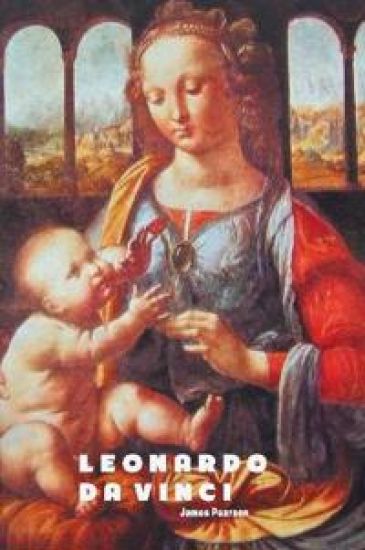
LEONARDO DA VINCI By James Pearson Leonardo da Vinci's art is the apotheosis of Renaissance - and Western - art. He depicted angels, Madonnas and saints in ever-mysterious images. His sfumato paintings remain some of the most hypnotic in all of art. The sheer intensity of Leonardo's curiosity and his spectacular inventiveness in the fields of science, botany, geology, anatomy, medicine and warfare make him more than worthy of the name 'universal genius'. The most erotic artist of the Renaissance, the one who created the darkest and the strangest images, who created the most hypnotic smiles in art, who took Western painting to the highest point it has reached, was not Michelangelo Buonarroti, Andrea del Sarto, Fra Angelico, Sandro Botticelli, Piero della Francesca, Andrea Mantegna, Raphael, Titian or Masaccio, but Leonardo da Vinci. He is the creator of the Mona Lisa, and ' t]he Mona Lisa is without doubt the most famous work in the entire forty-thousand year history of the visual arts', writes Roy McMullen. Leonardo da Vinci is one of the most celebrated of artists. He is the artist-as-hero, the artist-as-genius - undisputed genius (like Shakespeare or Sophocles). Leonardo is exalted for his amazing mind, his scientific curiosity, his ideas on botany, anatomy, architecture, weaponry, engineering, etc. He wrote copiously, on art and painting, and philosophy; subjects studied in his notebooks include geology, optics, acoustics, music, mathematics, anatomy, hydraulics, ballistics, weight, movement, naval armaments, flight and so on. He 'invented', or rediscovered, the bicycle, an early form of military tank, the helicopter; he understood the principle of gravity before Newton, and explained why stars twinkled before Kepler; he prefigured Bacon, Galileo, Huygens, Cuvier and Halley, among others. Nothing is neglected in Leonardo's 'scientific' curiosity about the world. Artists have long studied all manner of things, despising the relatively recent notion of 'specialization'. The text has been revised for this edition. With a full colour cover. Illustrated, including new illustrations. Painters Series. Bibliography and notes. www.crmoon.com

FRANK STELLA AMERICAN ABSTRACT ARTIST By James Pearson A study of the American abstract artist Frank Stella (b. 1936), surveying his career from the famous Black Paintings of the late 1950s up to the present day. Frank Stella has become become among America's premier contemporary artists. Unlike many modern artists, Stella has always worked in abstraction. His art is irrepressible, daring, hugely enjoyable, and refreshingly angst-free. This book begins with the celebrated Black Paintings of 1959, moves on through the Minimalist Copper and Aluminium paintings of the early Sixties, to the exuberant Protractor series, the expansion into three dimensions in the 1970s, and closing with the 3-dimensional Polish Village, Exotic Birds and Brazilian 'maximalist' works of the 1980s and 1990s. Employing the most up-to-date art criticism of Frank Stella, James Pearson also looks at Stella's contemporaries: Jasper Johns, Robert Rauschenberg, Kenneth Noland, Jules Olitski, Morris Louis, Robert Ryman, Brice Marden, Mark Rothko and Barnett Newman among others. Includes new illustrations, and quotes from the artist. EXTRACT FROM CHAPTER 5 There does not seem to be much going on in some of Frank Stella's 1960s Minimal paintings. But there is, in fact, a lot going on. Stella limits himself to a narrow set of rules. Like Brice Marden, Barnett Newman, Morris Louis and Mark Rothko, Stella sets himself to explore a few configurations of painting. But these things - the shape of the canvas, internal organization of the stripes, colour of the bands - offer up endless permutations. Frank Stella's paintings are lean, but leanness does not necessarily mean unfeelingness. This is the problem that monochrome painting creates, and Minimal art in general. Certainly Stella is intense: his Black Stripe Paintings, his Protractor series, his copper paintings, his India Birds, are intense works of art. The Stella exhibitions of the late 1980s and early 1990s were affairs, in which one was impressed by a sense of colour and light, a spaciousness to the works, and a huge scale, so that each work dominated the gallery rooms. Stella is in no way a quiet, unobtrusive artist: his paintings are domineering, self-confident, assured of their own effects. Stella has always been an artist who knows what he's doing. His paintings do not lurk in gallery corners, shyly. His paintings announce themselves instantly and powerfully. Stella's June-July 1985 show at the ICA in London was typical: massive multi-media works were squeezed into the ubiquitous sparse white rooms, completely taking over the sedate spaces. REVISED AND UPDATED, WITH NEW ILLUSTRATIONS. Fully illustrated, with a revised text. Bibliography and notes. ISBN 9781861717511. Also available in hardback. www.crmoon.com
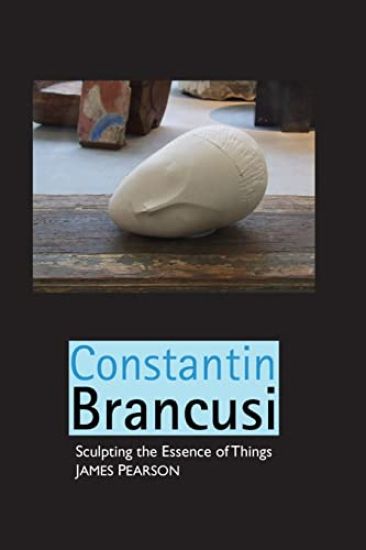
CONSTANTIN BRANCUSISCULPTING THE ESSENCE OF THINGSBy James PearsonLarge Print EditionConstantin Brancusi is one of the greatest of all sculptors, and a key sculptor of the modern era, along with Auguste Rodin and Pablo Picasso. Brancusi's influence can be seen in a wide range of Western sculptors, including Donald Judd, Carl Andre, Henry Moore, Jean Arp, Barbara Hepworth, Minimalists and land artists. This new book studies the religious and mythical dimensions of Constantin Brancusi's distinctive scultpural forms, the 'eggs', 'fishes', 'heads' and 'columns'. His central quest was for the 'essence of things', which resulted in purifying a form until only the essence was left. It was Constantin Brancusi's project to strip away the detritus that had accumulated around sculpture, Henry Moore said, and to offer the pure, simple shape. What Brancusi did was 'to concentrate on very simple shapes, to keep his sculpture, as it were, one-cylindered, to refine and polish a single shape to a degree almost too precious.' As well as being a sculptor, Constantin Brancusi was also an accomplished photographer. Quite a few artists (not all of them sculptors) have expressed for Brancusi's photographs, and the way he would set up his sculptures in his studio and photograph them at particular times of the day, when the lighting was just right. They are early examples of installation art (and some of the best, too). Andy Goldsworthy said he admired how Brancusi created the right conditions in his studio so that his work 'comes alive at a particular time of the day as the light momentarily touches it'. For Goldsworthy, Brancusi's works were at their best when they were arranged by the sculptor in his studio and photographed. Somehow, it wasn't quite the same when they were displayed in modern art museums (such as the Pompidou Centre in Paris or the Museum of Modern Art in Gotham, which have important Brancusi pieces). Fully illustrated, including many photos of Constantin Brancusi's studio in Paris, Brancusi's works in museums in New York, Washington and L.A., forerunners and influences, prehistoric art, and the art of his contemporaries. With bibliography and notes. 248 pages. With a full colour cover. This new (5th) edition has been revised. Large Print Edition - in 18-point type. www.crmoon.com

FRANK STELLA: AMERICAN ABSTRACT ARTISTBy James PearsonLarge Print Edition A study of the American abstract artist Frank Stella (b. 1936), surveying his career from the famous Black Paintings of the late 1950s up to the present day. Frank Stella has become become among America's premier contemporary artists. Unlike many modern artists, Stella has always worked in abstraction. His art is irrepressible, daring, hugely enjoyable, and refreshingly angst-free. This book begins with the celebrated Black Paintings of 1959, moves on through the Minimalist Copper and Aluminium paintings of the early Sixties, to the exuberant Protractor series, the expansion into three dimensions in the 1970s, and closing with the 3-dimensional Polish Village, Exotic Birds and Brazilian 'maximalist' works of the 1980s and 1990s. Employing the most up-to-date art criticism of Frank Stella, James Pearson also looks at Stella's contemporaries: Jasper Johns, Robert Rauschenberg, Kenneth Noland, Jules Olitski, Morris Louis, Robert Ryman, Brice Marden, Mark Rothko and Barnett Newman among others. Includes new illustrations, and quotes from the artist. EXTRACT FROM CHAPTER 5There does not seem to be much going on in some of Frank Stella's 1960s Minimal paintings. But there is, in fact, a lot going on. Stella limits himself to a narrow set of rules. Like Brice Marden, Barnett Newman, Morris Louis and Mark Rothko, Stella sets himself to explore a few configurations of painting. But these things - the shape of the canvas, internal organization of the stripes, colour of the bands - offer up endless permutations.Frank Stella's paintings are lean, but leanness does not necessarily mean unfeelingness. This is the problem that monochrome painting creates, and Minimal art in general. Certainly Stella is intense: his Black Stripe Paintings, his Protractor series, his copper paintings, his India Birds, are intense works of art. The Frank Stella exhibitions of the late 1980s and early 1990s were affairs, in which one was impressed by a sense of colour and light, a spaciousness to the works, and a huge scale, so that each work dominated the gallery rooms. Stella is in no way a quiet, unobtrusive artist: his paintings are domineering, self-confident, assured of their own effects. Stella has always been an artist who knows what he's doing. His paintings do not lurk in gallery corners, shyly. His paintings announce themselves instantly and powerfully. Stella's June-July 1985 show at the ICA in London was typical: massive multi-media works were squeezed into the ubiquitous sparse white rooms, completely taking over the sedate spaces. Fully illustrated, with a revised text. Bibliography and notes. www.crmoon.com