Kirjojen hintavertailu. Mukana 11 244 527 kirjaa ja 12 kauppaa.

Kirjahaku

Etsi kirjoja tekijän nimen, kirjan nimen tai ISBN:n perusteella.

6 kirjaa tekijältä James Perrin Warren

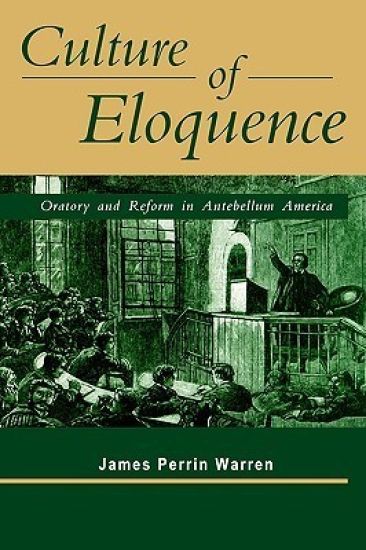
Culture of Eloquence

Culture of Eloquence

James Perrin Warren

Pennsylvania State University Press
1999
pokkari
Americans of the early Republic valued the art of eloquence, upholding the ideal that an impassioned, intelligent, and moral speaker will provide essential truths to a democratic audience. Drawing on nonfiction prose of the 1830s–1850s—especially orations, lectures, and addresses—James Perrin Warren sketches a cultural history of the reforming power of language.Antebellum America truly defined itself as a culture of eloquence. This disposition could be seen in the creation of new cultural spaces, such as the lyceum and popular lecture system, for speakers who were then measured against the ideals of eloquence held by their listeners. Defining eloquence as "powerful, moving speech," Warren engages a host of writers/orators to develop his argument, beginning with Ralph Waldo Emerson's philosophy of language in the 1830s and expanding his discussion to include the theories and practices of Henry David Thoreau, Margaret Fuller, Elizabeth Peabody, Frederick Douglass, William Gilmore Simms, and Walt Whitman. From this list he outlines practices that crossed the boundaries of gender, race, and class, ultimately showing that diverse sectors of society valued the word as a means toward reform.Powerful words move people to action, and Warren clearly delineates the authority accorded oratory in antebellum America. This book will appeal to a wide audience, including those interested in antebellum American culture, American literature and cultural history, literary criticism, and rhetoric.
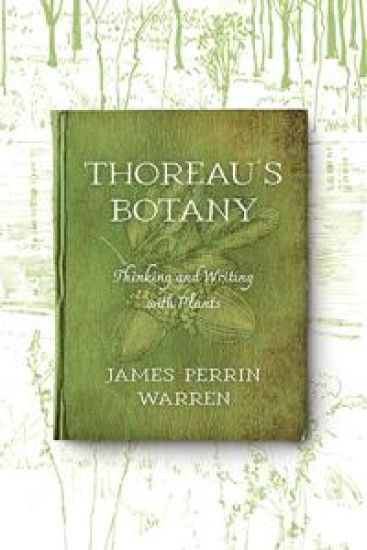
Thoreau’s Botany

Thoreau’s Botany

James Perrin Warren

UNIVERSITY OF VIRGINIA PRESS
2023
sidottu
Thoreau’s last years have been the subject of debate for decades, but only recently have scholars and critics begun to appreciate the posthumous publications, unfinished manuscripts, and Journal entries that occupied the writer after Walden (1854). Until now, no critical reader has delved deeply enough into botany to see how Thoreau’s plant studies impact his thinking and writing. Thoreau’s Botany moves beyond general literary appreciation for the botanical works to apply Thoreau’s extensive studies of botany--from 1850 to his death in 1862--to readings of his published and unpublished works in fresh, interdisciplinary ways. Bringing together critical plant studies, ecocriticism, and environmental humanities, James Perrin Warren argues that Thoreau’s botanical excursions establish a meeting ground of science and the humanities that is only now ready to be recognized by readers of American literature and environmental literature.
Thoreau's Botany

Thoreau's Botany

James Perrin Warren

UNIVERSITY OF VIRGINIA PRESS
2023
pokkari
Thoreau’s last years have been the subject of debate for decades, but only recently have scholars and critics begun to appreciate the posthumous publications, unfinished manuscripts, and Journal entries that occupied the writer after Walden (1854). Until now, no critical reader has delved deeply enough into botany to see how Thoreau’s plant studies impact his thinking and writing. Thoreau’s Botany moves beyond general literary appreciation for the botanical works to apply Thoreau’s extensive studies of botany--from 1850 to his death in 1862--to readings of his published and unpublished works in fresh, interdisciplinary ways. Bringing together critical plant studies, ecocriticism, and environmental humanities, James Perrin Warren argues that Thoreau’s botanical excursions establish a meeting ground of science and the humanities that is only now ready to be recognized by readers of American literature and environmental literature.
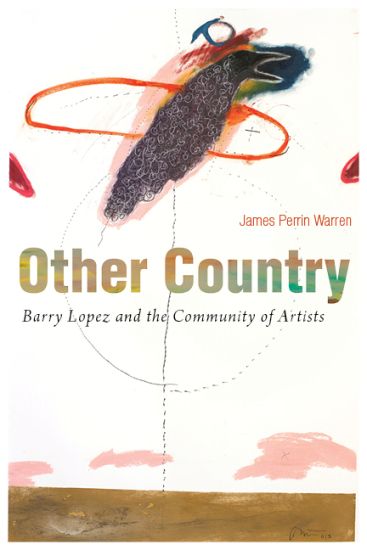
Other Country

Other Country

James Perrin Warren

University of Arizona Press
2015
sidottu
The award-winning American environmental writer Barry Lopez has traveled extensively in remote and populated parts of the world. Lopez's fiction and nonfiction focus on the relationship between the physical landscape and human culture, posing abiding questions about ethics, intimacy, and place.Other Country presents a full-scale treatment of Lopez's work. James Perrin Warren examines the relationship between Lopez's writing and the work of several contemporary artists, composers, and musicians, whose works range from landscape photography, painting, and graphic arts to earth art, ceramics, and avant-garde music. The author demonstrates Lopez's role in creating this community of artists who have led cultural change, and shows that Lopez's writing—and his engagement with the natural world—creates an ""other country"" by redefining boundaries, rediscovering a place, and renewing our perceptions of landscapes. Warren's critique examines manuscripts and typescripts from the 1960s to the present, interviews with Lopez conducted from 2008 to 2013, and interviews with artists. Part 1 focuses on the relationship between Lopez's storytelling, which he calls ""a conversation with the land,"" and Robert Adams's landscape photography. For both Lopez and Adams, a worthy artistic expression serves the cultural memory of a community, reminding us how to behave properly toward other people and the land. Part 2 looks at the collaborative friendship of Lopez and visual artist Alan Magee, tracking the development of Lopez's short stories through a consideration of Magee's career. Part 3 moves farther afield, discussing Lopez's relationship to Richard Long's earth art, Richard Rowland's ceramics, and John Luther Adams's soundscapes.Other Country reveals the dynamic relationships between Lopez, considered by many the most important environmental writer working in America, and the artistic community, who seek to explore the spiritual and ethical dimensions of an honorable and attentive relationship to the land and thus offer profound implications for the future of the planet.
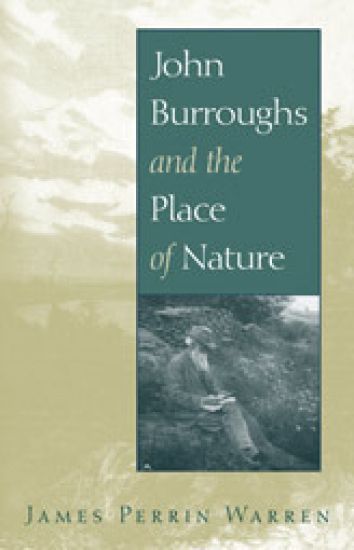
John Burroughs and the Place of Nature

John Burroughs and the Place of Nature

James Perrin Warren

University of Georgia Press
2006
sidottu
This study situates John Burroughs, together with John Muir and Theodore Roosevelt, as one of a trinity of thinkers who, between the Civil War and World War I, defined and secured a place for nature in mainstream American culture. Though not as well known today, Burroughs was the most popular American nature writer of his time. Prolific and consistent, he published scores of essays in influential large-circulation magazines and was often compared to Thoreau. Unlike Thoreau, however, whose reputation grew posthumously, Burroughs wasa celebrity during his lifetime: he wrote more than thirty books, enjoyed a continual high level of visibility, and saw his work taught widely in public schools.James Perrin Warren shows how Burroughs helped guide urban and suburban middle-class readers “back to nature” during a time of intense industrialization and urbanization. Warren discusses Burroughs’s connections not only to Muir and Roosevelt but also to his forebears Emerson, Thoreau, and Whitman. By tracing the complex philosophical, creative, and temperamental lineage of these six giants, Warren shows how, in their friendships and rivalries, Burroughs, Muir, and Roosevelt made the high literary romanticism of Emerson, Thoreau, and Whitman relevant to late-nineteenth- and early-twentieth-century Americans. At the same time, Warren offers insights into the rise of the nature essay as a genre, the role of popular magazines as shapers and conveyors of public values, and the dynamism of place in terms of such opposed concepts as retreat and engagement, nature and culture, and wilderness and civilization.Because Warren draws on Burroughs’s personal, critical, and philosophical writings as well as his better-known narrative essays, readers will come away with a more informed sense of Burroughs as a literary naturalist and a major early practitioner of ecocriticism. John Burroughs and the Place of Nature helps extend the map of America’s cultural landscape during the period 1870-1920 by recovering an unfairly neglected practitioner of one of his era’s most effective forces for change: nature writing.
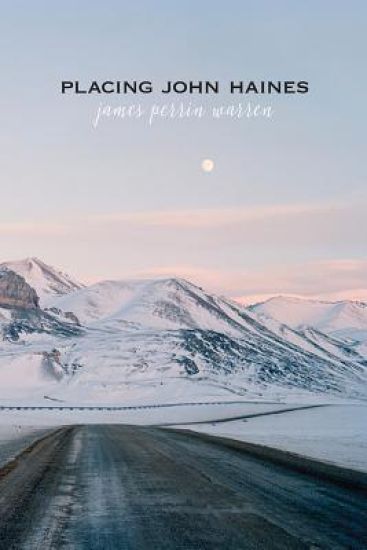
Placing John Haines

Placing John Haines

James Perrin Warren

University of Alaska Press
2017
pokkari
John Haines arrived in Alaska, fresh out of the Navy, in 1947, and established a homestead seventy miles southeast of Fairbanks. He stayed there nearly twenty-five years, learning to live off the country: hunting, trapping, fishing, gathering berries, and growing vegetables. Those years formed him as a writer the interior of Alaska, and especially its boreal forest marking his poetry and prose and helping him find his unique voice. Placing John Haines, the first book-length study of his work, tells the story of those years, but also of his later, itinerant life, as his success as a writer led him to hold fellowships and teach at universities across the country. James Perrin Warren draws out the contradictions inherent in that biography that this poet so indelibly associated with place, and authentic belonging, spent decades in motion and also sets Haines's work in the context of contemporaries like Robert Bly, Donald Hall, and his close friend Wendell Berry. The resulting portrait shows us a poet who was regularly reinventing himself, and thereby generating creative tension that fueled his unforgettable work.A major study of a sadly neglected master, Placing John Haines puts his achievement in compelling context.