Kirjojen hintavertailu. Mukana 11 342 296 kirjaa ja 12 kauppaa.

Kirjahaku

Etsi kirjoja tekijän nimen, kirjan nimen tai ISBN:n perusteella.

5 kirjaa tekijältä James R. Barrett

The Irish Way

The Irish Way

James R. Barrett

Penguin Books Ltd
2013
pokkari
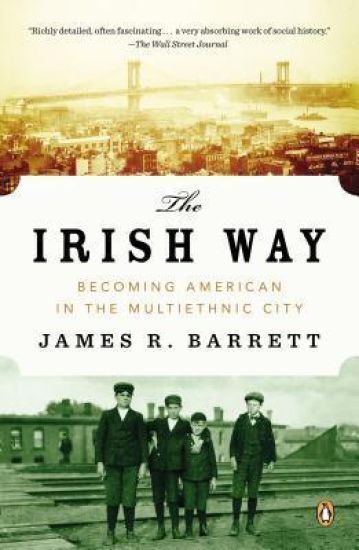
In the newest volume in the award-winning Penguin History of American Life series, James R. Barrett chronicles how a new urban American identity was forged in the streets, saloons, churches, and workplaces of the American city. This process of "Americanization from the bottom up" was deeply shaped, Barrett argues, by the Irish. From Lower Manhattan to the South Side of Chicago to Boston's North End, newer waves of immigrants and African Americans found it nearly impossible to avoid the Irish. While historians have emphasized the role of settlement houses and other mainstream institutions in Americanizing immigrants, Barrett makes the original case that the culture absorbed by newcomers upon reaching American shores had a distinctly Hibernian cast. By 1900, there were more people of Irish descent in New York City than in Dublin; more in the United States than in all of Ireland. But in the late nineteenth century, the sources of immigration began to shift, to southern and eastern Europe and beyond. Whether these newcomers wanted to save their souls, get a drink, find a job, or just take a stroll in the neighborhood, they had to deal with Irish Americans.Barrett reveals how the Irish vacillated between a progressive and idealistic impulse toward their fellow immigrants and a parochial defensiveness stemming from the hostility earlier generations had faced upon their own arrival in America. They imparted racist attitudes toward African Americans; they established ethnic "deadlines" across city neighborhoods; they drove other immigrants from docks, factories, and labor unions. Yet the social teachings of the Catholic Church, a sense of solidarity with the oppressed, and dark memories of poverty and violence in both Ireland and America ushered in a wave of progressive political activism that eventually embraced other immigrants. Drawing on contemporary sociological studies and diaries, newspaper accounts, and Irish American literature, The Irish Way illustrates how the interactions between the Irish and later immigrants on the streets, on the vaudeville stage, in Catholic churches, and in workplaces helped forge a multi-ethnic American identity that has a profound legacy in the USA today.
Work and Community in the Jungle

Work and Community in the Jungle

James R. Barrett

University of Illinois Press
2002
nidottu
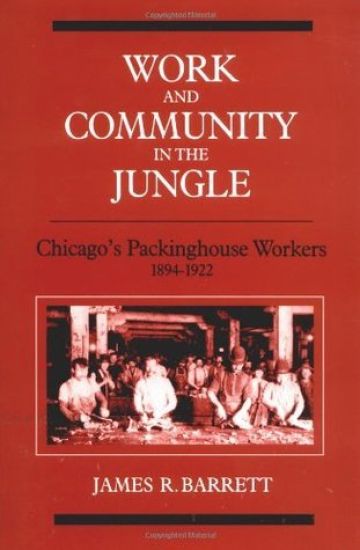
Mythologized by Upton Sinclair as hopeless, Chicago's packinghouse workers were in fact active agents in the early twentieth century transformation that swept urban industrial America. James R. Barrett's award-winning study explores how the lives and neighborhoods of packinghouse workers convey the experience of mass production work, the quality of working class life, the process of class formation and fragmentation, the effects of unionization, and the changing character of class relations. Merging history and analysis with contemporary social surveys and a computer-assisted analysis of census data, Barrett delves into a wide range of social, economic, and cultural factors that resulted in class cohesion and fragmentation.
William Z. Foster and the Tragedy of American Radicalism

William Z. Foster and the Tragedy of American Radicalism

James R. Barrett

University of Illinois Press
2001
nidottu
In this trenchant work, James Barrett traces the political journey of a leading worker radical whose life and experiences encapsulate radicalism's rise and fall in the United States. A self-educated wage earner raised in the slums of a large industrial city, William Z. Foster became a brilliant union organizer who helped build the American Federation of Labor and, later, radical Trade Union Educational League. Embracing socialism, syndicalism, and communism in turn, Foster rose through the ranks of the American Communist Party to stand at the forefront of labor politics throughout the 1920s. Yet by the time he died in 1961, in a Moscow hospital far from the meat-packing plants and steel mills where he had built his reputation, Foster's political marginalism stood as a symbol for the isolation of American labor radicalism in the postwar era. Integrating both the indigenous and the international factors that determined the fate of American communism, William Z. Foster and the Tragedy of American Radicalism provides a new understanding of the basis for radicalism among twentieth-century American workers.
History from the Bottom Up and the Inside Out

History from the Bottom Up and the Inside Out

James R. Barrett

Duke University Press
2017
sidottu
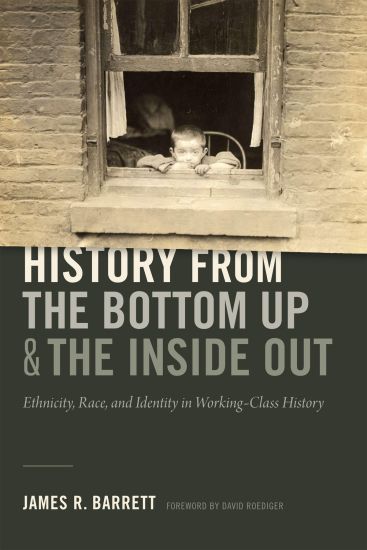
In History from the Bottom Up and the Inside Out James R. Barrett rethinks the boundaries of American social and labor history by investigating the ways in which working-class, radical, and immigrant people's personal lives intersected with their activism and religious, racial, ethnic, and class identities. Concerned with carving out space for individuals in the story of the working class, Barrett examines all aspects of individuals' subjective experiences, from their personalities, relationships, and emotions to their health and intellectual pursuits. Barrett's subjects include American communists, "blue-collar cosmopolitans"-such as well-read and well-traveled porters, sailors, and hoboes-and figures in early twentieth-century anarchist subculture. He also details the process of the Americanization of immigrant workers via popular culture and their development of class and racial identities, asking how immigrants learned to think of themselves as white. Throughout, Barrett enriches our understanding of working people’s lives, making it harder to objectify them as nameless cogs operating within social and political movements. In so doing, he works to redefine conceptions of work, migration, and radical politics.
History from the Bottom Up and the Inside Out

History from the Bottom Up and the Inside Out

James R. Barrett

Duke University Press
2017
pokkari
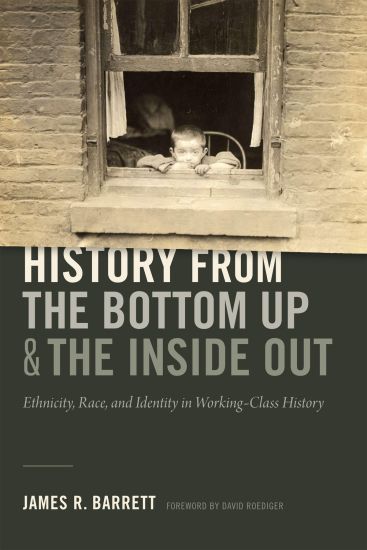
In History from the Bottom Up and the Inside Out James R. Barrett rethinks the boundaries of American social and labor history by investigating the ways in which working-class, radical, and immigrant people's personal lives intersected with their activism and religious, racial, ethnic, and class identities. Concerned with carving out space for individuals in the story of the working class, Barrett examines all aspects of individuals' subjective experiences, from their personalities, relationships, and emotions to their health and intellectual pursuits. Barrett's subjects include American communists, "blue-collar cosmopolitans"-such as well-read and well-traveled porters, sailors, and hoboes-and figures in early twentieth-century anarchist subculture. He also details the process of the Americanization of immigrant workers via popular culture and their development of class and racial identities, asking how immigrants learned to think of themselves as white. Throughout, Barrett enriches our understanding of working people’s lives, making it harder to objectify them as nameless cogs operating within social and political movements. In so doing, he works to redefine conceptions of work, migration, and radical politics.