Kirjojen hintavertailu. Mukana 11 699 587 kirjaa ja 12 kauppaa.

Kirjahaku

Etsi kirjoja tekijän nimen, kirjan nimen tai ISBN:n perusteella.

13 kirjaa tekijältä James R. Flynn

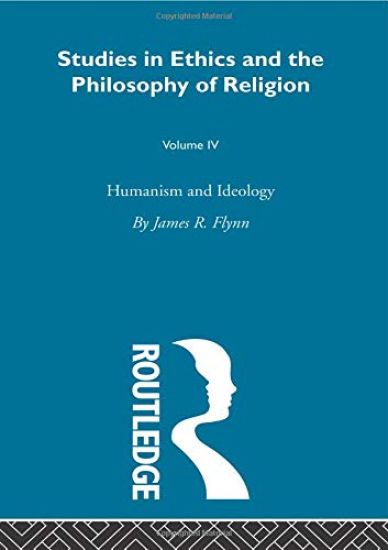
Humanism & Ideology Vol 4

Humanism & Ideology Vol 4

James R. Flynn

Routledge
2003
sidottu
This is Volume IV of a series of seven of Studies in Ethics and the Philosophy of Religion. Originally published in 1973. To deal with the problem of ethical scepticism, to show why it is of particular interest to political activists and students of politics, these are the principal aims of this book.
Humanism & Ideology Vol 4

Humanism & Ideology Vol 4

James R. Flynn

Routledge
2010
nidottu
This is Volume IV of a series of seven of Studies in Ethics and the Philosophy of Religion. Originally published in 1973. To deal with the problem of ethical scepticism, to show why it is of particular interest to political activists and students of politics, these are the principal aims of this book.
Where Have All the Liberals Gone?

Where Have All the Liberals Gone?

James R. Flynn

Cambridge University Press
2008
sidottu
Professor James R. Flynn is renowned for his belief that the IQ gap between black and white Americans is not genetic, but environmental in origin. Flynn's controversial new book offers an alternative to the vision of American society popularized by Herrnstein and Murray in The Bell Curve and is a must-read for all those wanting to keep up to date with the IQ debate. It traces the history of American idealism from Jefferson to the followers of Leo Strauss; analyses the black marriage market, the case for affirmative action, the folly of Iraq, and the liberal failure of will; and concludes with a powerful defence of humane ideals and human autonomy. With its clear and attractive prose, social scientists, philosophers and the general public will find this a unique and exciting book that will rearm American idealism with new ideas.
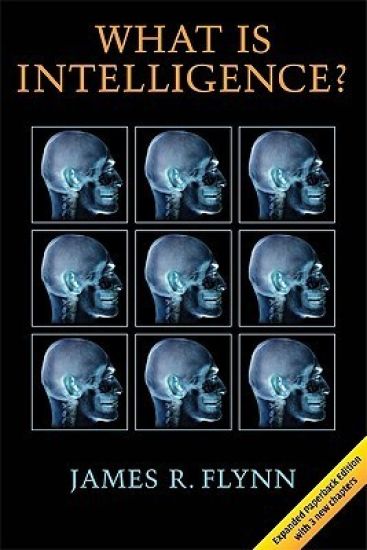
What Is Intelligence?

What Is Intelligence?

James R. Flynn

Cambridge University Press
2009
pokkari
The 'Flynn effect' refers to the massive increase in IQ test scores over the course of the twentieth century. Does it mean that each generation is more intelligent than the last? Does it suggest how each of us can enhance our own intelligence? Professor Flynn is finally ready to give his own views. He asks what intelligence really is and gives a surprising and illuminating answer. This expanded paperback edition includes three important new essays. The first contrasts the art of writing cognitive history with the science of measuring intelligence and reports data. The second outlines how we might get a complete theory of intelligence, and the third details Flynn's reservations about Gardner's theory of multiple intelligences. A fascinating book that bridges the gulf separating our minds from those of our ancestors a century ago, and makes an important contribution to our understanding of human intelligence.
How to Defend Humane Ideals

How to Defend Humane Ideals

James R. Flynn

University of Nebraska Press
2008
pokkari
One of the principal moral and psychological problems of our time is whether humane ideals can be defended. Loss of faith in the objectivity of ethics has encouraged a sense of hopelessness. The notion that no ideal is better than any other, that a humane commitment has no rational advantage over Nietzsche's contempt for ordinary people, has been accused of leaving our civilization without self-confidence or a purpose. James R. Flynn rejects attempts to salvage ethical objectivity as futile and counterproductive. Instead, he uses philosophical analysis to demonstrate the relevance of logic and evidence to moral debate. He then uses modern social science to refute racists, Social Darwinists, Nietzsche, and the meritocracy thesis of The Bell Curve. Flynn concludes that the great post-Enlightenment project—justice for all races and classes, the reduction of inequality, and the abolition of privilege—retains its moral dignity and relevance.
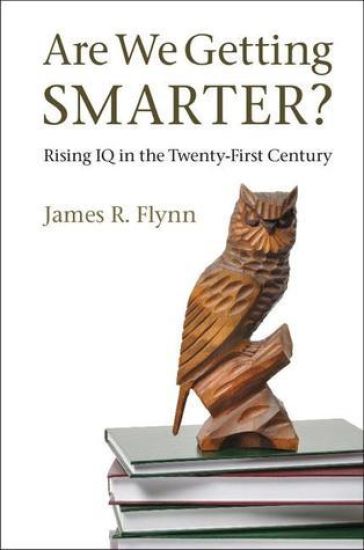
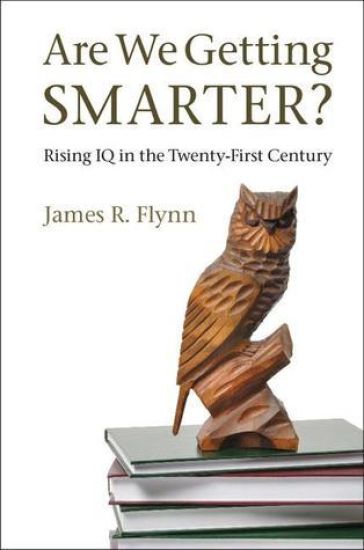
Are We Getting Smarter?

Are We Getting Smarter?

James R. Flynn

Cambridge University Press
2012
sidottu
The 'Flynn effect' is a surprising finding, identified by James R. Flynn, that IQ test scores have significantly increased from one generation to the next over the past century. Flynn now brings us an exciting new book which aims to make sense of this rise in IQ scores and considers what this tells us about our intelligence, our minds and society. Are We Getting Smarter? features fascinating new material on a variety of topics including the effects of intelligence in the developing world; the impact of rising IQ scores on the death penalty, cognitive ability in old age and the language abilities of youth culture; as well as controversial topics of race and gender. He ends with the message that assessing IQ goes astray if society is ignored. As IQ scores continue to rise into the twenty-first century, particularly in the developing world, the 'Flynn effect' marches on.
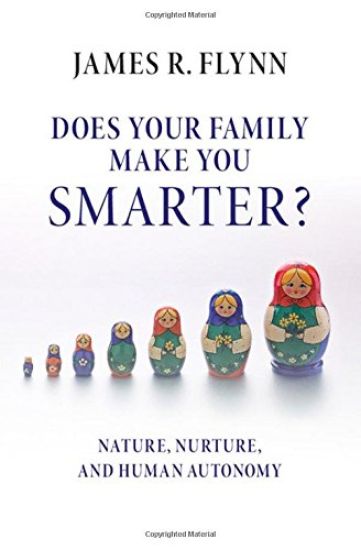
Does your Family Make You Smarter?

Does your Family Make You Smarter?

James R. Flynn

Cambridge University Press
2016
sidottu
Does your family make you smarter? James R. Flynn presents an exciting new method for estimating the effects of family on a range of cognitive abilities. Rather than using twin and adoption studies, he analyses IQ tables that have been hidden in manuals over the last 65 years, and shows that family environment can confer a significant advantage or disadvantage to your level of intelligence. Wading into the nature vs. nurture debate, Flynn banishes the pessimistic notion that by the age of seventeen, people's cognitive abilities are solely determined by their genes. He argues that intelligence is also influenced by human autonomy - genetics and family notwithstanding, we all have the capacity to choose to enhance our cognitive performance. He concludes by reconciling this new understanding of individual differences with his earlier research on intergenerational trends (the 'Flynn effect') culminating in a general theory of intelligence.
Are We Getting Smarter?

Are We Getting Smarter?

James R. Flynn

Cambridge University Press
2012
pokkari
The 'Flynn effect' is a surprising finding, identified by James R. Flynn, that IQ test scores have significantly increased from one generation to the next over the past century. Flynn now brings us an exciting new book which aims to make sense of this rise in IQ scores and considers what this tells us about our intelligence, our minds and society. Are We Getting Smarter? features fascinating new material on a variety of topics including the effects of intelligence in the developing world; the impact of rising IQ scores on the death penalty, cognitive ability in old age and the language abilities of youth culture; as well as controversial topics of race and gender. He ends with the message that assessing IQ goes astray if society is ignored. As IQ scores continue to rise into the twenty-first century, particularly in the developing world, the 'Flynn effect' marches on.
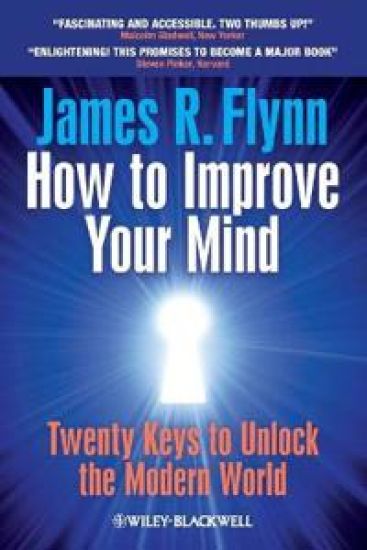
How To Improve Your Mind

How To Improve Your Mind

James R. Flynn

Wiley-Blackwell
2012
nidottu
Become the master of your world Presents 20 key concepts, or keys, to aid critical thinking Authored by one of the world's most eminent psychologists - and founder of the Flynn Effect Looks at topics such as Race and IQ, "good" science and the current world economic crisis Written in a clear and lucid style, illustrated with many examples
Does your Family Make You Smarter?

Does your Family Make You Smarter?

James R. Flynn

Cambridge University Press
2016
pokkari
Does your family make you smarter? James R. Flynn presents an exciting new method for estimating the effects of family on a range of cognitive abilities. Rather than using twin and adoption studies, he analyses IQ tables that have been hidden in manuals over the last 65 years, and shows that family environment can confer a significant advantage or disadvantage to your level of intelligence. Wading into the nature vs. nurture debate, Flynn banishes the pessimistic notion that by the age of seventeen, people's cognitive abilities are solely determined by their genes. He argues that intelligence is also influenced by human autonomy - genetics and family notwithstanding, we all have the capacity to choose to enhance our cognitive performance. He concludes by reconciling this new understanding of individual differences with his earlier research on intergenerational trends (the 'Flynn effect') culminating in a general theory of intelligence.
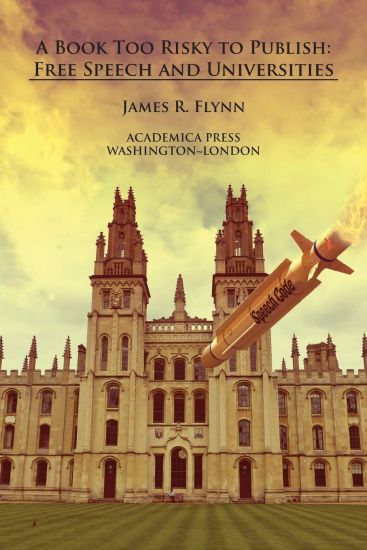
A Book Too Risky to Publish

A Book Too Risky to Publish

James R. Flynn

Academica Press
2020
sidottu
Traditionally, our society has broadly agreed that the “good university” should teach the intellectual skills students need to become citizens who are intelligently critical of their own beliefs and of the narratives presented politicians, society, the media, and, indeed, universities themselves. The freedom to debate is essential to the development of critical thought, but on university campuses today free speech is increasingly restricted for fear of causing “offense.” In this daring and intrepid book, which was originally withdrawn from publication by another publisher but is now proudly presented by Academica Press, the famous intelligence researcher James R. Flynn presents the underlying factors that have circumscribed the range of ideas now tolerated in our institutions of learning. Flynn studiously examines how universities effectively censor teaching, how social and political activism effectively censors its opponents, and how academics censor themselves and each other. A Book Too Risky To Publish concludes that few universities are now living up to their original mission to promote free inquiry and unfettered critical thought. In an age marred by fake news and ever increasing social and political polarization, this book makes an impassioned argument for a return to critical thought in our institutions of higher education.
A Book Too Risky to Publish

A Book Too Risky to Publish

James R. Flynn

Academica Press
2020
nidottu
Traditionally, our society has broadly agreed that the “good university” should teach the intellectual skills students need to become citizens who are intelligently critical of their own beliefs and of the narratives presented politicians, society, the media, and, indeed, universities themselves. The freedom to debate is essential to the development of critical thought, but on university campuses today free speech is increasingly restricted for fear of causing “offense.” In this daring and intrepid book, which was originally withdrawn from publication by another publisher but is now proudly presented by Academica Press, the famous intelligence researcher James R. Flynn presents the underlying factors that have circumscribed the range of ideas now tolerated in our institutions of learning. Flynn studiously examines how universities effectively censor teaching, how social and political activism effectively censors its opponents, and how academics censor themselves and each other. A Book Too Risky To Publish concludes that few universities are now living up to their original mission to promote free inquiry and unfettered critical thought. In an age marred by fake news and ever increasing social and political polarization, this book makes an impassioned argument for a return to critical thought in our institutions of higher education.
Beyond Patriotism

Beyond Patriotism

James R. Flynn

Imprint Academic
2012
pokkari
Beyond Patriotism argues that some millions of Americans have become "post-national" people who put the good of humanity ahead of patriotism or national honour. It discusses the decisions that disillusioned them from the Vietnamese War, to the attempt to put Pol Pot back into power, to the sanctions against Iraq. Rather than lamenting the heyday of patriotism, post-national people should congratulate themselves on attaining moral maturity. They should clarify their thinking about why nationalism is bankrupt, what Americans should do to pacify the world, what they owe to their native land, and what they owe to themselves.