Kirjojen hintavertailu. Mukana 12 473 817 kirjaa ja 12 kauppaa.

Kirjahaku

Etsi kirjoja tekijän nimen, kirjan nimen tai ISBN:n perusteella.

4 kirjaa tekijältä James R. Miller

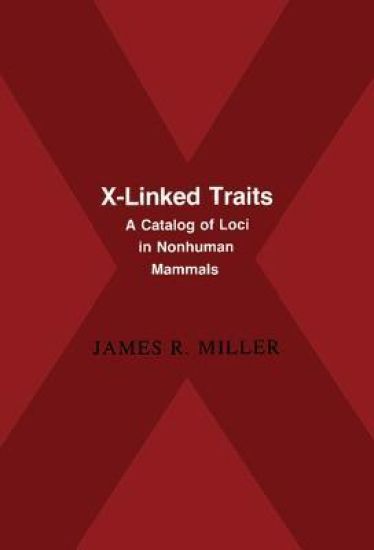
X-Linked Traits

X-Linked Traits

James R. Miller

Cambridge University Press
1990
sidottu
Until recently, comparative studies have not played a major role in mammalian genetics because there was little to compare. However, this situation has been changed by rapid developments in molecular biology which have revealed details of the genetic structures of a wide range of mammalian species. The resulting flood of information on comparative aspects of mammalian genomes has been scattered across a great many journals and books, and no single source has been available. X-Linked Traits: A Catalog of Loci in Non-Human Mammals presents just such a source for the mammalian X-chromosome. X-Linked Traits will serve as a useful guide for researchers in comparative mammalian genetics, developmental biology, cell biology, and biochemistry, as well as clinical disciplines in human and veterinary medicine.

The Three Little Bass and the Big Bad Gar

The Three Little Bass and the Big Bad Gar

James R. Miller

Independently Published
2019
nidottu
Who doesn't love a twist on the classic Three Little Pigs story? Written by a precocious 8 year old boy named James, this adorable adaptation of the classic Three Little Pigs story is a sweet twist with a fishy theme Illustrated by his mother, a former Disney Animation graphic designer, this tale of three little bass fish and the Big Bad Gar will delight young readers everywhere Bold graphic illustrations complement the sweet tale told by a second grader complete with a couple twists of childhood humor that your child is sure to appreciate. Check out the whole Three Little series by the Miller Brothers
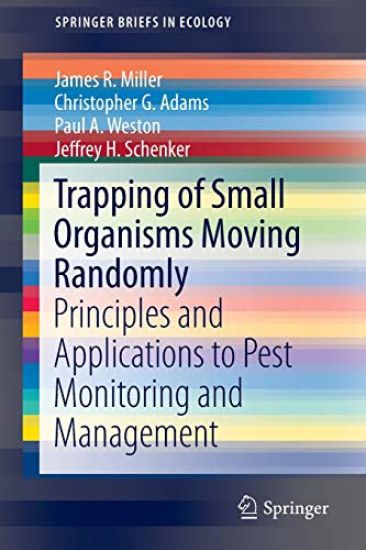
Trapping of Small Organisms Moving Randomly

Trapping of Small Organisms Moving Randomly

James R. Miller; Christopher G. Adams; Paul A. Weston; Jeffrey H. Schenker

Springer International Publishing AG
2015
nidottu
This new book is the first to make logical and important connections between trapping and foraging ecology. It develops and describes—both verbally and mathematically--the underlying principles that determine and define trap-organism interactions. More important, it goes on to explain and illustrate how these principles and relationships can be used to estimate absolute population densities in the landscape and to address an array of important problems relating to the use of trapping for detection, population estimation, and suppression in both research and applied contexts. The breakthrough nature of subject matter described has broad fundamental and applied implications for research for addressing important real-world problems in agriculture, ecology, public health and conservation biology. Monitoring traps baited with potent attractants of animals like insects have long played a critical role in revealing what pests are present and when they are active. However, pest managers have been laboring without the tools necessary for quick and inexpensive determination of absolute pest density, which is the cornerstone of pest management decisions. This book spans the gamut from highly theoretical and fundamental research to very practical applications that will be widely useful across all of agriculture.