Kirjojen hintavertailu. Mukana 11 699 587 kirjaa ja 12 kauppaa.

Kirjahaku

Etsi kirjoja tekijän nimen, kirjan nimen tai ISBN:n perusteella.

10 kirjaa tekijältä James R. Otteson

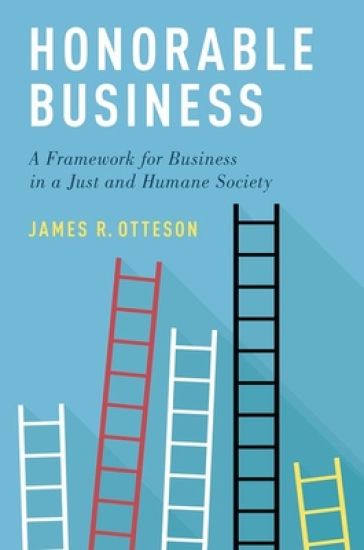
Honorable Business

Honorable Business

James R. Otteson

Oxford University Press Inc
2019
sidottu
Business has a bad name for many people. It is easy to point to unethical and damaging behavior by companies. And it may seem straightforward to blame either indivuduals or, more generally, ruthless markets and amoral commercial society. In Honorable Business, James R. Otteson argues that business activity can be valuable in itself. The primary purpose of honorable businesses is to create value-for all parties. They look for mutually voluntary and mutually beneficial transactions, so that all sides of any exchange benefit, leading to increasing prosperity not just for one person or for one group at the expense of others but simultaneously for everyone involved. Done correctly, honorable business is a positive-sum activity that can enable flourishing for individuals and prosperity for society. Otteson connects honorable business with the political, economic, and cultural institutions that contribute to a just and humane society. He builds on Aristotle's conception of human beings as purposive creatures who are capable of constructing a plan for their lives that gives them a chance of achieving the highest good for humanity, focusing on autonomy and accountability, as well as good moral judgment. This good judgment can enable us to answer the why of what we do, not just the how. He also draws on Adam Smith's moral philosophy and political economy, and argues that Smithian institutions have played a significant role in the remarkable increase in worldwide prosperity we have seen over the last two hundred years. Otteson offers a pragmatic Code of Business Ethics, linked to a specific conception of professionalism, and defends this Code on the basis of a moral mandate to use one's limited resources of time, talent, and treasure to provide value for oneself only by simultaneously providing value to others. The result is well-articulated parameters within which business can be an acceptable-perhaps even praiseworthy-activity.
Honorable Business

Honorable Business

James R. Otteson

Oxford University Press Inc
2019
nidottu
Business has a bad name for many people. It is easy to point to unethical and damaging behavior by companies. And it may seem straightforward to blame either indivuduals or, more generally, ruthless markets and amoral commercial society. In Honorable Business, James R. Otteson argues that business activity can be valuable in itself. The primary purpose of honorable businesses is to create value-for all parties. They look for mutually voluntary and mutually beneficial transactions, so that all sides of any exchange benefit, leading to increasing prosperity not just for one person or for one group at the expense of others but simultaneously for everyone involved. Done correctly, honorable business is a positive-sum activity that can enable flourishing for individuals and prosperity for society. Otteson connects honorable business with the political, economic, and cultural institutions that contribute to a just and humane society. He builds on Aristotle's conception of human beings as purposive creatures who are capable of constructing a plan for their lives that gives them a chance of achieving the highest good for humanity, focusing on autonomy and accountability, as well as good moral judgment. This good judgment can enable us to answer the why of what we do, not just the how. He also draws on Adam Smith's moral philosophy and political economy, and argues that Smithian institutions have played a significant role in the remarkable increase in worldwide prosperity we have seen over the last two hundred years. Otteson offers a pragmatic Code of Business Ethics, linked to a specific conception of professionalism, and defends this Code on the basis of a moral mandate to use one's limited resources of time, talent, and treasure to provide value for oneself only by simultaneously providing value to others. The result is well-articulated parameters within which business can be an acceptable-perhaps even praiseworthy-activity.
Adam Smith's Marketplace of Life

Adam Smith's Marketplace of Life

James R. Otteson

Cambridge University Press
2002
pokkari
Adam Smith wrote two books, one about economics and the other about morality. His Wealth of Nations argues for a largely free-market economy, while his Theory of Moral Sentiments argues that human morality develops out of a mutual sympathy that people seek with one another. How do these books go together? How do markets and morality mix? James Otteson provides a comprehensive examination and interpretation of Smith’s moral theory and shows how his conception of the nature of morality applies to his understanding of markets, language and other social institutions. Considering Smith’s notions of natural sympathy, the impartial spectator, human nature, and human conscience the author also addresses the issue of whether Smith thinks that moral judgments enjoy a transcendent sanction. James Otteson sees Smith’s theory of morality as an institution that develops unintentionally but nevertheless in an orderly way according to a market model.
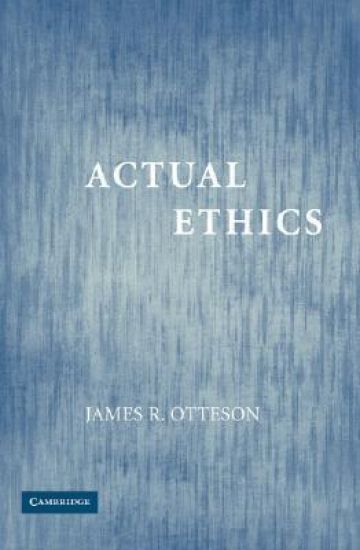
Actual Ethics

Actual Ethics

James R. Otteson

Cambridge University Press
2006
pokkari
Actual Ethics offers a moral defense of the 'classical liberal' political tradition and applies it to several of today's vexing moral and political issues. James Otteson argues that a Kantian conception of personhood and an Aristotelian conception of judgment are compatible and even complementary. He shows why they are morally attractive, and perhaps most controversially, when combined, they imply a limited, classical liberal political state. Otteson then addresses several contemporary problems - wealth and poverty, public education, animal welfare, and affirmative action - and shows how each can be plausibly addressed within the Kantian, Aristotelian and classical liberal framework. Written in clear, engaging, and jargon-free prose, Actual Ethics will give students and general audiences an overview of a powerful and rich moral and political tradition that they might not otherwise consider.
Adam Smith's Marketplace of Life

Adam Smith's Marketplace of Life

James R. Otteson

Cambridge University Press
2002
sidottu
Adam Smith wrote two books, one about economics and the other about morality. His Wealth of Nations argues for a largely free-market economy, while his Theory of Moral Sentiments argues that human morality develops out of a mutual sympathy that people seek with one another. How do these books go together? How do markets and morality mix? James Otteson's 2002 book provides a comprehensive examination and interpretation of Smith's moral theory and shows how his conception of the nature of morality applies to his understanding of markets, language and other social institutions. Considering Smith's notions of natural sympathy, the impartial spectator, human nature, and human conscience the author also addresses the issue of whether Smith thinks that moral judgments enjoy a transcendent sanction. James Otteson sees Smith's theory of morality as an institution that develops unintentionally but nevertheless in an orderly way according to a market model.
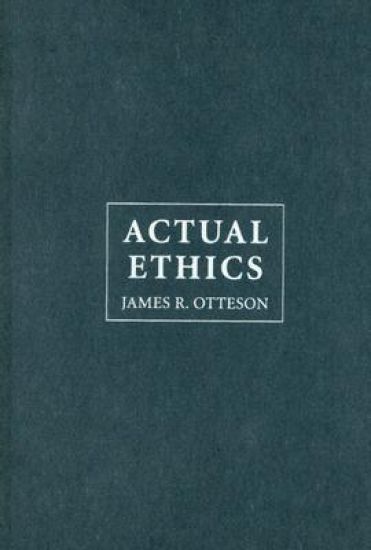
Actual Ethics

Actual Ethics

James R. Otteson

Cambridge University Press
2006
sidottu
Actual Ethics offers a moral defense of the 'classical liberal' political tradition and applies it to several of today's vexing moral and political issues. James Otteson argues that a Kantian conception of personhood and an Aristotelian conception of judgment are compatible and even complementary. He shows why they are morally attractive, and perhaps most controversially, when combined, they imply a limited, classical liberal political state. Otteson then addresses several contemporary problems - wealth and poverty, public education, animal welfare, and affirmative action - and shows how each can be plausibly addressed within the Kantian, Aristotelian and classical liberal framework. Written in clear, engaging, and jargon-free prose, Actual Ethics will give students and general audiences an overview of a powerful and rich moral and political tradition that they might not otherwise consider.
Adam Smith

Adam Smith

James R. Otteson

Continuum Publishing Corporation
2011
sidottu
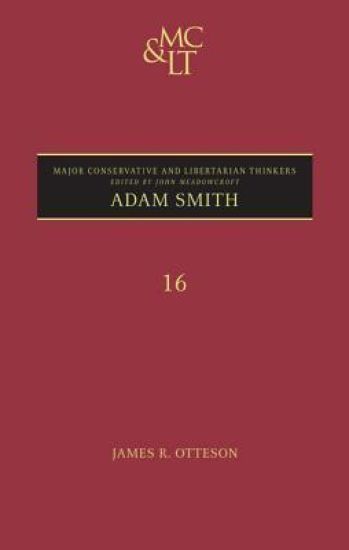
This is volume 16 in the "Major Conservative and Libertarian Thinkers" series. The Scottish philosopher Adam Smith (1723-1790) was as a pioneer of political economy. In fact, his economic thought became the foundation of classical economics and his key work, "An Inquiry into the Nature and Causes of the Wealth of Nations", is considered to be the first modern work in economics. For Smith, a free competition environment was the best way to foster economic development that would work in accordance with natural laws. The framework he set up to explain the free market remains true to this day. "Major Conservative and Libertarian Thinkers" provides comprehensive accounts of the works of seminal conservative thinkers from a variety of periods, disciplines, and traditions - the first series of its kind. Even the selection of thinkers adds another aspect to conservative thinking, including not only theorists but also writers and practitioners. The series comprises twenty volumes, each including an intellectual biography, historical context, critical exposition of the thinker's work, reception and influence, contemporary relevance, bibliography including references to electronic resources, and an index.
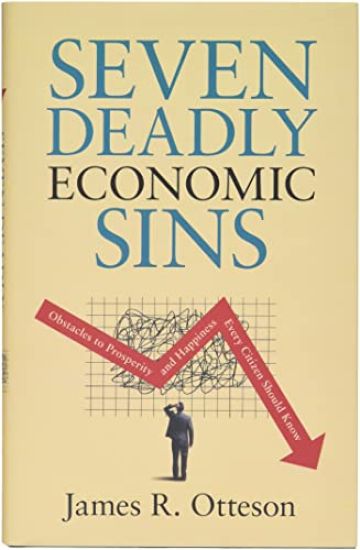
Seven Deadly Economic Sins

Seven Deadly Economic Sins

James R. Otteson

Cambridge University Press
2023
pokkari
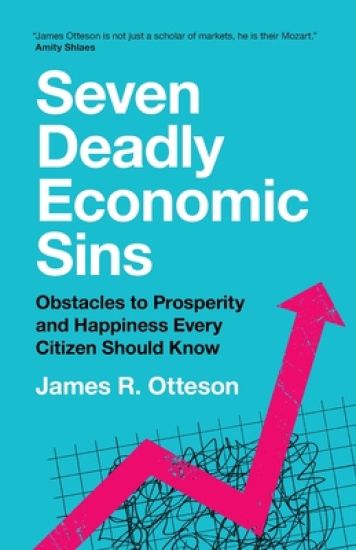
You have heard of the Seven Deadly Sins: pride, greed, lust, envy, gluttony, wrath, and sloth. Each is a natural human weakness that impedes happiness. In addition to these vices, however, there are economic sins as well. And they, too, wreak havoc on our lives and in society. They can seem intuitively compelling, yet they lead to waste, loss, and forgone prosperity. In this thoughtful and compelling book, James Otteson tells the story of seven central economic fallacies, explaining why they are fallacies, why believing in them leads to mistakes and loss, and how exorcizing them from our thinking can help us avoid costly errors and enable us to live in peace and prosperity.
Seven Deadly Economic Sins

Seven Deadly Economic Sins

James R. Otteson

Cambridge University Press
2021
sidottu
You have heard of the Seven Deadly Sins: pride, greed, lust, envy, gluttony, wrath, and sloth. Each is a natural human weakness that impedes happiness. In addition to these vices, however, there are economic sins as well. And they, too, wreak havoc on our lives and in society. They can seem intuitively compelling, yet they lead to waste, loss, and forgone prosperity. In this thoughtful and compelling book, James Otteson tells the story of seven central economic fallacies, explaining why they are fallacies, why believing in them leads to mistakes and loss, and how exorcizing them from our thinking can help us avoid costly errors and enable us to live in peace and prosperity.
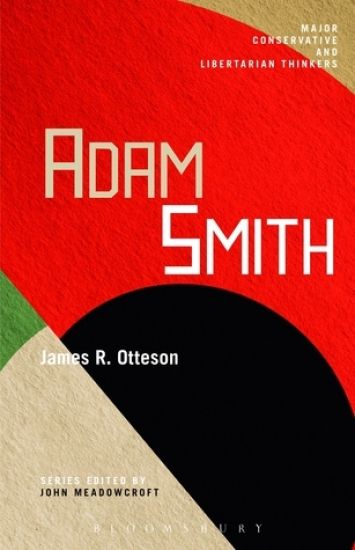
Adam Smith

Adam Smith

James R. Otteson

Bloomsbury Academic USA
2013
nidottu
The Scottish philosopher Adam Smith (1723-1790) was as a pioneer of political economy. In fact, his economic thought became the foundation of classical economics and his key work, An Inquiry into the Nature and Causes of the Wealth of Nations, is considered to be the first modern work in economics. For Smith, a free competition environment was the best way to foster economic development that would work in accordance with natural laws. The framework he set up to explain the free market remains true to this day.