Kirjojen hintavertailu. Mukana 12 016 292 kirjaa ja 12 kauppaa.

Kirjahaku

Etsi kirjoja tekijän nimen, kirjan nimen tai ISBN:n perusteella.

18 kirjaa tekijältä James Rickards

Road to Ruin

Road to Ruin

James Rickards

Penguin Books Ltd.
2016
pokkari
The bestselling author of The Death of Money on how investors can prepare for the next financial panic - and why it's coming sooner than you think. The global economy has made what seems like an incredible comeback after the financial crisis of 2008. Yet this comeback is artificial. Central banks have propped up markets by keeping interest rates low and the supply of money free-flowing. They won't bail us out again next time. And there will be a next time - soon. In The Road to Ruin, bestselling author James Rickards identifies how governments around the world are secretly preparing an alternative strategy for the next big crisis: a lockdown. Instead of printing money to reliquify markets and prop up assets, governments are preparing to close banks, shut down exchanges and order powerful asset managers not to sell. They're putting provisions in place that will allow them to do so legally. What's more, the global elite has already started making their own preparations, including hoarding cash and hard assets. When the next one comes, it will be the average investor who suffers most - unless he or she heeds Rickards' warning and prepares accordingly. James Rickards is the bestselling author of Currency Wars and The Death of Money. He is a portfolio manager at West Shore Group and an adviser on international economics and financial threats to the Department of Defence and the US intelligence community. He served as facilitator of the first-ever financial war games conducted by the Pentagon.
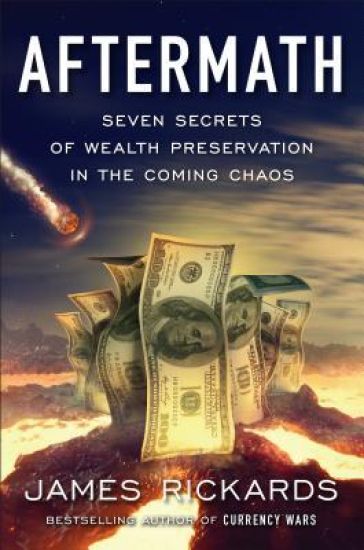
Aftermath

Aftermath

James Rickards

Penguin Books Ltd.
2019
pokkari
In his most practical book to date, financial expert and investment advisor James Rickards shows how and why our financial markets are being artificially inflated and what smart investors can do to protect their assets. What goes up must come down. As any student of financial history knows, the dizzying heights of the stock market can't continue indefinitely. In turbulent times, the elites are prepared, but what should the average investor do? James Rickards lays out the true risks to our financial system and offers invaluable advice on how best to weather the storm.
The New Case for Gold

The New Case for Gold

James Rickards

Penguin Business
2019
pokkari
They say John Maynard Keynes called gold a 'barbarous relic'. They say there isn't enough gold to support finance and commerce.They say the gold supply can't increase fast enough to support world growth.They're wrong.In The New Case for Gold, James Rickards explains why gold is one of the safest assets for investors in times of political instability and market volatility, and how every investor should look to add gold to his or her portfolio. Drawing on historical case studies, monetary theory and his personal experience as an investor, Rickards argues that gold should be a part of any prudent investor's portfolio.James Rickards is the bestselling author of Currency Wars and The Death of Money. He is a portfolio manager at West Shore Group and an adviser on international economics and financial threats to the Department of Defence and the US intelligence community. He served as facilitator of the first-ever financial war games conducted by the Pentagon.
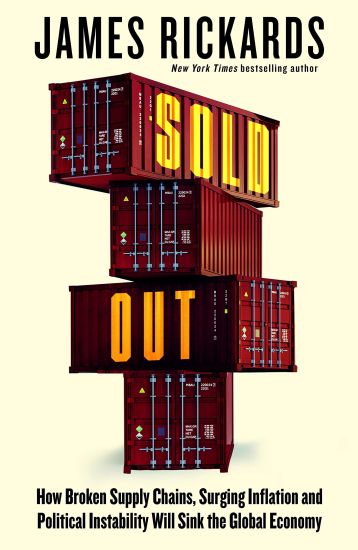
Sold Out

Sold Out

James Rickards

PENGUIN BOOKS LTD
2022
pokkari
Empty shelves, petrol station queues and energy shortages: crises more familiar to those who lived through the 1960s and 1970s have now become a reality for many as global shipping times are squeezed, containers lie unopened at docks and supply shortages push up inflation, increasing the cost of consumer goods from milk to cars to building materials.In Sold Out, James Rickards explains why the shelves are empty, who broke the supply chain and why shortages will persist. He breaks down the history and structure of business around the world to offer readers a behind-the-scenes look at what's really going on, and what they can do to mitigate the worst of what's to come.Drawing on his financial expertise, he explains that consumers and investors need to be nimble to come through this unprecedented turn of events in good shape. Luckily, Rickards is on hand to provide the tools readers need to look ahead, monitor key trends and insulate against risks.
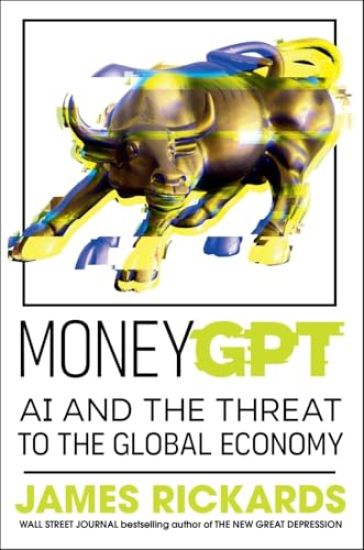
MoneyGPT

MoneyGPT

James Rickards

PENGUIN BOOKS LTD
2024
pokkari
Financial expert, investment advisor and New York Times bestselling author James Rickards shows how generative AI is reshaping the world of finance, explaining what smart investors can do to protect their assets.AI-powered programmes like ChatGPT have become valuable tools in the financial market, and proven to be incredibly beneficial to investors looking to identify investment opportunities and risks that might be overlooked by humans. Yet there is a darker side to these products, which we are only just beginning to fully understand.In this book, Rickards shows how models like ChatGPT work, and how they can be leveraged to capitalize on markets and avoid losses by providing accurate, up-to-date financial insights. Rickards’ guide is essential reading for anyone looking to navigate this tumultuous new climate.James Rickards breaks down the best ways you can protect your wealth in the age of the shifting financial markets, busting the myths surrounding all the usual doomsday predictions around super intelligent AI.
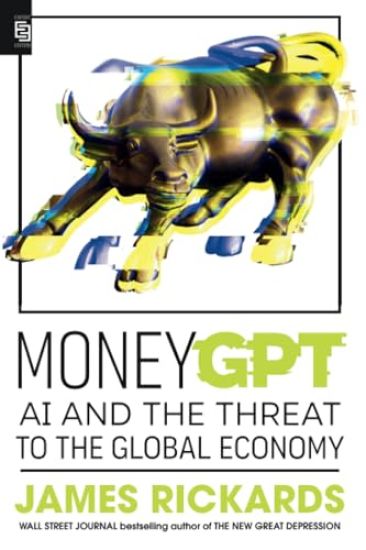
Moneygpt: AI and the Threat to the Global Economy
"Essential reading" - Forbes From the New York Times bestselling author of The New Great Depression and Currency Wars, a telling prediction for how AI will endanger global economic markets and security In November 2022, OpenAI released GPT-4 in a chatbot form to the public. In just two months, it claimed 100 million users--the fastest app to ever reach this benchmark. Since then, AI has become an all-consuming topic, popping up on the news, in ads, on your messenger apps, and in conversations with friends and family. But as AI becomes ubiquitous and grows at an ever-increasing pace, what does it mean for the financial markets? In MoneyGPT, Wall Street veteran and former advisor to the Department of Defense James Rickards paints a comprehensive picture of the danger AI poses to the global financial order, and the insidious ways in which AI will threaten national security. Rickards shows how, while AI is touted to increase efficiency and lower costs, its global implementation in the financial world will actually cause chaos, as selling begets selling and bank runs happen at lightning speed. AI further benefits malicious actors, Rickards argues, because without human empathy or instinct to intervene, threats like total nuclear war that once felt extreme are now more likely. And throughout all this, we must remain vigilant on the question of whose values will be promoted in the age of AI. As Rickards predicts, these systems will fail when we rely on them the most. MoneyGPT shows that the danger is not that AI will malfunction, but that it will function exactly as intended. The peril is not in the algorithms, but in ourselves. And it's up to us to intervene with old-fashioned human logic and common sense before it's too late.
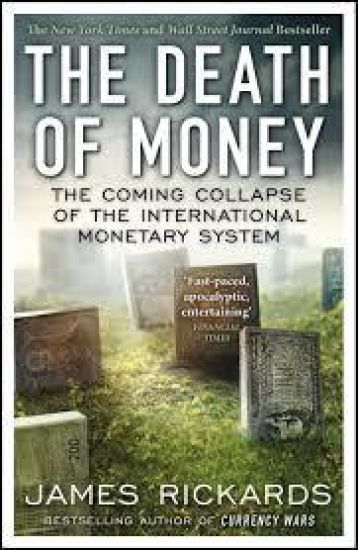
The Death of Money

The Death of Money

James Rickards

Penguin Books Ltd
2015
pokkari
'Part of a veritable golden age for smart books on the current state of the global economy' Politico'A fast-paced and apocalyptic look at the financial future' Financial TimesFinancial expert, investment advisor and New York Times bestselling author James Rickards explores how the international monetary system has collapsed three times in the past and warns that another collapse is rapidly approaching and why, this time, nothing less than the institution of money itself is at risk.------------------------------------------------------------------------The US dollar has been the global reserve currency since the end of the Second World War. If the dollar fails the entire international monetary system will fail with it. But Washington is gridlocked, and America's biggest competitors - China, Russia, and the Middle East - are doing everything possible to end US monetary hegemony.In The Death Of Money James Rickards offers a bracing analysis of the fundamental problem: money and wealth have become ever more detached. Money is transitory and ephemeral; wealth is permanent and tangible. While wealth has real value worldwide, money may soon be worthless. And who will be the real victims? Small investors.Fortunately, it is not too late to prepare for the coming death of money. In this riveting book, James Rickards shows us how.'A valuable contribution to our economic discourse' Forbes
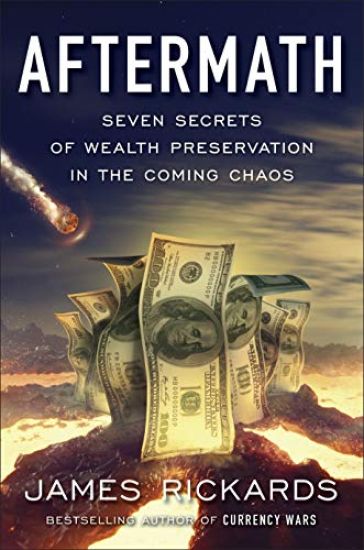
Aftermath: Seven Secrets of Wealth Preservation in the Coming Chaos
A Wall Street Journal bestseller Financial expert, investment advisor and New York Times bestselling author James Rickards shows why and how global financial markets are being artificially inflated--and what smart investors can do to protect their assets What goes up, must come down. As any student of financial history knows, the dizzying heights of the stock market can't continue indefinitely--especially since asset prices have been artificially inflated by investor optimism around the Trump administration, ruinously low interest rates, and the infiltration of behavioral economics into our financial lives. The elites are prepared, but what's the average investor to do? James Rickards, the author of the prescient books Currency Wars, The Death of Money, and The Road to Ruin, lays out the true risks to our financial system, and offers invaluable advice on how best to weather the storm. You'll learn, for instance: * How behavioral economists prop up the market: Funds that administer 401(k)s use all kinds of tricks to make you invest more, inflating asset prices to unsustainable levels. * Why digital currencies like Bitcoin and Ethereum are best avoided. * Why passive investing has been overhyped: The average investor has been scolded into passively managed index funds. But active investors will soon have a big advantage. * What the financial landscape will look like after the next crisis: it will not be an apocalypse, but it will be radically different. Those who forsee this landscape can prepare now to preserve wealth. Provocative, stirring, and full of counterintuitive advice, Aftermath is the book every smart investor will want to get their hands on--as soon as possible.
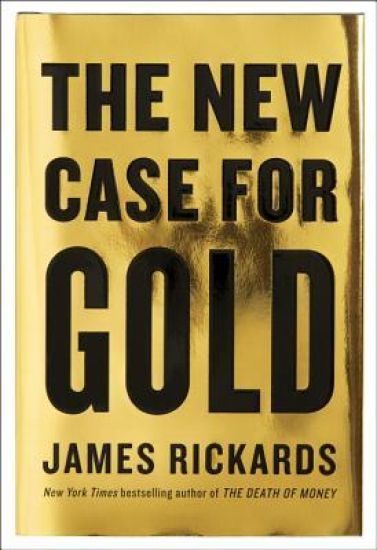
The New Case for Gold

The New Case for Gold

James Rickards

PORTFOLIO
2016
sidottu
**USA Today bestseller and Wall Street Journal business bestseller**They say John Maynard Keynes called gold a "barbarous relic." They say there isn't enough gold to support finance and commerce. They say the gold supply can't increase fast enough to support world growth. They're wrong. In this bold manifesto, bestselling author and eco­nomic commentator James Rickards steps forward to defend gold--as both an irreplaceable store of wealth and a standard for currency. Global political instability and market volatility are on the rise. Gold, always a prudent asset to own, has become the single most important wealth preserva­tion tool for banks and individuals alike. Rickards draws on historical case studies, monetary theory, and personal experience as an investor to argue that: - The next financial collapse will be exponentially bigger than the panic of 2008. - The time will come, sooner rather than later, when there will be panic buying and only central banks, hedge funds, and other big players will be able to buy any gold at all. - It's not too late to prepare ourselves as a nation: there's always enough gold for a gold standard if we specify a stable, nondeflationary price. Providing clear instructions on how much gold to buy and where to store it, the short, provocative argu­ment in this book will change the way you look at this "barbarous relic" forever.
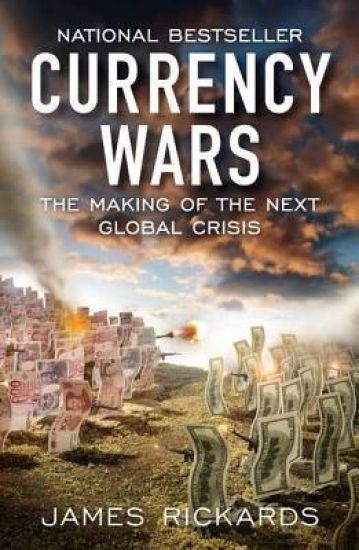
Currency Wars

Currency Wars

James Rickards

Portfolio
2012
nidottu
In 1971, President Nixon imposed national price controls and took the United States off the gold standard, an extreme measure intended to end an ongoing currency war that had destroyed faith in the U.S. dollar. Today we are engaged in a new currency war, and this time the consequences will be far worse than those that confronted Nixon.Currency wars are one of the most destructive and feared outcomes in international economics. At best, they offer the sorry spectacle of countries' stealing growth from their trading partners. At worst, they degenerate into sequential bouts of inflation, recession, retaliation, and sometimes actual violence. Left unchecked, the next currency war could lead to a crisis worse than the panic of 2008.Currency wars have happened before-twice in the last century alone-and they always end badly. Time and again, paper currencies have collapsed, assets have been frozen, gold has been confiscated, and capital controls have been imposed. And the next crash is overdue. Recent headlines about the debasement of the dollar, bailouts in Greece and Ireland, and Chinese currency manipulation are all indicators of the growing conflict.As James Rickards argues in Currency Wars, this is more than just a concern for economists and investors. The United States is facing serious threats to its national security, from clandestine gold purchases by China to the hidden agendas of sovereign wealth funds. Greater than any single threat is the very real danger of the collapse of the dollar itself.Baffling to many observers is the rank failure of economists to foresee or prevent the economic catastrophes of recent years. Not only have their theories failed to prevent calamity, they are making the currency wars worse. The U. S. Federal Reserve has engaged in the greatest gamble in the history of finance, a sustained effort to stimulate the economy by printing money on a trillion-dollar scale. Its solutions present hidden new dangers while resolving none of the current dilemmas.While the outcome of the new currency war is not yet certain, some version of the worst-case scenario is almost inevitable if U.S. and world economic leaders fail to learn from the mistakes of their predecessors. Rickards untangles the web of failed paradigms, wishful thinking, and arrogance driving current public policy and points the way toward a more informed and effective course of action."
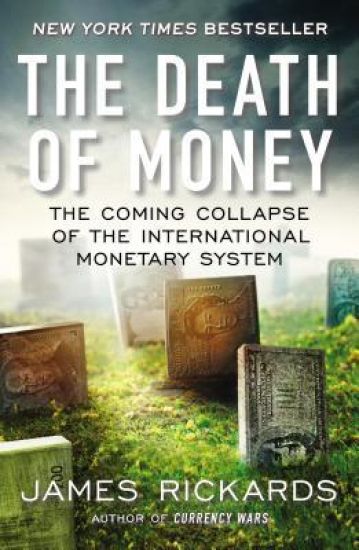
The Death of Money: The Coming Collapse of the International Monetary System
The next financial collapse will resemble nothing in history. . . . Deciding upon the best course to follow will require comprehending a minefield of risks, while poised at a crossroads, pondering the death of the dollar. The U.S. dollar has been the global reserve currency since the end of World War II. If the dollar fails, the entire international monetary system will fail with it. But optimists have always said, in essence, that confidence in the dollar will never truly be shaken, no matter how high our national debt or how dysfunctional our government. In the last few years, however, the risks have become too big to ignore. While Washington is gridlocked, our biggest rivals--China, Russia, and the oil-producing nations of the Middle East--are doing everything possible to end U.S. monetary hegemony. The potential results: Financial warfare. Deflation. Hyperinflation. Market collapse. Chaos. James Rickards, the acclaimed author of Currency Wars, shows why money itself is now at risk and what we can all do to protect ourselves. He explains the power of converting unreliable investments into real wealth: gold, land, fine art, and other long-term stores of value.
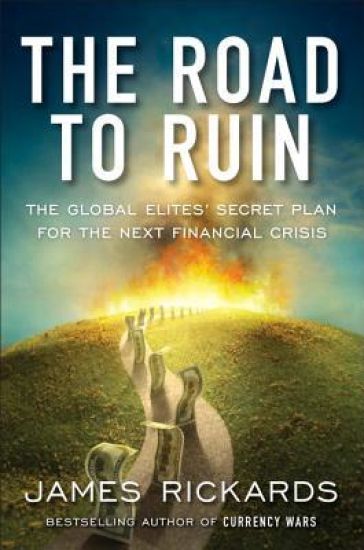
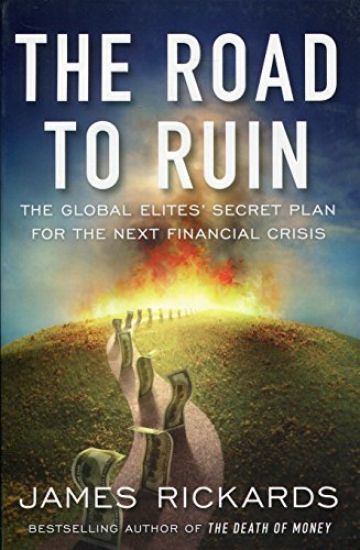
The Road to Ruin: The Global Elites' Secret Plan for the Next Financial Crisis
The bestselling author of The Death of Money and Currency Wars reveals the global elites' dark effort to hide a coming catastrophe from investors in The Road to Ruin, now a National Bestseller. A drumbeat is sounding among the global elites. The signs of a worldwide financial meltdown are unmistakable. This time, the elites have an audacious plan to protect themselves from the fallout: hoarding cash now and locking down the global financial system when a crisis hits. Since 2014, international monetary agencies have been issuing warnings to a small group of finance ministers, banks, and private equity funds: the U.S. government's cowardly choices not to prosecute J.P. Morgan and its ilk, and to bloat the economy with a $4 trillion injection of easy credit, are driving us headlong toward a cliff. As Rickards shows in this frightening, meticulously researched book, governments around the world have no compunction about conspiring against their citizens. They will have stockpiled hard assets when stock exchanges are closed, ATMs shut down, money market funds frozen, asset managers instructed not to sell securities, negative interest rates imposed, and cash withdrawals denied. If you want to plan for the risks ahead, you will need Rickards's cutting-edge synthesis of behavioral economics, history, and complexity theory. It's a guidebook to thinking smarter, acting faster, and living with the comfort­ing knowledge that your wealth is secure. The global elites don't want this book to exist. Their plan to herd us like sheep to the slaughter when a global crisis erupts--and, of course, to maintain their wealth--works only if we remain complacent and unaware. Thanks to The Road to Ruin, we don't need to be. "If you are curious about what the financial G tterd mmerung might look like you've certainly come to the right place... Rickards believes -- and provides tantalizing snippets of private conversations with those who dwell in the very eye-in-the-pyramid -- that the current world monetary and financial system is on the verge of insolvency and that the world financial elites already have a successor system for which they are laying the groundwork." --Ralph Benko, Forbes
MoneyGPT

MoneyGPT

James Rickards

Penguin USA
2024
nidottu
From the New York Times bestselling author of The New Great Depression and Currency Wars, a telling prediction for how AI will endanger global economic markets and security In November 2022, OpenAI released GPT-4 in a chatbot form to the public. In just two months, it claimed 100 million usersthe fastest app to ever reach this benchmark. Since then, AI has become an all-consuming topic, popping up on the news, in ads, on your messenger apps, and in conversations with friends and family. But as AI becomes ubiquitous and grows at an ever-increasing pace, what does it mean for the financial markets? In MoneyGPT, Wall Street veteran and former advisor to the Department of Defense James Rickards paints a comprehensive picture of the danger AI poses to the global financial order, and the insidious ways in which AI will threaten national security. Rickards shows how, while AI is touted to increase efficiency and lower costs, its global implementation in the financial world will actually cause chaos, as selling begets selling and bank runs happen at lightning speed. AI further benefits malicious actors, Rickards argues, because without human empathy or instinct to intervene, threats like total nuclear war that once felt extreme are now more likely. And throughout all this, we must remain vigilant on the question of whose values will be promoted in the age of AI. As Rickards predicts, these systems will fail when we rely on them the most. MoneyGPT shows that the danger is not that AI will malfunction, but that it will function exactly as intended. The peril is not in the algorithms, but in ourselves. And its up to us to intervene with old-fashioned human logic and common sense before its too late.