Kirjojen hintavertailu. Mukana 11 699 587 kirjaa ja 12 kauppaa.

Kirjahaku

Etsi kirjoja tekijän nimen, kirjan nimen tai ISBN:n perusteella.

7 kirjaa tekijältä James S. Corum

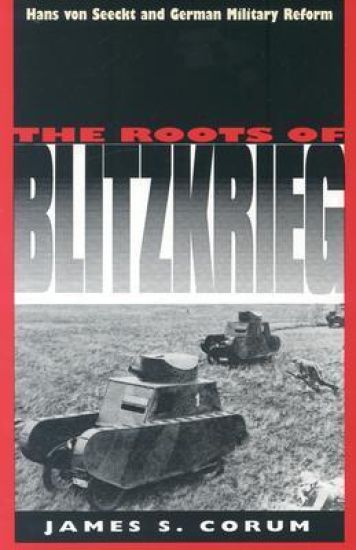
The Roots of Blitzkrieg

The Roots of Blitzkrieg

James S. Corum

University Press of Kansas
1992
nidottu
Between 1919 and 1933, German military leaders created and nurtured the Reichswehr, a new military organisation built on the wreckage of the old Imperial Army. James Corum traces the crucial transformations in military tactical doctrine, organisation and training that laid the foundations for the Nazi Blitzkrieg. He aims to provide a clear understanding of military thinking, reform and reorganisation in post-World War I Germany, as well as to raise important questions regarding fundamental processes in the study and development of military doctrine.
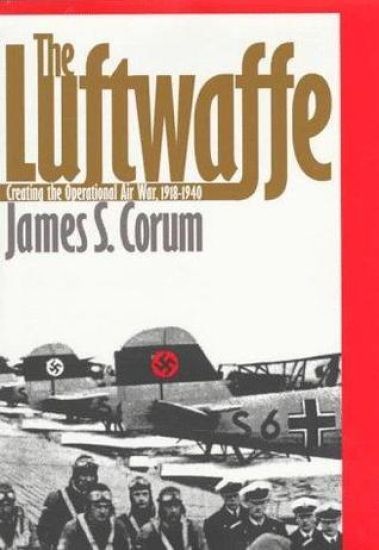
The Luftwaffe

The Luftwaffe

James S. Corum

University Press of Kansas
1997
nidottu
This study provides an appraisal of Germany's air forces from the post-World War I era through the early stages of World War II, revealing why the Luftwaffe proved so formidable against its British and French rivals. The author demolishes several myths surrounding the Luftwaffe, including the belief that they had no ideas beyond the support of ground forces and that its leadership in the Second World War lacked deep professional grounding.
Wolfram Von Richthofen

Wolfram Von Richthofen

James S. Corum

University Press of Kansas
2008
sidottu
Luftwaffe commander Wolfram von Richthofen was a brilliant master of the tactical and operational air war and one of the key catalysts in the resurrection of Germany's air force. Long overshadowed in history by his cousin, World War I's famous ""Red Baron,"" von Richthofen served in seven major air campaigns from 1936 to 1944, and as senior air commander he was always at the center of the action.For this first full-length biography of von Richthofen, James Corum has mined the field marshal's extensive diaries, which provide a detailed record of military campaigns, tactical and operational problems, interactions with other commanders, and his assessment of methods and weaponry. He has also drawn on interviews with former Luftwaffe members and on his unparalleled access to von Richthofen family papers and photos.Corum reveals how, before World War II, von Richthofen played a central role in developing and building the Luftwaffe and such famous aircraft as the Me 109 fighter and He 111 bomber. He then delivered tactical and operational successes in the Spanish Civil War, where he established the close air support tactics that became an essential trademark of the German blitzkrieg. As commander of the Special Air Division in the invasion of Poland, he demonstrated the effectiveness of massed airpower and in 1940 helped produce a dramatic German victory in France by providing close air support for Von Kleist's panzer divisions as they raced to the English Channel. Later he also led the Luftwaffe's Second Air Fleet against the Allied landings in Sicily, Salerno, and Anzio.Providing a fully rounded portrait, Corum also cites von Richthofen's signal defeats in the Battle of Britain and around Stalingrad; depicts his arrogant and ruthless tendencies; and reveals his loyal but naive belief in Hitler.Cutting through the myths that have grown around von Richthofen's life, Corum's study fills a major gap in the literature and offers new insight into German military culture, Hitler's strategic thinking, and their impact on the German way of war.
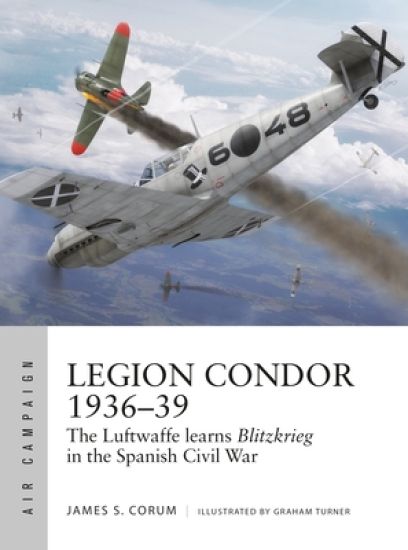
Legion Condor 1936–39

Legion Condor 1936–39

James S. Corum

Osprey Publishing
2020
nidottu
The bombing of Guernica has become a symbol of Nazi involvement in the Spanish Civil War, but the extent of the German commitment is often underestimated.The Luftwaffe sent 20,000 officers and men to Spain from 1936 to 1939, and the Condor Legion carried out many missions in support of the Spanish Nationalist forces and played a lead role in many key campaigns of the war. Aircraft that would play a significant role in the combat operations of World War II (the Heinkel 11 bomber, the Me 109 fighter, and others) saw their first action in Spain, fighting against the modern Soviet fighters and bombers that equipped the Republican Air Force. Condor Legion bombers attacked Republican logistics and transport behind the lines as well as bombing strategic targets, German bombers and fighters provided highly effective close air support for the front-line troops, and German fighters and anti-aircraft units ensured Nationalist control of the air. The experience garnered in Spain was very important to the development of the Luftwaffe. The war allowed them to hone and develop their tactics, train their officers, and to become the most practised air force in the world at conducting close support of ground troops. In effect, the Spanish Civil War proved to be the training ground for the Blitzkrieg which would be unleashed across Europe in the years that followed.In this rigorous new analysis, Legion Condor expert James Corum explores both the history and impact of the Luftwaffe’s engagement during the Spanish Civil War and the role that engagement played in the development of the Luftwaffe strategy which would be used to such devastating effect in the years that followed.
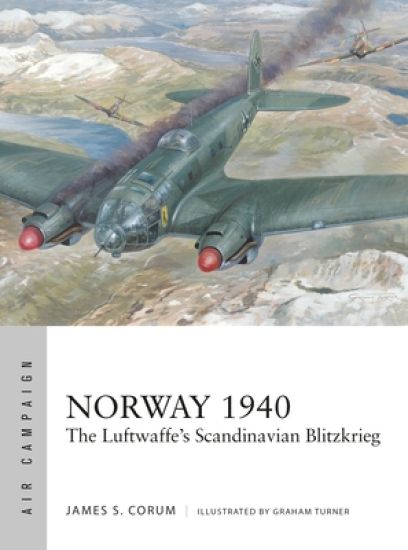
Norway 1940

Norway 1940

James S. Corum

Osprey Publishing
2021
nidottu
A history of the innovative German air campaign that ensured victory in the rapid conquest of Norway, and an analysis of its importance to World War II and the development of air power.The German invasion of Norway was a pivotal moment in modern warfare, the first joint campaign that featured air power as an equal element of all operations. It was, in fact, the superior use of their air force that gave the Germans the decisive margin of victory and ensured the failure of the Allied counter-offensive in central Norway in April and May 1940.All aspects of air power were employed in Norway, from long-range bombing and reconnaissance to air transport, with the Luftwaffe’s ability to transport large numbers of troops and supply ground forces over great distances being particularly important. Norway was the first campaign in history in which key targets were seized by airborne forces, and the first in which air superiority was able to overcome the overwhelming naval superiority of an enemy.Researched from primary sources, this engaging history by air power expert Dr James Corum skilfully draws out where and why air power made the difference in Norway, and analyses the campaign’s influence on the coming months and years of World War II.
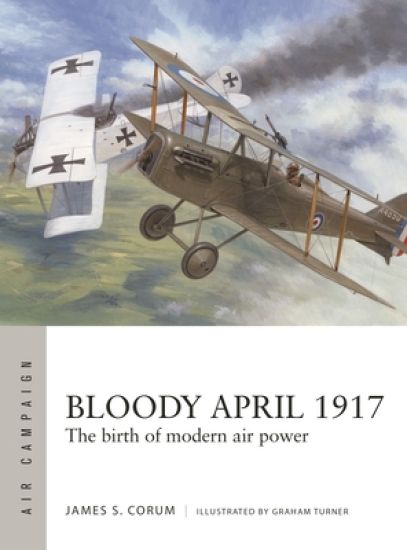
Bloody April 1917

Bloody April 1917

James S. Corum

BLOOMSBURY PUBLISHING PLC
2022
nidottu
Researched from original-language primary sources, this is a uniquely well-informed and multi-faceted history of the World War I air campaign of Bloody April.Researched from original German-, French-, and English-language sources, and written by an authority on both air and ground military operations, author, Dr James S Corum examines how Bloody April caused Allied forces to reassess their approach to the use of airpower. Considering well-known problems such as technology and training doctrine, but also how the artillery-aircraft combination ideally had to work in late-WW I ground offensives, Dr Corum analyses what each side got wrong and why. He describes little-known parts of the April campaigns, such as both sides' use of strategic bombing with heavy aircraft, and considers the German use of advanced high-altitude reconnaissance aircraft with oxygen and heated suits while detailing the exploits of the infamous 'Red Baron', Manfred von Richthofen.Lessons from Bloody April not only served to improve the coordination of Allied artillery and aircraft but subsequently aircraft played a much larger role in supporting ground troops in attack mode. Bloody April paved the way for the airpower revolution that, by 1918, would make the Allies masters of the sky on the Western Front.
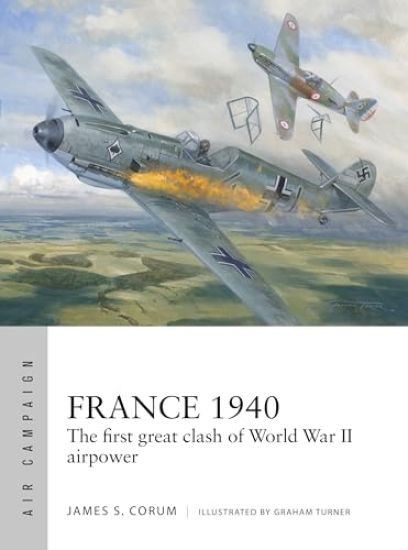
France 1940

France 1940

James S. Corum

BLOOMSBURY PUBLISHING PLC
2025
nidottu
A renowned airpower expert assesses the air campaign fought in France in 1940, explaining why the Luftwaffe was so effective against the French and British. The battle for France and Belgium was one of the most significant moments in modern warfare: the first great clash of modern major powers, where both sides possessed large and capable air forces, and modern combined-arms doctrine. It was in the air that the Germans had a notable advantage in both numbers and quality. But this does not fully explain the victory of the Luftwaffe over the RAF and the French Air Force in 1940. In this book, renowned airpower scholar James S. Corum offers an operational-level history of the air campaign, and explains comprehensively and concisely how the campaign was fought, and why the Luftwaffe made such superior use of their airpower. He explains the importance of the air forces’ leadership and fighting doctrine, and aspects of the campaign often overlooked, such as the dysfunctional organization that kept hundreds of French aircraft out of the battle, and Germany’s pioneering use of radio-equipped air liaison officers that provided the world’s first system of ‘on-call’ close air support. Researched from French, British, and German primary sources, and illustrated throughout with artwork, 3D diagrams, maps and photos, this book distils the author’s decades of scholarship into an essential guide to airpower in the fall of France.