Kirjojen hintavertailu. Mukana 12 390 323 kirjaa ja 12 kauppaa.

Kirjahaku

Etsi kirjoja tekijän nimen, kirjan nimen tai ISBN:n perusteella.

6 kirjaa tekijältä James Sheldon, Ron Simon

Before I Forget - Directing Television

Before I Forget - Directing Television

James Sheldon; Ron Simon

BearManor Media
2011
pokkari
JAMES SHELDON was directing the radio show We, The People when it became the first commercial CBS network program to telecast nationally on June 1, 1948. Since then he has experienced the technological changes from live to electronic tape to film, from black and white to color, and from a few hundred thousand to the multi-millions of television sets in use today. His early live credits include dramatic series like Robert Montgomery Presents and Studio One, comedies like Mister Peepers and musicals like Don Ameche's Holiday Hotel. He was part of the move from New York to Los Angeles as television production shifted west in the mid 50's. Credits during that period: The Johnny Carson Show, West Point Story, Harbor Command and Dick Powell's Zane Grey Theater. In the 60's, he directed many episodes of 87th Precinct, Naked City, Route 66, The Millionaire, My Three Sons, The Twilight Zone, Walt Disney's Wonderful World of Color and Gunsmoke. In the '70's, M*A*S*H, The Virginian, Sanford & Son, Rock Hudson's McMillan & Wife and Raymond Burr's Ironsides. In the '80's, Seven Brides for Seven Brothers, Cagney & Lacey, and The Equalizer. Included in the list of the many actors whose careers he helped start are: James Dean, Paul Newman, Dustin Hoffman, Gene Hackman, Carroll O'Connor, Clint Eastwood, Burt Reynolds, Lee Remick, Tony Randall and Tyne Daly.
American Errand: Rivers of the North

American Errand: Rivers of the North

James Sheldon

James Sheldon
2016
nidottu
TO DO THE LEWIS AND CLARK TRAIL, I had no plan except to put my canoe in the water and paddle. I had done no prior research. I had no backup person or crew. I had no cell phone. I didn't even have a map. I was excited but, basically clueless. From my home near Kansas City, I drove my old junker car to the Pacific Coast where, at the mouth of the Columbia River, I donated it to a local salvage yard. Then with no other way home, I set out with canoe and dog on what would become a 4,000 mile journey into the awesome heart of America.See pictures, maps, and more at: americanerrand.com
Journey to the Midnight Sun - Love Conquers All
"Journey to the Midnight Sun" is a trilogy, and "Lover Conquers All" is its first book-a fictional story set in the year 3010. John is a horseman from the West, crazy enough to believe men once walked on the moon. Laureal is an emerald-eyed savage crazy enough to love him. And the 'Great Spirit' loves them both. In chapter one, John is sent on a quest by his Order. His mission is to find a lost treasure trove of knowledge hidden away by the ancients. Things go awry quickly, and the first chapter ends in a disaster. The survivors have a choice: break down in finger-pointing and bitterness, or team up and rise together from the ashes of tragedy. They chose the better path and set out together on a daring adventure to regain what had been lost.Book one comes to its own conclusion, so the reader will not be left hanging. Books two and three have been completed and are in the final editing stage, and they will be available soon. Book two is subtitled 'Lake of the Swans, ' while book three is subtitled 'Dawn of the Third Millennium.' Each book will be priced as low as allowed, but please do not take that to mean they are not good-my previous two books, although not well known, have 5 STARS on Amazon, and my new book, "Journey to the Midnight Sun," is my best work to date.
The March of Evil: A History of the Rise and Fall of the Fascist Evil

The March of Evil: A History of the Rise and Fall of the Fascist Evil

Adolf R. Lerner; James Sheldon; James W. Gerard

Literary Licensing, LLC
2012
sidottu
The March of Evil: A History of the Rise and Fall of the Fascist Evil is a comprehensive account of the emergence and decline of fascist regimes around the world. Written by Adolf R. Lerner, the book provides a detailed analysis of the political, social, and economic factors that led to the rise of fascist movements in various countries, including Italy, Germany, Spain, and Japan.The author traces the roots of fascism to the aftermath of World War I, when many countries were struggling with economic depression and political instability. He explores how fascist leaders exploited these conditions to gain power, using propaganda, violence, and intimidation to suppress opposition and establish authoritarian regimes.Lerner also examines the impact of fascist rule on society, including the persecution of minority groups, the suppression of free speech and press, and the use of concentration camps and other forms of state violence. He discusses the role of international alliances and conflicts in the spread and defeat of fascism, including World War II and the Cold War.The book concludes with an analysis of the legacy of fascism in the modern world, including the ongoing threat of far-right extremism and the importance of vigilance in defending against authoritarianism and totalitarianism.Overall, The March of Evil is a timely and insightful examination of one of the darkest periods in human history, offering valuable lessons for understanding and confronting the dangers of fascism and other forms of extremist ideology.This scarce antiquarian book is a facsimile reprint of the old original and may contain some imperfections such as library marks and notations. Because we believe this work is culturally important, we have made it available as part of our commitment for protecting, preserving, and promoting the world's literature in affordable, high quality, modern editions, that are true to their original work.
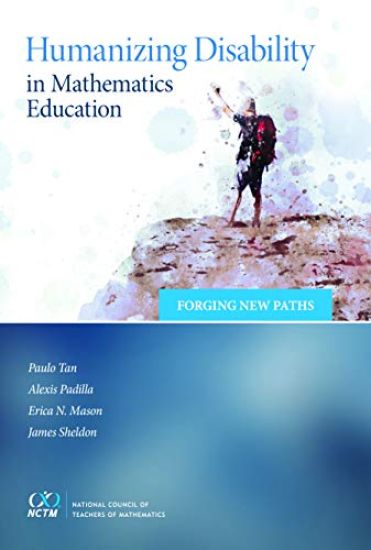
Humanizing Disability in Mathematics Education

Humanizing Disability in Mathematics Education

Paulo Tan; Alexis Padilla; Erica N. Mason; James Sheldon

National Council of Teachers of Mathematics,U.S.
2020
nidottu
Humanizing Disability in Mathematics Education: Forging New Paths is about enhancing the practices of mathematics teachers by extending the concepts of access, equity, and empowerment to include students living with all types of disabilities. These students are rarely thought of as mathematics doers and thinkers, and so are seldom offered opportunities to engage in mathematics in meaningful and connected ways. Humanizing Disability examines the current mindset and pedagogy that students with different learning needs encounter, and then offers strategies and practices to humanize the mathematics experience for these students.In the first part of the book, the authors lay out some key ideas about humanizing mathematics education for students with disabilities. As teachers of mathematics of teacher educators and students with disabilities, as well as with their own backgrounds as learners with identified disabilities, the authors’ case and perspective are informed by hands-on episodes of their work and their own lived experiences. Foundational to the authors’ advocacy are these compelling concepts:Students with disabilities are mathematics doers and thinkers.There are multiple ways of knowing and doing mathematics.The idea that disability is a tragedy must be resisted.Humanizing mathematics education is a matter of human rights to counter conventional, deficit-centered forms of education involving students with disabilities.Humanizing the mathematics education of students with disabilities enhances the learning of all. Theory and argument isn’t practice, so Humanizing Disability offers practical examples of implementation through the exploration of singular cases of how an Individual Education Plan (IEP) can be a powerful tool for access, equity, and inclusivity for the disabled learner; of using funds of knowledge and of identity to navigate the education system; and of building inclusive classrooms and communities.Humanizing Disability in Mathematics Education: Forging New Paths offers an inclusive way to think about mathematics education involving individuals with disabilities. It goes beyond the walls of the mathematics classrooms to address issues of dignity, access, and empowerment. For those whose mission it is to bring meaningful mathematics to each and every student, it is a must-have reference for your professional library.