
Kirjahaku
Etsi kirjoja tekijän nimen, kirjan nimen tai ISBN:n perusteella.
38 kirjaa tekijältä James Thomas

'IT'S THE SUN WOT WON IT', was the famous headline claim of Britain's most popular newspaper following the Conservative party's victory over Labour in the 1992 general election. The headline referred to a virulent press campaign against Neil Kinnock's Labour party, and dramatically highlighted one of the chief features of British politics during the twentieth century - the conflict between a socialist Labour party and a capitalist popular press. Labour's frequent complaints of the political and electoral unfairness of newspaper bias meant that some commentators considered that this dispute had a heritage as old as the party itself. Others, including the Labour leadership at the time, argued that despite past tensions, the 1992 election marked the culmination of an unprecedented campaign of vilification against the party. Popular Newspapers, the Labour Party and British Politics assesses these competing claims, looking not only at 1992 but both back and forward to examine the continuities and changes in newspaper coverage of British politics and the Labour party over the twentieth century. The book explores whether the popular press has lived up to its claim of being a democratic 'fourth estate', or has merely, as Labour politicians have argued been a powerful 'fifth column' distorting the democratic process. Drawing on a range of previously unexamined sources this book offers the first original and comprehensive history of a fascinating aspect of British politics from Beaverbrook to Blair. James Thomas is a lecturer at the Cardiff School of Journalism, Media and Cultural Studies at Cardiff University, and has published articles and esays exploring the relationship between the popular press and British politics.

This diary of a man suffering a devastating disease brings the reader into the world of an individual whose well-established life, with its ordinary routines and pleasures, suddenly falls apart. His own fate makes him more sympathetic to others who are struck by ill fortune.


In the week following the death of Princess Diana, the media presented images of the entire British nation united in tearful hysterical grief to mourn their 'People's Princess'. However, despite this emphasis on the response of the 'people', their has so far been no detailed examination of popular attitudes or media coverage during September 1997. James Thomas radically challenges the myths surrounding the mourning with the first ever 'people's history' of the week. He combines a detailed survey of media coverage with analysis of a range of qualitative and quantitative evidence about popular attitudes, especially those of the 'ordinary' people across Britain who recorded their views and actions for the Mass-Observation of Britain project. 'Diana's Mourning' provides fascinating evidence of the diversity, complexity and ambiguity of popular reactions to Diana's death, and demonstrates that far from being united, the British people were in fact deeply divided in grief in September 1997. It not only questions the accuracy of media representations of popular opinion, but also illustrates the media's power to influence attitudes and shape the myth of a nation in mourning.

'IT'S THE SUN WOT WON IT', was the famous headline claim of Britain's most popular newspaper following the Conservative party's victory over Labour in the 1992 general election. The headline referred to a virulent press campaign against Neil Kinnock's Labour party, and dramatically highlighted one of the chief features of British politics during the twentieth century - the conflict between a socialist Labour party and a capitalist popular press. Labour's frequent complaints of the political and electoral unfairness of newspaper bias meant that some commentators considered that this dispute had a heritage as old as the party itself. Others, including the Labour leadership at the time, argued that despite past tensions, the 1992 election marked the culmination of an unprecedented campaign of vilification against the party. Popular Newspapers, the Labour Party and British Politics assesses these competing claims, looking not only at 1992 but both back and forward to examine the continuities and changes in newspaper coverage of British politics and the Labour party over the twentieth century. The book explores whether the popular press has lived up to its claim of being a democratic 'fourth estate', or has merely, as Labour politicians have argued been a powerful 'fifth column' distorting the democratic process. Drawing on a range of previously unexamined sources this book offers the first original and comprehensive history of a fascinating aspect of British politics from Beaverbrook to Blair. James Thomas is a lecturer at the Cardiff School of Journalism, Media and Cultural Studies at Cardiff University, and has published articles and esays exploring the relationship between the popular press and British politics.

Script Analysis for Actors, Directors, and Designers, Seventh Edition, teaches the skills of script analysis using a formalist approach that examines the written part of a play to evaluate its potentials for performance and production.This new edition features new and revised content, including an analysis of two new plays, Kalidasa’s Shakuntala and Federico Garcia Lorca’s The House of Bernarda Alba; information for the theatre designer integrated in chapters throughout the book; and an expanded appendix on critical approaches to script analysis. Explorations of both classic and unconventional plays are combined with clear examples, end-of-chapter summaries, and stimulating questions that will allow actors, directors, and designers to immediately incorporate the concepts and processes into their theatre production work.An excellent resource for students of acting, script analysis, directing, playwriting, and stage design courses, this book provides the tools to effectively bring a script to life on stage.
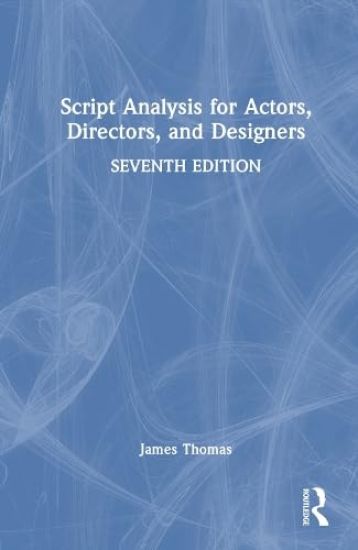
Script Analysis for Actors, Directors, and Designers, Seventh Edition, teaches the skills of script analysis using a formalist approach that examines the written part of a play to evaluate its potentials for performance and production.This new edition features new and revised content, including an analysis of two new plays, Kalidasa’s Shakuntala and Federico Garcia Lorca’s The House of Bernarda Alba; information for the theatre designer integrated in chapters throughout the book; and an expanded appendix on critical approaches to script analysis. Explorations of both classic and unconventional plays are combined with clear examples, end-of-chapter summaries, and stimulating questions that will allow actors, directors, and designers to immediately incorporate the concepts and processes into their theatre production work.An excellent resource for students of acting, script analysis, directing, playwriting, and stage design courses, this book provides the tools to effectively bring a script to life on stage.

Modern loneliness and the absence of intimacy amongst London's millions are the ills suffered by the quirky yet deeply melancholic 30-something, Joseph Bogart. Weighed down with emotional baggage and feeling lost amidst a mass of failed relationships, Joseph uses his sharp wit and tragicomedy to fight the hopelessness gnawing at him. Through his trials, we discover if Joseph is able to find a successful way out of his life of 'quiet desperation'.
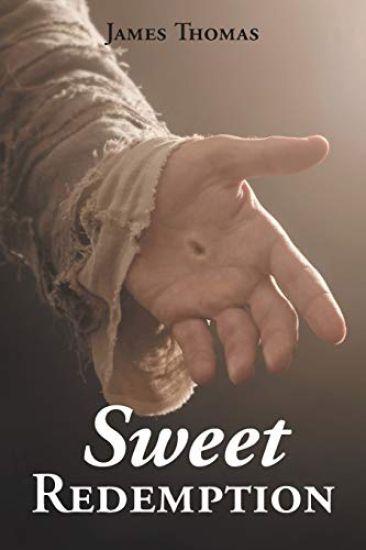
Redemption comes to those who may refuse to accept the hand you are dealt as a child. I refused to accept and carry all the bad things that were in my life as child. It took about forty years of standing on the promises of God. Even though I was not perfect, he came through. My past speaks loudly to people that a person can overcome. This is my redemption story, and Jesus has stuck closer than any brother. I have learned that God will use a rejected piece of stone to help strengthen his kingdom. Today people that see me and know me would not have a clue as to what I came out of through Jesus Christ. These redemptive years have rewarded us with a lot joy in our hearts that is beyond words although we gave it a chance through this writing about Sweet Redemption.
Redemption comes to those who may refuse to accept the hand you are dealt as a child. I refused to accept and carry all the bad things that were in my life as child. It took about forty years of standing on the promises of God. Even though I was not perfect, he came through. My past speaks loudly to people that a person can overcome. This is my redemption story, and Jesus has stuck closer than any brother. I have learned that God will use a rejected piece of stone to help strengthen his kingdom. Today people that see me and know me would not have a clue as to what I came out of through Jesus Christ. These redemptive years have rewarded us with a lot joy in our hearts that is beyond words although we gave it a chance through this writing about Sweet Redemption.

Published in 1999, this study focuses on the work of absolute idealist readers of Spinoza's metaphysics, such as John Clark Murray and Leslie Armour. The text is intended to establish a better absolute idealist interpretation of the identity of Spinoza's one substance (reality) with each of its diversity of "attributes". Consideration is given to the interpretations developed by these earlier commentators, who read the attributes as one metaphysical being diversely interpreted. The author finds this disadvantageous in understanding the "parallelism" of the attributes, or Spinoza's doctrine that the same order and connection of things is found in each. This problem can be solved with an alternative absolute idealist reading of the attributes as one order diversely intuited.

Published in 1999, this study focuses on the work of absolute idealist readers of Spinoza's metaphysics, such as John Clark Murray and Leslie Armour. The text is intended to establish a better absolute idealist interpretation of the identity of Spinoza's one substance (reality) with each of its diversity of "attributes". Consideration is given to the interpretations developed by these earlier commentators, who read the attributes as one metaphysical being diversely interpreted. The author finds this disadvantageous in understanding the "parallelism" of the attributes, or Spinoza's doctrine that the same order and connection of things is found in each. This problem can be solved with an alternative absolute idealist reading of the attributes as one order diversely intuited.
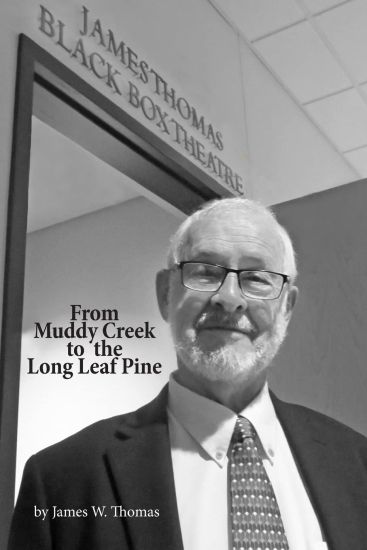
From Muddy Creek to the Long Leaf Pine chronicles the life of a remarkable man as he grows from a precocious child in rural North Carolina to a career as an academic in theatre history and literature, founder and artistic director of a professional theatre, academic dean of fine arts at two universities, and recipient of a lifetime achievement award in drama. In 2013, Jim was made Ambassador Extraordinary of the Order of the Long Leaf Pine, the highest civilian honor for the state of North Carolina.



Prologue Ft. Lauderdale, Florida is a waterfront city that has long been a playground for the rich and famous. Million dollar homes nestle alongside multi-million dollar estates, all of which are built along interconnecting waterways. It is a city where boats number in the tens of thousands. Naturally, such a concentrated abundance of wealth has served to upstart a vast number of waterfront cafes and bars from which party goers and fine diners alike may watch the nightly parade of expensive yachts as they transient the Intracoastal Waterway. It is a parade of affluence and decadence at its finest. The Gold Coast of Florida is an area where wealth goes beyond measurement and is perpetual. There always has been, and always will be, someone bigger and faster-someone with a larger yacht, a faster car, a sleeker jet. The possibilities are directly proportionate to desire and the sky is the limit. Competition is fierce, perhaps even audacious. Yet, that only serves to attract the wealthy. It is a melting pot for the rich. However, for many it has also been their waterloo. Trust Fund Babies-young recipients of inherited fortunes-flock from near and far to jockey into position as potential suitors for devastatingly beautiful women. Those in the know often refer to those beauties as Zoologists. When referred to in this context, a Zoologist is one who is on the hunt for four particular species-a jaguar in her garage, a mink in her closet, a tiger in her bed, and a jackass who will pay for it all without questions asked. Unfortunately, those not in the know must learn. Many a wealthy man has relocated to Ft. Lauderdale, Florida to, show them how it is done, only to find himself well laid, but penniless, some three years later. Of course, as with any game of desire, the have nots are always figuring a means to compete with the haves. Enter crime, cons, strippers, smugglers, gambling . . . it would be necessary to update the list daily, for imagination and desire know no holiday. There is but one desire . . . one goal . . . and that desire knows no discrimination whatsoever. In order to compete with the haves one needs nothing more that a burning desire to become a Player. This is a story of some of those Players, so please, read on . . . if you dare
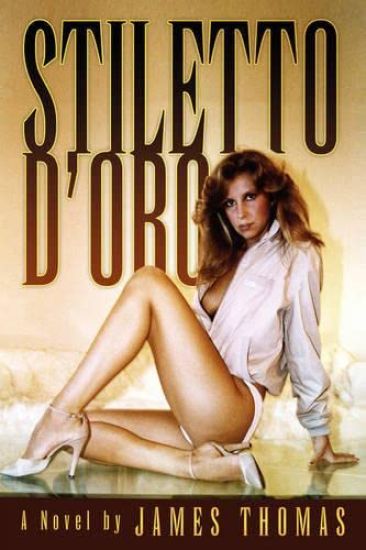
Prologue Ft. Lauderdale, Florida is a waterfront city that has long been a playground for the rich and famous. Million dollar homes nestle alongside multi-million dollar estates, all of which are built along interconnecting waterways. It is a city where boats number in the tens of thousands. Naturally, such a concentrated abundance of wealth has served to upstart a vast number of waterfront cafes and bars from which party goers and fine diners alike may watch the nightly parade of expensive yachts as they transient the Intracoastal Waterway. It is a parade of affluence and decadence at its finest. The Gold Coast of Florida is an area where wealth goes beyond measurement and is perpetual. There always has been, and always will be, someone bigger and faster-someone with a larger yacht, a faster car, a sleeker jet. The possibilities are directly proportionate to desire and the sky is the limit. Competition is fierce, perhaps even audacious. Yet, that only serves to attract the wealthy. It is a melting pot for the rich. However, for many it has also been their waterloo. Trust Fund Babies-young recipients of inherited fortunes-flock from near and far to jockey into position as potential suitors for devastatingly beautiful women. Those in the know often refer to those beauties as Zoologists. When referred to in this context, a Zoologist is one who is on the hunt for four particular species-a jaguar in her garage, a mink in her closet, a tiger in her bed, and a jackass who will pay for it all without questions asked. Unfortunately, those not in the know must learn. Many a wealthy man has relocated to Ft. Lauderdale, Florida to, show them how it is done, only to find himself well laid, but penniless, some three years later. Of course, as with any game of desire, the have nots are always figuring a means to compete with the haves. Enter crime, cons, strippers, smugglers, gambling . . . it would be necessary to update the list daily, for imagination and desire know no holiday. There is but one desire . . . one goal . . . and that desire knows no discrimination whatsoever. In order to compete with the haves one needs nothing more that a burning desire to become a Player. This is a story of some of those Players, so please, read on . . . if you dare